

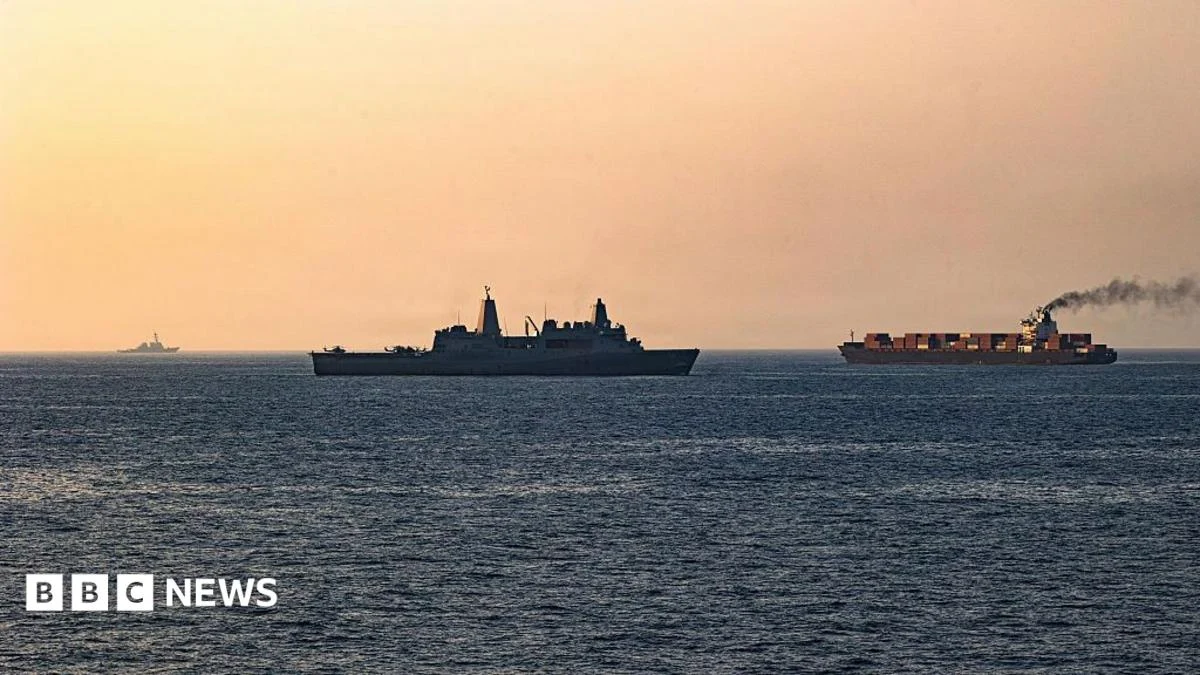
The United States military has confirmed the completion of a significant "heavy wave" of retaliatory strikes targeting Iran, a direct response to Tuesday’s attempted ballistic missile attacks on American forces in the Middle East. US Central Command (Centcom) reported hitting "dozens" of sites associated with Iran’s Islamic Revolutionary Guard Corps (IRGC), citing Iranian aggression against US bases in Jordan and commercial shipping in the strategically vital Strait of Hormuz. These coordinated strikes mark a dramatic escalation in the simmering conflict, which has now spanned five months with no clear end in sight.
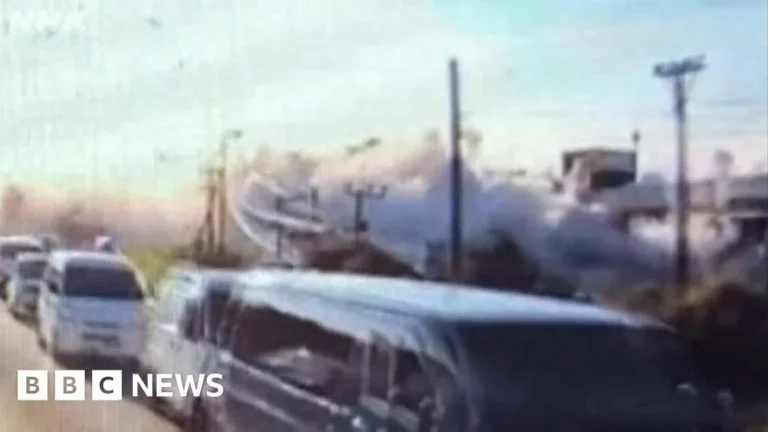
Iranian state media swiftly reported casualties from the latest US operations, stating that three individuals, including a two-year-old child, were killed on Qeshm island. Other locations in the south and west of the country were also reportedly impacted. The civilian deaths underscore the grave humanitarian risks inherent in this expanding conflict, drawing international condemnation and concern. This latest exchange of hostilities follows a week characterized by a notable expansion of the conflict’s geographical scope, including the first publicly acknowledged joint US-Saudi strikes against Iranian proxies in Iraq.
Escalation and Retaliation: A Chronology of Recent Events
The current wave of hostilities is rooted in a volatile sequence of events that began earlier in the week, following a brief lull in direct military engagements. For several days prior, there had been a reported cessation of strikes from both sides, fueling speculation that diplomatic channels might have reopened. Former President Donald Trump had publicly referred to "very friendly negotiations," though Tehran vehemently denied any such discussions were taking place, highlighting the profound distrust and communication gaps between the two adversaries.
However, any hopes for de-escalation were shattered on Tuesday with a critical Iranian missile attack. The IRGC claimed responsibility for targeting a US air base and a command centre in Jordan, justifying its actions as a response to what it termed "acts of aggression of the American child-killing army." Simultaneously, the IRGC’s naval forces asserted they had struck three oil tankers in the Strait of Hormuz. According to Iranian statements, these tankers had "ignored warnings" and navigated an "unsafe and illegal route" through the crucial Gulf waterway. Jordan’s armed forces later confirmed that their air defense systems had successfully intercepted five Iranian missiles targeting the Kingdom’s territory on Thursday, averting potentially significant damage and casualties.
In the wake of these Iranian provocations, President Trump vowed a robust response. Speaking to reporters at the White House, he declared, "We’re going to be hitting them very hard because it’s our turn to hit them. They know it’s coming. They asked us not to do it." This promise materialized swiftly. The latest wave of US strikes commenced at 20:00 ET on Wednesday (01:00 BST on Thursday) and reportedly lasted approximately one hour. Centcom characterized these actions as a "powerful response to yesterday’s attempted Iranian attacks on US forces based in the Middle East," adding that all Iranian missiles launched on Tuesday had been successfully intercepted by US and allied defense systems.
Once the strikes were concluded, Centcom released details of the targets, specifying that the US operations had focused on "military command centers, missile and drone facilities, coastal surveillance and defense sites, and maritime capabilities." Iranian state media, particularly the Irib news agency, corroborated that significant infrastructure was hit, including the islands of Qeshm and Abadan, both integral to Iran’s oil industry. Fars news agency, citing the Hormozgan University of Medical Sciences, provided the grim detail of the civilian casualties on Qeshm: "A US attack on a residential home in the Chah Tangu neighbourhood of Qeshm killed three members of a family: the father, the mother, and their 2-year-old child."
This latest escalation follows closely on the heels of other significant military actions. Just last Friday, President Trump had suspended an intensive bombing campaign against Iran that had persisted for 13 consecutive nights. That earlier campaign, which the US stated targeted Iranian weapons and military sites, had reportedly resulted in scores of deaths. Adding another layer of complexity to the regional conflict, Centcom also confirmed on Tuesday that joint US-Saudi strikes had targeted "multiple terrorist logistics and weapons sites across eastern Iraq." These operations were described as a "strong response to over 30 IRGC-directed aerial drone attacks in the last 72 hours" in Iraq. The Iraqi paramilitary Popular Mobilisation Forces (PMF), a powerful umbrella organization predominantly composed of Iran-backed Shia militias, reported that at least 20 of its members had been killed in these US-Saudi strikes on its bases. The Iraqi presidency issued a strong denunciation, branding the bombing of PMF bases as "an unacceptable attack and a blatant violation of Iraq’s sovereignty." However, President Trump countered this assertion in an interview with Fox News, claiming the strikes had been "co-ordinated with the Iraqi government," a statement that immediately drew skepticism and further highlighted the internal divisions within Iraq regarding foreign military presence and regional alliances.
Background and Broader Context of the US-Iran Conflict
The current five-month-long conflict is a dangerous manifestation of decades of antagonism between the United States and Iran, characterized by a complex interplay of geopolitical rivalries, ideological clashes, and proxy warfare across the Middle East. The 1979 Iranian Revolution irrevocably altered the US-Iran relationship, transforming a key American ally into a staunch adversary. Subsequent events, including the Iran hostage crisis, US sanctions, and Iran’s nuclear program, have consistently fueled distrust and hostility.
The Islamic Revolutionary Guard Corps (IRGC), established in the aftermath of the revolution, is not merely a military force but a powerful politico-economic entity within Iran. It controls vast sectors of the Iranian economy and possesses significant influence over foreign policy. Its Quds Force, an elite special operations unit, is responsible for extraterritorial operations and cultivating a network of proxy militias across the region, including Hezbollah in Lebanon, various Shia groups in Iraq, and the Houthis in Yemen. These proxies are often utilized by Iran to project power, exert influence, and challenge US and allied interests without direct state-on-state confrontation, a strategy often referred to as a "shadow war."
The Strait of Hormuz, a narrow chokepoint between the Persian Gulf and the Gulf of Oman, stands as a critical flashpoint. Approximately 20% of the world’s petroleum, and a significant portion of its liquefied natural gas, passes through this waterway. Any disruption to shipping in the Strait has immediate and profound global economic repercussions, making it a crucial strategic asset for Iran, which has repeatedly threatened to close it in response to external pressure. The IRGC’s naval capabilities, including fast attack craft and anti-ship missiles, are specifically designed to operate effectively in this constrained maritime environment.
The US military presence in the Middle East, primarily managed by Centcom, is extensive and diverse, encompassing air bases, naval assets, and ground forces strategically positioned across allied nations like Jordan, Saudi Arabia, Kuwait, and Qatar. This presence is ostensibly aimed at countering terrorism, ensuring regional stability, and deterring Iranian aggression. The American forces possess advanced air defense systems, including Patriot and THAAD missile interceptors, which Centcom claims were instrumental in thwarting Tuesday’s Iranian missile attacks.
Saudi Arabia, a key US ally and the leading Sunni Muslim power, has been locked in a decades-long struggle for regional dominance with Iran, the largest Shia Muslim country. This rivalry manifests in proxy conflicts across the region, from Yemen to Syria and Iraq. The recent joint US-Saudi strikes in Iraq against Iranian-backed militias underscore this strategic alignment, though Saudi Arabia’s reported desire to de-escalate tensions, as conveyed by Prince Khalid bin Salman to President Trump, suggests a nuanced approach that seeks to balance deterrence with avoiding outright war.
The role of Iraq in this conflict is particularly precarious. Having suffered decades of war and instability, Iraq is now caught between its two powerful allies, the United States and Iran. The PMF, while officially part of the Iraqi security apparatus, is heavily influenced by Iran, creating a complex internal dynamic. Attacks on PMF bases, whether by the US or its allies, inevitably raise questions of Iraqi sovereignty and risk destabilizing the fragile political landscape. President Trump’s claim of coordination with the Iraqi government on the recent strikes stands in stark contrast to the Iraqi presidency’s condemnation, highlighting the deep diplomatic challenges.
Official Responses and Diplomatic Undercurrents
Official statements from all involved parties reflect a mix of justification, condemnation, and cautious diplomacy. Centcom’s public communications have consistently emphasized the defensive nature of US actions and the precision targeting of IRGC military infrastructure, aiming to deter further Iranian aggression while minimizing civilian casualties. The reporting of civilian deaths by Iranian state media, however, immediately complicates this narrative and fuels anti-American sentiment within Iran and among its regional allies.
President Trump’s public pronouncements have been characterized by a hawkish stance, emphasizing US resolve and the need for strong retaliation. His statement about Iran "asking us not to do it" implies a direct line of communication or indirect signaling, though the veracity and context of such an exchange remain unconfirmed. This rhetorical approach aims to project strength and deter future attacks, consistent with his administration’s broader "maximum pressure" campaign against Iran.
The reported meeting between President Trump and Saudi Defense Minister Prince Khalid bin Salman, where Saudi Arabia allegedly expressed a desire for de-escalation, introduces an interesting diplomatic dimension. While Saudi Arabia is a staunch opponent of Iranian expansionism, a full-scale regional war would carry immense risks for the Kingdom, including potential attacks on its critical oil infrastructure and broader economic disruption. This suggests a strategic interest in managing tensions rather than allowing them to spiral out of control, even as it aligns with the US in countering Iranian influence.
The Iraqi government’s strong condemnation of the US-Saudi strikes on PMF bases highlights the delicate balance it must maintain. Iraq seeks to avoid becoming a battleground for US-Iran proxy conflicts, asserting its sovereignty while navigating complex alliances. This condemnation serves to appease powerful internal factions, particularly the Iran-backed militias, and to signal to the international community that Iraq desires stability and respect for its territorial integrity.
Broader Impact and Implications
The latest round of US-Iran hostilities carries profound implications for regional stability, global energy markets, and the future trajectory of diplomatic efforts.
Regional Stability: The expansion of strikes into Iraq, involving both US and Saudi forces, and the direct targeting of IRGC assets within Iran itself, significantly raises the risk of a wider regional conflict. Proxy groups on all sides are deeply entrenched, and any miscalculation could trigger a chain reaction, drawing in more actors and further destabilizing an already volatile region. The civilian casualties reported on Qeshm island are a grim reminder of the human cost and the potential for public outrage to further fuel cycles of violence.
Global Energy Markets: The Strait of Hormuz remains a critical choke point. While all Iranian missiles were reportedly intercepted, the attempted attacks on commercial shipping there send a clear signal of Iran’s capability and willingness to disrupt global oil supplies. Sustained hostilities in the Gulf could lead to significant spikes in oil prices, impacting global economies already grappling with various challenges. The vulnerability of oil infrastructure in the region, both onshore and offshore, remains a major concern for energy security.
Diplomatic Efforts: The renewed cycle of violence has severely undermined any nascent diplomatic efforts. The mutual accusations and retaliatory strikes make it exceptionally difficult to envision a pathway back to dialogue, especially with the deep distrust between Washington and Tehran. The prospect of "friendly negotiations" seems more distant than ever, suggesting that a military standoff, rather than a diplomatic breakthrough, will define the immediate future of US-Iran relations.
Humanitarian Concerns: The reported death of a two-year-old child on Qeshm island serves as a stark reminder of the devastating human toll of military conflicts. As hostilities escalate, the risk to civilian populations in Iran, Iraq, and potentially other areas, grows exponentially. International organizations and humanitarian agencies will likely face increasing challenges in providing aid and protection to affected communities.
US Foreign Policy Credibility: The ongoing conflict also presents a significant challenge to US foreign policy in the Middle East. Balancing the need to deter aggression and protect US interests with the imperative to avoid a larger war is a complex task. The differing accounts regarding coordination with Iraq, for instance, could strain alliances and complicate future joint operations.
In conclusion, the "heavy wave" of US retaliatory strikes against Iran marks a dangerous intensification of a conflict already fraught with peril. With both sides demonstrating a willingness to engage militarily and claim justifications for their actions, the path forward remains uncertain. The immediate future will likely see continued tensions, with the international community holding its breath to see whether diplomatic efforts can somehow re-emerge to prevent the Middle East from descending into an even broader and more catastrophic confrontation.