


Hyatt Hotels Corporation has announced a significant escalation in its strategic expansion into the mid-market hospitality sector, even as the Chicago-based hospitality giant navigates a complex fiscal landscape characterized by revised growth projections and a shifting timeline for new property openings. During its most recent earnings call on Thursday, the company unveiled a robust $500 million credit facility designed specifically to assist developers in securing financing for projects under its recently launched Hyatt Studios brand. This move signals a deliberate effort by Hyatt to address the financing bottlenecks currently plaguing the construction industry, while simultaneously maintaining its core identity as a leader in the luxury and lifestyle segments. Despite these proactive measures, Hyatt’s stock experienced a decline of more than 5% in early trading following the revelation that several key projects slated for the fourth quarter of 2024 would likely be delayed until 2027.
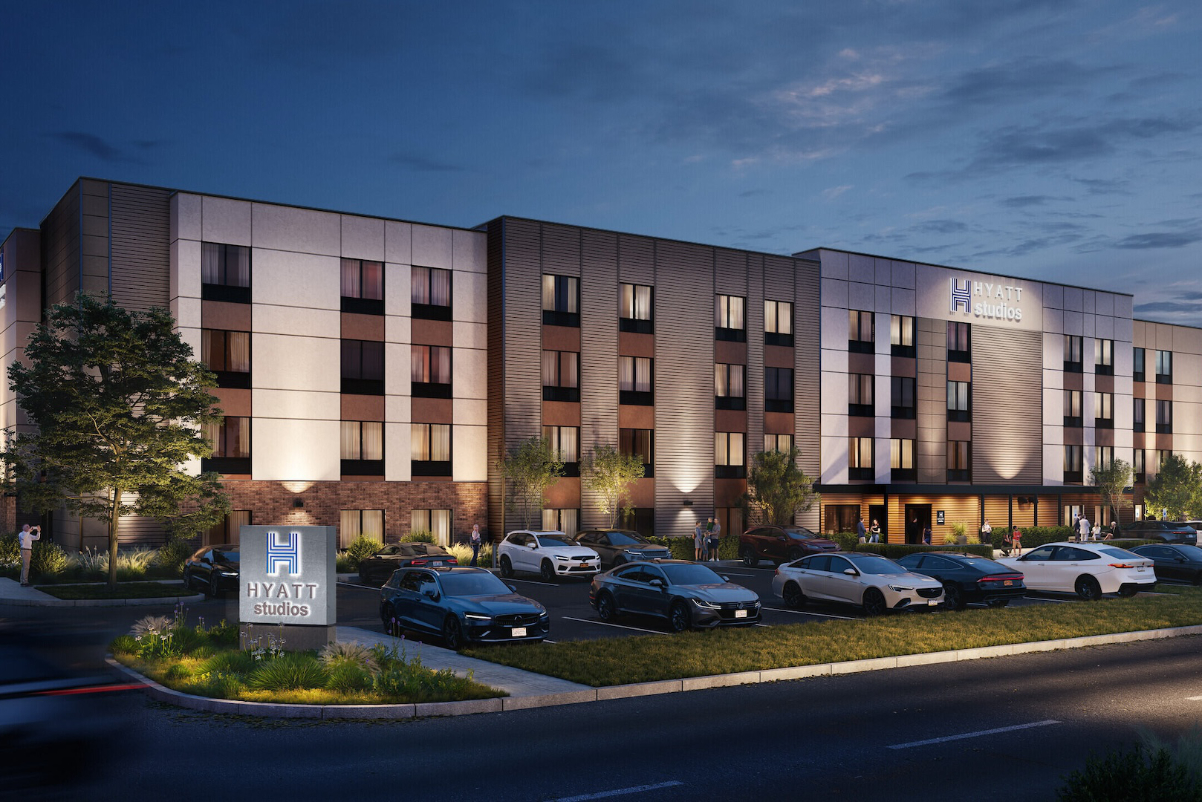
The announcement of the $500 million credit facility represents a pivotal moment in Hyatt’s broader "asset-light" strategy. By partnering with Hall Structured Finance, a prominent private lender, Hyatt is effectively providing a financial safety net for developers looking to break ground on Hyatt Studios properties. The Hyatt Studios brand, which marks the company’s first foray into the upper-midscale extended-stay category in the Americas, is seen as a crucial engine for future room growth. However, the external environment—defined by high interest rates and cautious lending from traditional financial institutions—has slowed the pace of new construction. CEO Mark Hoplamazian emphasized that the company is taking a "measured view" of the current landscape, recognizing that the timing of openings must be balanced against the realities of the global supply chain and the financing market.
The Hyatt Studios Financing Program: A $500 Million Catalyst
The centerpiece of Hyatt’s current growth strategy is the dedicated construction loan program for Hyatt Studios newbuilds. This $500 million initiative, developed in conjunction with Hall Structured Finance, is designed to provide developers with the necessary capital to move projects from the planning stage to the construction phase. In a market where regional banks have tightened their lending criteria, Hyatt’s decision to back a credit facility of this magnitude is a rare move for a hospitality brand and underscores the importance the company places on its mid-market expansion.
The Hyatt Studios brand was conceptualized to fill a gap in the company’s portfolio, targeting a demographic that seeks the reliability and service of a Hyatt-branded property at a more accessible price point. By focusing on the upper-midscale segment, Hyatt is attempting to capture a larger share of the domestic travel market, particularly among business travelers and families seeking extended-stay options. The $500 million facility is expected to accelerate the development of dozens of properties, ensuring that the brand reaches a critical mass of locations more quickly than it would through traditional financing routes alone.
According to Hoplamazian, the partnership with Hall Structured Finance is not merely about providing cash; it is about creating a streamlined pipeline for developers who are already committed to the Hyatt ecosystem. By reducing the friction associated with securing construction loans, Hyatt hopes to mitigate the impact of the broader economic slowdown on its long-term growth targets.
Analyzing the Revised Net Rooms Growth Forecast
One of the primary drivers behind the recent volatility in Hyatt’s stock price was the adjustment of its net rooms growth (NRG) forecast. In April, the company had projected a healthy growth rate of 6% to 7% for the full year of 2024. However, in the latest update, Hyatt narrowed this forecast to "approximately 6%." While a 1% adjustment might seem minor in isolation, in the high-stakes world of hospitality real estate, it signals a slowdown in the conversion of the development pipeline into operational, revenue-generating rooms.
The revision is largely attributed to the delay of several large-scale projects. Hyatt noted that some hotels originally expected to open in the final quarter of 2024 are now being pushed back, with some timelines extending as far as 2027. These delays are often the result of complex factors, including municipal permitting hurdles, labor shortages in the construction sector, and the aforementioned financing challenges.
Despite the lowered forecast, Hyatt remains optimistic about its long-term trajectory. The company reported that its fee growth remains primarily driven by its luxury and lifestyle brands, which continue to see strong demand from high-net-worth travelers. The "luxury and lifestyle story" remains the backbone of Hyatt’s profitability, even as it builds out its mid-market infrastructure. This dual-track approach—protecting the high-end core while aggressively expanding the base—is the central pillar of Hyatt’s current corporate evolution.
The Evolution of Hyatt’s Asset-Light Business Model
Hyatt’s strategic shift must be viewed through the lens of its multi-year transition toward an asset-light business model. Historically, hotel companies owned significant portions of the real estate on which their brands operated. Over the last decade, Hyatt has aggressively divested its owned real estate, choosing instead to focus on management and franchise fees. This model is generally preferred by investors because it offers higher margins and less exposure to the cyclical risks of real estate ownership.
The move into the mid-market and extended-stay sectors via Hyatt Studios is a natural extension of this asset-light philosophy. Mid-market hotels are typically less expensive to build and operate than luxury resorts, allowing for faster scaling and a more diversified revenue stream. However, the success of this model depends on the ability of third-party developers to secure their own financing. By intervening with the $500 million credit facility, Hyatt is essentially acting as a facilitator to ensure its asset-light strategy does not stall due to external macroeconomic pressures.
In the second quarter, Hyatt’s management and franchise fees grew significantly, reflecting the continued strength of global travel demand. However, the company is mindful that its luxury portfolio is reaching a point of maturity in certain markets. To sustain the double-digit growth rates expected by Wall Street, Hyatt must find new avenues for expansion, making the success of Hyatt Studios and other mid-market initiatives imperative.
The Mid-Market Frontier: Navigating the Upper Midscale Segment
The upper-midscale segment is currently one of the most competitive arenas in the hospitality industry. Hyatt is not alone in its pursuit of this market; major competitors like Marriott International, Hilton, and IHG Hotels & Resorts have all launched or refreshed their own mid-market and extended-stay brands in recent years. Marriott’s "StudioRes" and Hilton’s "LivSmart Studios" are direct competitors to Hyatt Studios, each vying for the same pool of developers and guests.
Hyatt’s late entry into this segment is being compensated for by its focus on quality and its established loyalty program, World of Hyatt. The company believes that its reputation for high-end service will translate well into the mid-market, offering a "premium" experience within the upper-midscale tier. The challenge, however, lies in maintaining brand standards while keeping costs low enough to remain attractive to value-conscious travelers.
The mid-market segment also offers a degree of resilience against economic downturns. While luxury travel can be sensitive to fluctuations in the stock market or corporate earnings, mid-market and extended-stay properties often see more stable demand from essential business travel and cost-conscious leisure tourists. By diversifying its portfolio, Hyatt is building a more "recession-resistant" business.
Market Reactions and Investor Sentiment
The 5% drop in Hyatt’s stock price following the earnings announcement reflects a broader trend of investor sensitivity to growth projections in the post-pandemic era. While Hyatt’s financial fundamentals remain strong, the market reacted unfavorably to the combination of a lowered growth forecast and the push-out of hotel openings. Investors typically prize predictability, and the shift of 2024 openings to 2027 introduced an element of uncertainty that the market was quick to price in.
Analyst reactions have been mixed. Some see the $500 million credit facility as a savvy move to gain a competitive advantage over other brands that are not offering similar financial support to their developers. Others, however, expressed concern that Hyatt is being forced to take on more indirect risk to sustain its growth targets. There is also the question of RevPAR (Revenue Per Available Room) growth, which has begun to stabilize across the industry after the "revenge travel" boom of 2022 and 2023.
During the earnings call, Hoplamazian sought to reassure investors by pointing to the strength of the company’s pipeline. As of mid-2024, Hyatt’s pipeline stood at a record high, with thousands of rooms in various stages of development. The executive team argued that the delays are a matter of timing, not a lack of demand or a failure of the brand’s appeal.
Macroeconomic Pressures and the Construction Pipeline
The delays cited by Hyatt are symptomatic of broader issues within the global construction and real estate industries. For the past two years, developers have faced a "triple threat" of rising interest rates, increased material costs, and a tightening labor market. These factors have made the "pro-forma" financial projections for many hotel projects difficult to justify, leading many developers to pause or cancel projects.
In the United States, the regional banking crisis of early 2023 further exacerbated these issues. Regional banks, which traditionally provide the bulk of construction lending for mid-sized hotel projects, have significantly reduced their exposure to commercial real estate. This vacuum in the lending market is precisely what Hyatt and Hall Structured Finance are aiming to fill.
Furthermore, the "measured view" mentioned by Hoplamazian also accounts for the varying speeds of recovery in international markets. While the Americas and Europe have seen robust demand, the recovery in Greater China has been more uneven. Hyatt has a significant presence in Asia, and any slowdown in the Chinese property market or consumer spending has a direct impact on the company’s global room growth.
Looking Ahead: The Path to 2027 and Beyond
As Hyatt looks toward the end of the decade, the success of its current initiatives will be measured by its ability to successfully integrate the Hyatt Studios brand into its global ecosystem. The 2027 timeline for delayed projects suggests a long-term horizon for the company’s current expansion phase. While the immediate market reaction was negative, the strategic foundations being laid today—including the $500 million financing program—could position Hyatt for a period of sustained growth once the current macroeconomic headwinds subside.
The company is also expected to continue its focus on the lifestyle segment, which includes brands like Andaz, Thompson Hotels, and the recently acquired Dream Hotel Group. These brands offer high margins and strong brand loyalty, complementing the more volume-driven mid-market strategy.
In summary, Hyatt is currently a company in transition, navigating the friction between its luxury heritage and its mid-market future. The $500 million credit facility is a bold attempt to control its own destiny in a difficult financing environment. While the revised growth forecasts and delayed openings have created short-term volatility, Hyatt’s leadership remains committed to a vision of a diversified, asset-light hospitality powerhouse that can cater to travelers across every price point and stay duration. The coming years will determine if this pivot to the mid-market can deliver the same level of prestige and profitability that has defined the Hyatt brand for decades.