


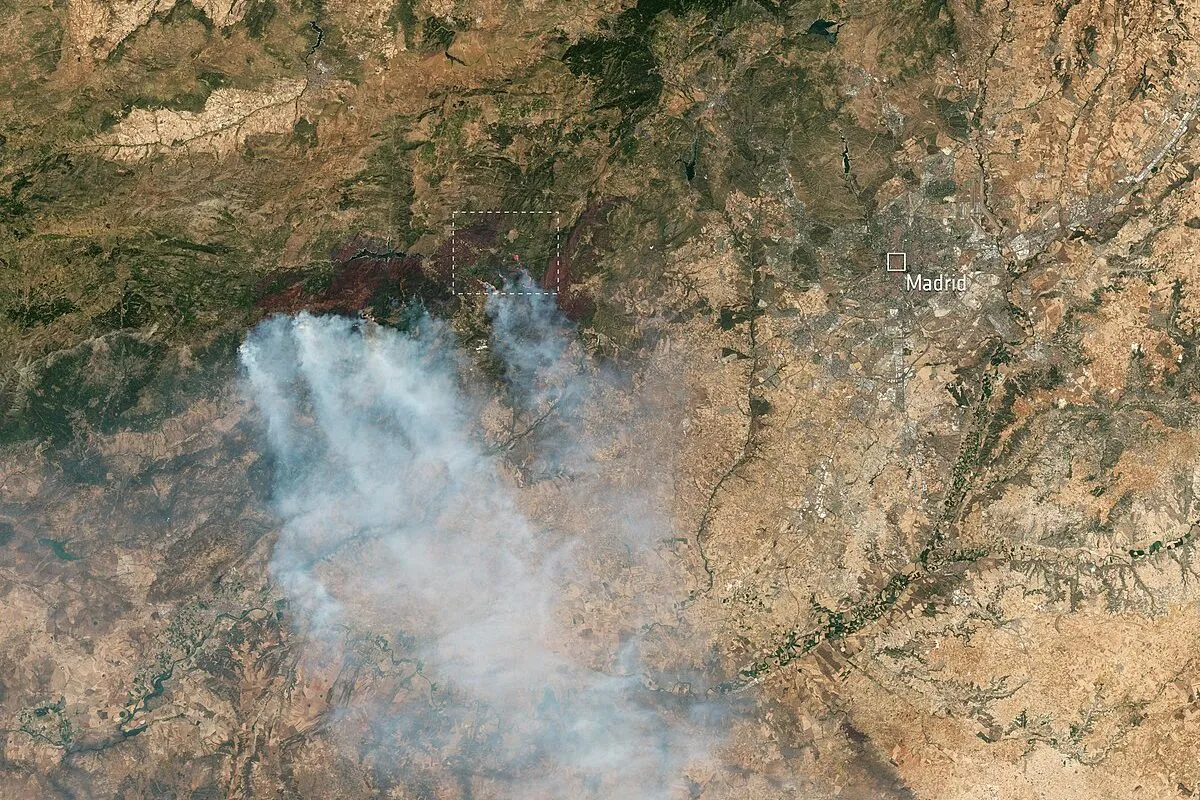
The European continent is currently grappling with a relentless series of heat waves that have ignited a chain reaction of catastrophic wildfires, forcing the mass evacuation of thousands of residents and tourists. As temperatures surge past historical norms, the environmental and humanitarian crisis has transitioned from a regional concern into a continent-wide emergency. While the initial brunt of the infernos has been borne by France and Spain, official warnings from the European Union suggest that the danger is rapidly migrating eastward and northward, placing Greece, Italy, and Central Europe under high-alert status. The intersection of extreme meteorological conditions and the peak summer travel season has created a volatile scenario that threatens not only the natural landscape but also the economic stability of the Mediterranean’s vital tourism industry.
The Geographic Expansion of the Wildfire Crisis
The current crisis began with concentrated outbreaks in the southwestern regions of Europe, where a combination of prolonged drought and record-breaking temperatures created a "tinderbox" effect. In France, the Gironde region has seen some of the most aggressive fire behavior in decades. Tens of thousands of hectares of pine forest have been reduced to ash, necessitating the relocation of residents from suburban Bordeaux and vacationers from coastal campsites. Similarly, in Spain, the provinces of Castile and León, Galicia, and Andalusia have been besieged by multiple fronts, some of which were sparked by lightning strikes during "dry thunderstorms" where rain evaporates before hitting the parched ground.
However, the risk is no longer confined to the Iberian Peninsula or the French Atlantic coast. Maria Zuber, the head of the European Union’s Emergency Response Coordination Center (ERCC), recently highlighted the shifting trajectory of the threat. According to data monitored by the ERCC, the atmospheric conditions driving these fires are moving toward the Balkan Peninsula and the heart of Europe. "The next risk, it’s already moving to Greece and also Central Europe," Zuber stated, emphasizing that the window for containment is narrowing as the heat dome expands.
The situation in Greece has already turned deadly. On Wednesday, three firefighters lost their lives while battling a fast-moving blaze that broke out in difficult terrain. This loss underscores the extreme peril faced by first responders who are operating in conditions where shifting wind patterns can trap ground crews in seconds. The Greek government has since activated additional emergency protocols, preparing for a weekend of peak temperatures that could further destabilize the landscape.
A Chronology of the Heat Event and Fire Propagation
The current crisis did not emerge in a vacuum but is the result of a compounding sequence of weather events that began in late spring. To understand the scale of the current emergency, it is necessary to examine the timeline of the heat wave’s progression across the continent.
In late June and early July, an unusual high-pressure system became stationary over North Africa and the Mediterranean, beginning to pump scorched air northward. By mid-July, this system intensified, leading to the first major heat-related red alerts in Portugal and Spain. During this period, temperatures in the interior of the Iberian Peninsula consistently exceeded 40°C (104°F), with some stations recording peaks of 45°C.
By the third week of July, the heat moved into France and the United Kingdom, shattering all-time temperature records. This was the period when the fires in the Gironde region of France began to spiral out of control. The sheer intensity of the heat caused the vegetation to lose all moisture, making it susceptible to even the smallest spark.
As the calendar turned toward the end of July, the high-pressure system shifted eastward. This movement brought the extreme heat to Italy and the Balkan states. The current week represents a critical juncture where the "legacy" heat in the west remains a threat, while new, high-intensity heat centers are forming over Greece and Central European nations like Hungary, Austria, and southern Germany. Maria Zuber’s warnings regarding the beginning of August specifically target Italy, where the combination of the "Sirocco" winds from Africa and the existing drought in the Po Valley has created a high-risk environment for the coming weeks.
Scientific Context and Supporting Data
The scale of the 2024 wildfire season is being closely monitored by the Copernicus Emergency Management Service (CEMS). According to data from the European Forest Fire Information System (EFFIS), the total burnt area in Europe this year has already surpassed the 10-year average for this point in the season. In some regions, the area burned is three to four times higher than the historical norm.
Climate scientists point to several factors that are exacerbating the current crisis. First is the "heat dome" phenomenon, where a persistent region of high pressure traps heat over a specific area, preventing cooler air from circulating. Second is the soil moisture deficit; much of Southern Europe experienced a winter and spring with significantly below-average rainfall. When soil is dry, the sun’s energy goes directly into heating the air rather than evaporating moisture, creating a feedback loop that intensifies the heat.
Furthermore, the "Pyrocumulonimbus" effect has been observed in the largest fires in France and Spain. These are "fire clouds" created by the intense heat of the blaze itself, which can generate their own wind systems and even lightning, starting new fires kilometers away from the original front. This makes traditional containment lines nearly impossible to maintain.
Official Responses and the resceu Framework
In response to the escalating threat, the European Union has mobilized its collective defense mechanism. The Emergency Response Coordination Center (ERCC) serves as the 24/7 hub for coordinating aid. Under the "rescEU" program, a fleet of firefighting aircraft, including Canadair water bombers and heavy-lift helicopters, has been stationed strategically across the continent to be deployed at a moment’s notice.
Maria Zuber noted that the coordination effort is currently under significant strain due to the simultaneous nature of the fires. "We will need to see what will happen with the Iberian Peninsula, because if [it is] there as well, we will have all Europe on fire," she warned. This statement reflects the logistical nightmare of a "pan-European" fire event. If France, Spain, Greece, and Italy all require maximum aerial support at the same time, the EU’s shared resources will be stretched beyond their capacity.
Individual nations have also called upon their military forces to assist civilian firefighters. In Spain, the Military Emergencies Unit (UME) has been deployed to the most dangerous fronts, while in France, reinforcements have been brought in from northern regions that are not currently facing fire threats. International solidarity has also been visible, with countries like Sweden and Germany offering ground crews and equipment to their southern neighbors.
Economic Disruptions and the Impact on Tourism
The timing of these wildfires is particularly damaging for the European tourism sector, which is still in a period of recovery following the global pandemic. The Mediterranean basin is the world’s leading tourist destination, and the months of July and August represent the peak of revenue generation for local economies.
In popular destinations such as the French Riviera, the Greek islands, and the Spanish Costas, the proximity of fires to resort towns has led to mass evacuations. Hundreds of thousands of tourists have had their vacations cut short, fleeing smoke-filled skies and approaching flames. The images of tourists being evacuated by boat from beaches in Greece or fleeing campsites in France have a chilling effect on future bookings.
Travel industry analysts suggest that we may be witnessing a long-term shift in travel patterns. If extreme heat and wildfires become a predictable annual occurrence in July and August, travelers may begin to favor Northern European destinations or shift their Mediterranean trips to the "shoulder seasons" of May, June, September, and October. This would require a massive restructuring of the tourism infrastructure in Southern Europe, which is currently geared toward the high-summer rush.
Furthermore, the cost of the fires extends beyond lost tourism revenue. The destruction of timber, the loss of agricultural land (including vineyards and olive groves), and the immense cost of firefighting operations and subsequent reforestation represent a multi-billion euro hit to the European economy.
Future Outlook: A Continent Under Pressure
As August approaches, the focus of emergency planners is shifting toward Italy and the central belt of the continent. Italy is particularly vulnerable due to its geography; the country is a long peninsula that can be hit by heat from both the Atlantic and African systems. The ERCC’s prediction of heightened risk for Italy in early August is based on meteorological models showing a "tongue" of extreme heat extending up from the Sahara.
Central Europe, including countries like the Czech Republic and Poland, which historically have not faced the same wildfire intensity as the Mediterranean, are now being forced to adapt. These nations often lack the specialized aerial firefighting equipment common in the south, making them more reliant on EU-wide assistance if a major outbreak occurs.
The long-term implications for European policy are clear. There is an increasing call for more aggressive climate adaptation strategies. This includes better forest management, such as creating larger firebreaks and removing undergrowth that acts as fuel, as well as investing in more sophisticated early-warning systems. The "Green Deal" initiatives of the EU are being viewed not just as environmental goals, but as essential security measures to protect the continent from an increasingly hostile climate.
The current wildfire crisis serves as a stark reminder of the vulnerability of the European landscape. With three firefighters already dead and thousands of lives disrupted, the priority remains the immediate protection of life and property. However, as Maria Zuber’s warnings suggest, the continent must prepare for a summer where the "front line" of the fire is everywhere, and the traditional boundaries of disaster management are pushed to their breaking point. The coming weeks will be a critical test of European solidarity and the efficacy of its collective emergency response infrastructure.