


The Fédération Internationale de Football Association (FIFA), global football’s governing body, has unveiled plans to establish a new commercial subsidiary, tentatively named FIFA Forward Enterprise (FFE). This initiative aims to centralize and manage FIFA’s major events, most notably the highly lucrative FIFA World Cup, and critically, to invite external investors to acquire minority, non-controlling stakes within this new entity. The proposal has ignited a fierce debate within the footballing world, drawing sharp criticism from influential confederations like UEFA, while FIFA champions it as a vital step towards financial modernization and broader wealth distribution among its member associations.
The Genesis of a Commercial Overhaul
At its core, the FFE proposal represents a significant strategic shift for FIFA, an organization traditionally responsible for both the governance and commercial exploitation of global football. FIFA stated that the FFE was conceived "to ensure all Fifa member associations have the opportunity to take meaningful ownership of the commercial opportunity of football in their respective countries." The organization adamantly asserts that this commercial restructuring "does not come at the cost of either the spirit or the governance of Fifa or football itself," seeking to assuage concerns about potential undue influence from external capital.
The concept of a separate commercial arm is not entirely novel in the sports industry, with several major leagues and federations having explored similar models to optimize revenue generation and attract capital for growth. For FIFA, however, the move comes at a sensitive time, following years of intense scrutiny over its governance and financial practices, particularly in the wake of the "FIFAgate" corruption scandal that rocked the organization in the mid-2010s. That period necessitated sweeping reforms, including enhanced transparency and stricter ethical guidelines, making any major financial restructuring inherently controversial.
FIFA’s Financial Landscape and the Drive for New Capital
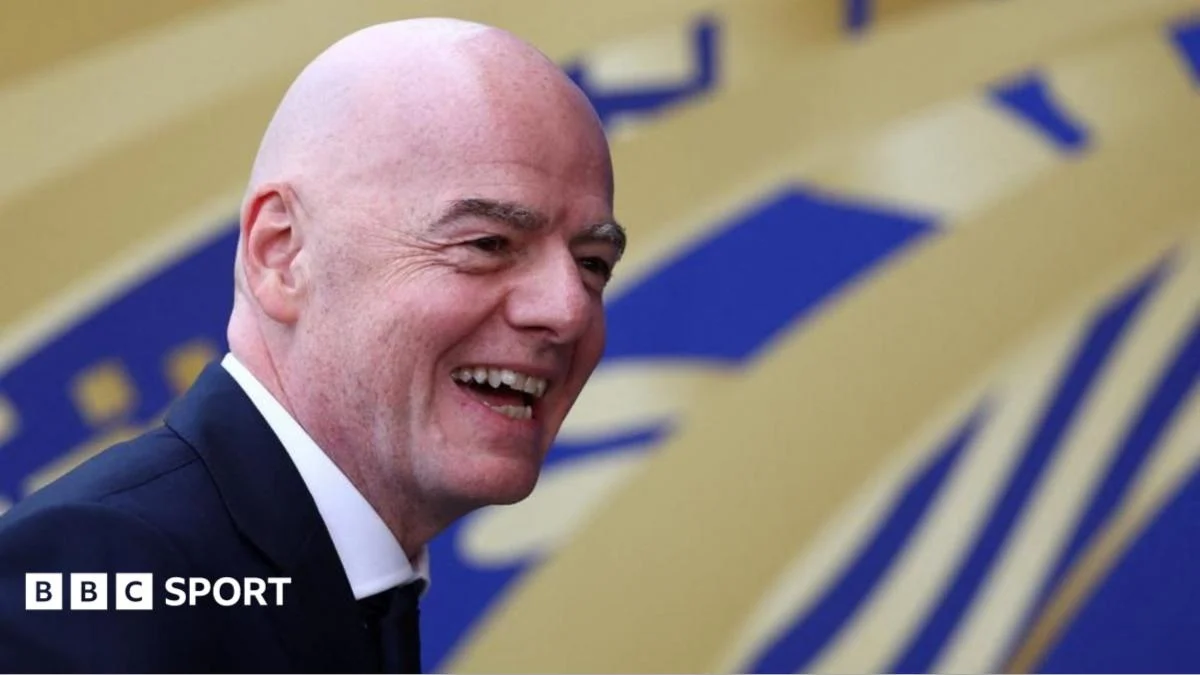
FIFA operates on a four-year World Cup cycle, during which it generates billions in revenue, predominantly from the sale of media rights, marketing rights, ticketing, and hospitality packages for its flagship tournament. The 2018 World Cup cycle, for instance, saw FIFA report revenues exceeding $6.4 billion, with a significant portion then distributed to its 211 member associations for football development projects through various programs, including the existing FIFA Forward program. Despite these impressive figures, President Gianni Infantino, who assumed office in 2016 with a mandate to restore trust and modernize the organization, has consistently sought ways to increase revenue streams and broaden financial stability, especially for smaller national federations.
The FFE proposal is presented as a mechanism to unlock additional capital that can be reinvested into the game, particularly at the grassroots level and in developing football nations. By inviting third-party investors, FIFA aims to tap into a deeper pool of capital and commercial expertise, potentially leading to higher valuations for its commercial assets and more efficient monetization strategies for its marquee events. This influx of capital could theoretically allow FIFA to increase its distributions to member associations, fund larger development projects, and create new competitions or expand existing ones. The official narrative from FIFA suggests that the FFE would act as a highly professionalized commercial entity, leveraging private sector efficiency while allowing FIFA to focus on its core regulatory and sporting functions.
A Timeline of Contentious Proposals
The FFE initiative is not an isolated proposal but rather the latest iteration in a series of ambitious, and often controversial, commercial projects championed by President Infantino. For several years, Infantino has been exploring ways to inject significant new capital into global football, often through the creation or expansion of major international tournaments.
- Early 2018: Reports first emerged of a secretive $25 billion offer from a consortium of investors to create two new FIFA competitions: an expanded 24-team Club World Cup and a Global Nations League. These proposals were met with skepticism and resistance, particularly from UEFA, which viewed them as a direct threat to its highly successful club and national team competitions.
- May 2018: The FIFA Council, the organization’s main decision-making body, rejected a formal proposal for the $25 billion investment package, largely due to concerns over the lack of transparency regarding the investors and the rapid timeline for approval. However, Infantino continued to advocate for the underlying principle of external investment and new competition formats.
- October 2018: Infantino reportedly wrote to FIFA member associations, signaling his intent to push forward with a revised commercial strategy, emphasizing the potential for increased financial distributions.
- February 2019: FIFA announced plans for a revamped, expanded Club World Cup, scheduled to debut in 2021, though the full scale of external investment for this specific project remained a point of contention.
- The Current FFE Proposal: The FFE represents a more generalized commercial entity, not tied to a specific tournament, but designed to manage the commercial rights of FIFA’s existing and future events. This broader scope, while potentially less disruptive to individual competition calendars, still raises fundamental questions about control and influence. The deadline of September 19th set by Infantino for federations to accept the plans, coupled with the upfront incentive, highlights the urgency and strategic importance FIFA attaches to this project.
The Financial Inducement: A $40 Million Carrot
Central to the FFE proposal, and a significant point of contention, is the financial incentive offered to member associations. President Infantino reportedly informed FIFA members that they would receive $40 million if they backed his controversial proposal. Furthermore, an initial payment of $20 million was offered to federations who accepted the plans by a set deadline of September 19th. This tactic of tying approval to immediate financial benefits has drawn strong criticism, with opponents arguing it could compromise the independent decision-making of national federations, particularly those with more limited financial resources who might find such an offer difficult to refuse.
For many smaller federations, $20 million or $40 million represents a transformative sum, capable of funding significant infrastructure projects, youth development programs, or professionalizing their domestic leagues. This immediate financial injection could overshadow long-term governance concerns or the potential dilution of control over football’s commercial future. Critics argue that this approach, while seemingly beneficial in the short term, could create a dependency on external capital and shift the balance of power within FIFA towards the executive leadership and its preferred investors.
UEFA’s Vehement Opposition and Broader Stakeholder Reactions
The most vocal and influential opposition to the FFE proposal has come from the Union of European Football Associations (UEFA), Europe’s governing body. UEFA has publicly accused FIFA of using football "to enrich themselves and their friends," a scathing indictment that reflects deep-seated mistrust and a historical rivalry between the two organizations. UEFA’s concerns are multifaceted:
- Loss of Control: UEFA fears that external investors, even with "non-controlling" stakes, would inevitably exert influence over commercial decisions, potentially dictating event formats, scheduling, and marketing strategies in ways that prioritize profit over sporting integrity or traditional football values.
- Threat to Existing Competitions: Europe boasts some of the most lucrative football competitions globally, including the UEFA Champions League and the European Championship. Any new or expanded FIFA commercial venture, especially one with significant external backing, could be perceived as a direct competitor or a dilution of the commercial value of UEFA’s assets.
- Transparency and Governance: UEFA has consistently called for greater transparency regarding the identity of potential investors, the valuation of FIFA’s assets, and the exact terms of any proposed deal. The accusations of "enriching friends" hint at concerns about potential conflicts of interest or a lack of due diligence in selecting commercial partners.
- Autonomy: UEFA values its autonomy and financial independence. The FFE proposal, in their view, represents a move towards centralizing more commercial power within FIFA, potentially at the expense of confederations.
Beyond UEFA, reactions from other confederations and national federations are likely to be more varied. Confederations like CONMEBOL (South America), CAF (Africa), and AFC (Asia) might see the FFE as an opportunity for their member associations to access greater funding, especially given the financial challenges faced by many federations outside of Europe. However, even within these confederations, larger and more financially stable national associations might share some of UEFA’s governance concerns. Player associations and fan groups also represent key stakeholders, likely to express concerns about the increasing commercialization of the sport and its potential impact on player welfare, ticket affordability, and the overall fan experience.
Thrive Eternal: The Proposed Investor Group
If approved, the proposal indicates that Thrive Eternal is expected to lead the proposed investor group for FFE. Thrive is identified as an American venture capital firm founded by Joshua Kushner, who is notably the brother of Jared Kushner, son-in-law to former US President Donald Trump. The involvement of Thrive Eternal and its connection to prominent political figures adds another layer of scrutiny to the FFE proposal.
The venture capital firm’s background in tech and media investments suggests an interest in leveraging digital platforms and innovative commercial strategies for FIFA’s events. However, the political connection immediately raises questions about transparency, potential influence, and the perception of fair dealing. Any deal involving such high-profile figures would inevitably undergo intense public and media scrutiny regarding the terms of investment, the valuation of FIFA’s assets, and the due diligence process undertaken by FIFA in selecting its partners. Concerns could arise about whether the selection process was purely merit-based or if other considerations played a role.
Broader Impact and Implications for Global Football
The establishment of the FIFA Forward Enterprise, if approved, would have profound implications for the future of global football across several dimensions:
- Governance and Integrity: The central concern revolves around whether the introduction of external, profit-driven investors, even in a minority capacity, could compromise FIFA’s independence and regulatory role. The line between commercial interest and sporting integrity can be delicate. Would FFE’s commercial imperatives ever override FIFA’s responsibility to uphold fair play, athlete welfare, or the broader development of the game? Ensuring robust governance structures, transparent decision-making processes, and strict ethical firewalls between FFE and FIFA’s regulatory functions would be paramount.
- Financial Future: On the one hand, FFE promises to unlock significant new capital, potentially increasing FIFA’s overall revenue and its ability to distribute funds to member associations. This could accelerate football development globally. On the other hand, it introduces external shareholders who will expect returns on their investment, potentially leading to increased commercialization, pressure to maximize revenue from every aspect of the game, and a focus on established markets at the expense of emerging ones. The long-term financial independence of FIFA could also be affected if it becomes overly reliant on external capital for its operations or development programs.
- Competition Formats and Scheduling: Investors would naturally seek to maximize the commercial appeal of events. This could lead to pressure for changes in tournament formats, increased frequency of major competitions, or alterations to the international match calendar, potentially leading to player burnout or conflicts with domestic league schedules. The ongoing debate around the biennial World Cup proposal, though separate, illustrates the tension between commercial expansion and the established rhythm of football.
- Power Dynamics within Football: The FFE proposal could significantly alter the power balance within global football. By creating a powerful commercial entity directly under FIFA’s purview, and backed by external capital, FIFA President Infantino could consolidate more authority at the global level, potentially diminishing the influence of historically powerful confederations like UEFA. This would represent a strategic victory for FIFA in its ongoing efforts to assert its global leadership.
- Transparency and Public Trust: In the post-FIFAgate era, public trust and transparency are critical for FIFA. Any deal involving billions of dollars and politically connected investors must be conducted with the utmost transparency to avoid rekindling past controversies. The specifics of the FFE’s operational model, its investment agreements, and its reporting mechanisms would need to be clear and accessible to all stakeholders.
The debate surrounding the FIFA Forward Enterprise is a microcosm of the broader challenges facing modern football: how to balance unprecedented commercial growth with the sport’s traditions, integrity, and global development mission. The decision by FIFA’s member associations will not only shape FIFA’s financial future but also define the very nature of governance and commercialization in the world’s most popular sport for decades to come. The coming months will undoubtedly witness intense lobbying and crucial deliberations as the footballing world grapples with this high-stakes proposal.