

United States President Donald Trump declared on Tuesday that the "Board of Peace" had successfully brokered an agreement for the "complete disarmament" of Hamas and other armed factions operating within the Gaza Strip. This pronouncement, made public through his Truth Social platform, heralded a potential breakthrough in the protracted conflict, though immediate reactions from key stakeholders remained complex and, in some instances, contradictory.
A senior official from Hamas, speaking to the BBC, confirmed their agreement to the Board of Peace’s comprehensive disarmament plan for Gaza, indicating that an official statement from the group would be forthcoming. This confirmation marks a significant shift, as Hamas had previously rejected disarmament proposals in April of the current year. However, Israel, a central party to any enduring peace in the region, has yet to issue a formal comment on the alleged agreement, leading to an atmosphere of cautious optimism mixed with deep skepticism.
President Trump elaborated that the agreement stipulates Israel’s withdrawal from Gaza "as disarmament is completed," positioning the accord as "a critical step towards Gaza finally being governed by a new Palestinian government." This vision aligns with the second phase of a broader US-brokered Gaza ceasefire plan, which explicitly includes the disarmament of Hamas alongside the extensive reconstruction of the devastated enclave.
The "Trump 20-Point Plan" and Phased Implementation
Trump’s statement on Truth Social framed the agreement as a "major milestone in the implementation of the Trump 20-Point Plan," a framework whose full details have largely remained opaque to the public but appears to outline a comprehensive strategy for regional stability and resolution of the Israeli-Palestinian conflict. He emphasized that the agreement would be executed in "carefully structured phases."
According to the President, the phased approach entails the withdrawal of Israeli forces concurrent with the completion of disarmament. Following this, an "International Stabilization Force" would collaborate with a newly established Palestinian police force to assume responsibility for ensuring the security of Gaza’s residents and its neighbors. This proposed security architecture suggests a significant international involvement in post-conflict Gaza, a complex undertaking that would require substantial political will, resources, and multilateral consensus.
The President also extended gratitude to the mediating nations of Egypt, Qatar, and Turkey, acknowledging their pivotal roles in facilitating the negotiations. These countries have historically served as crucial conduits for dialogue between Israel and Hamas, often hosting indirect talks and shuttle diplomacy. Agence France-Presse, citing Egyptian state media, reported that Cairo is slated to host an upcoming mediator meeting focused on the second phase of the ceasefire plan, underscoring the ongoing diplomatic efforts.
Hamas’s Shifting Stance and Leadership Transition
The confirmation from a senior Hamas official regarding their agreement to disarm represents a notable pivot for the militant group, which has historically maintained its armed wing as integral to its resistance narrative against Israeli occupation. This development comes on the heels of significant internal changes within Hamas’s leadership. Earlier this month, Khalil al-Hayya was elected as the group’s new leader, succeeding Yahya Sinwar, who was killed by the Israeli military in Gaza in October 2024.
Al-Hayya, known for his role as chief negotiator for Hamas, has led the group’s delegations in numerous indirect ceasefire talks held in Egypt and Qatar. His ascent to leadership, coupled with his extensive experience in negotiations, may signal a pragmatic shift within Hamas towards engagement with international peace initiatives, albeit under intense pressure from the ongoing conflict and the humanitarian crisis in Gaza. The group’s previous rejection of a similar disarmament plan in April, as reported by the BBC citing a senior Palestinian official familiar with negotiations, highlights the fluidity of their position and the complex internal dynamics at play. The current agreement, if truly finalized and adhered to, would mark an unprecedented concession from Hamas regarding its military capabilities.
The Enigmatic "Board of Peace"
Central to President Trump’s announcement is the "Board of Peace," an entity that has been the subject of considerable international scrutiny and speculation. The BBC previously reported earlier this year that the Board was initially conceived to help end the Israel-Hamas war in Gaza and oversee reconstruction efforts. However, its proposed charter has been noted for its omission of any explicit mention of the Palestinian territory, instead appearing "designed to supplant functions of the UN."
This characterization raises significant questions about the Board’s legitimacy, mandate, and its relationship with established international bodies like the United Nations Relief and Works Agency for Palestine Refugees in the Near East (UNRWA) and the broader UN apparatus involved in humanitarian aid and reconstruction. If the Board indeed seeks to operate outside or in parallel to existing UN frameworks, it could complicate international coordination, funding, and the long-term governance of Gaza, potentially leading to jurisdictional disputes and challenges in securing universal recognition for its authority. Its role as the primary broker of such a critical agreement without broader international endorsement remains a point of concern for many observers.
Israel’s Complex Position and Historical Skepticism
Despite the optimism emanating from Washington and the apparent agreement from Hamas, Israel’s reaction has been characterized by silence, followed by conflicting reports. While President Trump’s announcement implied Israeli buy-in, an unnamed source cited by the Times of Israel shortly after the announcement suggested that the agreement had been signed between negotiators from Hamas, the Board, and mediating countries, conspicuously omitting Israel as a signatory. Further complicating matters, an "Israeli office" reportedly issued a statement indicating that the disarmament proposal, as presented, did not meet Jerusalem’s demands. This aligns with earlier Israeli media reports indicating opposition to the deal being discussed with Hamas.
Israel’s stance is deeply rooted in its security doctrine and historical experiences. The devastating Hamas-led attack on October 7, 2023, which resulted in the killing of 1,200 people and the taking of 251 hostages, profoundly reshaped Israeli public opinion and government policy. Any agreement that does not comprehensively address Israel’s security concerns, including verifiable disarmament, demilitarization, and a robust mechanism to prevent future attacks, is likely to face significant domestic resistance. The notion of an "International Stabilization Force" and a "new Palestinian government" would need to be meticulously defined to ensure they do not inadvertently create new security vulnerabilities for Israel.
The Path to Reconstruction and Governance
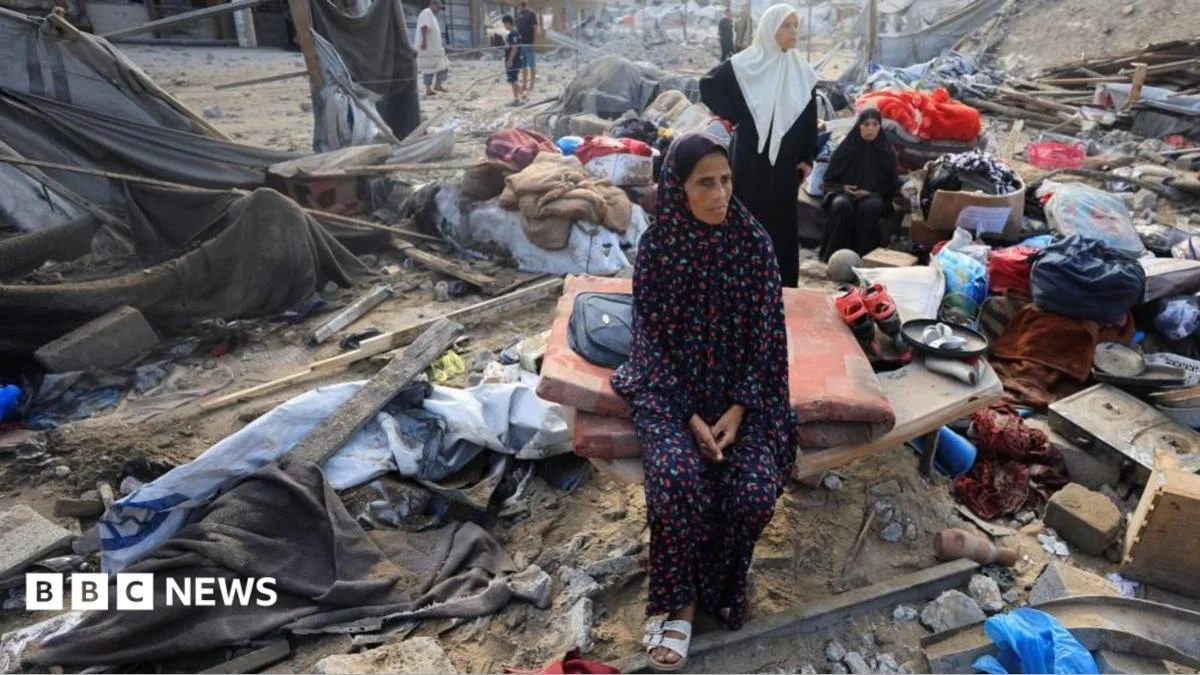
The second phase of the US-brokered plan also encompasses the monumental task of Gaza’s reconstruction. The scale of destruction in the territory following Israel’s extensive military campaign has been catastrophic. According to the Hamas-run health ministry in Gaza, more than 73,290 people have been killed, including 21,280 children. Infrastructure has been decimated, with countless homes, schools, hospitals, and vital facilities reduced to rubble.
The establishment of a "new Palestinian government" to oversee Gaza’s future poses significant political and logistical challenges. Whether this refers to a reformed Palestinian Authority (PA), a technocratic government, or an entirely new administrative body remains unclear. For any new government to be effective, it would require broad Palestinian legitimacy, international support, and the capacity to deliver essential services, manage reconstruction, and maintain security. The estimated costs of reconstruction are staggering, potentially running into hundreds of billions of dollars, requiring a massive, coordinated international aid effort far exceeding historical precedents. Without a stable and legitimate governance structure, such aid would be difficult to channel effectively and sustainably.
Chronology of Conflict and Peace Efforts
The current developments are set against a backdrop of intense conflict and sporadic peace attempts:
- October 7, 2023: Hamas launches a devastating multi-front attack on Israel, killing 1,200 people and taking 251 hostages.
- October 7, 2023 – Present: Israel launches a massive military response in Gaza, leading to widespread destruction and a severe humanitarian crisis.
- October 2024: Yahya Sinwar, then leader of Hamas in Gaza, is killed by Israeli forces.
- Earlier this month: Khalil al-Hayya is elected as the new leader of Hamas, a figure with extensive experience in ceasefire negotiations.
- April (current year): Hamas reportedly rejects an earlier disarmament plan put forth by a key figure in Trump’s Gaza peace efforts.
- Earlier (current year): The "Board of Peace" emerges as a proposed entity to mediate and oversee reconstruction, though its charter raises questions about its scope and relationship with existing international bodies.
- Recently: Talks between mediators and Hamas leaders in Cairo make "rare progress," according to Reuters, though an Israeli official deems proposed terms "not satisfactory."
- Today: President Trump announces the Board of Peace agreement for complete Hamas disarmament, followed by Hamas’s confirmation and conflicting Israeli signals.
International and Regional Implications
The potential agreement, if it materializes, carries profound implications for regional stability. The involvement of Egypt, Qatar, and Turkey highlights the critical role of regional powers in facilitating peace. For Egypt, stability in Gaza is a direct national security concern due to its shared border. Qatar and Turkey have historically provided diplomatic and financial support to Hamas, positioning them as influential intermediaries.
However, the lack of a clear, unified Israeli response introduces a significant element of uncertainty. For any peace deal to be truly transformative, it must have the unequivocal backing of both principal parties. The United Nations and other international bodies, while welcoming steps towards peace, would likely emphasize the importance of adherence to international law, humanitarian principles, and the need for a comprehensive political solution that addresses the aspirations of both Israelis and Palestinians.
Challenges and Prospects for Implementation
The road from an announced agreement to its full implementation is fraught with immense challenges. The complete disarmament of an entrenched militant group like Hamas, which possesses a complex network of tunnels, weaponry, and fighters, is an extraordinarily difficult undertaking, requiring meticulous planning, verification mechanisms, and sustained international oversight. The logistics of Israeli withdrawal and the subsequent deployment of an International Stabilization Force and a new Palestinian police force would require unprecedented levels of coordination and trust.
Furthermore, the funding and execution of Gaza’s reconstruction will demand a global commitment. The establishment of a legitimate and effective "new Palestinian government" requires not only external support but also internal reconciliation among Palestinian factions. The agreement, if truly finalized and implemented, could represent a watershed moment, potentially paving the way for a more stable and prosperous future for Gaza. However, the deep-seated animosities, historical grievances, and complex political realities suggest that this announced agreement, while significant, is merely the first, albeit crucial, step on a long and arduous journey towards lasting peace in the region. The coming days will undoubtedly reveal more about the specifics of the agreement, the sincerity of all parties, and the formidable obstacles that lie ahead.