


In a significant admission regarding the current trajectory of automotive interior design, Mercedes-Benz CEO Ola Källenius has suggested that while digital displays may continue to expand, the automotive industry has likely reached a tipping point in the elimination of physical controls. Speaking on the evolution of vehicle cabins, Källenius noted that while touchscreens remain a central pillar of the modern luxury experience, the "low button" era has prompted a re-evaluation of how drivers interact with their vehicles. This shift marks a potential course correction for the Stuttgart-based manufacturer, which has been a primary driver of the industry-wide transition toward massive, screen-dominated dashboards.
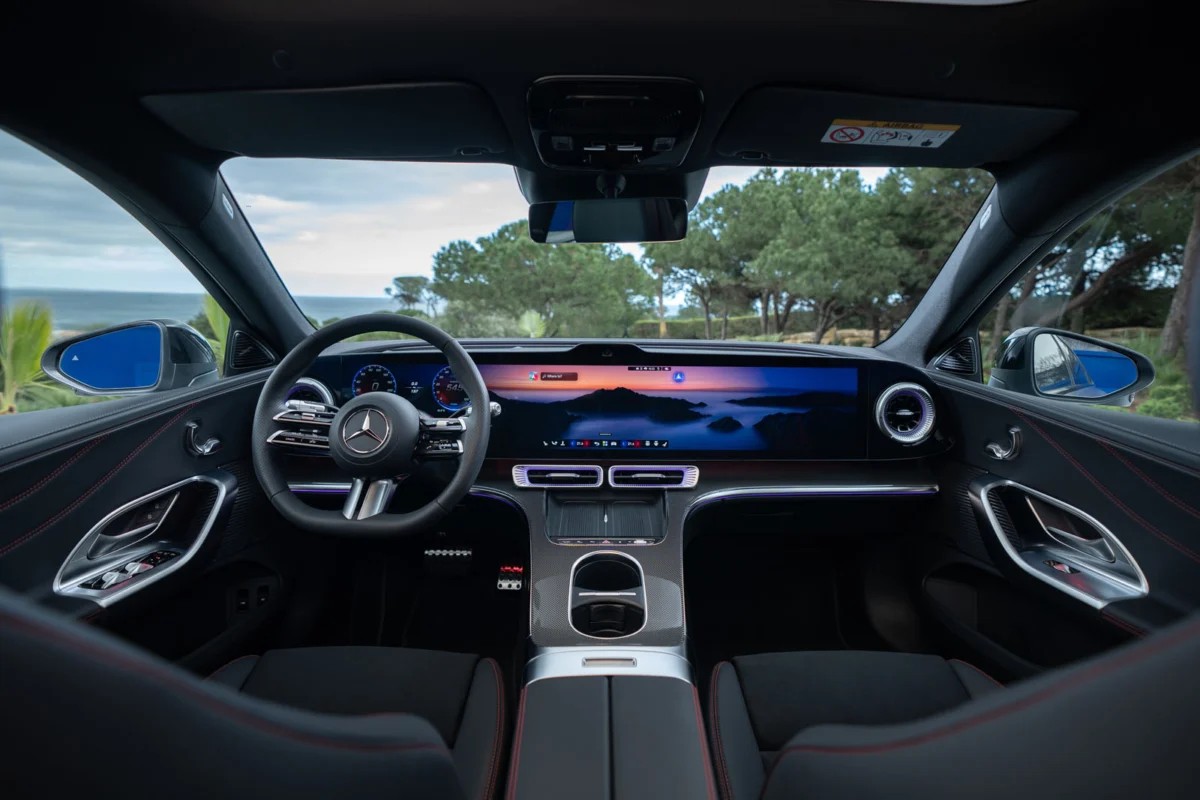
For the past decade, the global automotive market has witnessed a relentless migration of functional controls—ranging from climate settings to audio volume—away from tactile switches and into complex sub-menus within touchscreen interfaces. Mercedes-Benz has been at the forefront of this digital revolution, most notably with the introduction of the MBUX Hyperscreen. This three-screen array, which spans a staggering 1410mm across the dashboard in models like the EQS and S-Class, represents the largest production display in the industry. However, as these screens have grown, so too has a chorus of criticism from consumers and safety advocates who argue that the loss of physical buttons compromises ergonomics and driver focus.
The Philosophy of "Sensible" Ergonomics
Källenius addressed these concerns by highlighting the rigorous development process behind the Mercedes-Benz User Experience (MBUX). He emphasized that the company invests thousands of engineering hours into UI (user interface) and UX (user experience) design to ensure that digital complexity does not translate into operational difficulty. According to Källenius, the internal benchmark for success is a system so intuitive that it can be operated by a five-year-old child or a member of the Mercedes board with equal ease. Despite this focus on intuitive software, he conceded that the industry might have overreached in its pursuit of a minimalist, digital-only aesthetic.
"Sometimes you get a bit ahead of yourself and do technology for the sake of technology and maybe forget a little bit about the customer," Källenius remarked. This admission serves as a rare acknowledgment from a top-tier executive that the push for digitalization may have occasionally prioritized futuristic visuals over practical utility. Consequently, Mercedes-Benz is moving toward a middle ground, which Källenius describes as the reintroduction of "the most sensible buttons." This strategy involves retaining high-tech displays while restoring physical switches for critical functions, particularly on the steering wheel and center console, where tactile feedback is essential for eyes-on-the-road operation.
A Chronology of the Digital Cockpit Evolution
The transition from the analog era to the "low button" era has been a rapid progression over the last fifteen years. To understand the current landscape, it is necessary to examine the timeline of Mercedes-Benz’s interior evolution:
- 2005–2012 (The COMAND Era): Mercedes-Benz relied heavily on the Cockpit Management and Data system (COMAND), which utilized a central rotary controller and a modest, non-touch screen. Physical buttons for climate control and radio presets were standard.
- 2013 (The W222 S-Class Launch): Mercedes introduced the dual-screen layout, merging the instrument cluster and infotainment screen under a single pane of glass. This set the design language for the next decade.
- 2018 (The Birth of MBUX): The Mercedes-Benz User Experience (MBUX) debuted in the A-Class, introducing natural language voice control and touch-sensitive pads on the steering wheel.
- 2021 (The Hyperscreen Milestone): With the launch of the electric EQS, Mercedes debuted the 56-inch Hyperscreen, effectively turning the entire dashboard into a digital interface and removing almost all physical switches from the center stack.
- 2024–Present (The "Sensible Button" Pivot): Following feedback regarding the difficulty of using haptic sliders on steering wheels, Mercedes began reintroducing physical buttons and improved tactile switches in its latest models, including the updated E-Class and upcoming electric architectures.
Data-Driven Challenges: Safety and Consumer Satisfaction
The pivot toward reintroducing buttons is not merely a matter of aesthetic preference; it is supported by growing data regarding safety and consumer satisfaction. A 2023 study by Vi Bilägare, a Swedish automotive magazine, conducted a real-world test comparing a 2005 Volvo (with physical buttons) to several modern EVs with touchscreens. The results were startling: drivers in the older car could perform common tasks, such as adjusting the radio and climate, in a fraction of the time and while traveling a much shorter distance than those using modern touchscreens.
Furthermore, the European New Car Assessment Programme (Euro NCAP) has signaled a major policy shift that will impact all manufacturers. Starting in 2026, Euro NCAP plans to introduce new requirements that will penalize vehicles that do not have physical controls for essential functions such as turn signals, hazard lights, windshield wipers, the horn, and SOS calls. This regulatory pressure is a significant factor in the industry’s move away from "peak low button."
In the United States, J.D. Power’s Initial Quality Study (IQS) has consistently identified infotainment systems as the primary source of owner dissatisfaction. Consumers frequently cite "frozen" screens, overly complex menu structures, and the lack of tactile volume or tuning knobs as major pain points. For a luxury brand like Mercedes-Benz, which commands a premium price, ensuring that the technology enhances rather than hinders the driving experience is critical for maintaining brand loyalty.
Industry Reactions and Competitive Landscape
Mercedes-Benz is not alone in this strategic recalibration. Other major players in the automotive sector have recently voiced similar sentiments. Thomas Schäfer, CEO of Volkswagen Passenger Cars, admitted in 2023 that the brand’s move toward haptic touch sliders on steering wheels was a mistake that "definitely did a lot of damage" to the brand’s reputation for ergonomics. Volkswagen has since committed to returning to physical buttons on its steering wheels for upcoming models like the Golf and Tiguan.
In contrast, brands like Tesla and Rivian continue to push the boundaries of minimalism, with Tesla recently removing the physical gear selector and turn signal stalks in the refreshed Model 3, moving those functions to the screen and steering wheel buttons respectively. This divergence in philosophy highlights a growing split in the industry: the "Silicon Valley" approach of total digital integration versus the "Traditional Luxury" approach of balanced ergonomics.
Industry analysts suggest that the "low button" trend was partly driven by manufacturing costs. It is significantly cheaper for an automaker to program a function into a software menu than it is to design, manufacture, and wire a physical switch. However, Källenius’s comments suggest that Mercedes-Benz recognizes that the cost savings of digitalization may be outweighed by the loss of the "premium feel" that physical, well-weighted switchgear provides to a luxury customer.
The Role of Voice Control and AI
While physical buttons are making a return, Källenius clarified that the growth of screens is not necessarily over. The "peak screen" era may still be in the future as manufacturers find new ways to utilize displays for entertainment and augmented reality. To bridge the gap between complex screens and driver safety, Mercedes is doubling down on its MBUX Virtual Assistant.
By utilizing generative AI and advanced voice recognition, Mercedes aims to make the screen a secondary interface. If a driver can simply say, "I’m cold," or "Find me a coffee shop with a charging station," and have the car execute the command perfectly, the need to navigate touchscreens or press buttons diminishes. However, until voice control reaches 100% reliability, the "sensible button" remains the necessary fail-safe.
Analysis of Implications for the Future of Mobility
The shift back toward physical controls represents a maturing of the digital automotive age. For years, manufacturers chased the "smartphone on wheels" concept, assuming that because consumers loved touchscreens in their pockets, they would love them on their dashboards. What the industry—and Mercedes-Benz specifically—has discovered is that the context of use is entirely different. A smartphone user is not simultaneously navigating a two-ton vehicle through traffic at 70 miles per hour.
The reintroduction of buttons is a victory for functional design over purely aesthetic minimalism. It suggests a future where "luxury" is defined not just by the size of a screen, but by the thoughtfulness of the human-machine interface. For Mercedes-Benz, this means maintaining its lead in display technology (such as the upcoming MBUX Unity platform) while ensuring that the driver never feels overwhelmed by the technology.
In conclusion, the comments from Ola Källenius signal the end of the "experimentation" phase of digital cockpits. The industry is entering a "refinement" phase, where the novelty of the touchscreen is being tempered by the practical realities of safety and ergonomics. As Mercedes-Benz prepares its next generation of vehicles, the "low button" era will likely be remembered as a transitional period that ultimately led to a more balanced, user-centric approach to automotive luxury. The 1410mm Hyperscreen may be here to stay, but the humble, tactile button has successfully defended its place on the dashboard.