

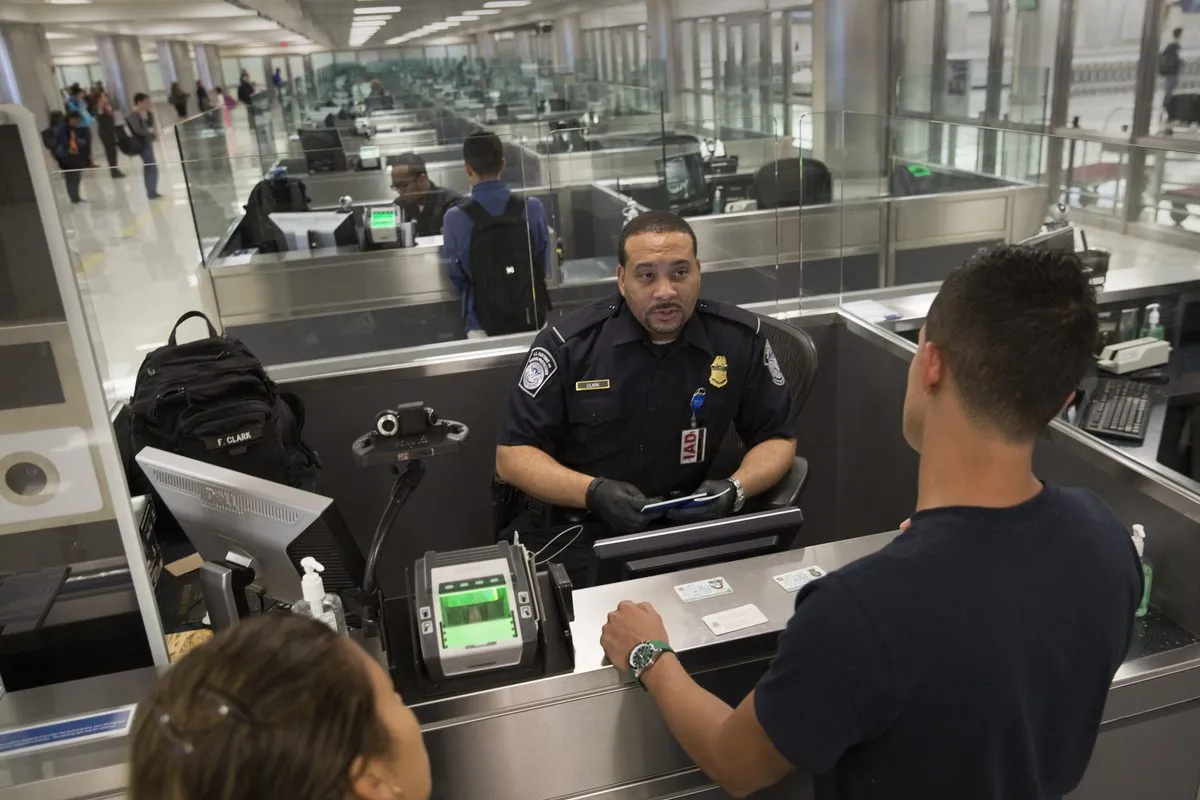
The United States government has officially transitioned its visa bond pilot program into a permanent regulatory fixture, requiring select international travelers to post significant financial collateral before being granted entry into the country. Under the finalized rule, which was formally entered into the Federal Register on August 3, the Department of State and the Department of Homeland Security (DHS) now have the permanent authority to demand bonds ranging from $5,000 to $20,000 from applicants seeking B1 (business) and B2 (tourist) visas. This measure specifically targets nationals from countries identified as having high rates of visa overstays, aiming to create a powerful financial incentive for foreign visitors to comply with the terms of their admission and depart the United States within their authorized period of stay.
The implementation of this final rule marks the culmination of a multi-year effort to refine border enforcement mechanisms and reduce the administrative burden associated with tracking and deporting individuals who remain in the country illegally after their non-immigrant visas expire. By shifting the financial risk onto the traveler, the U.S. government seeks to mitigate the long-standing issue of "visa jumping," where individuals enter the country under the guise of temporary tourism or business but intend to reside or work indefinitely.
The Mechanics of the Visa Bond Program
The visa bond program functions as a form of security deposit. When a consular officer determines that an applicant for a B1 or B2 visa poses a significant risk of overstaying—based on established statistical data and individual interview assessments—they may require the applicant to post a bond as a condition of visa issuance. The bond amounts are typically set at $5,000, $10,000, or $15,000, though the regulation allows for amounts up to $20,000 in specific high-risk scenarios.
To recover the bond, the traveler must strictly adhere to the conditions of their visa. This includes departing the United States on or before the date specified by Customs and Border Protection (CBP) at the port of entry. Furthermore, the finalized rule stipulates that compliance must be verified through specific channels; travelers are generally required to arrive and depart via commercial air carriers, which provide electronic manifests to the U.S. government. Departures via land or sea ports may require additional manual verification to ensure the bond is successfully processed for a refund. If a traveler overstays their visa by even a single day, or violates other terms of their status (such as engaging in unauthorized employment), the bond is forfeited to the U.S. Treasury.
Chronology of the Program’s Development
The journey toward a permanent visa bond system began in earnest during the latter half of the 2010s, as the Department of Homeland Security began publishing more granular data regarding visa overstay rates. In 2019, the administration issued a memorandum directing the Secretary of State and the Secretary of Homeland Security to develop strategies to reduce overstay rates, specifically targeting countries with overstay rates higher than 10%.
In late 2020, a six-month pilot program was introduced. This pilot was designed to test the feasibility of the bond system and to determine if financial collateral actually influenced traveler behavior. Despite the global travel disruptions caused by the COVID-19 pandemic, the pilot provided enough preliminary data for federal agencies to argue for its permanence. Throughout 2021 and 2022, the program underwent a period of internal review and public comment. The final rule published on August 3 represents the conclusion of this administrative process, integrating feedback from legal experts, travel industry stakeholders, and international diplomatic partners.
Statistical Justification and Targeted Nations
The decision to make the visa bond program permanent is rooted in data provided by the DHS Annual Overseas Report. According to recent figures, while the vast majority of visitors to the United States depart on time, certain nations consistently exhibit overstay rates that exceed the national average.
In the fiscal years leading up to the pilot program, several countries—primarily in Africa and parts of Asia—recorded overstay rates well above 10%. For example, countries such as Angola, Chad, Djibouti, Eritrea, Liberia, Libya, and Sudan have historically been flagged in DHS reports. The program does not apply to all travelers from these nations, but rather gives consular officers a specific tool to use when an applicant’s individual ties to their home country—such as employment, property ownership, or family—are deemed insufficient to guarantee their return, yet the applicant is not otherwise ineligible for a visa.
The State Department argues that the bond program actually increases the chances of visa approval for some "borderline" applicants. In the past, an applicant with weak ties to their home country might have faced an outright rejection under Section 214(b) of the Immigration and Nationality Act, which presumes every immigrant is an intending immigrant. With the bond program, the consular officer has a middle-ground option: granting the visa contingent upon a financial guarantee.
Official Responses and Diplomatic Considerations
The finalization of the rule has met with a range of reactions from official bodies and international observers. Proponents within the federal government emphasize the program’s role in national security and the rule of law. A spokesperson for the Department of State noted that the program is a "measured response to a persistent challenge," asserting that it provides a "necessary deterrent against those who would circumvent the legal immigration process."
However, the program has faced criticism from diplomatic circles and human rights organizations. Several affected nations have expressed concern that the bond requirement places an undue financial burden on their citizens, effectively creating a wealth-based barrier to international travel. Diplomatic representatives from the African Union have previously noted that a $15,000 bond is several times the average annual income in many of the targeted countries, making it nearly impossible for legitimate business travelers or students’ families to visit the United States.
Within the U.S., immigration advocacy groups have raised questions regarding the transparency of the program. Organizations such as the American Immigration Lawyers Association (AILA) have called for clearer guidelines on how consular officers determine the bond amount and what specific criteria are used to "risk-rate" an applicant. There are concerns that without strict oversight, the program could be applied inconsistently or based on subjective biases.
Broader Economic and Travel Industry Impact
The travel and tourism sector, a vital component of the U.S. economy, has monitored the development of the visa bond program with a degree of apprehension. The U.S. Travel Association has highlighted that while border security is paramount, overly restrictive visa policies can deter legitimate international visitors, leading to a loss in tourism revenue.
In 2023, international travelers spent hundreds of billions of dollars in the United States. While the bond program targets a relatively small subset of total visitors, industry analysts suggest that the "chilling effect" of such policies can extend beyond the targeted countries. There is a risk that the U.S. could be perceived as an unwelcoming destination, prompting high-net-worth individuals and business leaders from emerging markets to seek opportunities in Europe or Asia instead.
Furthermore, there is the potential for diplomatic reciprocity. In international relations, visa policies are often met with tit-for-tat responses. If the United States imposes a $20,000 bond on citizens of a specific country, that country may choose to impose similar financial or administrative hurdles on American citizens traveling abroad for business or leisure.
Analysis of Legal and Administrative Implications
From a legal perspective, the visa bond program operates under the broad discretionary authority granted to the Executive Branch in matters of immigration and national security. However, the permanence of the rule may invite legal challenges centered on the Administrative Procedure Act (APA). Critics may argue that the government has not provided sufficient evidence that the bond program is the most effective or least restrictive means of reducing overstays.
Administratively, the program requires a sophisticated infrastructure to manage the collection, holding, and disbursement of funds. The DHS must coordinate with financial institutions to ensure that bonds are held in escrow and that refunds are processed efficiently once a traveler’s departure is verified. Any significant delays in returning funds to compliant travelers could result in further legal action and damage the reputation of the U.S. visa system.
The finalized rule also includes provisions for "surety bonds," where a third-party company in the U.S. can guarantee the bond on behalf of the traveler for a fee. This could lead to the emergence of a niche insurance market catering to high-risk visa applicants, though the costs and accessibility of such services remain to be seen.
Future Outlook and Monitoring
As the visa bond program moves from a pilot phase to a permanent fixture of U.S. immigration policy, the government has committed to ongoing monitoring of its effectiveness. The Department of State and DHS will likely continue to publish annual data on overstay rates to determine if the financial deterrent is achieving its stated goals.
The success of the program will be measured not only by a decrease in overstay percentages but also by the administrative efficiency of the bond process. If the program succeeds in reducing illegal stays without significantly hindering legitimate travel or causing diplomatic rifts, it may serve as a model for other nations facing similar immigration challenges. Conversely, if the program leads to a sharp decline in legitimate business and tourism from key emerging regions, or if it becomes mired in legal and administrative complications, it may face future legislative or executive revisions.
For now, the August 3 implementation marks a significant shift in how the United States manages the risk associated with non-immigrant entry. Travelers from high-risk nations must now prepare for a more rigorous—and potentially much more expensive—application process, as the U.S. reinforces its borders with a new layer of financial accountability.