The Emergence of the Citroen Holidays
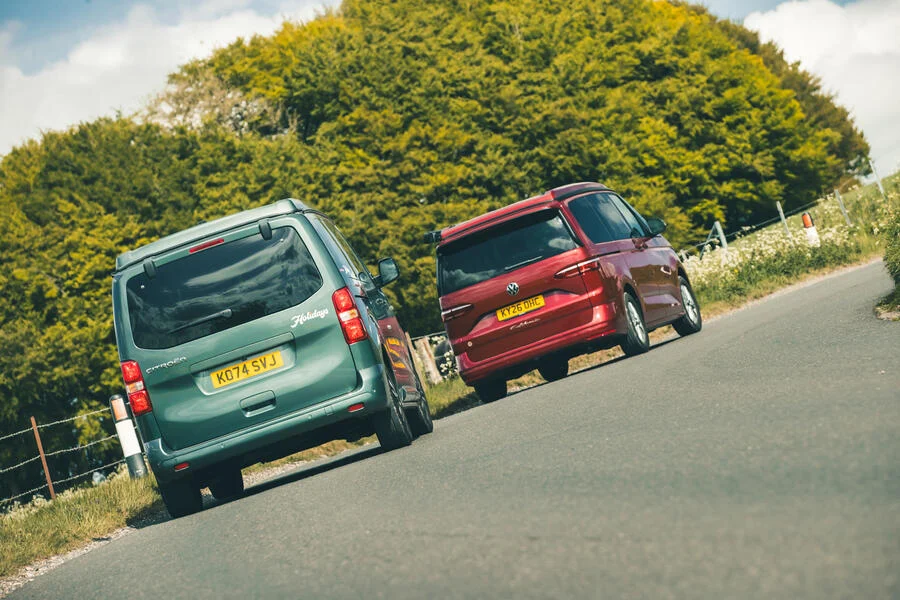
The Citroen Holidays represents a comprehensive effort by the French manufacturer to provide a turnkey solution for outdoor enthusiasts. Built upon the recently updated Spacetourer platform, the Holidays is not merely a van with a mattress thrown in the back; it is a meticulously engineered living space designed to compete directly with the refinement and utility of the Volkswagen T7 California.
Key features of the Citroen Holidays include a pop-up roof that provides standing room and a secondary sleeping area, a modular interior that can accommodate four passengers, and a fully functional kitchenette equipped with a gas stove, sink, and refrigerator. To ensure year-round usability, Citroen has integrated a Webasto heating system and enhanced insulation, addressing one of the primary concerns of seasonal campers. The vehicle also features 180-degree swiveling front seats, allowing the cabin to transform into a dining or social lounge within minutes.
The Volkswagen California: A Seventy-Five Year Legacy
To understand the magnitude of Citroen’s challenge, one must look at the history of the Volkswagen California. The lineage of the VW camper traces back to 1950 with the introduction of the Type 2, affectionately known as the "Splittie" or "Bulli." While third-party conversions like Westfalia dominated the early decades, Volkswagen officially brought the "California" nameplate in-house in 2004 with the T5 generation.
Since that official debut two decades ago, Volkswagen has sold over 200,000 units of the California, establishing it as a cult icon and a staple of European coastal roads and mountain passes. The latest iteration, based on the T7 Multivan, utilizes the MQB platform, which brings passenger-car levels of refinement, safety technology, and plug-in hybrid (PHEV) powertrain options to the camper segment for the first time. The California’s reputation is built on its "dual-purpose" nature—it is small enough to serve as a daily driver and fit into standard multi-storey car parks (remaining under two meters in height), yet capable enough to sustain a family of four on a cross-continental journey.
Comparative Specifications and Technical Data
The competition between the Citroen Holidays and the VW California is largely defined by their technical underpinnings and spatial efficiency.
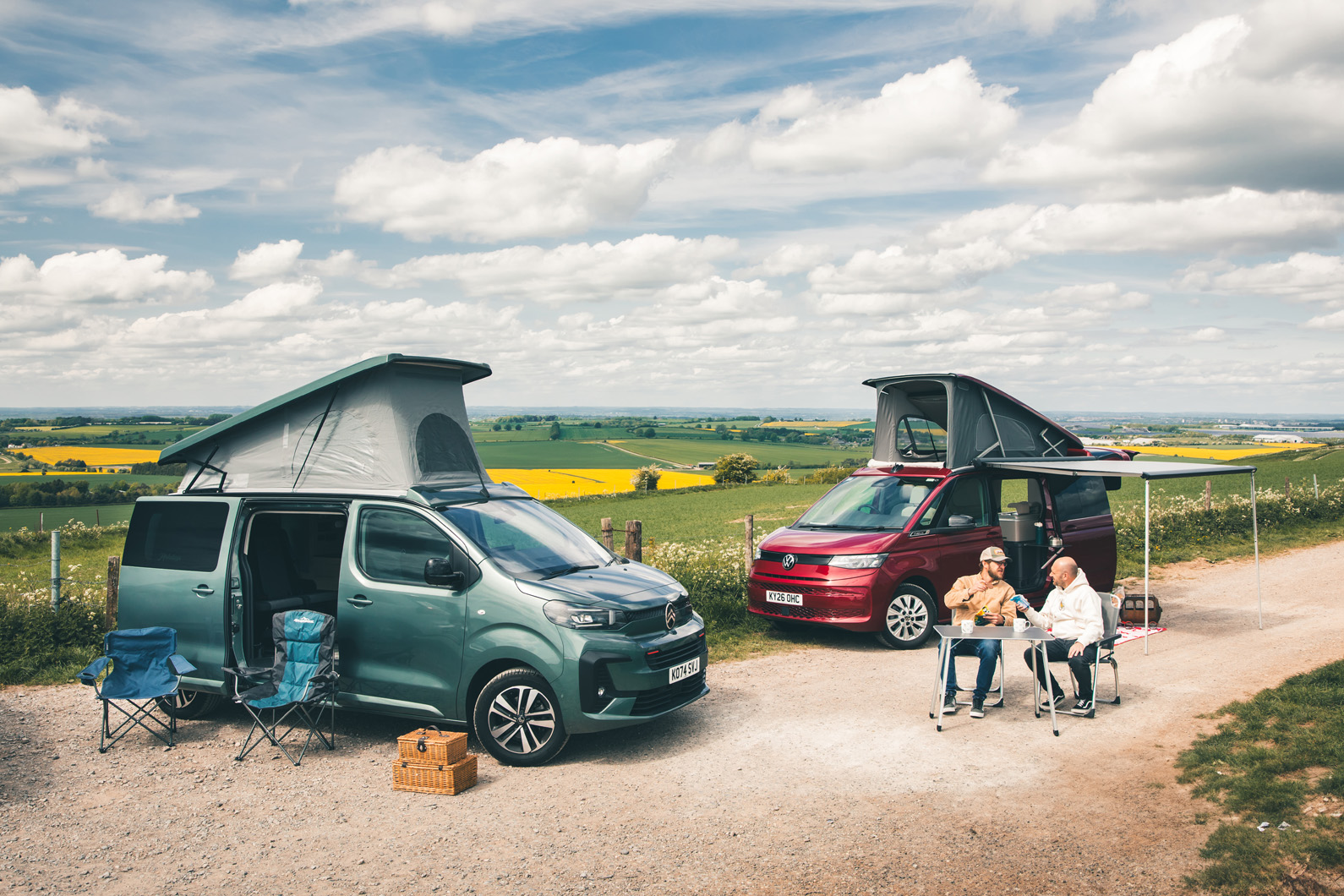
| Feature | Citroen Holidays (BlueHDi 145) | VW California T7 (2.0 TDI) |
|---|---|---|
| Length | Approx. 4.98m | Approx. 5.17m |
| Height | Under 1.99m | Under 1.99m |
| Engine Options | 2.0L Diesel (145hp/180hp) | 2.0L Diesel / 1.5L PHEV |
| Transmission | 6-speed Manual / 8-speed Auto | 7-speed DSG |
| Sleeping Capacity | 4 Persons | 4 Persons |
| Starting Price (Est) | £55,000 – £58,000 | £65,000 |
While the Volkswagen California T7 has grown in length to accommodate its new platform, the Citroen Holidays remains slightly more compact, which may appeal to urban dwellers. However, Volkswagen’s introduction of the eHybrid 4Motion drivetrain in the T7 offers a level of mechanical sophistication and tax efficiency that Citroen’s traditional diesel-heavy lineup may struggle to match in certain markets. Citroen counters this with its proven BlueHDi engines, which are renowned for their long-distance cruising efficiency and torque, essential for a vehicle carrying the weight of a built-in kitchen and water tanks.
Chronology of the Compact Camper Evolution
The evolution of the factory-built camper has moved through several distinct phases:
- 1950–1980s: The era of the specialist converter. Volkswagen supplied "empty" vans to companies like Westfalia, who handled the interior cabinetry and pop-top installations.
- 1988–2003: Volkswagen began marketing the California nameplate, though production was still handled by Westfalia.
- 2004–2023: The T5 and T6 generations marked the era of "In-House" production. Volkswagen moved manufacturing to a dedicated facility in Hanover, ensuring automotive-grade quality control for the living quarters.
- 2024–Present: The "Lifestyle Integration" era. Citroen joins the fray with the Holidays, and Mercedes-Benz continues to refine the Marco Polo. The focus has shifted from "rugged camping" to "digital nomadism," with integrated Wi-Fi, touch-screen control panels for utilities, and advanced driver assistance systems (ADAS).
Market Context and the "Van Life" Phenomenon
The timing of Citroen’s entry is no coincidence. The global campervan market experienced an unprecedented surge following the COVID-19 pandemic, as travelers sought socially distanced ways to holiday. This demand has led to a sustained increase in residual values for used campers and a multi-year waiting list for new Volkswagen Californias.
By entering the market now, Citroen is positioning itself as a value-driven alternative. While the VW California T7 can easily exceed £75,000 when equipped with popular options like the "Ocean" trim, Citroen is expected to undercut this pricing significantly. Industry analysts suggest that Citroen’s strategy involves leveraging the economies of scale provided by the Stellantis Group (which also owns Peugeot, Fiat, and Vauxhall) to offer similar utility at a lower price point.
Official Positioning and Industry Reactions
Citroen executives have framed the Holidays as an extension of the brand’s philosophy of "comfort and freedom." In official statements, the company emphasizes that the Holidays is designed to be a "mobile cocoon," echoing the comfort-centric suspension tuning found in their passenger cars like the C5 X.
Industry experts note that Citroen’s move is a defensive-offensive maneuver. For years, the Citroen Jumpy/Spacetourer has been a favorite for independent conversion companies like Pössl (with their Campster model). By launching the Holidays, Citroen is essentially bringing that revenue stream in-house, ensuring that the profit margins from the expensive camping equipment stay with the manufacturer rather than third-party outfits.
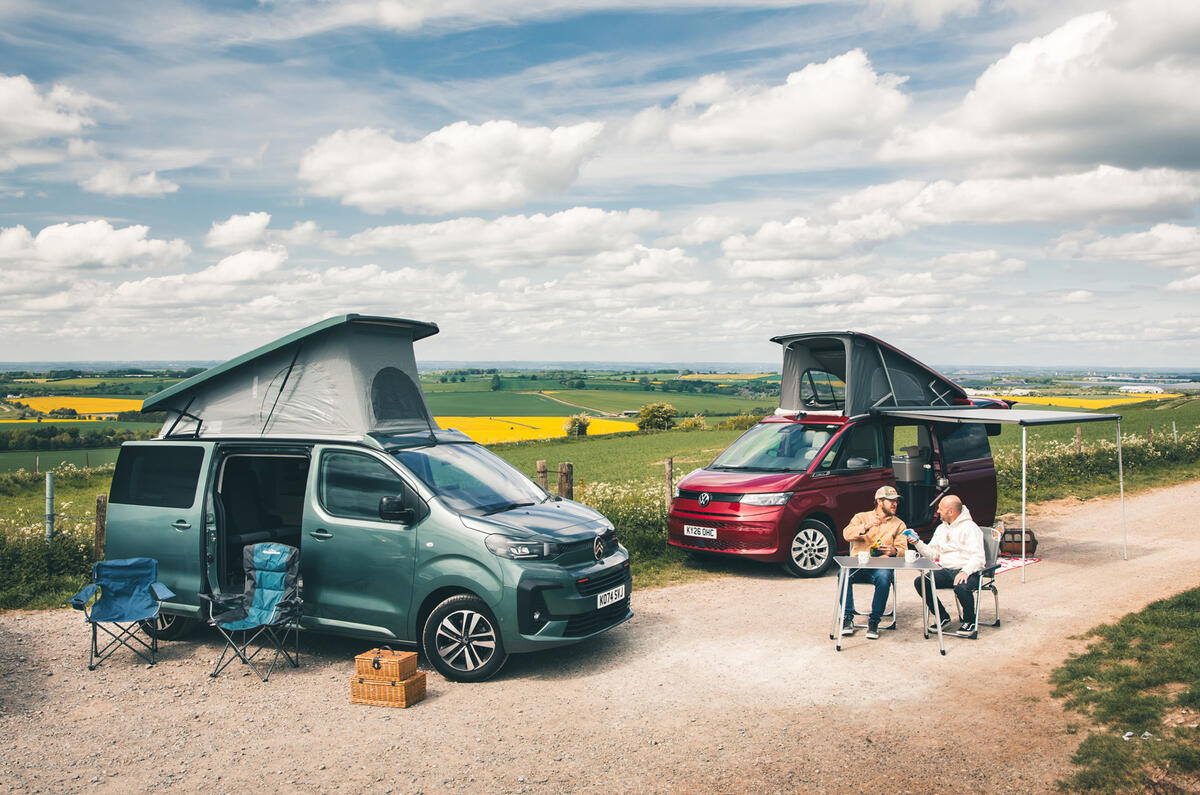
Volkswagen, meanwhile, remains confident in its premium positioning. A spokesperson for VW Commercial Vehicles recently highlighted that the California is "more than a van; it is a brand in itself," pointing to the dedicated "California on Tour" app and the massive global community of owners that Citroen has yet to cultivate.
Infrastructure and Practical Implications
For the consumer, the choice between these two "ultimate sleepers" often comes down to practicalities beyond the spec sheet.
- Service Network: Both brands offer extensive European service networks, which is vital for long-distance travelers. However, VW’s dedicated "Van Centres" are specifically equipped to handle the unique requirements of heavy campers.
- The "Two-Door" Advantage: The new VW California T7 features sliding doors on both sides of the vehicle for the first time, a layout made possible by moving the kitchen unit slightly. This allows for better ventilation and easier access. The Citroen Holidays traditionally relies on a single-side sliding door (though configurations vary), which can limit campsite layout options.
- Weight and Payload: Both vehicles hover near the 2.5-tonne mark. Prospective owners must be mindful of payload capacities; once four passengers, water, fuel, and luggage are added, these vehicles operate close to their Gross Vehicle Weight (GVW) limits, affecting braking distances and handling.
Broader Impact on the Automotive Industry
The arrival of the Citroen Holidays is likely to spark a "campervan arms race" among other manufacturers. Rumors suggest that Ford is looking to expand its "Nugget" range, and Renault is refining its "Hippie Caviar" concepts for production.
Furthermore, this competition is accelerating the electrification of the segment. While heavy batteries currently pose a challenge for campervan payloads and range, the pressure from Citroen and Volkswagen is pushing engineers to find innovative solutions, such as ultra-thin solar films for pop-up roofs and vehicle-to-load (V2L) technology that allows the van’s traction battery to power induction hobs and coffee machines.
In conclusion, while the Volkswagen California remains the spiritual and market leader of the campervan world, the Citroen Holidays arrives as a formidable and likely more affordable challenger. It offers a modern, comfortable, and factory-warrantied alternative that may finally break the German icon’s monopoly. For the consumer, this rivalry means more innovation, better interior ergonomics, and a broader range of price points in a segment that shows no signs of slowing down. Whether Citroen can truly "beat" the California will depend on its ability to match VW’s legendary build quality and the intangible "cool factor" that has defined the California for twenty years.