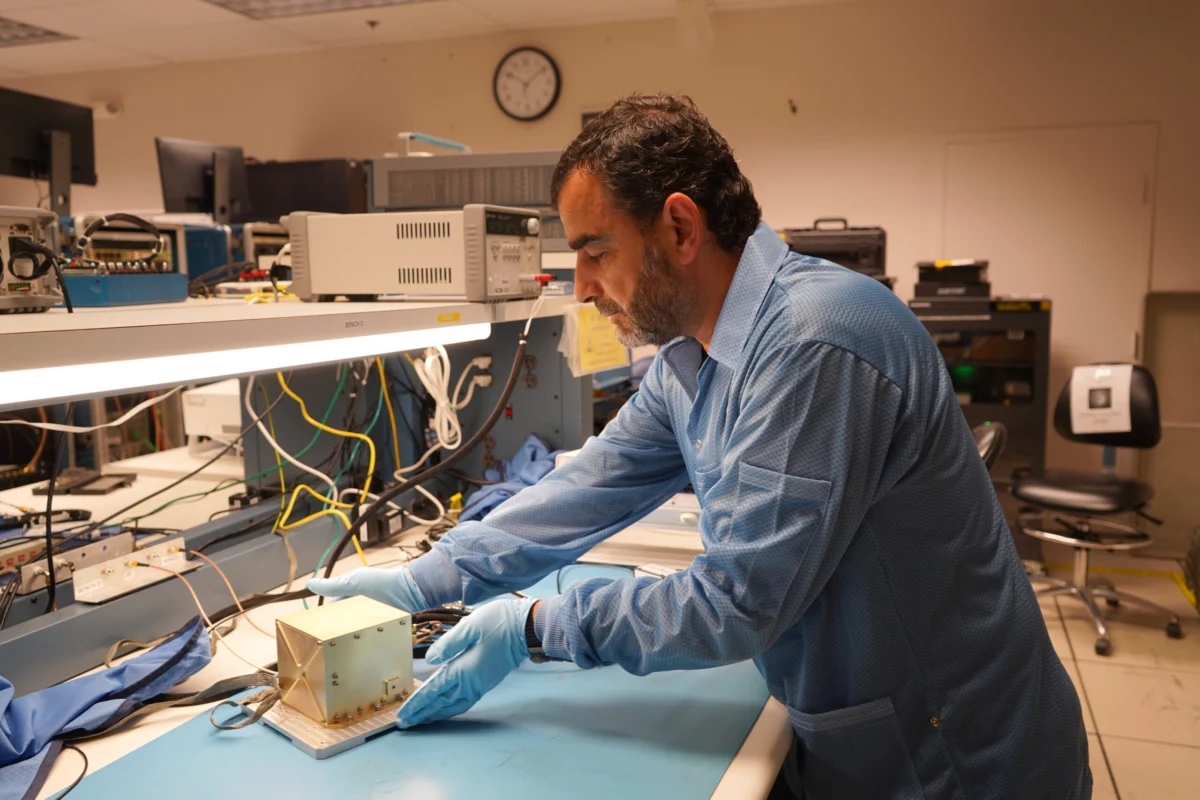
NASA marked a significant milestone in the development of future lunar communications and navigation services on July 13, 2026, with the delivery of its advanced NavCube3-mini payload to Intuitive Machines. The compact yet powerful navigation receiver is slated for integration into Altus-1, the company’s inaugural lunar relay satellite. This crucial step underscores NASA’s commitment to establishing robust communications and precise navigation capabilities essential for astronauts and robotic missions operating at the agency’s envisioned Moon Base and across the lunar surface.
The NavCube3-mini: A Leap in Lunar Positioning Technology
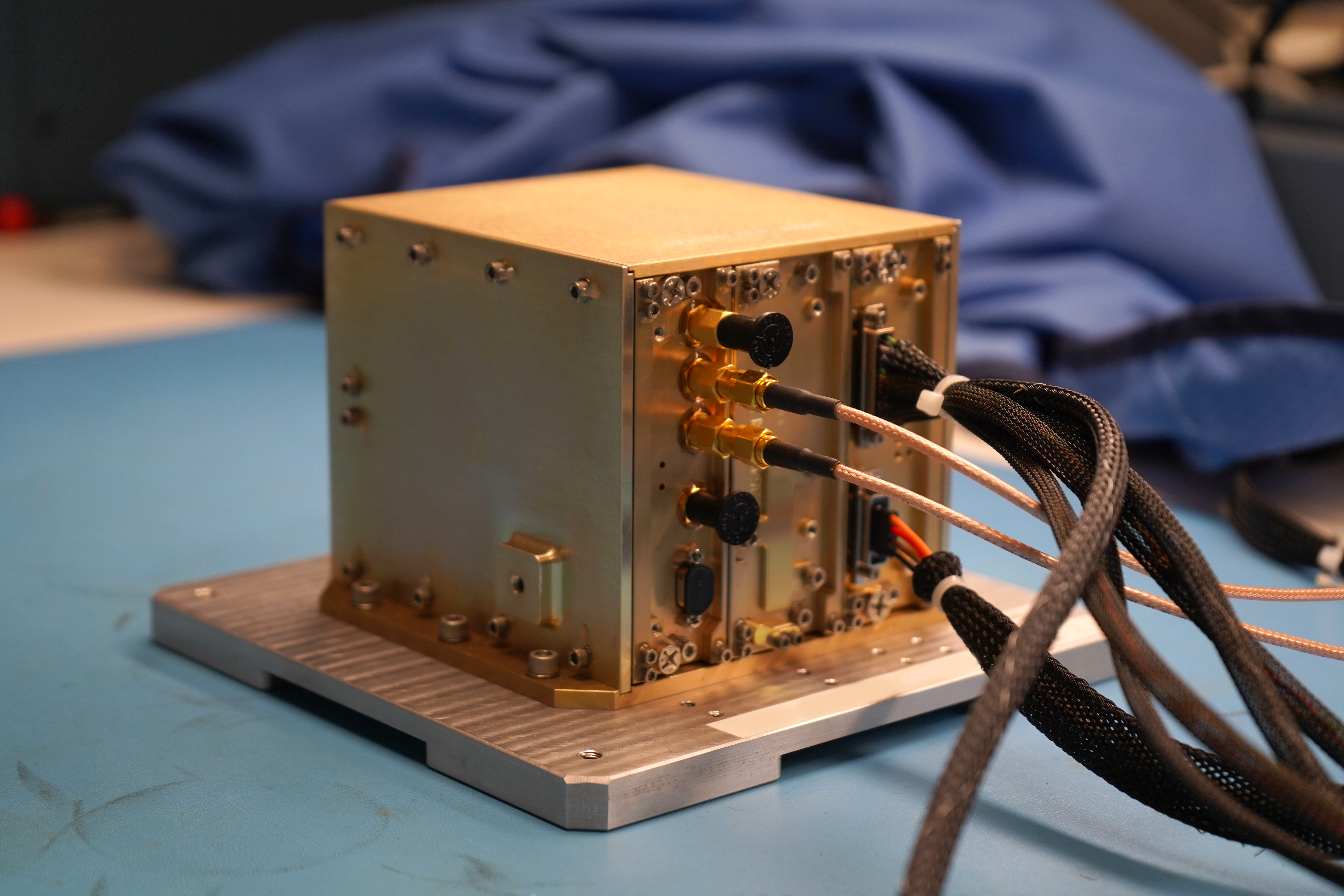
Weighing a mere 3.5 pounds and approximately half the size of a standard shoebox, the NavCube3-mini represents a remarkable achievement in miniaturized space technology. Its primary function is to leverage signals from Earth-based Global Navigation Satellite Systems (GNSS), specifically the United States’ GPS and Europe’s Galileo constellations, to determine a spacecraft’s precise position far beyond Earth orbit. Operating on less than 20 watts of power – comparable to a typical laptop computer – this device is designed to overcome the inherent challenges of receiving faint GNSS signals at lunar distances, which are significantly weaker than those received in Earth orbit due to the immense range.
The development of NavCube3-mini builds upon a rich legacy of navigation technology advancements spearheaded by NASA’s Goddard Space Flight Center in Greenbelt, Maryland. For years, Goddard engineers have been pushing the boundaries of space navigation, extending the reach of GPS signals to unprecedented distances from Earth. Prior successes include the Magnetospheric Multiscale (MMS) mission, which utilized GPS receivers at altitudes of up to 70,000 kilometers (approximately 43,500 miles), and the Orion Exploration Flight Test-1 (EFT-1) in 2014, which demonstrated GPS acquisition at over 5,800 kilometers (3,600 miles). Even the Lunar Reconnaissance Orbiter (LRO) has successfully acquired GPS signals while in lunar orbit, paving the way for the NavCube series. These previous achievements have been instrumental in refining the algorithms and hardware necessary for NavCube3-mini to reliably process these attenuated signals at the Moon, roughly 384,400 kilometers (238,900 miles) away. The ability to autonomously navigate using these commercial-off-the-shelf-derived signals reduces reliance on Earth-based tracking stations, thereby freeing up valuable deep space network resources and enhancing mission autonomy.
Intuitive Machines and the Altus-1 Lunar Relay Network
The NavCube3-mini’s maiden flight aboard Altus-1 is a cornerstone of a planned network of lunar relay satellites. This network is being developed by Intuitive Machines under its Near Space Network Services contract with NASA, an agreement that exemplifies NASA’s strategic pivot towards leveraging commercial capabilities for space exploration. Intuitive Machines, already a key commercial partner in NASA’s Commercial Lunar Payload Services (CLPS) initiative, has demonstrated its capability through lunar landers like Nova-C. The Altus-1 satellite, therefore, is not merely a single mission but the vanguard of a broader commercial infrastructure designed to provide essential communications and navigation support for the burgeoning lunar ecosystem.
The lunar relay network is specifically engineered to address critical communication and navigation gaps, particularly for missions operating in challenging lunar regions. The Moon’s rugged topography, including deep craters and mountains, can create communication "shadows" where direct line-of-sight to Earth is obstructed. This is especially true for the lunar South Pole region, a primary target for NASA’s Artemis missions due to the potential presence of water ice in permanently shadowed craters. By positioning relay satellites in strategic lunar orbits, Altus-1 and its successors will ensure continuous connectivity, allowing data to flow seamlessly between Earth, lunar surface assets, and orbiting spacecraft, even when direct communication with Earth is impossible. This continuous link is paramount for mission control, scientific data transmission, and the safety of human explorers.
Paving the Way for Artemis and Sustainable Lunar Presence
The deployment of the NavCube3-mini and the establishment of the Altus lunar relay network are integral to realizing NASA’s ambitious Artemis program goals. Artemis aims to return humans to the Moon, land the first woman and first person of color on the lunar surface, and establish a sustainable human presence as a stepping stone for future human missions to Mars. A key objective of Artemis is to land astronauts at the lunar South Pole by 2028, a region of immense scientific interest due to its potential resources.
However, operating in the lunar South Pole presents unique challenges. The region is characterized by extreme terrain, including deep craters and areas of perpetual darkness, which complicate navigation and communication. For instance, the low sun angles at the poles mean long shadows can obscure landmarks, making traditional optical navigation difficult. Furthermore, the topography can block direct radio links to Earth, creating isolated operational zones. The Altus relay network, equipped with NavCube3-mini, will mitigate these issues by providing continuous, high-bandwidth communication and precise positioning data. This capability is vital for the safety of astronauts, enabling them to communicate with mission control, receive critical data, and navigate complex terrain with unprecedented accuracy. For robotic rovers and landers, robust navigation means more efficient resource prospecting, safer transit, and the ability to operate autonomously in previously inaccessible areas. The "Moon Base" concept, central to NASA’s long-term lunar vision, will rely heavily on such infrastructure to support habitat construction, scientific research, resource extraction, and prolonged human habitation.
Rigorous Testing Ensures Spaceflight Readiness
Before its delivery to Intuitive Machines, the NavCube3-mini underwent an exhaustive environmental and performance test campaign at NASA Goddard Space Flight Center, a critical phase designed to certify its readiness for the harsh realities of spaceflight. This rigorous testing regime is a standard practice for all space-bound hardware, ensuring reliability and functionality under extreme conditions.
Environmental testing included:
- Vibration Testing: The payload was subjected to intense shaking that simulated the violent forces and acoustic environments experienced during a rocket launch. This ensures the structural integrity of the components and their ability to withstand the journey into space.
- Thermal Vacuum Testing: NavCube3-mini was placed in a vacuum chamber where temperatures were cycled through the extreme highs and lows encountered in space – from scorching sunlight to frigid shadow. This test verifies that the electronics and materials can operate reliably without degradation in the vacuum of space and across vast temperature fluctuations.
- Electromagnetic Compatibility (EMC) Testing: This crucial test ensures that the payload can operate harmoniously alongside other sensitive spacecraft systems without causing or experiencing electromagnetic interference. In a complex satellite environment, uncontrolled electromagnetic emissions can disrupt other instruments, leading to mission anomalies.
Alongside these environmental trials, comprehensive performance testing was conducted both before and after each environmental test. Engineers utilized high-fidelity simulations of the GPS and Galileo signals that NavCube3-mini will encounter in lunar orbit. These simulations meticulously recreated the weak signal strength, Doppler shifts, and orbital dynamics pertinent to the lunar environment. By verifying the payload’s functionality and performance throughout the entire testing campaign, NASA has ensured that NavCube3-mini is robust, reliable, and ready to meet the demands of its mission aboard Altus-1.
Strategic Implications and the Future of Lunar Infrastructure
The NavCube3-mini’s mission aboard Altus-1 will serve as a pivotal technology demonstration, validating the use of GNSS-based navigation in the vast lunar region. The valuable performance data gathered from this flight will be instrumental in informing and supporting the development of future lunar navigation infrastructure. This initiative is a cornerstone of NASA’s broader strategy to cultivate comprehensive communications and navigation services that integrate capabilities from both commercial providers and NASA’s own networks.
This hybrid approach is designed to foster a dynamic and resilient lunar ecosystem capable of supporting an ever-increasing array of missions, including orbiting spacecraft, landers, rovers, and eventually, astronauts living and working on the Moon. The ability to precisely locate assets and maintain continuous communication will unlock new possibilities for scientific discovery, resource prospecting, and the establishment of permanent lunar outposts. The vision extends beyond simple positioning; it aims to create a robust Positioning, Navigation, and Timing (PNT) service for the Moon, analogous to what GNSS provides on Earth. Such an infrastructure will enable enhanced autonomy for lunar vehicles, reducing the need for constant human oversight and allowing for more complex operations. It will also significantly improve safety margins for human explorers, providing real-time location data in emergency situations and facilitating efficient rendezvous and docking procedures for spacecraft.
Statements from Key Stakeholders
"The delivery of NavCube3-mini marks a pivotal moment in our journey towards establishing a sustainable human presence on the Moon," stated Dr. Jennifer Dooren, Program Manager for NASA’s Space Communications and Navigation (SCaN) program, in a recent briefing. "Our collaboration with Intuitive Machines is critical. By integrating advanced technologies like NavCube3-mini into commercial lunar infrastructure, we are not only pushing the boundaries of navigation but also fostering a robust lunar economy. This payload is more than just a piece of hardware; it’s a testament to ingenuity and a crucial enabler for Artemis and future deep space missions."
From Intuitive Machines, Timothy Crain, Chief Technology Officer, commented, "We are immensely proud to integrate NASA’s NavCube3-mini into Altus-1. This payload is a cornerstone of our efforts to build a comprehensive lunar communications and navigation network. Altus-1 represents the initial stride in creating an orbital infrastructure that will serve all lunar explorers, both governmental and commercial. Our team is working diligently to ensure seamless integration and prepare Altus-1 for its critical mission, which will revolutionize how we operate on and around the Moon."
An independent space policy analyst, Dr. Eleanor Vance, added, "This collaboration between NASA and Intuitive Machines is a prime example of how leveraging private sector agility and innovation can accelerate space exploration goals. The NavCube3-mini, as part of the Altus network, isn’t just about better GPS on the Moon; it’s about building the fundamental utilities for a future lunar economy. It allows for scalability, reduces government overhead, and encourages more players to enter the lunar domain, ultimately making lunar exploration safer, more affordable, and more accessible."
Chronology and Outlook
The July 13 delivery of NavCube3-mini to Intuitive Machines for integration into Altus-1 sets the stage for a launch expected later in 2026. This launch will initiate the crucial in-space demonstration of GNSS-based navigation at lunar distances, providing invaluable data for the broader Altus network. As subsequent Altus satellites are deployed, they will gradually form a robust, interconnected relay system around the Moon, systematically expanding communication coverage and refining navigation services.
This sustained effort, highlighted by this recent delivery, represents a fundamental shift in how NASA approaches lunar infrastructure. By building on partnerships with commercial providers like Intuitive Machines, NASA is actively constructing a more connected, resilient, and capable lunar environment. As activity around the Moon continues to grow in the coming years, driven by international missions, commercial ventures, and the Artemis program’s return of humans, these advanced capabilities will be indispensable. They will empower lunar spacecraft and explorers to operate with unprecedented safety, efficiency, and autonomy, ushering in a new era of lunar exploration and discovery. The long-term vision is clear: a fully integrated lunar communications and navigation system that transforms the Moon from a distant destination into a dynamic, accessible, and sustainably explored frontier.