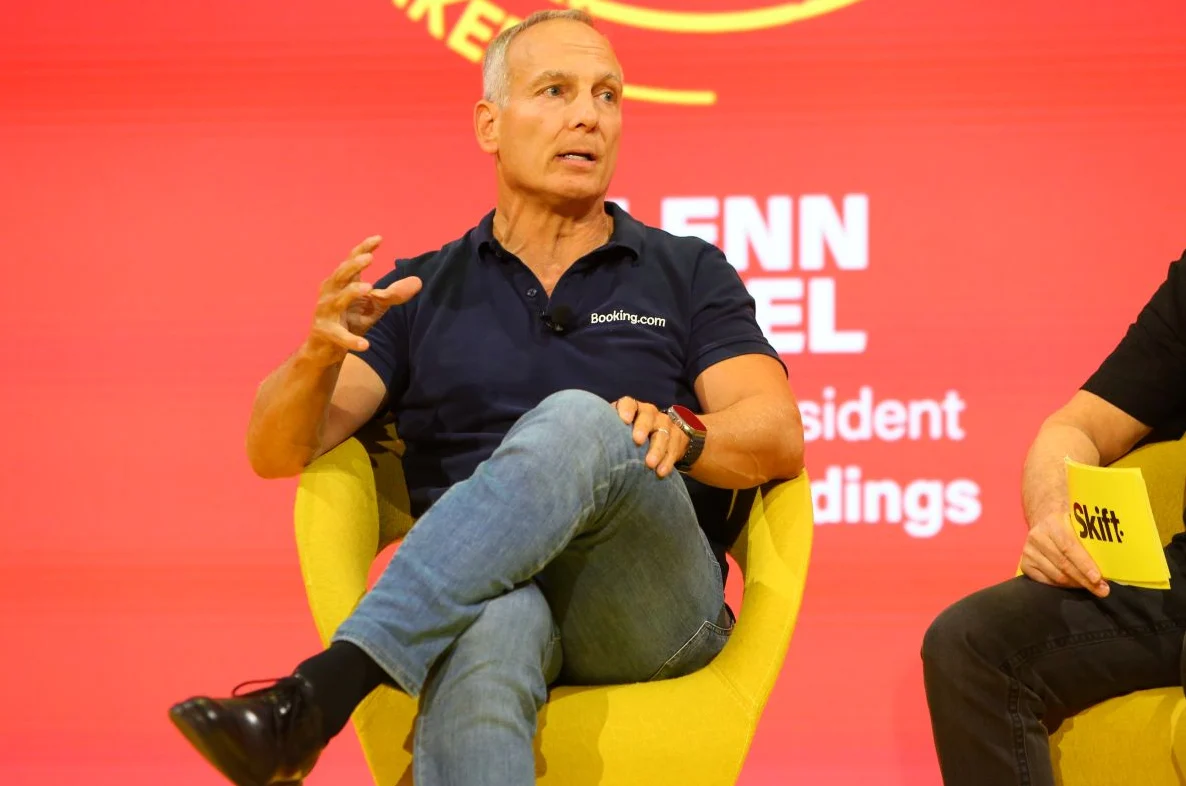
Booking Holdings, the parent company of travel giants such as Booking.com, Priceline, and Agoda, has officially acknowledged a measurable shift in the digital marketing environment, citing pressure on organic search traffic resulting from Google’s integration of artificial intelligence into its search engine. During the company’s second-quarter 2024 earnings call, Chief Executive Officer Glenn Fogel confirmed that the rollout of Google’s AI Overviews—a feature that provides AI-generated summaries at the top of search result pages—has begun to impact the traditional search engine optimization (SEO) landscape. While Fogel emphasized that the impact remains a relatively small portion of the company’s total business, the admission highlights a pivotal moment in the relationship between major online travel agencies (OTAs) and the world’s dominant search platform.
The core of the issue lies in the displacement of "blue links," the traditional organic search results that have long been the lifeblood of free traffic for web-based businesses. As Google prioritizes AI-generated content that answers user queries directly on the search results page, the visibility of external websites is being pushed further down the screen, particularly on mobile devices. Fogel’s remarks to analysts underscore a growing concern within the travel industry: that the "silver bullet" for maintaining prominence within evolving Large Language Models (LLMs) remains elusive, and that the rules of digital discovery are being rewritten in real-time.
The Shift from Traditional Search to AI Overviews
To understand the pressure currently felt by Booking Holdings, one must look at the technical evolution of Google Search. For decades, the search engine operated on a referral model, where a user’s query resulted in a list of external websites. In the second quarter of 2024, Google accelerated the rollout of what was previously known as the Search Generative Experience (SGE), rebranding it as AI Overviews. This system uses generative AI to synthesize information from across the web, providing a comprehensive answer that often precludes the need for a user to click through to a secondary site.
For a travel company, this is particularly disruptive. If a user searches for "best hotels in Amsterdam," Google’s AI may now provide a curated list, pricing summaries, and descriptive text within the Google interface itself. This "zero-click" trend means that even if Booking.com is the source of some of that data, the user may never land on Booking’s platform to finalize the transaction, or may only do so through a paid advertisement rather than an organic link. Fogel noted that while he does not like "losing SEO," the company is monitoring the situation closely to adapt its marketing spend and technical infrastructure.
Chronology of the SEO Transition and Q2 Performance
The timeline of this disruption began in earnest in May 2024, during the Google I/O developer conference, where the tech giant announced that AI Overviews would be rolled out to hundreds of millions of users in the United States, with global expansion to follow. This coincided almost exactly with the peak of the second-quarter booking season for the summer travel period.
Booking Holdings reported its second-quarter results against this backdrop of technological change. Despite the SEO headwinds, the company’s financial performance remained robust, though it showed signs of a normalizing travel market. In Q2 2024, Booking Holdings reported a total of 287 million room nights booked, representing a 7% increase year-over-year. Revenue grew by 7% to $5.9 billion, while net income rose to $1.5 billion. However, the company’s guidance for the third quarter was more conservative than some analysts expected, which, combined with the commentary on SEO pressure, led to a temporary dip in share price following the announcement.
The company’s reliance on paid search remains its primary defense against organic volatility. Booking Holdings is one of Google’s largest advertising clients, spending billions of dollars annually on performance marketing. In 2023 alone, the company’s marketing expenses surpassed $6.8 billion, the vast majority of which was directed toward digital channels like Google Search and Meta. Fogel clarified that because paid search is a significantly larger driver of volume than organic SEO for Booking, the current AI-driven shifts are manageable, but they necessitate a strategic pivot toward direct customer acquisition.
The Strategy of Direct Traffic and the "Connected Trip"
A critical data point revealed by Fogel during the earnings call was the resilience of Booking’s direct traffic. Currently, direct bookings—where users go straight to the Booking.com app or website without using a search engine—account for a percentage in the mid-60s of the company’s total business. Fogel emphasized that this metric "hasn’t gone down at all," suggesting that brand loyalty and app penetration are providing a necessary buffer against Google’s algorithmic changes.
The long-term solution to SEO pressure, according to Booking’s leadership, is the "Connected Trip" vision. This strategy involves creating a holistic travel ecosystem where flights, accommodations, ground transportation, and attractions are integrated into a single seamless experience. By providing a superior user interface and a comprehensive loyalty program (Genius), Booking aims to become the starting point for travel planning, effectively bypassing the search engine layer entirely.
The success of the mobile app is central to this goal. In Q2, about 53% of total room nights were booked through the company’s mobile apps, a record high. By moving the consumer into a closed app environment, Booking reduces its vulnerability to Google’s "top of page" AI summaries and secures a direct line of communication with the traveler through push notifications and personalized offers.
Comparative Industry Reactions and Market Context
Booking Holdings is not alone in navigating these waters. Its primary competitor, Expedia Group, has also been vocal about the challenges of the shifting SEO landscape. Expedia has recently undergone a massive internal reorganization to unify its loyalty programs and tech stack, specifically to drive more direct traffic and reduce its multi-billion-dollar dependency on Google. Similarly, Airbnb has famously pivoted away from performance marketing (SEO/SEM) in favor of brand marketing, claiming that over 90% of its traffic comes directly or through unpaid channels.
However, Booking’s business model has traditionally been more intertwined with Google’s ecosystem than Airbnb’s. The travel industry as a whole is watching how Google balances its role as a "helpful assistant" with its role as an advertising platform. If Google’s AI Overviews become too efficient at answering travel queries, they risk cannibalizing the very ads that companies like Booking and Expedia pay for.
Industry analysts suggest that the "SEO pressure" Fogel mentioned may also be a byproduct of regulatory changes in Europe. The Digital Markets Act (DMA), which went into effect earlier in 2024, forced Google to change how it displays search results in the European Economic Area (EEA). These changes were intended to give more visibility to comparison sites but often resulted in a more cluttered and less intuitive interface, which Fogel had previously criticized for potentially confusing consumers.
Supporting Data: The Financial Weight of Marketing
The scale of Booking’s marketing operations provides context for why even a "small part" of SEO loss is noteworthy. For the six months ending June 30, 2024, Booking Holdings spent approximately $3.5 billion on marketing. This expenditure is designed to capture high-intent travelers at the moment they search.
| Metric | Q2 2023 | Q2 2024 | Change |
|---|---|---|---|
| Room Nights (Millions) | 268 | 287 | +7.1% |
| Revenue (Billions USD) | $5.46 | $5.86 | +7.3% |
| Marketing Expense (Billions USD) | $1.82 | $1.91 | +4.9% |
| Direct Traffic Share | ~60% | Mid-60% | Positive Trend |
The data shows that while marketing costs are rising, they are growing at a slower rate than revenue, suggesting some efficiency gains. However, if organic (free) traffic continues to dwindle due to AI Overviews, the company may be forced to increase its paid spend to maintain the same volume of bookings, which could compress margins in the long term.
The Broader Implications of LLMs in Travel Planning
The challenge for Booking Holdings, and the travel industry at large, is that AI is not just changing where links appear, but how travel is planned. LLMs like ChatGPT, Gemini, and Claude are increasingly capable of acting as personalized travel agents. This evolution shifts the value proposition from "who has the most listings" to "who can provide the most intelligent recommendations."
Fogel has been proactive in this space, integrating AI-driven trip planners into Booking.com and Priceline. The goal is to compete with Google by offering a more specialized AI experience that is deeply integrated with real-time inventory and booking capabilities—something a general-purpose LLM cannot yet do perfectly.
The "moving target" described by industry experts refers to the fact that as LLMs evolve, they may start to favor different types of content. For example, if an AI Overview prioritizes long-form blog content or user reviews over price-comparison tables, OTAs must fundamentally change their content strategy to remain relevant. Fogel’s admission of SEO pressure is a signal to the market that the era of predictable search traffic is over, replaced by an era of algorithmic volatility.
Conclusion and Future Outlook
As Booking Holdings moves into the second half of 2024, the focus remains on fortifying its direct-to-consumer channels. The pressure from Google’s AI Overviews serves as a catalyst for a transition that was already underway: the move from being a search-dependent middleman to a destination brand in its own right.
While the "blue links" may be fading, Booking’s massive data advantage and its ability to spend billions on paid placement provide a significant moat that smaller competitors lack. Fogel’s strategy appears to be one of cautious adaptation—acknowledging the loss of traditional SEO while doubling down on the "Connected Trip" to ensure that when a traveler thinks of a holiday, they open the Booking.com app rather than a Google search bar. The coming quarters will reveal whether this direct-traffic push can outpace the erosion of the organic search landscape, or if the cost of customer acquisition in an AI-dominated world will become a permanent drag on the industry’s profitability.