The stark reality of Ukraine’s escalating air defense crisis unfolded dramatically at the Kvitneva railway station near Kyiv, where workers meticulously lifted white body bags from the pockmarked platform, carrying them to waiting ambulances. The scene, marked by scattered personal effects — shoes, glasses, and fragments of clothing — bore silent witness to the brutal efficiency of Russia’s latest massive aerial assault, which claimed eight lives at this single location. This localized tragedy was but a microcosm of a nationwide onslaught that killed 21 people and injured dozens more across Ukraine. The overnight attack, involving 115 drones and 24 ballistic missiles, highlighted a critical vulnerability: while most drones were intercepted, Kyiv’s depleted air defenses failed to stop any of the incoming ballistic missiles, leaving the capital and other regions exposed to devastating destruction.
Chronology of a Night of Terror and Destruction
The barrage commenced just after midnight, shattering the brief tranquility of a spring night with alarmingly little warning. The initial wave, primarily composed of Iranian-designed Shahed-136/131 kamikaze drones, sought to overwhelm Ukrainian air defenses and identify potential targets, as well as deplete precious interceptor missiles. These "Geran-2" drones, as Russia designates them, are relatively slow but effective in swarming tactics, often preceding more sophisticated missile attacks. Ukrainian air defense units, employing a combination of mobile fire groups equipped with anti-aircraft guns and shoulder-launched missiles, alongside more advanced systems, managed to neutralize a significant portion of this drone swarm. However, the sheer volume and persistent nature of the drone attacks, a tactic honed by Russia over months, continued to stretch Ukraine’s defensive capabilities to their limits.
Following the drone attacks, the more lethal phase of the assault began. Ballistic missiles, likely a mix of Iskander-M and possibly S-300/S-400 missiles repurposed for ground attack, streaked towards their targets with hypersonic speed, offering minimal reaction time. These missiles, known for their steep trajectory and high velocity, pose an immense challenge even for advanced air defense systems. The grim outcome was immediate and widespread: storage and logistics facilities, ranging from online retailer warehouses to a crucial postal sorting center, were systematically targeted and destroyed.
In Kvitneva, the precise primary target remained ambiguous amidst the smoldering ruins. The railway infrastructure itself, a vital artery for wartime logistics and civilian transport, bore significant damage, alongside an adjacent warehouse that continued to burn hours after the impact. Down the road, another warehouse remained engulfed in flames more than 12 hours post-attack, a testament to the intensity of the explosions and the scale of the destruction. The rapid succession of impacts, combined with their destructive power, ensured this night would be remembered as one of the most intense bombardments Kyiv has endured in recent months, reminiscent of the early days of the full-scale invasion.
The Human Cost and Immediate Aftermath
Beyond the statistics of casualties and destroyed infrastructure, the human stories began to emerge from the rubble. At Kvitneva, the eight individuals killed were going about their daily lives or working late shifts, abruptly cut short by the indiscriminate violence. The sight of medics leaving the scene, quickly followed by another team moving in to repair the power lines above the track, underscored a grim routine that Ukrainians have become all too familiar with: immediate response, clear-up, and rapid recovery efforts, a testament to their resilience but also a stark reminder of the constant state of emergency.
The broader toll of 21 killed and dozens injured painted a harrowing picture across the country. Emergency services, including the State Emergency Service of Ukraine (SESU), worked tirelessly through the night and into the following day, extricating survivors, providing first aid, and battling widespread fires. Hospitals, already strained by years of conflict, received an influx of trauma victims, many with severe burns, shrapnel wounds, and concussions from the powerful blasts.
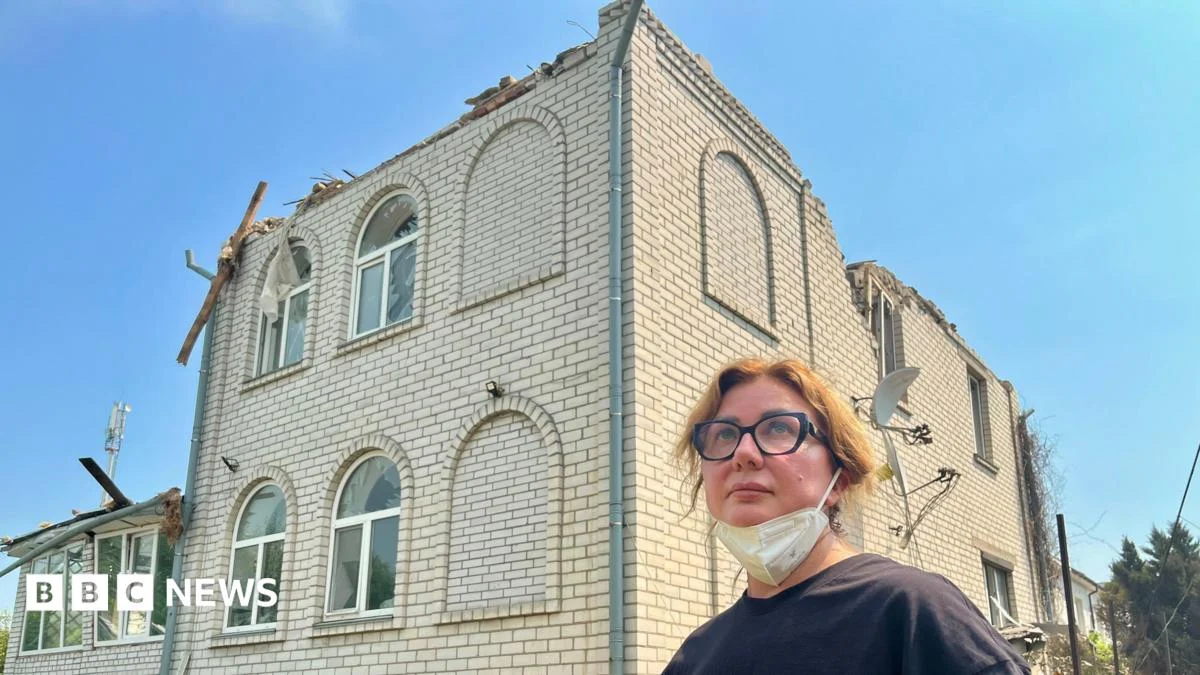
Among the survivors was Anastasiia Dudley, whose house nearby was almost totally destroyed. She and her mother miraculously survived, shaken but physically unharmed, a harrowing escape from a tragedy that could have easily claimed more lives. Their experience echoed that of countless others across Ukraine who, in the absence of robust air defense, are left to the lottery of fate with each incoming missile. The psychological impact of such relentless bombardment is profound, fostering chronic stress, anxiety, and a pervasive sense of insecurity among the civilian population. Children, in particular, suffer from the trauma of interrupted sleep, constant alerts, and the ever-present threat of violence.
Ukraine’s Air Defense Dilemma: A Cry for Interceptors
The immediate aftermath of the attack quickly pivoted to the pressing issue of Ukraine’s air defense capabilities, or rather, their alarming deficiencies. President Volodymyr Zelenskyy, in a series of urgent statements, drew a direct and unequivocal link between the "horrific casualties and destruction" and the delays in the supply of critical interceptor missiles from international partners. His message was stark: "Ballistic missile interceptors could have saved the lives of those killed today."
Ukraine possesses an undisclosed number of Patriot air defense systems, widely regarded as one of the most advanced missile defense technologies in the world. These systems, provided by Western allies, have proven highly effective in intercepting a variety of threats, including Russia’s most sophisticated Kinzhal hypersonic missiles, when they have the necessary ammunition. However, the crux of the problem lies not in the launchers themselves, but in the severe shortage of the Patriot interceptor missiles they fire. Each incoming ballistic missile typically requires at least two interceptors to ensure a high probability of successful engagement, a protocol designed to maximize effectiveness against high-speed, maneuvering targets.
The Patriot system, with a formidable engagement range of approximately 160 kilometers (99 miles) for aircraft and a shorter, though still substantial, range for ballistic missiles, offers crucial protection for strategic assets and population centers. However, its effectiveness is directly proportional to the availability of its expensive interceptor missiles. Ukrainian military expert and former intelligence service officer Ivan Stupak eloquently articulated this predicament: "Imagine you own a Lamborghini but have no fuel. You have one of the best cars in the world, but you can’t drive anywhere… The situation with Patriot is similar. The systems are there, but there are no interceptor missiles." This analogy underscores the crippling reality that without a steady supply of interceptors, Ukraine’s sophisticated air defense systems are rendered largely inert, leaving its skies wide open.
Strategic Implications and Vulnerabilities
The scarcity of Patriot interceptors carries profound strategic implications. Russia, which routinely employs between 20 and 30 ballistic missiles in its large-scale strikes, is exploiting this known vulnerability. The ability to launch such attacks with relative impunity "encourages Russia to launch such attacks that take human lives," as President Zelenskyy warned previously. This creates a vicious cycle: Russia continues its bombardments, knowing that Ukrainian defenses are stretched, further depleting the already scarce interceptors.
Moreover, the lack of interceptors not only exposes Ukrainian cities and infrastructure but also renders the valuable Patriot systems themselves vulnerable. Stupak highlighted this critical concern: "Now the question is how to protect the systems themselves from being destroyed… Because they could very well become priority targets for the Russian Federation." These high-value assets, crucial for Ukraine’s defense, could become prime targets for Russian intelligence and long-range strike capabilities if their locations are compromised and they lack the means to defend themselves. "Until we receive more interceptor missiles, these systems need to be relocated or concealed somehow so the Russians cannot detect and destroy them. Right now they’re extremely vulnerable," Stupak added, emphasizing the precarious position Ukraine finds itself in.
International Appeals and the Geopolitics of Aid
President Zelenskyy’s pleas have become increasingly urgent and direct. On Wednesday, he explicitly stated, "Quite literally every single day, the lives of people here in Ukraine depend on the decisiveness of our partners in Europe and America." He confirmed discussions with NATO chief Mark Rutte about securing more interceptor missiles, underscoring the high-level diplomatic efforts underway to address this critical shortfall.
The delays in supplying sufficient air defense systems and interceptors are multi-faceted. Global production capacity for advanced munitions like Patriot interceptors (PAC-2 and PAC-3 missiles) is finite, and ramping up production takes time and significant investment. Competing demands from other allies, existing contracts, and the complexities of international arms transfers further complicate the issue. Furthermore, political deliberations in some key donor countries, particularly the United States, have resulted in prolonged delays in approving new aid packages, directly impacting the flow of military assistance, including air defense components.
While European nations have stepped up their contributions, including pledges to provide additional air defense systems like SAMP/T (a Franco-Italian equivalent to Patriot) and more interceptors, the scale of Ukraine’s needs remains immense. Germany, for instance, has committed to sending an additional Patriot system, but the delivery timelines and the quantity of accompanying interceptors are crucial. The sheer volume of munitions required to defend a country the size of Ukraine against Russia’s relentless air campaign is staggering, far exceeding current supply rates.
Broader Impact and Future Outlook
The implications of this air defense crisis extend far beyond the immediate casualties and destruction. Economically, the systematic targeting of logistics and storage facilities cripples supply chains, disrupts commerce, and undermines Ukraine’s ability to sustain its economy, particularly its vital agricultural exports and internal distribution networks. The destruction of postal sorting centers, for example, directly impacts everyday life, affecting everything from online shopping to critical mail delivery. These attacks are not merely military but are designed to inflict maximum economic and psychological damage, eroding civilian morale and straining the government’s resources.
Strategically, the lack of adequate air defense allows Russia to maintain air superiority over large parts of Ukraine, enabling it to conduct more effective reconnaissance and strike operations. It also frees up Russian aircraft and missile inventories, as they face less risk of interception. This dynamic could compel Ukraine to divert valuable resources, including manpower and equipment, to passive defense measures, such as hardening infrastructure or relocating key assets, rather than offensive operations.
The resilience demonstrated by Ukrainians, exemplified by the rapid repair teams at Kvitneva, is extraordinary. However, this resilience is being tested to its limits. The international community faces a critical juncture: continued delays in providing robust air defense capabilities risk not only more civilian casualties and infrastructure destruction but also a potential shift in the strategic balance of the conflict. The ongoing struggle for Ukraine’s skies is not just a military battle; it is a profound test of international resolve and the collective commitment to protecting civilian lives and upholding global security. The urgent calls from Kyiv underscore that the decisiveness of its partners today will determine the fate of countless lives and the trajectory of the war tomorrow.