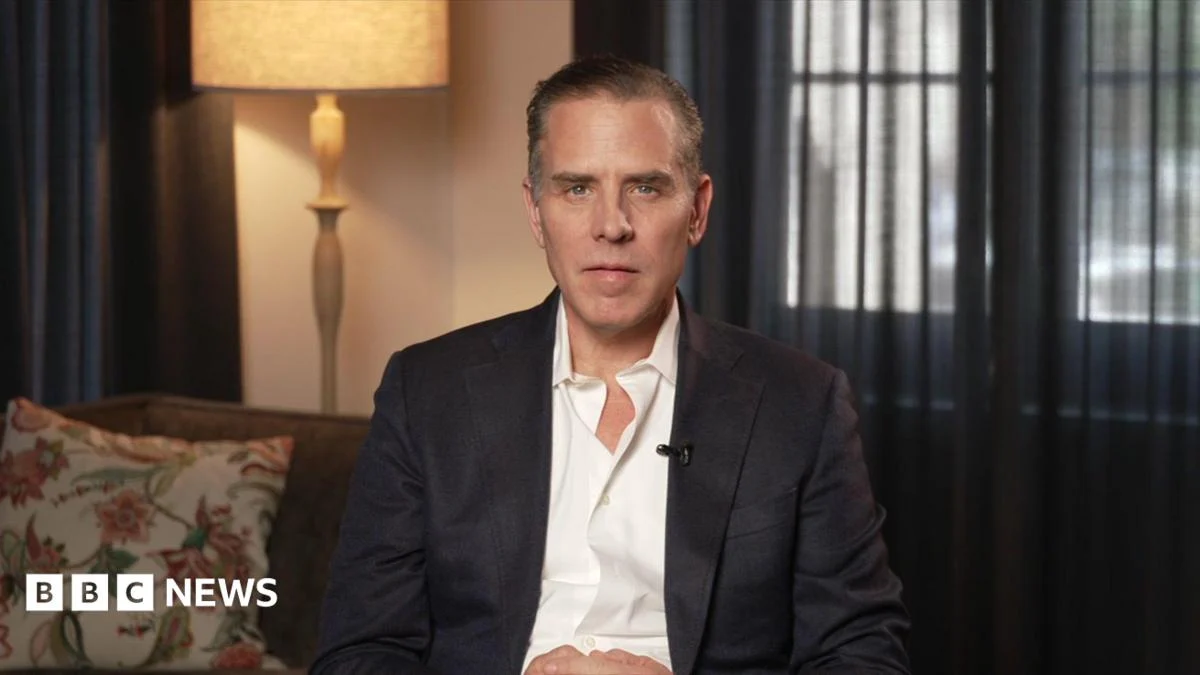
Hunter Biden, son of former US President Joe Biden, has offered an unvarnished account of his life, legal battles, and the profound personal challenges facing his family, including his father’s health, in a wide-ranging interview with the BBC’s Newsnight. Speaking publicly for the first time since receiving a full presidential pardon from his father in December 2024, Hunter Biden acknowledged the extraordinary privilege afforded to him, stating he is "the most privileged person there is," while simultaneously admitting the pardon was "not a good choice for America or his father’s legacy." The interview delved into the controversial pardon, the deeply personal struggle with addiction, and the distressing revelation that his father, former President Joe Biden, is battling a "painful" and metastasized cancer. Hunter Biden also reflected on the pivotal 2024 presidential debate that ultimately led to his father withdrawing from the re-election campaign and firmly ruled out any future aspirations for elected office, instead focusing on aiding others in their recovery from addiction.
The Contested Pardon: A Son’s Defense, A Father’s Legacy
The December 2024 presidential pardon granted by then-President Joe Biden to his son, Hunter, has been a lightning rod for criticism, sparking intense debate over ethics, nepotism, and the integrity of the American justice system. In his BBC interview, Hunter Biden directly confronted these criticisms, stating, "It’s something that is easily criticised and for good reason." He conceded, "It’s not fair… All I know is that I’m grateful that he did it for me," acknowledging the pardon’s potential detriment to the American people, the Constitution, and his father’s historical standing.
Constitutional Powers and Historical Context
Presidential pardons are a constitutional power vested in the President of the United States under Article II, Section 2, Clause 1, which states the President "shall have Power to grant Reprieves and Pardons for Offenses against the United States, except in Cases of Impeachment." This authority is broad, allowing presidents to commute sentences, remit fines, and offer full pardons for federal crimes. Historically, presidents have used this power for various reasons, from acts of mercy to political expediency. Notable examples include Gerald Ford’s pardon of Richard Nixon in 1974, aimed at healing a divided nation, and Bill Clinton’s controversial eleventh-hour pardon of financier Marc Rich in 2001. Each instance has drawn scrutiny, but a pardon granted to a direct family member, particularly by a sitting president, enters a unique and ethically fraught territory. The perceived conflict of interest and the potential for abuse of power invariably lead to heightened public and political scrutiny, fueling accusations of a two-tiered justice system.
The Rationale: Shielding from Political Retribution
Hunter Biden offered a specific justification for his father’s decision, arguing that the pardon was a pre-emptive measure to shield him from potential politically motivated prosecutions under an incoming Donald Trump administration. "I was the only one in the world that could have gotten what I got from the only person in the world who could give it, my father," he asserted. This perspective suggests a belief that the legal challenges against him were not solely about justice but were being weaponized for political gain, a common theme in the highly polarized American political landscape. The fear of an adversarial administration using the justice system to target a political opponent’s family member, while not unprecedented in rhetoric, presents a complex ethical dilemma for a president torn between their duty and paternal instincts.
A Contradiction of Prior Pledges
The pardon stood in stark contrast to repeated assurances from then-President Joe Biden that he would not use his executive powers to intervene in his son’s legal cases. Throughout Hunter Biden’s legal troubles, which spanned years and multiple investigations, President Biden had maintained a public stance of non-interference, emphasizing the independence of the Department of Justice. For instance, in an interview in March 2023, President Biden stated he would "stay out of it" and that his son was "a grown man." The sudden reversal in December 2024, announced with a statement that his son had been "selectively and unfairly prosecuted," ignited a fresh wave of criticism, particularly from Republican lawmakers and conservative media, who quickly accused the former president of hypocrisy and a flagrant abuse of power. Hunter Biden, however, insisted that he and his father had never discussed the possibility of a pardon before it was granted, stating, "There is no way that you can have those kinds of discussions that would not become public."
Scope of the Pardon: Federal Gun, Tax, and Other Offenses
The comprehensive nature of the pardon further amplified its significance. It covered Hunter Biden’s federal gun conviction, a tax case to which he had previously pleaded guilty, and crucially, any federal offenses committed between 2014 and 2024. This broad scope effectively wiped clean a decade’s worth of potential federal criminal liability, insulating him from further prosecution on those matters. The gun conviction stemmed from charges related to his purchase of a firearm in 2018, where he allegedly made false statements on a federal form regarding his drug use. The tax case involved charges of failing to pay federal income taxes on over $1.5 million in income. These cases, highly publicized and politically charged, had been central to Republican efforts to scrutinize the Biden family.
Political Repercussions and Ethical Debates
The decision to pardon Hunter Biden has left an indelible mark on Joe Biden’s legacy, complicating perceptions of his commitment to justice and ethical governance. For critics, it provided irrefutable evidence of a double standard, where political connections could circumvent legal consequences. For supporters, it was viewed as a deeply personal act of a father protecting his son, albeit one with significant political costs. The immediate aftermath saw a resurgence of calls for further investigations into the Biden family’s business dealings, albeit with diminished legal avenues due to the pardon. This event underscored the perpetual tension in American politics between the personal and the public, where the actions of a president’s family members often become intertwined with the office itself.
A Descent into Addiction: "Hell on Earth" and the Path to Recovery
Beyond the political maelstrom of the pardon, Hunter Biden offered a raw and harrowing account of his battle with addiction, describing it as "hell on earth." His candor shed light on the devastating personal toll of substance abuse, separating it from the political narratives that have often defined his public image.
The Gripping Details of Substance Abuse
During the interview, Hunter Biden revealed the extreme depths of his addiction, detailing a period where he was consuming "almost a gallon of vodka a day" while simultaneously smoking crack cocaine "almost every 15 minutes at its worst." These stark revelations paint a picture of severe, unrelenting substance dependence, illustrating the overwhelming grip that addiction can exert on an individual’s life. He explicitly stated, "There’s nothing glamorous about it," aiming to dispel any romanticized notions often associated with drug use, particularly among those in privileged positions. Such detailed descriptions underscore the destructive power of addiction, capable of dismantling lives regardless of socio-economic status.
Beyond Privilege: Seeking Oblivion
Hunter Biden directly addressed the suggestion that his privileged background as the son of a prominent political figure might have contributed to a sense of invincibility or entitlement that fueled his addiction. He rejected this notion outright, asserting, "I wasn’t reaching for anything except oblivion." He explained that his substance abuse was a desperate attempt to escape profound feelings of anxiety and isolation. This perspective aligns with common understandings of addiction as a coping mechanism, a way to self-medicate emotional pain or trauma. While the external circumstances of his life were unique, his internal struggle resonated with countless individuals battling similar demons. He noted that drugs and alcohol initially offered a deceptive sense of relief, feeling like a "solution," before inevitably transforming into "the thing that almost killed me." This progression from perceived remedy to life-threatening dependency is a classic trajectory in addiction narratives.
The Broader Landscape of Addiction
Hunter Biden’s story, while unique in its political context, mirrors a broader public health crisis in the United States. According to the Substance Abuse and Mental Health Services Administration (SAMHSA), millions of Americans struggle with substance use disorders each year. In 2022, an estimated 48.7 million people aged 12 or older had a substance use disorder in the past year. Opioid and stimulant epidemics continue to plague communities, leading to devastating rates of overdose deaths. Addiction is a complex disease influenced by a myriad of factors, including genetics, environment, mental health, and trauma. Recovery is a challenging, often lifelong journey, requiring comprehensive support systems. Hunter Biden’s willingness to discuss his struggles publicly, including his ongoing commitment to sobriety and helping others, adds a personal dimension to the national conversation about addiction, potentially reducing stigma and encouraging others to seek help. His public advocacy for recovery, following his own arduous path, has been a consistent theme in his recent public appearances.
A Father’s Frailty: Joe Biden’s Spreading Cancer and Family Impact
Perhaps the most poignant and unexpected revelation from the interview was Hunter Biden’s emotional disclosure regarding his father’s deteriorating health. The former president, whose age and health had been subjects of public scrutiny throughout his political career, is facing a far more severe challenge than previously known.
The Revelation of Metastasis
Hunter Biden revealed that his father’s "cancer has spread, metastasised into his bones and further." This detail signifies a significant and concerning progression of the disease. Metastatic cancer, where cancer cells spread from their original site to other parts of the body, is typically associated with a more advanced stage of the illness and often carries a more challenging prognosis. He described the condition as "very painful" and "very debilitating," offering a stark glimpse into the private suffering of the former president. While President Biden’s medical history had included treatment for non-melanoma skin cancers in the past, and he had undergone a procedure to remove a lesion in 2023, the public had not been informed of any widespread, metastasized cancer. This new information raises serious questions about the transparency of presidential health disclosures and the immense personal burden carried by public figures and their families.
Emotional Toll and Family Dynamics
Discussing his father’s health, Hunter Biden became visibly emotional, stopping to clear his throat. "Cancer is really hard," he said, "It’s really sad to watch." He underscored his father’s central role within the family, describing him as "to this day, the centre of our family," and "the best father, the best husband, the best grandfather." This portrayal paints a picture of a tight-knit family unit rallying around a beloved patriarch facing a formidable health crisis. The emotional weight of seeing a loved one, especially a parent, grapple with such a debilitating illness is a universal experience, amplified here by the public profile of the individuals involved. Hunter Biden’s only complaint, he noted, was a wish for his father to "complain more," suggesting a stoic resilience in his father that perhaps masks the true extent of his pain.
Health Concerns and Public Office
The revelation about Joe Biden’s metastasized cancer adds a significant layer to the ongoing discussion about the health and fitness of leaders, particularly those in high-stress public roles. While Joe Biden is no longer in office, the implications for his prior presidency and the expectations for transparency regarding the health of public officials remain relevant. The public’s right to know about the physical and mental well-being of their leaders is often weighed against an individual’s right to privacy. This new information highlights the immense personal sacrifices and hidden struggles that can accompany a life in public service, even after leaving office.
The Pivotal 2024 Debate: A Campaign’s Turning Point
Hunter Biden also offered a personal perspective on the fateful presidential debate in June 2024, an event widely considered a critical turning point that ultimately led to his father’s decision not to seek re-election.
Hunter’s Firsthand Account of Disquiet
Watching the debate unfold from his home in California, Hunter Biden immediately sensed that something was amiss with his father’s performance. "I was shocked," he recalled, "I knew something was wrong." This firsthand account from a close family member reinforces the widespread public perception at the time that Joe Biden’s performance was notably faltering. During the debate, the then-president exhibited moments of verbal hesitation, a raspy voice, and difficulty articulating complete thoughts, leading to widespread concern and commentary across the political spectrum. Many observers, including political analysts and even some Democratic strategists, noted a stark contrast to his previous debate performances and public appearances.
The Debate’s Role in Joe Biden’s Re-election Bid
The June 2024 debate proved to be a watershed moment for Joe Biden’s re-election campaign. Prior to the debate, despite concerns about his age, he had been the presumptive Democratic nominee. However, the widely perceived weak performance amplified existing doubts about his cognitive acuity and stamina for another term. Within days of the debate, calls for him to step aside intensified from within his own party. Senior Democratic figures, donors, and media outlets openly questioned his viability as a candidate. This immense pressure, coupled with the apparent personal recognition of his own declining health, likely contributed to his subsequent decision to withdraw from the race, paving the way for a new Democratic nominee. Hunter Biden’s emotional reaction to the debate performance underscores the devastating impact it had, not just politically, but personally on the Biden family, who were witnessing a beloved father and grandfather struggle on the national stage.
Looking Forward: Personal Decisions and Public Scrutiny
The BBC interview provided a rare glimpse into Hunter Biden’s current mindset, revealing a man grappling with his past, supporting his family through immense challenges, and charting a new course for his future.
Ruling Out Elected Office
One definitive statement from the interview was Hunter Biden’s categorical rejection of seeking elected office. This decision likely stems from a combination of factors: his past struggles with addiction, the intense and often brutal public scrutiny he has faced, and a desire to live a life less consumed by political drama. His experiences have made him a lightning rod for political attacks, and pursuing a political career would undoubtedly invite a perpetual re-litigation of his personal and legal history. His focus, he indicated, is now on helping others navigate their own journeys of recovery from addiction, a path that allows him to leverage his lived experience for positive impact without the demands and controversies of political life.
The Enduring Shadow of Public Life
Despite the pardon and his personal commitment to recovery, Hunter Biden remains a figure of intense public interest and political contention. His story serves as a stark reminder of the unique challenges faced by the families of powerful political figures. Every aspect of their lives, from personal struggles to professional dealings, can become fodder for public debate, political campaigns, and media scrutiny. The interview with the BBC offered a deeply personal perspective, humanizing a figure often reduced to a political talking point. It underscored the complex interplay between individual choices, family loyalty, the exercise of presidential power, and the relentless demands of public life in contemporary America. As the Biden family navigates personal health crises and political legacies, their story continues to captivate and divide, reflecting the broader fractures within the nation itself.