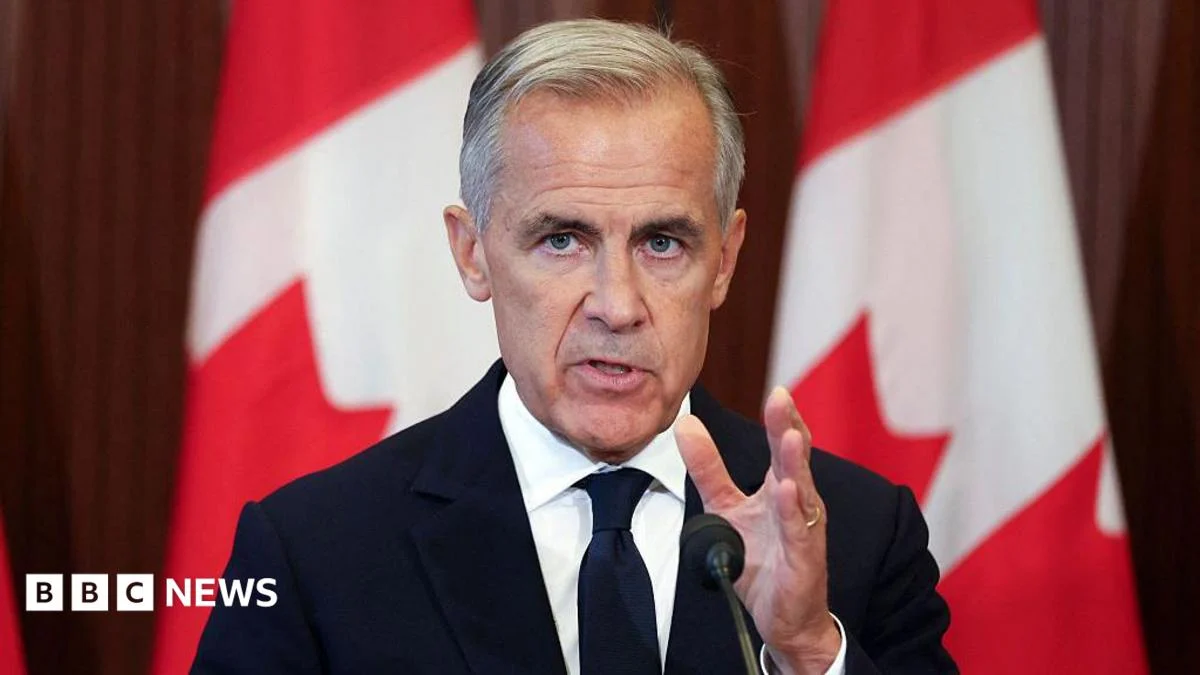
Canada’s Prime Minister Mark Carney has vehemently denounced a fresh wave of US tariffs as a "miscalculation" designed to "hurt and divide us," following the dramatic collapse of high-stakes trade talks late on Friday. Addressing Canadians on Saturday morning, Carney asserted that he had walked away from a deal because he was unwilling to "compromise Canada’s sovereignty," characterizing the US approach as an "attack" on the nation. "They asked too much and they offered too little," Carney declared, confirming Canada’s intention to match US tariffs "dollar-for-dollar" from September 8, targeting key sectors including steel, dairy, appliances, and electronics. This latest escalation marks a significant downturn in relations between the two long-standing allies, raising profound questions about the future of North American trade and the integrity of existing agreements.
The Breakdown: Accusations and Unmet Demands
The optimism that had permeated earlier stages of the week’s negotiations quickly evaporated as both sides traded accusations of making last-minute changes that derailed a potential agreement. Canadian officials maintained that the US had presented "unacceptable" terms that were overly restrictive, specifically highlighting demands that would curb Canada’s ability to forge new trade deals with other nations. Prime Minister Carney directly refuted US assertions that Canada had introduced new demands, stating, "We clarified what was on offer and were continually disappointed by the answers." Conversely, US negotiators accused Canada of introducing "new demands and walk backs" on previously agreed-upon terms, painting a picture of Canadian intransigence.
The US Trade Representative, Jamieson Greer, speaking on Fox News on Saturday, confirmed the immediate cessation of talks, stating there were "no plans to resume." Greer further claimed that the US had been prepared to reduce some of its existing tariffs on Canada as part of the ill-fated deal, implying Canadian inflexibility as the cause of its failure. However, the specifics of these proposed tariff cuts and the counter-demands remain contentious and unverified by both parties, contributing to the opacity surrounding the negotiations’ final moments. The imposition of new 50% US tariffs on a wide array of Canadian goods, adding to existing duties on steel, aluminum, automobiles, and lumber, now casts a long shadow over the economic landscape.
A Detailed Chronology of Escalation
The recent collapse is the culmination of more than a year of fraught, on-again, off-again trade discussions, which gained renewed urgency in recent weeks due to a US-imposed deadline to finalize a deal or face further punitive tariffs. This period of intensified negotiation was set against the backdrop of a mandatory review of the North American free trade agreement, USMCA, which also involves Mexico.
- 2020-2023: The USMCA, signed during the Trump administration’s first term to replace the 1994 North American Free Trade Agreement (NAFTA), underpins an estimated $1.6 trillion (£1.2 trillion) in annual trilateral trade across Canada, the US, and Mexico. Despite its implementation, specific provisions, particularly those related to dispute resolution and supply chain integration, have been sources of ongoing friction.
- Early Summer (Current Year): Canada and Mexico formally requested the renewal of USMCA for another 16 years, as stipulated by the agreement’s sunset clause, which mandates a joint review every six years to decide on a potential extension. The US, however, declined to renew it in its current form, signaling its intent to push for revisions.
- Recent Weeks: Trade talks intensified significantly, with negotiators from both sides engaging in marathon sessions to avert further tariffs. Public statements from officials on both sides initially conveyed a sense of cautious optimism, suggesting progress was being made.
- Friday Evening: The negotiations reached an impasse, ultimately collapsing. Prime Minister Carney announced late Friday night that a deal could not be reached, citing "last-minute changes" from the American side that he deemed "unfair" and "uneconomic."
- Saturday Morning: Prime Minister Carney addressed Canadians, delivering his strong condemnation of the US actions and announcing the retaliatory measures. US Trade Representative Jamieson Greer subsequently confirmed the breakdown and the lack of immediate plans to resume talks.
- September 8: The date set for Canada’s "dollar-for-dollar" retaliatory tariffs to take effect, targeting a broad range of US imports.
The Broader Context: USMCA and "America First"
The current trade dispute is deeply rooted in the "America First" trade policy championed by US President Donald Trump. This policy prioritizes domestic industries and job creation through the imposition of tariffs on imported goods, under the belief that such measures will rebalance trade deficits and force fairer agreements. While proponents argue this approach bolsters American manufacturing and creates jobs, critics, including numerous economists and international trade organizations, contend that tariffs ultimately raise prices for American consumers, disrupt global supply chains, and damage the broader global economy.
The USMCA itself was a product of this "America First" philosophy, designed to modernize and, from the US perspective, "rebalance" the trade relationship that NAFTA had established. Key changes included stricter rules of origin for automobiles, enhanced labor provisions, and intellectual property protections. The current review clause, which necessitates a periodic reassessment of the agreement, was intended to provide flexibility but has instead become a flashpoint for renewed tension. The US refusal to renew USMCA in its current form signaled a desire for even greater concessions from its partners, particularly Canada.
Prime Minister Carney’s immediate concern about the impact on the North American free trade pact was palpable, stating that Friday’s collapse was "certainly not good news" for the agreement’s future. The potential unravelling or significant weakening of USMCA could have profound and far-reaching consequences for the intricately linked economies of Canada, the US, and Mexico.
Economic Stakes: A $1.6 Trillion Relationship Under Strain
The economic relationship between Canada and the United States is one of the largest and most integrated in the world. Annually, goods and services worth hundreds of billions of dollars cross the shared border, supporting millions of jobs in both countries. In 2023, two-way trade in goods and services between the US and Canada exceeded $800 billion USD, with Canada being the US’s second-largest trading partner and the US being Canada’s largest. A significant portion of this trade is intra-company, reflecting deep supply chain integration, particularly in the automotive and aerospace sectors.
The existing US tariffs on Canadian steel, aluminum, automobiles, and lumber have already exacted a toll on Canadian industries and workers. For instance, the US tariffs on steel and aluminum, initially implemented under Section 232 of the Trade Expansion Act of 1962, were justified by the Trump administration on national security grounds. Canada, a key NATO ally and supplier of these materials to the US defense industry, strongly contested this justification. These tariffs have led to higher input costs for US manufacturers, while simultaneously reducing demand for Canadian products, impacting Canadian producers and potentially leading to job losses.
The new 50% tariffs on a wider range of Canadian goods, coupled with Canada’s planned "dollar-for-dollar" retaliation, risk an escalating trade war. This tit-for-tat exchange will inevitably lead to higher prices for consumers on both sides of the border, reduced competitiveness for businesses, and significant disruptions to established supply chains. The uncertainty generated by these trade disputes also deters investment, as businesses become hesitant to commit capital in an unpredictable regulatory environment. The overall economic impact could be substantial, threatening the stability and growth of both national economies.
Sector-Specific Impacts: Steel, Aluminum, Dairy, and Automotive
The tariffs specifically target sectors critical to both economies:
- Steel and Aluminum: These industries are particularly vulnerable. Canadian steel and aluminum producers, many of whom have integrated supply chains with US manufacturers, face reduced market access and increased costs. US industries relying on Canadian raw materials will also see their input costs rise, potentially making them less competitive against international rivals.
- Dairy: Canada’s dairy industry operates under a supply management system, which the US has long criticized as protectionist. The inclusion of dairy in the tariffs underscores a persistent point of contention. Canadian dairy farmers, already navigating complex domestic regulations, will face additional pressures, while US consumers might see price increases for certain dairy products if retaliatory tariffs are applied.
- Appliances and Electronics: These consumer goods sectors often have complex international supply chains. Tariffs on these items will directly impact consumer prices and could force companies to re-evaluate their manufacturing and distribution strategies, potentially leading to job shifts or factory relocations.
- Automotive: While not among the new 50% tariffs, existing US tariffs on Canadian automobiles remain a significant threat. The automotive sector is highly integrated across North America, with parts often crossing the border multiple times during the manufacturing process. Any escalation here could severely disrupt production, increase vehicle prices, and jeopardize hundreds of thousands of jobs in both countries.
Canadian Political Unity and Provincial Concerns
In a rare display of cross-party solidarity, Prime Minister Carney’s firm stance against the US tariffs has garnered widespread support from leaders across the Canadian political spectrum. The Conservative opposition leader, Pierre Poilievre, publicly backed Carney, labeling the latest US levies as "unjustified." This bipartisan unity underscores the perceived national importance of protecting Canadian sovereignty and economic interests against external pressure.
Provincial leaders, whose economies are directly exposed to cross-border trade, have also weighed in with a mix of support and concern:
- Doug Ford, Premier of Ontario: As the leader of Canada’s most populous province and a major manufacturing hub, Ford unequivocally backed Carney, stating that US President Trump "can’t be trusted." Ontario’s economy, heavily reliant on the automotive and manufacturing sectors, is particularly vulnerable to trade disruptions with the US.
- Christine Fréchette, Premier of Quebec: Fréchette voiced grave concerns about the potential job losses resulting from the new US tariffs. Emphasizing the human cost, she stated, "Behind these numbers are real people," and pledged to introduce measures to support impacted sectors within Quebec. Quebec’s economy has significant ties to US markets in various industries.
- Danielle Smith, Premier of Alberta: Whose oil-rich province has historically sought to forge closer ties with the US administration, urged both sides to resume talks. Alberta’s economy is highly dependent on energy exports to the US, and prolonged trade disputes could complicate efforts to secure market access for its oil and gas.
This chorus of provincial voices highlights the diverse regional impacts of the trade dispute and the collective desire for a resolution, even amidst the unified front against perceived US overreach.
Global Repercussions and Future Outlook
The collapse of Canada-US trade talks and the ensuing tariff escalation send a troubling signal to the international community. It reinforces concerns about the stability of global trade relations, particularly in an era marked by protectionist tendencies and geopolitical tensions. For other nations, it serves as a stark reminder of the potential for even long-standing economic partnerships to unravel under pressure.
Looking forward, the immediate future of Canada-US trade relations appears fraught with uncertainty. While both countries have historically demonstrated resilience in navigating trade disputes, the current breakdown is particularly severe given the explicit accusations of bad faith and the direct challenge to national sovereignty. The "dollar-for-dollar" retaliation pledged by Canada suggests a protracted period of economic friction rather than a swift resolution.
The path forward could involve several scenarios:
- Protracted Trade War: The most immediate risk is an escalating cycle of tariffs and counter-tariffs, damaging industries and consumers in both countries.
- Renewed Negotiations (with conditions): Despite the current hardline stances, economic realities and pressure from affected industries could eventually force both sides back to the negotiating table, albeit with a more cautious and potentially more adversarial dynamic.
- USMCA Under Threat: The long-term viability of the USMCA itself may be jeopardized. If the review clause cannot be successfully navigated, the entire framework of North American trade could be called into question, leading to a more fragmented and less efficient economic landscape.
The breakdown in talks between Canada and the United States represents a critical juncture for North American economic integration. As both nations brace for the impact of escalating tariffs, the global community watches closely, pondering the wider implications for international trade and cooperation in an increasingly unpredictable world.