The cinematic landscape is often a testing ground for familiar formulas, a space where established tropes are revisited in the hope of striking gold once more. In the realm of R-rated comedies centered on female friendships, a subgenre that has yielded significant commercial and critical successes like Bridesmaids and Girls Trip, the latest offering from writer-directors Jon Lucas and Scott Moore, Spa Weekend, attempts to tap into this lucrative vein. However, the film ultimately falls short of its predecessors, delivering a disappointing experience that mirrors the letdown of a vacation that promises much but provides little. While the premise itself—a group of friends seeking an escape at a wellness retreat—holds inherent appeal, the execution in Spa Weekend is characterized by uninspired hijinks, shallow emotional depth, and a talented cast left underserved by a script that fails to fully capitalize on their comedic and dramatic potential.
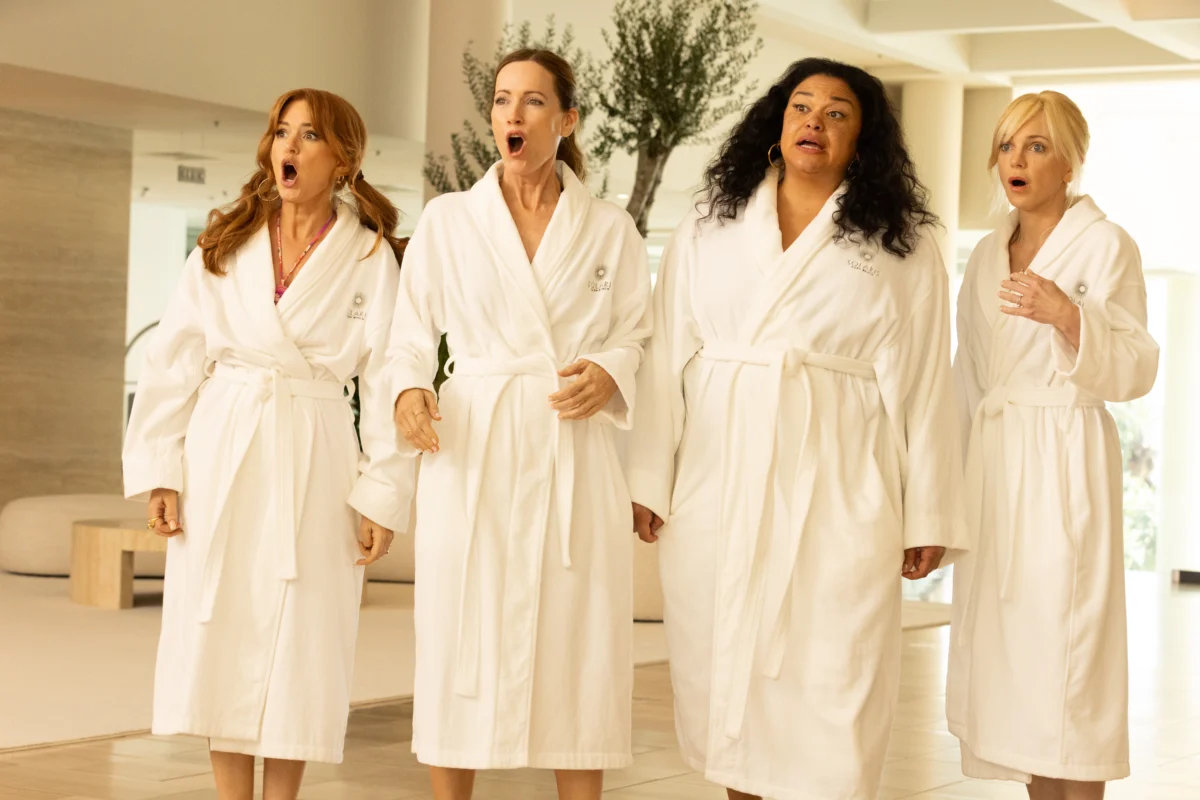
The film’s central conceit, as suggested by its title, revolves around a restorative getaway. Jane, an overworked Los Angeles attorney, portrayed by Leslie Mann, decides to book a two-night stay at a seemingly tranquil wellness retreat to celebrate an unspecified birthday. The retreat, though vaguely situated near Malibu, is a production shot in Australia, strategically avoiding specific geographical markers, allowing the picturesque sunsets to serve as the primary visual draw. Jane is joined by her two closest childhood friends: Sophie, played by Anna Faris, a woman enduring the indignity of working for a boss so entitled he cannot even procure his own confectionery; and Coco, brought to life by Michelle Buteau, who is navigating a tumultuous divorce, her anger management issues a persistent, unaddressed specter.
This trip is presented as the much-needed respite these women desperately require, yet struggle to attain. The narrative emphasizes their demanding lives as working mothers, perpetually pulled in multiple directions by aging parents, the needs of their children, and the relentless demands of their professional careers. The script suggests that planning even a simple date night requires months of advance notice, making the spontaneous booking of an entire vacation seem almost an impossibility. Yet, within the first five minutes of Coco casually suggesting the idea over brunch, the trio has inexplicably booked their rooms, a narrative leap that feels abrupt and undermines the very struggles the film aims to highlight.
The rapid transition from "I couldn’t possibly" to "We’ve booked the room" appears intended as an aspirational element, showcasing women finally defying societal expectations that perpetually relegate their needs to the back burner. It’s meant to be a moment of catharsis, a declaration of self-care in a world that demands they prioritize everyone else. However, this accelerated timeline inadvertently renders their previous struggles less authentic, implying that their limitations were merely a matter of willpower rather than deeply ingrained societal pressures. The implication is that their inability to take time for themselves was not due to genuine constraints but a lack of personal resolve.
Adding another layer of complexity, and perhaps intended conflict, is the inclusion of Mel, played by Isla Fisher. Mel is an unwanted fourth member of their circle, a last-minute addition, ostensibly on Sophie’s conscience. The film posits a rather generalized notion that every female friend group harbors a specific individual they secretly cannot stand. This narrative device, while perhaps intended to be relatable, risks alienating viewers or forcing them into uncomfortable self-reflection. If one cannot identify such a person in their own social circle, the film subtly suggests, perhaps it is because they are that person, or perhaps it is because the film’s generalizations are too broad and thus, universally applicable. This approach, the review notes, comes with a pervasive sense that the film is asking, "Am I right, ladies?" after every such observation.
The initial reception of Mel by Jane, Coco, and Sophie is, from the film’s perspective, warranted. Upon her arrival, Mel is characterized by a boisterous and disruptive presence, her attire revealing and her suitcase seemingly overflowing with more than just personal effects, including an assortment of sex toys. Her language is consistently inappropriate, and her arrival injects an immediate element of chaos into the serene environment. Guided meditation sessions devolve into heated arguments, ostensibly calm evenings morph into cocaine-fueled parties, and even a simple walk between spa treatments escalates into a high-stakes golf cart chase. While these events are intended to be R-rated hijinks, the review suggests that under the direction of Lucas and Moore, they lack the edge and raunchiness that would make them truly memorable or impactful. The comedic sequences, though numerous, are described as uninspired and failing to reach the expected level of R-rated debauchery.
Furthermore, Mel’s propensity for interfering in her friends’ lives becomes a central plot driver. She confiscates Sophie’s phone to confront her boss, orchestrates a reunion between Coco and her ex-partner, and even brazenly propositions a younger, attractive yoga instructor on Jane’s behalf, remarking on her age but highlighting her physical attributes. Mel’s actions are initially portrayed as disruptive and potentially damaging to her friends’ lives, but the narrative predictably pivots to argue that the world requires individuals like Mel – the "hot messes" who disrupt the status quo and compel others to break free from their predictable, albeit socially acceptable, routines.
This intended message, however, is undermined by the script’s failure to develop its characters beyond superficial archetypes. The review points out a lack of clarity regarding the characters’ specific professions or personal circumstances, such as Coco’s career or the reasons behind Jane’s single parenthood. Consequently, the emotional resonance of their struggles is diminished, making it difficult for the audience to invest deeply in their journeys. The film’s occasional moments of humor and warmth are attributed not to the script’s inherent brilliance, but to the actors’ existing talents, honed through previous, more successful projects.
The review highlights specific instances where the actors’ capabilities shine through, even within the confines of a less-than-stellar script. A scene where Jane struggles to conceal her attraction to a masseuse played by Adam Demos is likened to Mann’s more effective comedic performances in Blockers. Buteau’s chemistry with her on-screen ex-partner is noted as reminiscent of her compelling portrayal in the Netflix series Survival of the Thickest. Isla Fisher, true to form, elicits the film’s most genuine laughs through her signature blend of effervescent yet unhinged energy, a style that has served her well since her breakthrough in Wedding Crashers. Even Anna Faris, in a role that feels somewhat miscast as the awkward Sophie, serves as a reminder of her greater comedic prowess in films like The House Bunny and Smiley Face, where she is allowed to embrace more eccentric and uninhibited performances.
Ultimately, the film’s ability to evoke memories of superior works does not compensate for its own shortcomings. Spa Weekend offers nothing novel or insightful to the well-trodden comedic formula it emulates. Despite its ostensibly good intentions to provide a meaningful escape for overworked and stressed mothers, its primary takeaway is a rather simplistic suggestion: perhaps they should simply try taking a vacation. The review concludes that if this is what a significant relaxing escape entails, audiences would be better served by saving their money and finding solace in the comfort of their own homes. The film, in essence, fails to deliver on its promise of a revitalizing experience, leaving viewers with a sense of unfulfilled potential, much like a vacation that fails to live up to its brochure.