A significant legal challenge has been mounted against acclaimed writer and director Taylor Sheridan, along with major media entities Paramount and NBC Universal, and Sheridan’s management company Elevate Entertainment. The lawsuit, filed in the U.S. District Court for the Central District of California, accuses Sheridan of plagiarizing a television series concept that allegedly formed the foundational elements of the immensely popular Western drama, Yellowstone. The plaintiff, TV writer and entertainment journalist Lauren J. Salkin, claims that her meticulously developed project, Sovereign Nation, was appropriated by Sheridan and his team, leading to the creation and subsequent multi-billion-dollar success of Yellowstone without her compensation or credit.
The Genesis of the Dispute: Sovereign Nation vs. Yellowstone
At the heart of the litigation is Salkin’s assertion that she submitted comprehensive materials for her original series, Sovereign Nation, to Elevate Entertainment, Sheridan’s management firm, between late 2016 and early 2017. These submissions reportedly included a pilot script, a detailed show bible, and a pitch deck, representing over a decade of Salkin’s creative development. Sovereign Nation is described in the legal complaint as a "dramatic television series centered on tribal governance, casino-driven economic power and a modern war over land and development." This thematic core, Salkin contends, directly mirrors key narrative and thematic elements later seen in Yellowstone.
The lawsuit details a specific timeline of interaction, or rather, a perceived dismissal. According to Salkin, Elevate Entertainment responded to her submission on February 1, 2017, stating that Taylor Sheridan was "unavailable for TV projects." This response, she alleges, stands in stark contrast to subsequent events. The complaint explicitly notes, "Within months, Paramount greenlit Sheridan’s Yellowstone." The flagship series, starring Kevin Costner, premiered on the Paramount Network on June 20, 2018, and later found a significant streaming audience on Peacock, a platform operated by NBC Universal.
Allegations of Specific Expressive Choices
Salkin’s legal filing goes beyond a general claim of conceptual theft. The complaint meticulously outlines what are described as "specific expressive choices already embodied in Salkin’s materials" that are allegedly replicated in Yellowstone. These alleged parallels include:
- Tribal Casino as a Center of Power: The use of a tribal casino as the institutional locus for political maneuvering and economic development is cited as a direct overlap.
- Confrontation Over Expansion: A signature confrontation staged within the tribal chairman’s casino office, specifically concerning expansion beyond reservation boundaries, is highlighted.
- Mechanisms for Expansion: The legal framework for this expansion, including the utilization of trust land, the absence of traditional zoning restrictions, and a 99-year lease structure, are presented as shared elements.
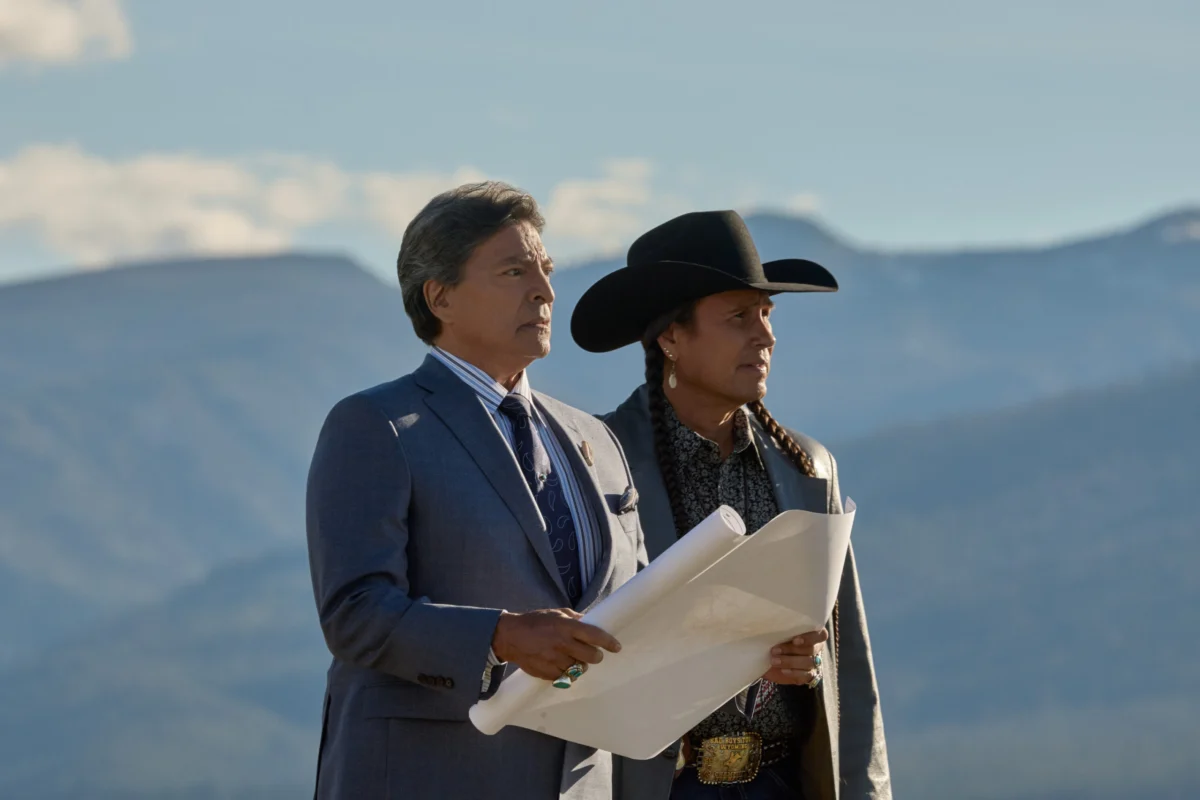
- Territorial Control Imagery: The recurring deployment of "master-plan imagery" to dramatize the struggle for territorial control is also identified as a borrowed narrative device.
Furthermore, Salkin claims that Yellowstone adopted several of her proposed casting recommendations for key roles within Sovereign Nation. This assertion suggests a level of detail in the alleged appropriation that extends beyond broad thematic concepts.
Copyright Law and Abstract Ideas
The lawsuit preemptively addresses a common defense in intellectual property cases: the distinction between abstract ideas and their specific expression. The complaint clarifies that Salkin’s claim is not based on the mere existence of common thematic elements in Western storytelling, such as "the abstract idea of a Western, a land dispute, an Indian casino or a powerful family." Instead, the core of the alleged infringement lies in "the copying of Salkin’s particular expressive choices and their coordinated selection and arrangement." This legal framing seeks to emphasize the unique and concrete manifestation of Salkin’s creative vision.
Adding another layer to Salkin’s case, the lawsuit mentions that a senior HBO scripted TV executive, who had previously reviewed materials for Sovereign Nation, later remarked to her about recognizing similarities between her project and Yellowstone. This anecdotal evidence, if admissible, could serve to corroborate Salkin’s claims of direct influence.
The Financial Stakes and Legal Recourse
The financial implications of this lawsuit are substantial. Yellowstone, under the stewardship of Sheridan, has become a cultural phenomenon and a significant revenue generator for its affiliated entities. Salkin’s complaint states that the Kevin Costner-led series, which has already spawned multiple successful spin-offs such as 1883 and 1923, "has generated billions of dollars" for the defendants. Salkin asserts that she "has received nothing" from this massive financial success, despite her alleged foundational contribution.
In her legal filing, Salkin is seeking significant remedies, including monetary damages and a share of the profits derived from Yellowstone, based on the alleged copyright infringement. Additionally, she is requesting injunctive relief to prevent any future infringement, which could potentially impact the ongoing production and distribution of the Yellowstone franchise.
A "David-versus-Goliath" Narrative
Paul B. Lackey, Salkin’s attorney, characterized the legal battle as a "classic David-versus-Goliath situation." In a statement to The Hollywood Reporter, Lackey emphasized the years of work Salkin invested in developing her concept: "She spent years putting together the specific and multi-layered framework for a story that has become the biggest streaming success of all time. She has watched the vast commercial success of this story that was stolen from her and decided that enough was enough. We will do everything in our power to get her justice." This framing highlights the perceived imbalance of power between an individual creator and major media corporations.
Broader Industry Implications and Potential Ramifications
The lawsuit against Taylor Sheridan, Paramount, and NBC Universal arrives at a critical juncture for the entertainment industry. As streaming platforms and major studios increasingly rely on established intellectual property and proven narrative formulas, allegations of idea theft can have far-reaching consequences.
Timeline of Key Events:
- Over 10 Years Prior to 2016: Lauren J. Salkin begins developing her television series concept, Sovereign Nation.
- Late 2016 – Early 2017: Salkin submits her pilot script, show bible, and pitch deck for Sovereign Nation to Elevate Entertainment, Taylor Sheridan’s management company.
- February 1, 2017: Elevate Entertainment responds, informing Salkin that Taylor Sheridan is "unavailable for TV projects."
- Within Months of February 2017: Paramount greenlights Taylor Sheridan’s Yellowstone.
- June 20, 2018: Yellowstone premieres on the Paramount Network.
- Date of Filing (Implied to be within a few weeks of the article’s publication): Salkin files her lawsuit in the U.S. District Court for the Central District of California.
The implications of this lawsuit extend beyond the immediate financial and legal ramifications for the parties involved. Should Salkin’s claims be substantiated, it could set a precedent for how creative ideas are protected and compensated within the industry. It raises questions about the vetting processes employed by major studios and management companies when receiving unsolicited or semi-solicited pitches, and the ethical responsibilities involved in adapting or drawing inspiration from submitted material.
Furthermore, the case could highlight the challenges faced by independent creators in asserting their intellectual property rights against powerful corporate entities. The vast financial success of Yellowstone magnifies the stakes for Salkin, making her pursuit of justice a significant undertaking. The outcome of this litigation will likely be closely watched by writers, producers, and executives across Hollywood, potentially influencing future creative collaborations and legal disputes concerning original content.
As of the publication of this article, representatives for Taylor Sheridan, Paramount, Elevate Entertainment, and NBCUniversal have not yet issued a public response to The Hollywood Reporter‘s request for comment. The legal process is expected to unfold, with further filings and potential depositions shedding more light on the intricate details of this high-profile intellectual property dispute.