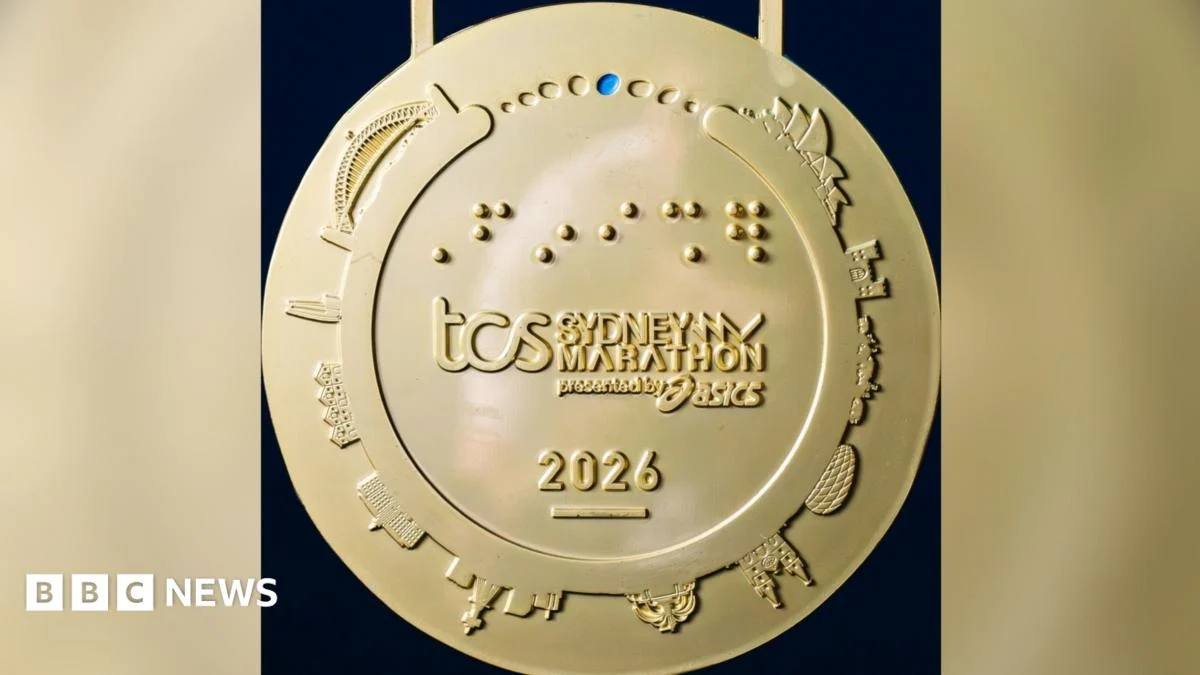
The Sydney Marathon, one of Australia’s premier long-distance running events, has inadvertently become the centre of international attention following the discovery of a significant design error on its finisher’s medal. Participants in the upcoming 2024 event, scheduled for August 30, will receive a double-sided medal intended to commemorate their achievement, featuring iconic Sydney landmarks such as the Opera House and Harbour Bridge. However, a prominent engraving on one side of the medal, meant to depict Sydney’s Allianz Stadium, has instead mistakenly rendered the distinctive architecture of Munich’s Allianz Arena, located thousands of kilometres away in Germany. This oversight has generated a wave of discussion across social media platforms and international news outlets, prompting both amusement and mild scrutiny as the marathon continues its bid to join the prestigious World Marathon Majors series.
The Erroneous Engraving: A Tale of Two Stadiums
The core of the design gaffe lies in the distinct architectural characteristics of the two stadiums, both coincidentally bearing the name of their sponsor, Allianz. Sydney’s Allianz Stadium, officially known as the Sydney Football Stadium, boasts a sleek, modern design characterised by a flatter facade adorned with long, elegant bronze fins. It is a structure that subtly blends into the urban landscape, reflecting the contemporary aesthetic of its Australian city. In stark contrast, Munich’s Allianz Arena is instantly recognisable worldwide for its futuristic and highly distinctive exterior, composed of thousands of diamond-shaped, inflatable ETFE plastic cushions. These cushions can be illuminated in various colours, creating a dynamic and iconic visual spectacle, especially at night. The medal’s engraving clearly reproduces the unique, cushion-like pattern of the Munich venue, rather than the smoother, finned appearance of its Sydney namesake.
The mistake was first brought to public attention by observant users on social media platforms, who quickly identified the discrepancy between the intended Sydney landmark and the actual German stadium depicted. Images of the medal began circulating widely, juxtaposed with photographs of both stadiums, highlighting the undeniable visual mismatch. The initial reactions ranged from disbelief and confusion to widespread amusement, with many questioning how such an error could have occurred in the production process for an event of this magnitude.
Organisers’ Response and Public Reception
In response to the burgeoning online discussion, the Sydney Marathon organisers confirmed the error, acknowledging that the medals depicting the incorrect stadium would indeed be distributed to the 40,000 registered runners. In an official statement, they adopted a lighthearted and pragmatic approach, noting: "It’s a beautiful medal, and now a little more unique." They further added, "It’s certainly given everyone something to talk about this weekend, mostly in good humour." This response aimed to defuse any potential negativity, framing the error as an idiosyncratic detail that adds character to the commemorative item rather than diminishing its value.
The humorous tone was echoed by the official Instagram account of Germany’s Allianz Arena, which playfully engaged with the incident. Their post read: "Oh wow, we didn’t have that on our bingo card!" They continued with a witty comparison, suggesting: "Perhaps they tried to find something else they had in common: Allianz Arena — Sydney Opera — Unique Architecture — Both are worth a visit!" This cross-continental banter underscored the largely good-natured reception of the gaffe, turning a potential embarrassment into an international talking point that generated unexpected publicity for both the marathon and the German stadium.
A Medal of Two Faces: Artistry and Error
While one side of the medal has become a topic of global discussion due to its factual inaccuracy, the reverse side has garnered unanimous praise for its exquisite design. This side features a striking gold and indigo pattern meticulously crafted by First Nations artist Ambrose Killian. Killian’s design, deeply rooted in Indigenous Australian culture and storytelling, has been widely commended for its ornate pattern, intricate details, and significant cultural resonance. It serves as a powerful symbol of Australia’s rich heritage and commitment to acknowledging its First Peoples.
Ambrose Killian confirmed to the BBC that his involvement was exclusively with the design of this reverse face of the medal. He was not consulted for, nor was he involved in, the design process for the side engraved with the stadium, thereby absolving him of any connection to the architectural misrepresentation. This clarification highlights the independent creative processes involved and ensures that the integrity and cultural significance of Killian’s contribution remain untarnished by the production error. The juxtaposition of a culturally rich, perfectly executed design on one side and an amusing factual error on the other creates a truly unique and memorable collector’s item for the participants.
The Sydney Marathon: A Bid for World Renown
The Sydney Marathon is not merely a local sporting event; it is a significant international race with aspirations of joining the elite ranks of the World Marathon Majors (WMM). The WMM series comprises six of the most prestigious marathons globally – Boston, London, Berlin, Chicago, New York City, and Tokyo – known for their exceptional organisation, massive participation, and world-record-setting performances. The Sydney Marathon is currently in a multi-year candidacy process, undergoing rigorous evaluation across numerous criteria, including course quality, elite athlete field, participant experience, media coverage, sustainability, and operational excellence. Achieving WMM status would significantly elevate the marathon’s profile, attracting even more international runners and solidifying Sydney’s position on the global sporting calendar.
The 42.195-kilometre course itself is a major draw, celebrated for its stunning scenic route that encompasses many of Sydney’s most iconic landmarks. Starting from Bradfield Park in Milson’s Point, runners cross the magnificent Sydney Harbour Bridge, offering panoramic views of the city skyline and the Opera House. The route continues through various vibrant neighbourhoods, skirting the Botanical Gardens, passing through Centennial Park, and along the picturesque foreshores, before culminating dramatically at the Sydney Opera House. This unparalleled backdrop is a key element of the marathon’s appeal and a major factor in its WMM bid. The inclusion of the Opera House and Harbour Bridge on the medal correctly reflects these quintessential Sydney experiences, ensuring that the medal, despite its stadium error, still captures the essence of the race’s visual journey.
Event Scale and Logistics
The 2024 Sydney Marathon is set to be one of its largest editions to date, with approximately 40,000 runners registered to participate across various categories, including the full marathon, half marathon, 10km run, and a 3.5km fun run. This impressive number of participants was drawn from over 120,000 ballot entries, underscoring the immense popularity and demand for the event. Such a large-scale gathering necessitates extensive logistical planning, involving thousands of volunteers, comprehensive road closures across central Sydney, sophisticated timing systems, medical support, and refreshment stations.
Organisers have lauded the record participation and fundraising efforts for this year’s event. Major marathons often serve as significant platforms for charitable giving, with participants raising millions of dollars for various causes. While specific figures for the 2024 Sydney Marathon’s fundraising have yet to be fully tallied, the sheer number of participants suggests a substantial contribution to numerous charities, aligning with the event’s broader community impact. The marathon’s economic footprint on Sydney is also considerable, with thousands of interstate and international visitors contributing to the local tourism, hospitality, and retail sectors, generating an estimated tens of millions of dollars in economic activity.
Implications and Analysis of the Gaffe
While the medal error has largely been met with good humour, it does invite a brief analysis of its broader implications, particularly in the context of the Sydney Marathon’s WMM aspirations.
- Brand Perception and Attention: Paradoxically, the mistake has generated an unprecedented level of international media attention for the Sydney Marathon. This "any publicity is good publicity" effect could inadvertently raise the event’s profile among a global audience who might not have otherwise heard of it. The quirky nature of the error makes it highly shareable and memorable.
- Operational Scrutiny: For an event striving for WMM status, meticulous attention to detail is paramount. While seemingly minor, a design error on such a prominent commemorative item could lead to questions about the robustness of quality control processes. The WMM evaluation committees scrutinise every aspect of a race’s operation, from course accuracy to merchandise production. However, given the generally positive and humorous response, it is unlikely to be a major detractor unless it points to broader systemic issues, which there is no evidence of.
- Sponsor Relations: Allianz, as the naming rights sponsor for both stadiums, finds itself in a unique position. The playful response from Allianz Arena Munich suggests the company views the situation with levity. From a branding perspective, it has created an unexpected, albeit unintentional, global connection between two of their sponsored venues, highlighting their extensive international presence. It demonstrates the importance of clear communication and stringent checks in branding and merchandise production, especially when dealing with globally recognised names.
- Participant Experience: For the 40,000 runners, the medal will undoubtedly become a talking point. Instead of just a memento of their physical achievement, it will also carry a unique story. Many runners appreciate quirky elements, and this "collectible error" might even enhance the medal’s appeal as a rare and memorable item, making it truly "more unique" as the organisers suggested. It might even foster a sense of shared camaraderie among participants who now possess this distinctive piece of sporting history.
- Future Safeguards: It is highly probable that this incident will lead to an internal review of the medal design and production approval processes for future editions of the Sydney Marathon. Implementing additional layers of verification, potentially involving multiple stakeholders or external design experts, could prevent similar errors from occurring.
Conclusion: A Unique Chapter in Marathon History
The Sydney Marathon’s 2024 finisher’s medal, with its accidental depiction of Munich’s Allianz Arena, has etched a peculiar yet memorable chapter into the event’s history. Far from overshadowing the athletic achievements and the scenic beauty of the race, the error has instead added a layer of international intrigue and good-humoured conversation. It stands as a testament to the unpredictable nature of large-scale event organisation and the power of social media to amplify even minor gaffes into global talking points.
As thousands of runners prepare to cross the finish line at the iconic Sydney Opera House, they will not only be celebrating their personal triumphs and contributing to significant charitable causes but also receiving a medal that is truly one-of-a-kind. It is a medal that, while technically incorrect on one side, perfectly captures the spirit of resilience, camaraderie, and the occasional delightful imperfection that makes human endeavours, especially those on such a grand scale, so uniquely compelling. The Sydney Marathon continues its journey towards global recognition, and this year, it will do so with a medal that, by featuring a piece of Germany, ensures it is remembered around the world.