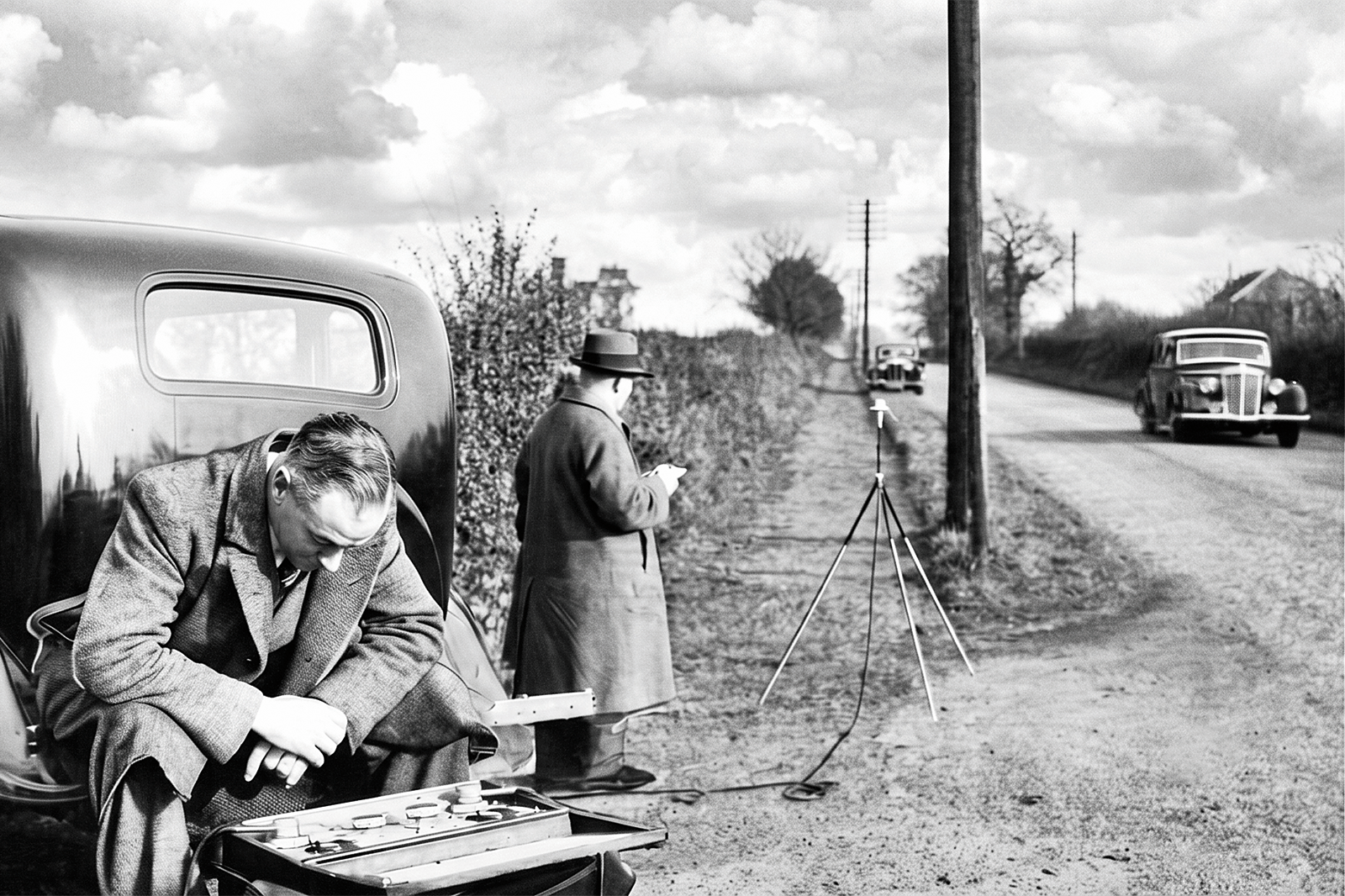
The transition of the British motoring landscape from a cacophony of unregulated mechanical roar to a strictly governed acoustic environment represents one of the most significant yet overlooked chapters in automotive history. By the conclusion of the 1930s, the United Kingdom had reached a critical juncture in its relationship with the internal combustion engine. Legal records from the era reveal that 1,282 individuals had been prosecuted under noise-related statutes by the end of a single calendar year, a staggering figure given that, at the time, noise remained largely unquantifiable in a court of law. This period of subjective enforcement, where a police officer’s personal threshold for "annoyance" served as the primary evidence for prosecution, eventually gave way to a more empirical approach. In 1937, as the "golden standard" of public silence began to erode under the weight of increasing traffic volumes, the British government and automotive industry oversaw the first practical trials of sound-measuring machinery, marking the birth of modern acoustic regulation.
The Scientific Foundation of Acoustic Measurement
Before the implementation of standardized noise limits, the scientific community had to establish a lexicon for sound that could withstand legal and engineering scrutiny. By the late 1930s, two distinct units of measurement had been adopted to categorize the output of motor vehicles: the decibel and the phon. While often used interchangeably in casual conversation, these units served fundamentally different purposes in the early days of acoustic testing.
The decibel was established as a pure measurement of mechanical energy—a logarithmic unit used to express the ratio of a physical sound pressure level to a reference pressure. However, engineers quickly realized that the decibel alone did not accurately reflect the human experience of motoring. Because the human ear does not perceive all frequencies with equal sensitivity—being more attuned to mid-range frequencies than to deep bass or high-pitched whistles—the "phon" was utilized to measure perceived loudness. This accounting for variables in human frequency perception allowed regulators to set limits based on the actual nuisance caused to the public, rather than the raw energy output of the engine.
The Ministry of Transport and the 90-Phon Benchmark
In a landmark recommendation that would set the tone for decades of engineering, the Ministry of Transport suggested that no motor vehicle should exceed a threshold of 90 phons. To provide context for contemporary observers, this level of intensity was described as being slightly higher than the noise experienced by a passenger sitting next to an open window on an express train traveling at speed. It was a standard intended to balance the technical limitations of 1930s engineering with the public’s right to a tranquil environment.
During this period, manufacturers began to use these new metrics as a point of competitive advantage. In tests conducted on Wolseley saloons—vehicles renowned for their refinement and middle-class appeal—the cars demonstrated remarkable acoustic efficiency. When cruising at 30 mph in top gear, the Wolseley recorded a peak of just 77 phons at a distance of 18 feet from the microphone. This was significantly below the Ministry’s recommended limit, proving that high-quality engineering could mitigate the "nuisance" factor that was then leading to over a thousand prosecutions annually.
The Chronology of British Noise Regulation
The timeline of noise control in the United Kingdom is characterized by a shift from broad, discretionary powers to specific, hardware-mandated requirements.
- 1930 – The Road Traffic Act: This foundational piece of legislation introduced general provisions against the "excessive noise" of motor vehicles, though it lacked the technical definitions required for consistent enforcement.
- 1934 – Expansion of Prosecution: The Act was refined to allow for more aggressive policing of urban noise, leading to the 1,282 prosecutions noted in historical records.
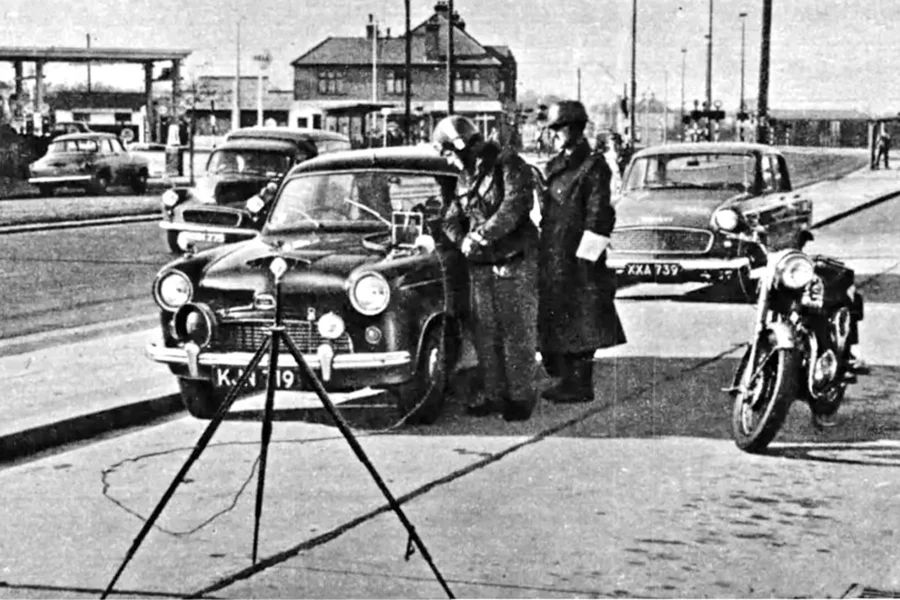
- 1937 – Introduction of Acoustic Testing: The first "sound measuring machines" were deployed in official capacities to move toward an objective standard of evidence.
- 1955 – The Silencer Mandate: As car ownership became "democratized" following the Second World War, the government introduced more stringent hardware regulations. The law stated that every internal combustion engine (ICE) vehicle must be fitted with a "silencer, expansion chamber, or other contrivance" sufficient for reducing exhaust noise to a "reasonable" level.
- 1959 – The Modification Crisis: Parliamentary debates intensified as Members of Parliament (MPs) noted that while manufacturers were producing quieter cars, owners were increasingly modifying them for performance or aesthetic reasons, leading to a new era of "unnecessary" noise.
Post-War Democratization and the Rise of the "Hellish Noise"
The 1950s heralded a transformative era for the British automotive industry. The austerity of the immediate post-war years gave way to a period of economic growth that placed car ownership within reach of the average working family. However, this democratization of the road brought with it a surge in noise pollution that the 1930s-era guidelines were ill-equipped to handle.
By 1955, the regulatory focus shifted from the behavior of the driver to the mechanical integrity of the vehicle itself. The mandate for silencers and expansion chambers was a direct response to the increasing density of suburban traffic. Yet, despite these factory-level improvements, a cultural divide was emerging. In 1959, an MP famously argued in the House of Commons that many vehicles—particularly motorcycles and sports cars—remained "obnoxious" to the public.
The core of the issue, according to legislative records, was not the manufacturers’ original designs but the aftermarket modifications performed by enthusiasts. The MP noted that while vehicles were relatively quiet when they left the factory, they were frequently "improved" in the view of their owners, resulting in what was described as a "hellish noise." This era marked the beginning of the long-standing tension between automotive enthusiasts seeking "character" and "performance" and the general public seeking peace and quiet.
Technical Analysis of Early Exhaust Systems
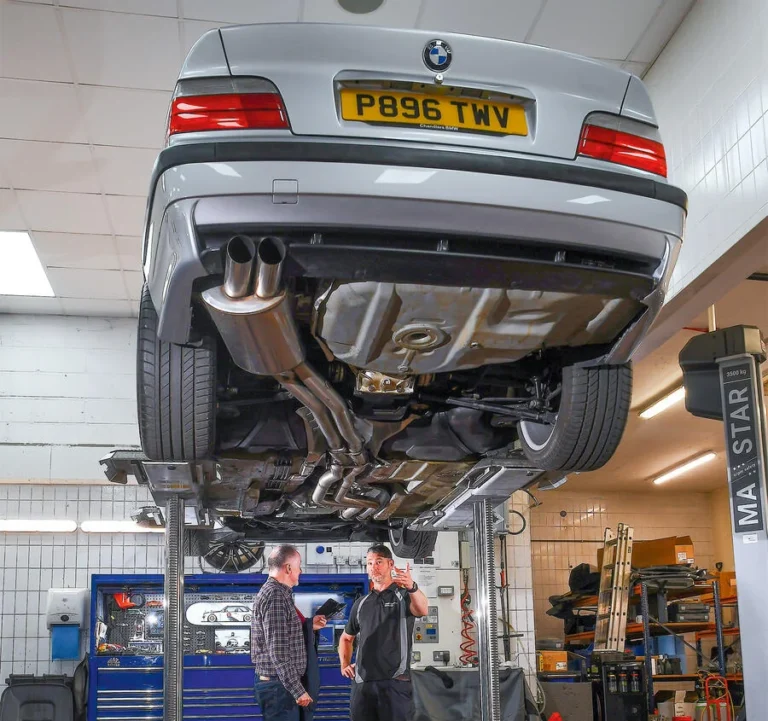
The "contrivances" mentioned in the 1955 regulations—silencers and expansion chambers—worked on principles that remain relevant in modern exhaust design. Early silencers utilized internal baffles and chambers to force exhaust gases to turn and expand, a process that dissipated the energy of the pressure waves before they exited the tailpipe.
The 1959 critique of "sports cars and motorcycles" highlighted a specific engineering trade-off: backpressure. In the mid-20th century, reducing noise almost always meant increasing backpressure, which in turn restricted engine breathing and reduced horsepower. Enthusiasts of the era would often remove internal baffles or install "straight-through" pipes to reclaim this lost power. This technical conflict necessitated the evolution of more sophisticated acoustic engineering, leading to the development of resonant chambers that could cancel out specific frequencies without significantly obstructing gas flow.
Broader Implications and Modern Comparisons
The historical struggle to quantify and control vehicle noise has direct parallels in the modern automotive landscape. Today, the 90-phon recommendation of the 1930s has been replaced by sophisticated European Union and UK standards that limit new passenger cars to approximately 70 to 72 decibels (dB(A)). This represents a massive reduction in sound energy compared to the early 20th century.
Furthermore, the "unnecessary noise" mentioned in 1959 remains a point of intense legislative focus. In the 21st century, many jurisdictions have begun trialing "acoustic cameras" or "noise cameras." These devices use an array of microphones to identify specific vehicles that exceed legal noise limits, automatically triggering a fine in a manner similar to a speed camera. This technology is the direct descendant of the "sound measuring machine" first trialed in 1937, fulfilling a century-long quest for objective, automated enforcement.
The rise of electric vehicles (EVs) has introduced a paradoxical shift in this narrative. For the first time in history, the concern is shifting from vehicles being too loud to vehicles being too quiet. Current regulations now require EVs to be fitted with Acoustic Vehicle Alert Systems (AVAS) to emit a synthetic sound at low speeds for the safety of pedestrians—a development that would have seemed unimaginable to the prosecutors and MPs of the 1930s and 50s.
Conclusion: The Legacy of the 1937 Experiments
The 1,282 people prosecuted before the advent of the sound meter serve as a reminder of a time when the law was governed by perception rather than data. The introduction of the decibel and the phon, the testing of the Wolseley saloons at 77 phons, and the 1955 mandate for silencers collectively established the framework for the modern urban environment. While the "hellish noise" of modified sports cars continues to provoke debate, the century-long effort to quantify silence has fundamentally reshaped how we design, drive, and regulate the machines that define our mobility. As we move toward a future of near-silent electric transport, the records of the 1930s remain a vital testament to the era when the world first learned to measure the roar of the road.