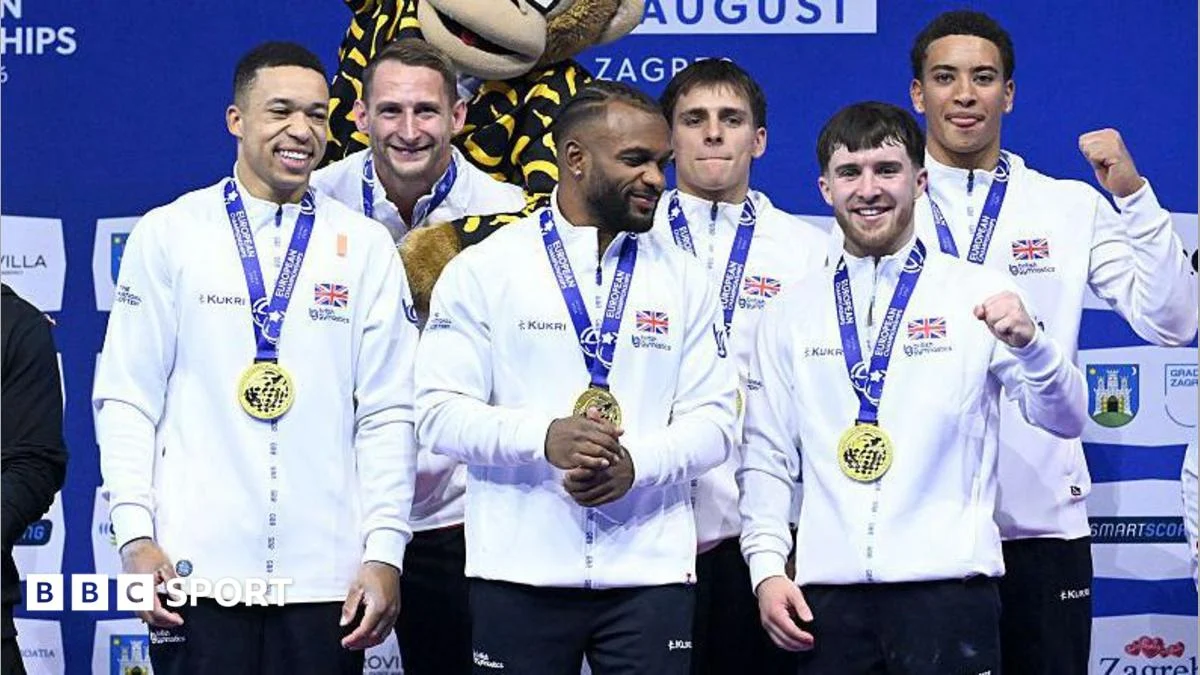
Great Britain’s men have etched their names in the annals of gymnastics history, successfully defending their team gold medal at the European Gymnastics Championships in Zagreb for the very first time. The triumphant quintet of Courtney Tulloch, Joe Fraser, Harry Hepworth, Jonas Rushworth, and Sol Scott delivered a masterful performance, amassing a commanding score of 246.728 points. Their victory was hard-fought, culminating in a nail-biting contest against the formidable World Gymnastics Group 2 (WG2/Russia) contingent, with the outcome hanging precariously until the very last routine.
This monumental achievement marks a significant milestone for British men’s artistic gymnastics, demonstrating a sustained level of excellence and consistency that has eluded the nation on the European stage until now. The jubilant atmosphere in the arena was palpable as the gymnasts embraced, their faces beaming with pride and exhaustion.
"This means everything," expressed Joe Fraser, a pivotal member of the gold-medal-winning team, his voice resonating with emotion. "It’s about consistency in team competitions, fighting through routines, pushing till the end, and that’s exactly what we did." Fraser, who had already showcased his individual brilliance earlier in the championships by securing gold on the high bar and a bronze medal on the parallel bars on Saturday, underscored the collective effort that propelled them to this triumph. "I’m unbelievably proud of each and every member of this team," he added, highlighting the camaraderie and mutual respect that define this successful squad.
The road to this historic gold was not without its challenges. Great Britain, the reigning European champions from the previous year’s competition in Leipzig, had finished a respectable third in the qualifying rounds. However, that performance was marred by several uncharacteristic errors, a fact that undoubtedly fueled their determination to deliver a flawless final.
A Calculated Comeback: From Qualifiers to Champions
The final began with Great Britain executing a strong opening sequence across the pommel horse, rings, and vault apparatus. Their early prowess quickly established a commanding lead, and they held the top position at the halfway stage of the competition. This initial surge provided a crucial buffer and instilled confidence within the team.
However, the dynamic nature of gymnastics meant that the pressure remained intense. As the competition progressed to the parallel bars and high bar, a few costly mistakes crept into their routines. These minor slip-ups, while not catastrophic, significantly narrowed the margin between Great Britain and their closest rivals, WG2. Heading into the final rotation, the difference between the two leading nations was less than a full mark, amplifying the suspense and underscoring the immense pressure on the final set of athletes.
The fate of the gold medal ultimately rested on the shoulders of Harry Hepworth. Fresh from his individual floor exercise bronze medal performance on Friday, Hepworth was tasked with delivering a high-scoring routine to secure the victory. He rose to the occasion magnificently, replicating the intensity and precision of his earlier floor performance. His captivating routine, executed with flair and technical brilliance, garnered a substantial score that was just enough to clinch the coveted gold medal for Great Britain.
"It got close towards the end, but we held our nerve and were absolutely delighted," Fraser recounted, reflecting on the tense finale. "The team competition is the big one, and we’ve won it again – incredible." His words encapsulated the immense satisfaction and disbelief that washed over the team as their victory was confirmed.
The European Gymnastics Championships: A Legacy of Excellence
The European Gymnastics Championships, a prestigious event held biennially, serves as a critical benchmark for artistic gymnastics across the continent. This year’s edition in Zagreb, Croatia, attracted the elite of European gymnastics, showcasing exceptional talent and fierce competition across both men’s and women’s disciplines. The men’s team final is widely regarded as one of the most thrilling events, demanding a combination of individual brilliance and seamless team coordination.
The competition in Zagreb was particularly significant as it also acted as a crucial stepping stone for future international events. Great Britain’s qualification for the men’s team final automatically secured their spot at the World Gymnastics Championships scheduled for October in Rotterdam. This event holds even greater importance as it will be the first Olympic qualifying event for the 2028 Games in Los Angeles, making the team’s success in Zagreb a dual victory with long-term implications.
A Dynasty in the Making: Consistency and Future Prospects
This historic back-to-back European team gold medal for Great Britain’s men’s artistic gymnastics team is a testament to the robust development programs and dedicated coaching within the sport. It signifies a period of sustained dominance, moving beyond a single breakthrough performance to establishing a true legacy. The team’s ability to adapt, overcome errors, and perform under immense pressure highlights their maturity and mental fortitude.
The success in Zagreb is not an isolated incident. Earlier in the week, Great Britain’s junior men’s team also demonstrated their prowess by retaining their own European team gold medal. This dual success across different age categories paints a bright picture for the future of British men’s artistic gymnastics, suggesting a strong pipeline of talent emerging through the ranks.
The strategic implications of this victory extend beyond the immediate accolades. Securing a place at the World Championships in Rotterdam provides the team with invaluable experience on the global stage, crucial for their Olympic aspirations. The performance in Zagreb will undoubtedly boost their confidence and allow them to refine their routines and strategies leading up to the pivotal Olympic qualifying event.
Beyond the Medals: The Impact on the Sport
The triumphant defense of their European title is expected to have a ripple effect throughout the sport in Great Britain. Increased media attention and public interest are likely to follow, potentially inspiring a new generation of young gymnasts. Furthermore, the success provides a strong financial incentive for continued investment in training facilities, coaching development, and athlete support programs.
The depth of talent within the British men’s team is evident. Joe Fraser, a seasoned competitor, has consistently delivered under pressure. Courtney Tulloch, Harry Hepworth, Jonas Rushworth, and Sol Scott each contributed significantly to the team’s overall score, showcasing a well-rounded and highly capable squad. The synergy between these athletes, their ability to support each other through challenging moments, and their shared ambition were instrumental in achieving this historic milestone.
The journey to Zagreb was characterized by rigorous training, strategic planning, and unwavering dedication. The gymnasts endured countless hours in the gym, honing their skills, perfecting their routines, and building the physical and mental resilience required for elite competition. Their victory is a powerful affirmation of their hard work and commitment.
The European Gymnastics Championships in Zagreb will forever be remembered as the event where Great Britain’s men’s artistic gymnastics team achieved a truly unprecedented feat. Their historic back-to-back team gold medal is a testament to their exceptional talent, unwavering determination, and the remarkable strength of their program. As they look towards the World Championships and the ultimate goal of Olympic success, this triumph serves as a powerful springboard, solidifying their position as a dominant force in international gymnastics.