The moment of tension centered on Stefan Richmann, who currently serves as the Head of Mini while also maintaining his role as Group Treasurer. When challenged on whether the brand should be "given the chop," Richmann’s response—stating the suggestion "hurt me personally"—avoided a direct confirmation or denial of the brand’s current profitability. This lack of financial clarity comes at a pivotal time for the automotive industry, as legacy manufacturers struggle with the dual pressures of an expensive transition to electric vehicles (EVs) and softening demand in key global markets.
The Financial Landscape: BMW’s Strategic Pivot
BMW Group is currently navigating a complex economic environment characterized by fluctuating interest rates, high energy costs in European production hubs, and intensifying competition from Chinese EV manufacturers. In its most recent quarterly reporting, the group emphasized a need for rigorous cost management to protect its margins. While the core BMW brand remains a powerhouse in the premium segment, the smaller-scale operations of Mini are increasingly viewed through a lens of efficiency.
Historically, Mini has been a high-margin "lifestyle" brand, allowing BMW to command premium prices for small cars that would otherwise compete in the low-margin B-segment. However, the cost of developing bespoke architectures for the new generation of Mini models—specifically the J01 electric hatch and the U25 Countryman—has been substantial. Analysts estimate that the "Mini" portion of BMW’s capital expenditure has risen significantly over the last three years, as the brand prepares to go fully electric by the early 2030s.
The skepticism voiced during the earnings call stems from the belief that Mini’s niche appeal may not be enough to offset the massive R&D costs associated with electrification. In a market where "economies of scale" is the primary mantra, a brand that sells fewer than 300,000 units annually faces an uphill battle to remain profitable without deep integration into its parent company’s larger platforms.
A Chronology of Transition: From Internal Combustion to "All-Electric"
To understand the current questioning of Mini’s resilience, one must look at the brand’s roadmap over the last decade. Since BMW took full control of the brand in the 1990s and relaunched it in 2001, Mini has gone through three distinct eras of growth.
- 2001–2013: The Renaissance. Mini established itself as the premier "small car with a big personality," successfully expanding from a single three-door hatch to a diverse lineup including the Clubman and the Countryman.
- 2014–2023: Platform Sharing and Optimization. BMW moved Mini onto the UKL platform, sharing architecture with front-wheel-drive BMW models like the 1 Series and X1. This era maximized profitability through component sharing.
- 2024–Present: The Electrification Gamble. The current era is defined by the "New Mini Family." This includes the Chinese-built electric Cooper (developed in partnership with Great Wall Motor) and the German-built Countryman.
The current friction arises from the transition to the third era. By decoupling the production of electric models (primarily in China) from internal combustion models (primarily in the UK), Mini has introduced new layers of logistical and geopolitical complexity. The recent introduction of EU tariffs on Chinese-made EVs has further complicated the business case for the new electric Cooper, potentially squeezing margins that were already under pressure.

The China Factor and the Spotlight Automotive Joint Venture
A significant portion of Mini’s future strategy rests on "Spotlight Automotive," a 50:50 joint venture between the BMW Group and Great Wall Motor (GWM). Based in Zhangjiagang, China, this partnership was designed to leverage China’s advanced EV supply chain to produce the next generation of electric Minis for the global market.
While this move was intended to reduce production costs, it has become a point of contention for analysts. The geopolitical landscape of 2026 is vastly different from when the deal was inked. Trade barriers and the "de-risking" strategies of Western governments have made relying on Chinese production a liability for some investors. If Mini cannot move these vehicles into the European or North American markets without heavy duties, the "loss-making" concerns voiced during the earnings call could transition from speculation to reality.
Furthermore, the dual-platform strategy—maintaining an internal combustion version of the Cooper built in Oxford alongside the electric version built in China—prevents the brand from achieving total manufacturing synergy. This "Power of Choice" strategy, while consumer-friendly, is inherently more expensive than a single-platform approach.
The Role of the Oxford Plant and UK Manufacturing
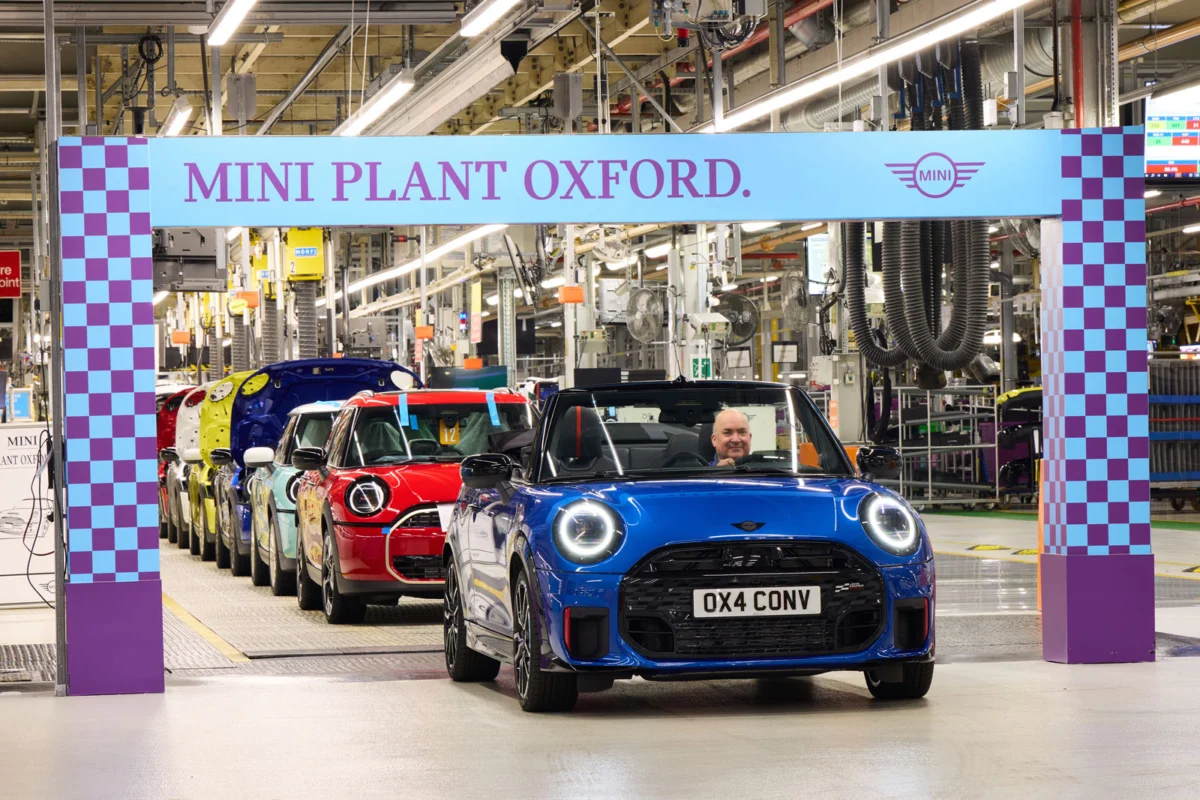
The resilience of the Mini brand is inextricably linked to its spiritual home in Oxford, England. In late 2023, BMW announced a £600 million investment to transform the Oxford plant for all-electric production by 2030. This investment was bolstered by support from the UK government, signaling a long-term commitment to the region.
However, from a purely financial perspective, the Oxford plant operates in a high-cost environment. Labor costs, energy prices, and post-Brexit logistical hurdles make UK manufacturing more expensive than the group’s operations in Hungary or China. For BMW to justify the continued existence of Mini as a standalone brand, the Oxford plant must demonstrate that it can produce the high-margin "Cooper S" and "John Cooper Works" variants with enough efficiency to contribute to the group’s overall 8-10% EBIT margin target for the automotive segment.
Industry data suggests that Mini’s sales volume in the UK and Europe has remained relatively stable, but the growth needed to satisfy investors has been elusive. In the United States, Mini remains a niche player, struggling to compete with the consumer shift toward larger SUVs and trucks—a segment where Mini’s "Big Love" marketing struggles to gain traction.
Supporting Data: Sales and Market Penetration
According to BMW Group’s 2025 year-end report, Mini delivered approximately 295,000 vehicles globally. While this represented a slight increase over the previous year, it remains below the brand’s peak performance years. More importantly, the percentage of Battery Electric Vehicles (BEVs) in Mini’s sales mix has climbed to nearly 20%, but these units are believed to have lower per-vehicle margins than their gasoline counterparts due to the high cost of batteries and the aforementioned tariff issues.

Comparing Mini to other premium small-car competitors, such as Audi’s A1 (which is being phased out) or Mercedes-Benz’s A-Class (also facing a precarious future), it is clear that the "premium compact" segment is shrinking. Investors are increasingly asking why BMW should continue to invest in a segment that its primary rivals are abandoning in favor of larger, more profitable SUVs.
Official Responses and the "Emotion" of Branding
The response from Stefan Richmann during the earnings call—focusing on the "hurt" caused by the question—highlights a fundamental aspect of the Mini brand: it is an emotional asset. For BMW, Mini is not just a line item on a balance sheet; it is a "conquest" brand that attracts younger, more urban customers who might eventually graduate to the BMW brand.
In official statements following the call, a BMW spokesperson reiterated that "Mini is an integral part of the BMW Group’s future. Its unique identity and loyal customer base provide a strategic advantage in the urban mobility sector." However, the spokesperson declined to provide specific EBIT margin figures for the Mini brand alone, as BMW typically reports financial results at the group level.
Fact-Based Analysis of Implications
If the skepticism from analysts persists and Mini’s margins do not improve as the new model rollout stabilizes, BMW may be forced to consider several paths:
- Deeper Integration: Moving Mini even closer to BMW’s mechanical architecture, effectively making Minis "re-skinned" BMWs to save on R&D. This risks diluting the brand’s unique "go-kart" handling characteristics.
- Portfolio Trimming: Eliminating slower-selling models like the 5-door hatch or the Aceman to focus exclusively on the core 3-door Cooper and the Countryman SUV.
- Strategic Re-evaluation of Manufacturing: If the China-built EVs remain subject to high tariffs, BMW may have to accelerate the timeline for moving EV production to Oxford or other European plants, a move that would require even more capital expenditure.
The question of whether Mini is "loss-making" is complicated by how the company allocates its shared R&D costs. If Mini is carrying a proportionate share of the group’s software and battery development costs, its individual profitability may indeed look slim. However, as part of a larger ecosystem, its value in terms of fleet CO2 averages and brand diversity remains significant.
Conclusion: A Brand at a Crossroads
As parent company BMW hits headwinds, the resilience of Mini is no longer a given. The brand is currently in the "valley of death" common to the EV transition—spending heavily on the future while the profitable legacy of the past begins to fade. The blunt questioning from analysts serves as a wake-up call that the "lifestyle" appeal of Mini must be backed by robust financial performance.
For the Mini brand to survive the decade and prove its necessity to the BMW Group, it must successfully navigate the geopolitical minefield of international trade, stabilize its manufacturing costs in Oxford, and prove that there is still a profitable market for premium small cars in an era dominated by massive SUVs. The "pain" felt by Stefan Richmann is a reflection of a brand that is fighting to maintain its identity in a corporate world that increasingly prioritizes margins over heritage. The coming 24 months will be the true test of whether Mini can remain a "jewel in the crown" or if it will become a casualty of the automotive industry’s most turbulent era.