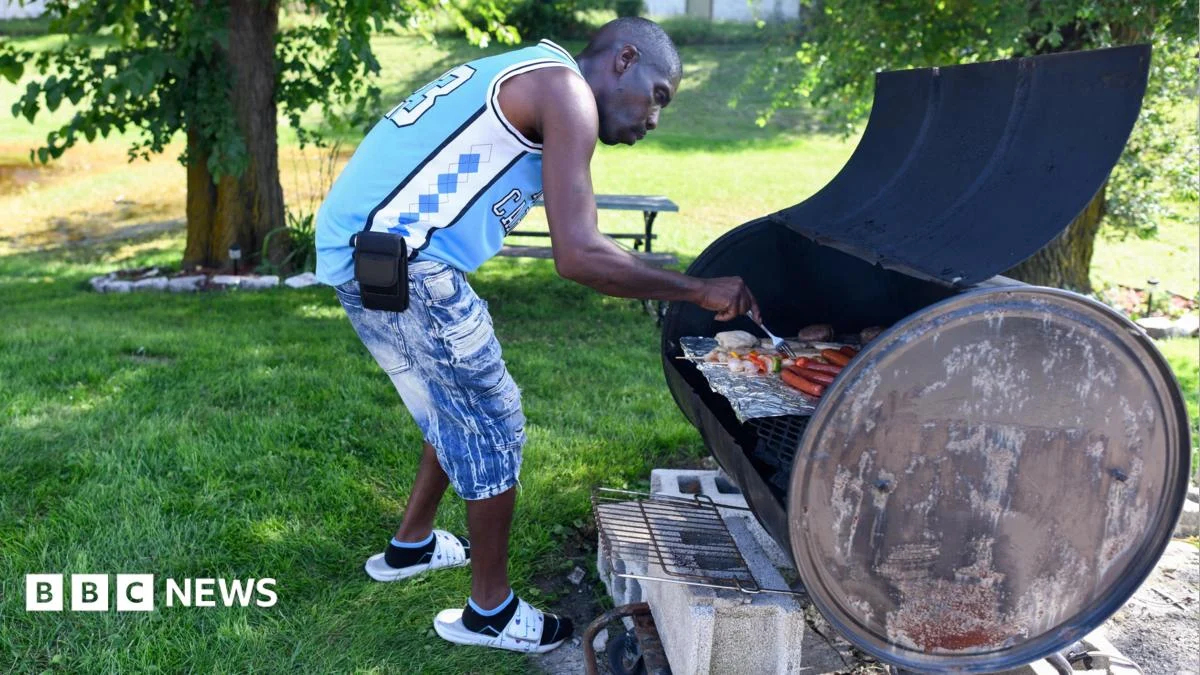
For Terry Dubois, a 77-year-old resident of Gary, Indiana, the relentless heat and the absence of basic amenities have become an enduring reality. It has been almost two weeks since a powerful storm tore through her town, leaving her, and tens of thousands of others, in a state of prolonged disarray without electricity. Her daily existence now hinges on the kindness of friends who deliver non-perishable food, a stark reminder of the disruption to normalcy. The only tether to the outside world is a power bank, a gift from her son, keeping her phone charged and her lines of communication open. While Dubois expressed gratitude that the summer temperatures have not been excessively punishing, allowing her to cope without air conditioning, the ordeal has been unprecedented. "I’ve never seen a storm like that in my entire life. Never, never," she recounted to the BBC, describing it as "a sheer wall of wind."
The August 11th Midwest Storm: A Chronicle of Fury
The meteorological event that plunged Gary into darkness and hardship struck on August 11th, a violent wave of sudden, severe storms that unleashed a barrage of flooding and tornadoes across the US Midwest. The impact was particularly brutal in cities like Chicago and various parts of Indiana, where the collective devastation tragically claimed seven lives. Gary, a former industrial powerhouse situated along the southern shore of Lake Michigan, bore the brunt of the atmospheric fury. According to the National Weather Service, wind gusts in the area peaked at an astounding 99 miles per hour (159 kilometers per hour). While the most intense phase of the storm lasted a mere five to ten minutes, its catastrophic effects have lingered for twelve days, reshaping the daily lives of its inhabitants.
This particular storm system, characterized by its widespread damaging winds, bore hallmarks of what meteorologists often classify as a derecho – a widespread, long-lived, straight-line wind storm that is associated with a fast-moving group of severe thunderstorms. Derechos are known for causing significant damage over extended geographic areas, often mimicking the destruction of a tornado, but across a much broader path. The August 11th event traversed multiple states, leaving a trail of uprooted trees, downed power lines, and structural damage in its wake, overwhelming local infrastructure and emergency services.
Gary’s Enduring Vulnerabilities Amidst the Outage
Power outages are not an unfamiliar occurrence in this region of the US, which frequently experiences severe weather. However, the current situation in Gary, with outages persisting for more than a week, stands out as an uncommon and critical event. The city, once globally renowned as home to the world’s largest steel mill and a vibrant industrial heartland, now grapples with significant socio-economic challenges. US Census data reveals that one-third of Gary’s approximately 70,000 residents live in poverty, a demographic reality that significantly amplifies the impact of such a prolonged crisis.
Beyond the immediate damage to properties, the lack of electricity has triggered a cascade of secondary crises. Residents have found themselves struggling to access and preserve food, with refrigeration becoming impossible. Maintaining basic hygiene has also become a daily struggle in homes without running water or hot water heaters. The health implications are particularly severe for vulnerable populations. There have been disturbing reports of individuals unable to refrigerate life-saving medications, while a wheelchair user faced the harrowing experience of having to crawl down stairs due to non-functional lifts.
Kyle Allen, another Gary resident, highlighted the eerie transformation of the city at night. "At night, some roads have been pitch black without working street lights," he told the BBC. Allen, accustomed to shorter power interruptions, noted that this experience has been fundamentally different, especially since he recently took on the responsibility of caring for his 95-year-old father. Proactively, he invested in a generator, a critical piece of equipment that has sustained him and his father since the initial power failure, underscoring the necessity of personal resilience in the face of systemic breakdown.
The Human Toll: "Absolutely Horrible" Conditions
The emotional and physical toll on Gary’s residents is palpable. Shatiya Hardin articulated the pervasive sentiment, describing the situation as "absolutely horrible." In an interview with CBS, the BBC’s US partner, she conveyed the daily grind: "At night we’re sweating, we’re irritable, we have children to look out for, elderly people who need electricity for oxygen tanks. It’s not OK for us to continually be in survival mode." Her words encapsulate the profound distress and frustration permeating the community, particularly among those caring for dependents or individuals with critical medical needs. The reliance on electricity for medical equipment, such as oxygen concentrators, nebulizers, and refrigerated insulin, transforms a mere inconvenience into a life-threatening emergency.
The prolonged absence of power also disrupts crucial social services. Schools may remain closed, impacting children’s education and parents’ ability to work. Local businesses, many of which are small and independently owned, face immense financial losses, unable to operate cash registers, process electronic payments, or maintain inventory. This exacerbates the economic fragility of an already economically challenged community, potentially leading to further job losses and business closures.
Mounting Frustration and Legal Action Against Nipsco
Amidst the growing despair and anger, local residents have taken decisive action. A class-action lawsuit has been launched against Nipsco, the utility company responsible for power distribution in the area. The lawsuit alleges that Nipsco failed in its duty to adequately manage the trees that ultimately brought down power lines during the storm, a critical negligence claim given the predictable nature of severe weather in the Midwest.
One of the plaintiffs, Jack Tipold, provided a harrowing account of the immediate impact of the outage. He recounted being in the middle of a dental surgery procedure when the power abruptly failed. Forced to abandon the procedure, he was discharged without adequate pain medication, enduring 48 agonizing hours. "I had all my teeth removed, and no medication for 48 hours. Let me tell you something, it was a struggle," Tipold told CBS, his experience highlighting the immediate and severe medical ramifications beyond just the lack of electricity.
Nipsco, in response to the allegations and the lawsuit, has publicly denied any wrongdoing. The company stated its intention to "vigorously" defend itself in court, suggesting a protracted legal battle may lie ahead. Utility companies typically have detailed tree-trimming schedules and vegetation management programs designed to mitigate the risk of outages during storms. The lawsuit will likely scrutinize the specifics of Nipsco’s adherence to these standards and the adequacy of its infrastructure maintenance in a region prone to severe weather.
Community Advocacy and Official Responses
The crisis has also galvanized community leaders and faith-based organizations. On a recent Saturday, alarmed by the protracted outage, faith leaders convened a press conference outside a local church, transforming it into a beacon of advocacy. "We come together today with one voice, asking those who have the power… to release the resources to our brothers and our sisters, our mothers and our fathers, because 12 days is long enough," one leader declared, as reported by the Indianapolis Star. This collective appeal underscores the urgent need for external assistance and a more robust, coordinated response from both the utility company and governmental bodies.
From an official standpoint, the City of Gary’s administration has been coordinating emergency services, establishing cooling and charging centers for residents, and working with local charities and the Indiana Department of Homeland Security to distribute food and water. Mayor Jerome Prince’s office has likely been inundated with calls for assistance and has faced the challenge of managing public expectations while advocating for accelerated restoration efforts from Nipsco. State-level support, potentially from the Indiana Emergency Management Agency (IEMA), would typically involve deploying resources, coordinating mutual aid from other utility companies, and potentially seeking federal assistance if the scope of the disaster warrants it. The involvement of FEMA (Federal Emergency Management Agency) would indicate a presidential disaster declaration, unlocking significant federal funding and resources for recovery.
Broader Implications: Infrastructure Resilience and Social Equity
This protracted outage in Gary serves as a critical case study in infrastructure resilience and social equity. The existing vulnerabilities of Gary’s population, combined with an aging power grid, create a perfect storm for magnified disaster impacts. The incident underscores the critical importance of investing in grid modernization, including burying power lines where feasible, implementing smart grid technologies for quicker outage detection and restoration, and robust vegetation management programs. Climate change models predict an increase in the frequency and intensity of severe weather events, making such investments not merely desirable but essential for public safety and economic stability.
The disproportionate impact on Gary’s low-income residents highlights a persistent issue of environmental and social injustice. Communities with fewer resources often live in areas with older infrastructure, have less capacity for personal preparedness (e.g., generators, emergency funds), and rely more heavily on public services that are strained during crises. The "survival mode" described by Shatiya Hardin is a stark illustration of this inequity, where basic necessities become luxuries and daily life devolves into a struggle for sustenance and safety.
The class-action lawsuit against Nipsco could also set an important precedent regarding utility company accountability. If successful, it could compel utility providers nationwide to re-evaluate and enhance their maintenance protocols, especially concerning tree management, and potentially lead to greater regulatory oversight. The legal battle will scrutinize the balance between cost-cutting measures and the imperative of maintaining a reliable and safe power supply for all customers.
As Gary slowly begins its arduous recovery, the experiences of Terry Dubois, Kyle Allen, Shatiya Hardin, and Jack Tipold will serve as powerful testaments to the human cost of infrastructural failure and the resilience of a community striving for normalcy. The path to full restoration will be long, and the lessons learned from this challenging period will undoubtedly shape future disaster preparedness strategies for the city and potentially for other vulnerable communities across the nation.