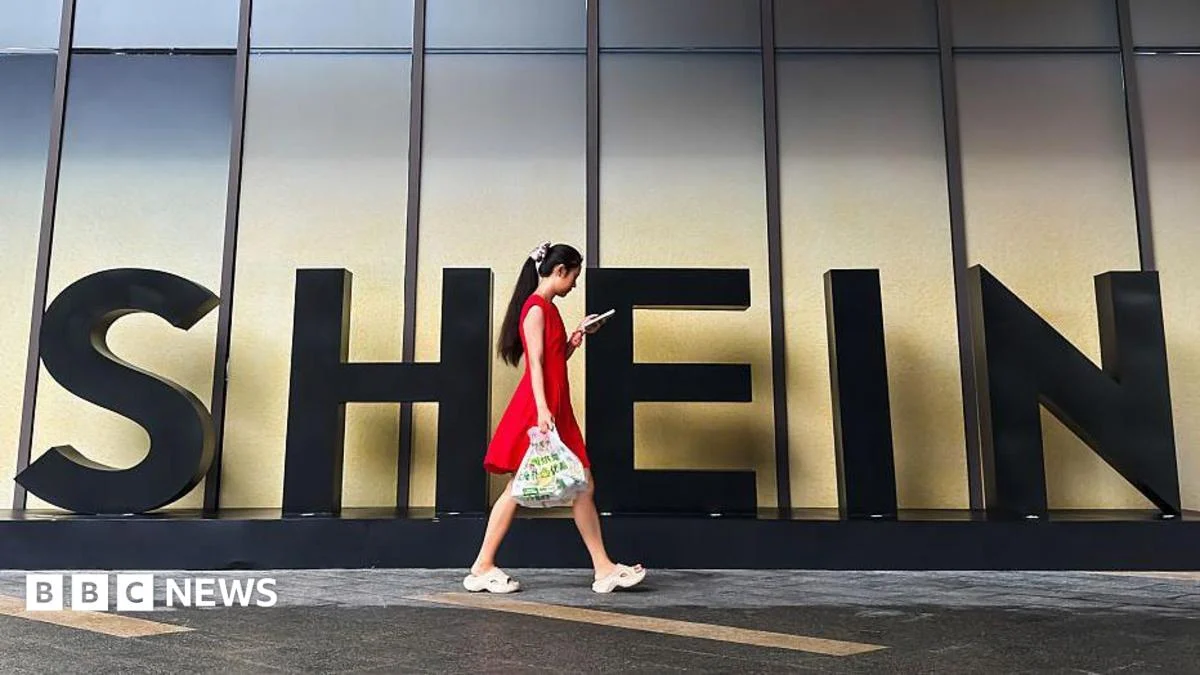
Fast-fashion behemoth Shein is poised to make its highly anticipated stock market debut in Hong Kong on September 1, aiming for a valuation of approximately $26.8 billion (£19.8 billion). This significant move follows a protracted journey to public markets, marked by unsuccessful attempts to list in the United States and London, where the company faced intense regulatory scrutiny. The listing represents a pivotal moment for the Singapore-headquartered firm, originally founded in China, as it seeks to stabilize its financial footing and secure capital amidst a challenging global economic and regulatory landscape.
The Road to Hong Kong: A History of IPO Attempts
Shein’s ambition to go public has been a saga spanning several years, reflecting both its explosive growth and the controversies that have shadowed its operations. Initial reports of a potential IPO emerged as early as 2020, with the company exploring a New York listing. However, these plans encountered significant headwinds, primarily due to escalating geopolitical tensions between the US and China, coupled with increasing scrutiny from American lawmakers regarding Shein’s labor practices, supply chain transparency, and data security protocols. The US Securities and Exchange Commission (SEC) has tightened its oversight of foreign companies listing on American exchanges, particularly those with substantial ties to China, demanding greater disclosure and accountability.
Following the impasse in the US, Shein pivoted its attention to the London Stock Exchange (LSE) in early 2024, reportedly considering a listing that could have valued it at up to $50 billion. This attempt also faltered, as UK regulators and politicians raised similar concerns about the company’s ethical standards, environmental impact, and corporate governance. Reports indicated that a letter signed by MPs and peers was sent to the UK government, urging them to block the listing due to allegations of forced labor in its supply chain and its significant environmental footprint. This public and political opposition effectively derailed the London plans, forcing Shein to seek an alternative venue.
The choice of Hong Kong for its IPO is a strategic one, offering a more familiar regulatory environment and a gateway to Chinese capital for a company with deep operational roots in mainland China. Despite its Singapore headquarters, Shein’s vast network of manufacturers remains predominantly in China, making a listing in a Chinese special administrative region a logical, if not entirely uncontroversial, progression.
Shein’s Ascent: The Ultra-Fast Fashion Phenomenon
Founded in Nanjing, China, in 2008 by Chris Xu, Shein initially operated as an online retailer for wedding dresses before transforming into a global fast-fashion powerhouse. Its meteoric rise is largely attributed to an innovative, data-driven business model that revolutionized the fashion industry. Dubbed "ultra-fast fashion," Shein leverages real-time trend data, social media analytics, and artificial intelligence to identify emerging styles with unparalleled speed. This information is then fed into a highly agile supply chain, primarily composed of a vast network of thousands of small and medium-sized factories in China.
This "on-demand" manufacturing approach allows Shein to produce small batches of new items—sometimes as few as 50-100 pieces—test their market appeal, and rapidly scale production for successful designs. This drastically reduces waste compared to traditional fashion retailers, who often produce large quantities upfront. By offering an astounding volume of new products daily—reportedly thousands of new SKUs added to its platform each day—and selling them at ultra-low prices, Shein quickly captured a massive global audience, particularly among Generation Z consumers. Its aggressive digital marketing strategies, heavy reliance on influencer collaborations, and user-generated content on platforms like TikTok and Instagram further amplified its reach. Today, Shein boasts customers in over 150 countries, positioning itself as one of the world’s largest online fashion retailers.
A Steep Valuation Adjustment
While Shein’s growth has been phenomenal, its forthcoming Hong Kong IPO valuation of approximately $26.8 billion marks a significant reduction from its peak. In 2022, private funding rounds reportedly valued the company at an eye-watering $100 billion, briefly making it one of the world’s most valuable privately held startups. The current target valuation represents a substantial decline of over 70% from that peak, reflecting a confluence of factors including weaker sales growth projections, escalating operational costs, and a more cautious investor sentiment in the global market.
The company’s filing on Monday indicated an offering of nearly 280 million shares, priced between HK$47.60 ($6.07; £4.45) and HK$49.50 each. At the top end of this range, the share sale is expected to raise approximately $1.77 billion (£1.3 billion) for the company. This capital injection is crucial for funding its global expansion, supply chain enhancements, and addressing increasing regulatory and sustainability demands. However, the revised valuation underscores a more realistic assessment by investors of the company’s near-term profitability and growth trajectory in an increasingly competitive and scrutinized environment. Wall Street investment giants Goldman Sachs, Morgan Stanley, and JP Morgan are backing the IPO, signaling confidence in the company’s long-term prospects despite the adjusted valuation.
Regulatory Gauntlet and Geopolitical Crosscurrents
The regulatory challenges Shein has faced in the US and UK are multifaceted, stemming from its opaque supply chain, rapid production model, and operational ties to China. Critics have consistently raised concerns about potential labor abuses, including allegations of forced labor in its manufacturing facilities, particularly concerning cotton sourced from Xinjiang. While Shein has repeatedly denied these allegations and invested in compliance measures, the lack of transparency in its vast network of third-party suppliers remains a persistent issue for Western regulators and human rights organizations.
Environmental concerns also weigh heavily on the fast-fashion industry, and Shein, with its high volume of low-cost production, is frequently singled out. The environmental footprint of its rapid production cycles, reliance on synthetic materials, and extensive global shipping networks contribute to significant waste and carbon emissions. Regulators and consumers alike are increasingly demanding greater sustainability and accountability from fashion brands.
Furthermore, data security and privacy have emerged as critical issues, especially for companies with Chinese origins operating globally. The potential for data access by the Chinese government has been a major sticking point for US regulators, contributing to the reluctance to approve a US listing. These concerns are amplified by broader geopolitical tensions between the world’s two largest economies. As economics associate professor Feng Qu from Nanyang Technological University noted, Chinese companies are increasingly wary of listing in the US due to the risk of being de-listed amid escalating trade and political disputes. This climate makes Hong Kong a more attractive, and perhaps safer, haven for Shein. Feng Qu also suggested that Shein is likely to command a higher valuation in Hong Kong than it would in London, where regulatory scrutiny proved to be a significant deterrent.
The De Minimis Dilemma: Reshaping the Competitive Landscape
A significant factor impacting Shein’s recent sales growth, particularly in the critical US market, has been the evolving regulatory landscape surrounding international trade. Marguerite LeRolland from market research company Euromonitor International highlighted to the BBC that Shein’s sales have slowed in the US, partly due to the ending of the "de minimis exemption."
The de minimis rule in the US allowed goods valued under $800 to be imported without incurring import duties or extensive customs checks. This exemption was a cornerstone of the business models for ultra-fast fashion retailers like Shein and its fierce rival, Temu. By shipping individual small parcels directly to consumers from China, these companies could bypass traditional import tariffs and complex logistical hurdles, enabling them to offer incredibly low prices. This advantage was instrumental in their rapid expansion and ability to undercut traditional retailers.
The removal or tightening of the de minimis exemption, or increased scrutiny of its application, directly impacts Shein’s cost structure. As Jane Foley, Rabobank’s head of FX strategy, told the BBC’s Today programme, the ending of this exemption "really did undermine the core business model of Shein." She added that the European Union has implemented similar measures, indicating a global trend towards closing this loophole. Without the de minimis advantage, Shein faces increased costs related to import duties and compliance, which could "narrow the price gap" between its products and those of competitors like Primark and H&M, as LeRolland observed. This shift forces Shein to re-evaluate its pricing strategies and supply chain efficiencies to maintain its competitive edge.
Operational Headwinds: Geopolitics and Accounting Shifts
Beyond regulatory and competitive pressures, Shein’s recent financial performance has also been affected by broader global events. The company explicitly stated in its filing that the "Iran war" had a discernible impact on demand, increased operational costs, and caused delays in deliveries across some markets. While specific details of this impact were not fully elaborated, geopolitical instability in critical shipping lanes, particularly through the Middle East, can significantly disrupt global supply chains, leading to higher freight costs, longer transit times, and increased logistical complexities. For a company like Shein, which relies on swift, cost-effective global delivery, such disruptions can directly erode profit margins and customer satisfaction.
Moreover, the company’s first-quarter figures reflected a paper loss of $328 million attributed to an accounting change related to special investor shares. These shares, which can be converted into ordinary stock at a later date, are subject to value fluctuations before a listing. Such accounting adjustments, while sometimes technical, can present a more volatile financial picture to potential investors and highlight the complexities involved in preparing a large private company for public trading.
The Future of Fast Fashion: Challenges and Outlook
As Shein prepares for its Hong Kong debut, questions linger about its ability to sustain its rapid growth trajectory in an increasingly scrutinized and competitive environment. Investors are keenly watching whether higher operational costs, intensified regulatory challenges, and a shifting trade landscape will impact Shein’s core ability to deliver goods swiftly and cheaply to market.
The rivalry with Temu, another Chinese-founded e-commerce giant that has quickly gained traction in Western markets, further intensifies the competitive landscape. Both companies operate on similar ultra-low-price models, vying for the same cost-conscious consumer base. The long-term sustainability of such models, particularly as regulatory environments tighten and consumer awareness about ethical and environmental issues grows, remains a subject of ongoing debate.
Shein’s IPO in Hong Kong marks a new chapter for the company, offering a pathway to much-needed capital and public market legitimacy after years of private growth and regulatory hurdles. While the valuation is significantly tempered from its peak, the listing represents a strategic recalibration, positioning Shein to navigate the complexities of global commerce from a more favorable regional base. The success of this IPO will not only be a testament to Shein’s resilience but also a crucial indicator of investor appetite for high-growth, controversial e-commerce giants in an evolving global economy.