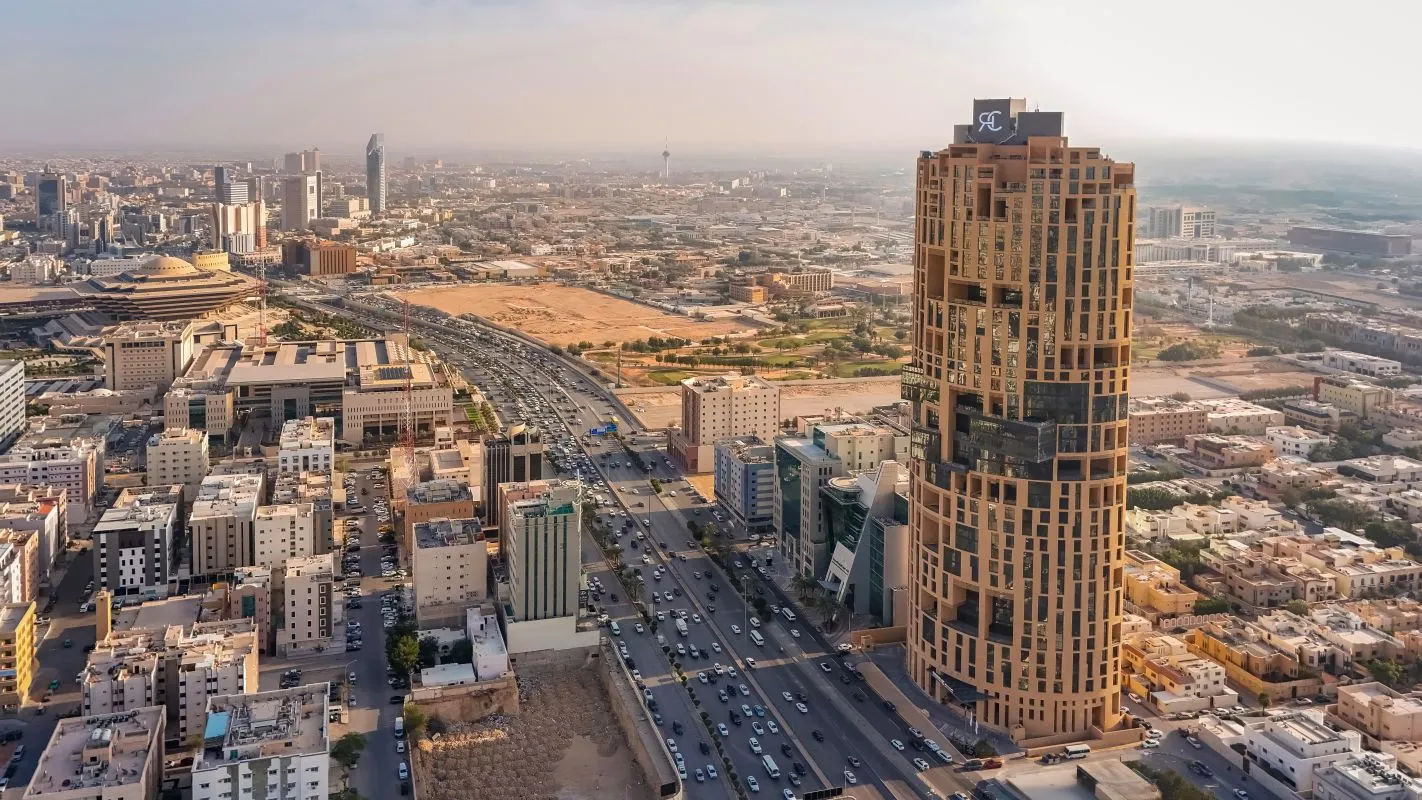
Radisson Hotel Group has reaffirmed its aggressive expansion strategy within the Kingdom of Saudi Arabia, signaling a robust commitment to the nation’s Vision 2030 despite ongoing geopolitical instability across the Middle East. The hospitality giant currently operates 35 properties within the Kingdom, with an additional 15 hotels under active construction. This development pipeline is a critical component of Radisson’s broader strategic objective to reach a milestone of 100 hotels in operation and under development across Saudi Arabia by the year 2030. This target remains unchanged even as regional tensions, including historical and contemporary friction points involving major regional powers, have historically influenced tourism flows in the Gulf.
The resilience of Radisson’s strategy is rooted in a fundamental shift in the Middle Eastern hospitality landscape: the emergence of Saudi Arabia as a self-sustaining tourism market driven by domestic demand. While neighboring hubs like the United Arab Emirates remain heavily reliant on international transit and global tourism, Saudi Arabia’s large population and its status as the center of Islamic pilgrimage provide a unique "hedge" against external shocks. According to Elie Younes, Executive Vice President and Global Chief Development Officer at Radisson Hotel Group, the company’s long-term outlook remains bullish. While acknowledging a potential short-term deceleration in signing volumes due to regional disruptions, Younes emphasized that the underlying fundamentals of the Saudi market—specifically those tied to the government’s economic diversification efforts—provide a stable foundation for growth that outweighs temporary geopolitical volatility.
A Strategic Chronology of Growth in the Kingdom
The expansion of Radisson Hotel Group in Saudi Arabia is not a sudden pivot but the result of a multi-decade evolution of its presence in the Middle East. To understand the current momentum, it is necessary to examine the timeline of the group’s engagement with the region.
In the early 2000s, Radisson’s presence was largely defined by its flagship Radisson Blu brand, which catered primarily to international business travelers in major hubs like Riyadh and Jeddah. During this period, the hospitality sector in the Kingdom was largely segmented into high-end corporate hotels and basic accommodation for religious pilgrims. However, the announcement of Saudi Vision 2030 in 2016 served as a catalyst for a paradigm shift.
Following the 2016 announcement, Radisson began diversifying its brand portfolio to capture a wider demographic. The introduction of Radisson RED and the Radisson Collection signaled a move toward lifestyle and luxury segments, respectively. By 2019, the group had accelerated its signing of management agreements, focusing on the "giga-projects" being developed by the Public Investment Fund (PIF). Between 2020 and 2023, despite the global downturn in travel caused by the COVID-19 pandemic, Radisson maintained its development pace in Saudi Arabia, opening several key properties in secondary cities and expanding its footprint in the holy cities of Makkah and Madinah.
As of 2024, the group is transitioning into a phase of rapid execution. The current pipeline of 15 hotels under construction represents a mix of urban corporate hotels and resort-style properties, reflecting the Kingdom’s push to become a global leisure destination.
Supporting Data: The Economic Logic of the 100-Hotel Target
The decision to target 100 properties is supported by a wealth of data indicating that Saudi Arabia is currently the fastest-growing hospitality market in the world. The Saudi Ministry of Tourism has set an ambitious goal of attracting 150 million visitors annually by 2030, a significant increase from its previous target of 100 million. To facilitate this, the government is investing over $800 billion into the tourism sector.
Industry data suggests that the Kingdom requires an additional 250,000 to 300,000 hotel rooms to meet the projected demand of Vision 2030. Currently, the supply remains concentrated in major cities, leaving significant "white space" in emerging tourist destinations like AlUla, the Red Sea Project, and NEOM. Radisson’s strategy specifically targets this supply gap.
Furthermore, domestic tourism in Saudi Arabia has shown remarkable resilience. In 2023, domestic tourism spending reached record highs, as Saudi nationals and residents increasingly opted for "staycations" and internal travel. This domestic base acts as a buffer; when international arrivals dip due to regional geopolitical concerns, the local population continues to travel for business, family, and leisure. In contrast, markets like Dubai, where international visitors account for the vast majority of hotel occupancy, are more sensitive to fluctuations in global travel sentiment and aviation disruptions.
Analyzing the Domestic Hedge: Saudi Arabia vs. the UAE
The disparity between the Saudi and Emirati hospitality models is a focal point of Radisson’s regional analysis. For decades, the UAE—and Dubai in particular—has been the gold standard for Middle Eastern tourism. However, the UAE’s model is built on being a "global crossroads." While this has brought immense success, it also makes the market vulnerable to external events, such as conflicts that affect international flight paths or global economic recessions.
Saudi Arabia’s model is increasingly bifurcated. While it is aggressively courting the international luxury traveler, its "floor" is supported by:
- Religious Tourism: The Hajj and Umrah pilgrimages provide a constant, non-discretionary stream of millions of visitors annually, regardless of the global economic climate.
- The Youth Bulge: With over 60% of the Saudi population under the age of 35, there is a massive and growing demand for modern, lifestyle-oriented hospitality brands like Radisson RED.
- Government Spending: The continuous flow of capital into infrastructure and giga-projects ensures a steady stream of corporate and consultative travel.
Radisson’s leadership has noted that on the "trading side"—referring to day-to-day hotel operations and occupancy rates—Saudi properties have remained more stable than those in other Gulf Cooperation Council (GCC) countries during periods of regional tension.
Official Responses and Regional Sentiment
The sentiment expressed by Radisson Hotel Group mirrors that of other major hospitality stakeholders and Saudi officials. The Saudi Ministry of Investment has repeatedly stated that the "long-term transformation of the Saudi economy is decoupled from short-term regional politics."
Elie Younes’s comments reflect a pragmatic "wait-and-see" approach regarding the speed of expansion, but a "full-steam-ahead" approach regarding the ultimate destination. "Our targets for the region have not changed," Younes stated, acknowledging that while signing volumes might experience a "slight slowdown" this year due to external uncertainties, the commitment to the 2030 roadmap is unwavering.
Industry analysts suggest that this confidence is also fueled by the increasing ease of doing business in the Kingdom. The streamlining of visa processes—including the introduction of the e-visa for 63 countries—and the modernization of legal frameworks for foreign investment have made it significantly easier for global operators like Radisson to scale their operations.
Broader Impact and Future Implications
The implications of Radisson’s 100-hotel commitment are significant for the broader Middle Eastern economy. First, it signals to other institutional investors that the Saudi market has reached a level of maturity where it is seen as a safe haven for long-term capital, even within a volatile region.
Second, the expansion will have a profound impact on the local labor market. The hospitality sector is a primary vehicle for "Saudization"—the government policy aimed at increasing the employment of Saudi nationals in the private sector. Radisson’s growth will necessitate the hiring and training of thousands of Saudi citizens, contributing to the development of a professional local workforce in the service industry.
Finally, Radisson’s focus on diverse brands suggests a move toward a more "normalized" hospitality market. By moving beyond the traditional five-star luxury model to include mid-scale and lifestyle brands, Radisson is helping to create a tourism ecosystem that can accommodate a variety of price points. This is essential if Saudi Arabia is to transition from a niche religious and business destination into a mass-market global tourism powerhouse.
As 2030 approaches, the success of Radisson’s "Saudi-first" strategy will likely serve as a benchmark for the global hospitality industry. If the Kingdom can continue to leverage its domestic demand to weather regional storms, it may well redefine the economic geography of tourism in the Middle East, shifting the center of gravity toward Riyadh and the Red Sea coast. For Radisson, the gamble is clear: the short-term risks of regional instability are secondary to the long-term rewards of being a dominant player in the world’s most ambitious economic transformation project.