When passengers settle into their seats on a commercial flight, they anticipate a seamless journey: a smooth takeoff, breathtaking views above the clouds, a steady descent, and ideally, an on-time or even early arrival at their destination. However, this expectation often collides with the reality of modern air travel, where delays on the tarmac or prolonged holding patterns in the sky can transform a smooth experience into one fraught with anxiety, jeopardizing connections and disrupting personal schedules. This pervasive challenge within the global aviation system has spurred NASA, in collaboration with industry partners, to pioneer advanced technologies aimed at fundamentally reshaping the air travel experience, making it safer, more efficient, and significantly more predictable from gate to gate.
The Complex Tapestry of Modern Air Travel Challenges
Large airports represent some of the most intricate and high-stakes operational environments in the world. The sheer volume of activity—aircraft taxiing, ground crews operating, and service vehicles maneuvering—creates a dynamic, often congested landscape on runways and taxiways. Globally, the National Airspace System (NAS) manages an average of over 45,000 flights daily, accommodating millions of passengers. This immense scale inherently introduces complexities, where even minor inefficiencies can cascade into widespread disruptions. A significant portion of flight delays originates on the ground, stemming from congestion, communication bottlenecks, and the inherent limitations of traditional, voice-based air traffic control (ATC) systems. These delays not only frustrate passengers but also impose substantial economic burdens on airlines, costing billions of dollars annually in fuel consumption, crew overtime, and passenger compensation. Moreover, the environmental impact of aircraft idling on taxiways or circling in holding patterns due to congestion contributes significantly to carbon emissions, underscoring the urgent need for innovative solutions.
NASA’s Strategic Approach: Pioneering Safer, Smarter Skies
For decades, NASA has been at the forefront of aeronautical research, contributing foundational technologies that have modernized commercial aviation. Its current initiatives, spearheaded by researchers at NASA’s Ames Research Center in California’s Silicon Valley, represent a concentrated effort to tackle the most persistent challenges in air travel. Working closely with industry giants like Boeing, NASA has been advancing a suite of field tests focused on three critical areas: digital taxi information, safe taxiway operations, and safe runway environments. These interconnected projects aim to mitigate human error, enhance situational awareness, reduce pilot and controller workloads, and ultimately streamline the flow of air traffic.
Revolutionizing Ground Operations: Digital Taxi and Enhanced Safety Systems
A cornerstone of NASA’s recent efforts involves the implementation of digital taxi information. Historically, pilots have relied on verbal instructions from air traffic controllers for taxiway guidance—a system prone to misinterpretation, particularly in complex airport layouts or adverse weather conditions. During NASA’s digital taxi tests, a paradigm shift occurred: pilots received taxiway guidance directly on cockpit displays or tablets. This digital interface allowed aircraft to autonomously follow pre-defined routes, significantly reducing the reliance on verbal commands. Researchers meticulously monitored a sophisticated array of sensors designed to identify any vehicles or other aircraft impeding the taxi path or runway. The results were compelling: this system not only reduced the workload for both pilots and air traffic controllers but also demonstrably lowered the risk of verbal errors, a critical factor in ground incidents.
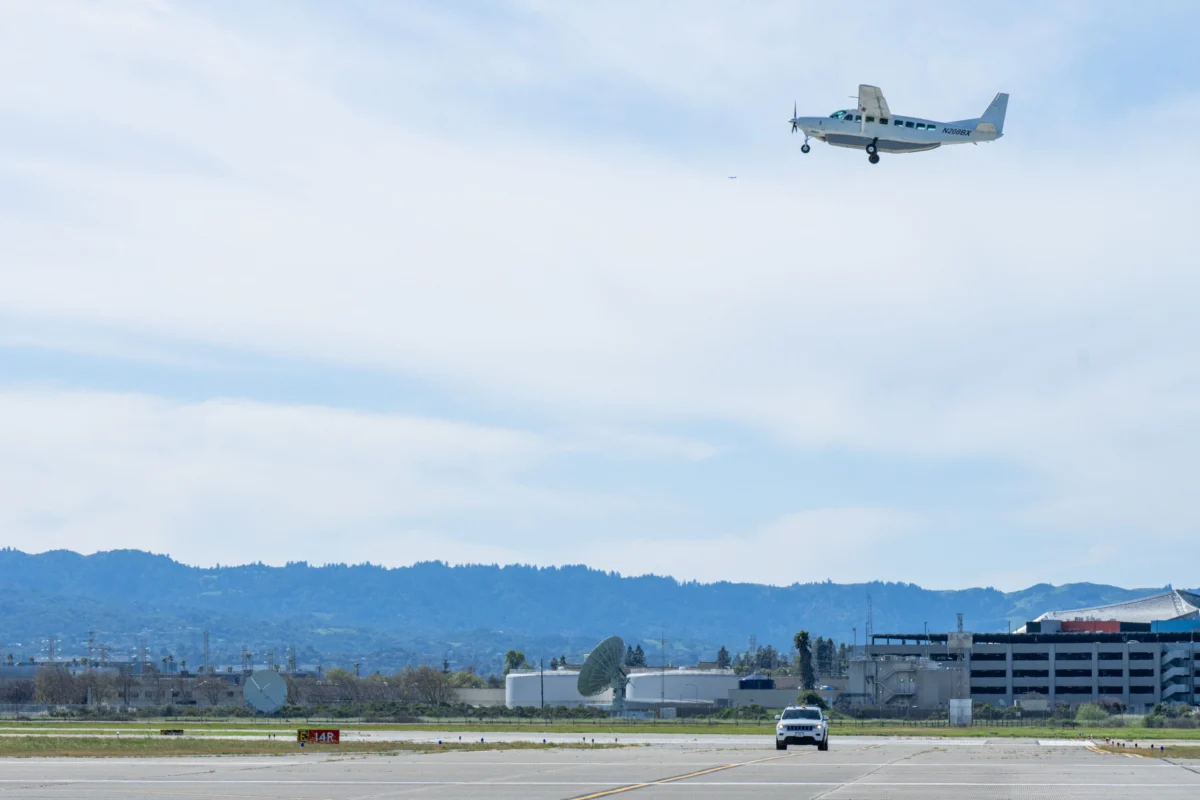
Complementing the digital taxi system are the safe taxiway and safe runways technologies. These innovations are designed to dramatically improve situational awareness, a key factor in preventing ground collisions and runway incursions. During rigorous testing, as a Boeing aircraft prepared to land, the same advanced sensor suite successfully detected a vehicle on the runway. This real-time alert provided crucial additional awareness to the flight crew, enabling them to take necessary precautions and avoid a potential collision. Such capabilities represent a significant leap forward in aviation safety, offering an extra layer of protection beyond traditional visual checks and radio communications. The integration of these sensor-driven systems creates a more robust and resilient operational environment, particularly vital at busy airports where multiple aircraft and ground vehicles operate in close proximity.
Beyond the Tarmac: Optimizing In-Flight Trajectories and Airspace Management
NASA’s commitment to enhancing the flying experience extends far beyond the airport surface. Modern flights are in constant dialogue with an ever-changing environment, responding to dynamic weather patterns, turbulence, and evolving air traffic conditions. Even seemingly minor adjustments in direction or altitude can have ripple effects, impacting arrival times and often forcing aircraft into inefficient holding patterns while air traffic controllers work to rebalance a busy and complex airspace.
To address these in-flight inefficiencies, NASA’s air traffic management researchers have been engaged in years of dedicated work. A significant milestone was reached in a 2025 collaborative effort involving Boeing, United Airlines, and international partners. This initiative rigorously evaluated the concept of real-time trajectory sharing on both domestic and transoceanic flights. During this testing phase, a United Airlines Boeing 737 aircraft continuously shared frequent and detailed flight information with both airline operations centers and air traffic control. NASA meticulously analyzed this data to determine the optimal frequency of these updates and, crucially, to identify which specific details were most critical for generating highly accurate arrival predictions.
The implications of this research are profound. By providing controllers with better, more precise information, they can sequence air traffic with unprecedented accuracy. This translates directly into fewer instances of aircraft being forced into holding patterns, allowing for more direct descents to the airport. For passengers, this means shorter flight times, reduced fuel consumption for airlines, and a significantly more predictable and less stressful journey.
Streamlining Departures: Pre-Departure Rerouting and Digital Exchange
The efficiency gains don’t stop once an aircraft is in the air. NASA has also developed cutting-edge pre-departure rerouting technology and digital exchange tools. These innovations provide dispatchers and air traffic controllers with a shared, common digital picture of all flights preparing to depart. This synchronized view allows for proactive adjustments to flight plans even before takeoff.
When a more optimal route becomes available—perhaps due to a change in weather, airspace congestion, or other operational factors—controllers can coordinate this change digitally. This eliminates the traditional reliance on time-consuming and error-prone verbal communication exchanges between pilots, controllers, and dispatchers. The benefits are manifold: fewer departure delays, substantial reductions in fuel consumption (as aircraft can take more direct routes and spend less time idling), and overall more predictable operations for passengers and airlines alike. This technology has already demonstrated its potential, and NASA has now transferred it to the Federal Aviation Administration (FAA), with airlines continuing to test and integrate it into their daily operations.
A Legacy of Aviation Advancement: NASA’s Enduring Role
NASA’s current achievements are not isolated breakthroughs but rather the latest chapters in a long and distinguished history of contributions to national airspace modernization. Since its inception, and even predating it with the National Advisory Committee for Aeronautics (NACA), NASA has been instrumental in advancing aeronautical science and technology. Its research has laid the groundwork for countless innovations that have made air travel safer, faster, and more accessible.
In close coordination with the FAA, NASA has consistently pushed the boundaries of automation concepts, refined how arrival and departure flows are managed, and introduced data-driven software tools that are now integral to the daily operations of commercial airlines worldwide. This collaborative ecosystem, involving government agencies, research institutions, airlines, and manufacturers, is crucial for translating cutting-edge research into tangible improvements for the flying public. Parimal Kopardekar, director of NASA’s Airspace Operations and Safety project, succinctly articulates this core mission: "Aviation safety is key to NASA’s research. Technology that can provide additional autonomy and support a future airspace with multiple aircraft operating in harmony is key to advancing the National Airspace System." This statement underscores NASA’s long-term vision: to create an airspace where advanced automation and human oversight work seamlessly together to manage an ever-increasing volume of air traffic.
Broader Implications and The Future of Flight
The implications of NASA’s ongoing research and development efforts are far-reaching, impacting multiple facets of the aviation ecosystem:
- Enhanced Safety: By reducing human error through digital communication, improving situational awareness with advanced sensors, and optimizing traffic flow, the risk of accidents, particularly ground collisions and runway incursions, is significantly diminished. This directly translates to safer skies and airports for everyone.
- Economic Efficiency: Reduced delays mean lower operational costs for airlines, primarily through significant fuel savings from less idling and fewer holding patterns. More predictable operations also lead to better crew scheduling and reduced costs associated with passenger disruptions. The economic impact of aviation delays is staggering, estimated to be in the tens of billions of dollars annually for the U.S. alone; NASA’s solutions offer a path to claw back a substantial portion of these losses.
- Environmental Sustainability: Less time spent idling on the ground and more direct flight paths result in reduced fuel consumption and, consequently, lower carbon emissions. As the aviation industry faces increasing pressure to decarbonize, these technological advancements offer a practical pathway toward more environmentally responsible air travel.
- Improved Passenger Experience: For the millions of travelers worldwide, these innovations promise a less stressful and more predictable journey. Reduced delays, smoother operations, and more accurate arrival times alleviate anxiety and allow passengers to plan their itineraries with greater confidence, ensuring they make connections and arrive at their destinations on schedule.
- Increased Airspace Capacity: As global air travel demand continues to grow, existing airspace infrastructure faces increasing strain. NASA’s technologies, by optimizing traffic flow and enhancing automation, contribute to more efficient use of available airspace, effectively increasing its capacity without requiring costly physical expansion of airports or airspace. This is crucial for accommodating future growth, including the potential integration of new air vehicles like Advanced Air Mobility (AAM) aircraft.
In summary, NASA’s collaborative research with industry partners like Boeing and United Airlines is not merely about incremental improvements; it represents a transformational shift in how air traffic is managed. By leveraging cutting-edge digital communication, advanced sensor technology, and sophisticated data analytics, NASA is systematically addressing the core challenges of modern air travel. From the initial moments on the tarmac to the complexities of in-flight trajectory management and the precision required for efficient departures, these innovations are designed to make every phase of flight safer, more reliable, and ultimately, a more positive experience for passengers. As these technologies mature and are fully integrated into the National Airspace System, they will continue to build on a proud legacy, ensuring that the skies remain open, efficient, and secure for generations to come.