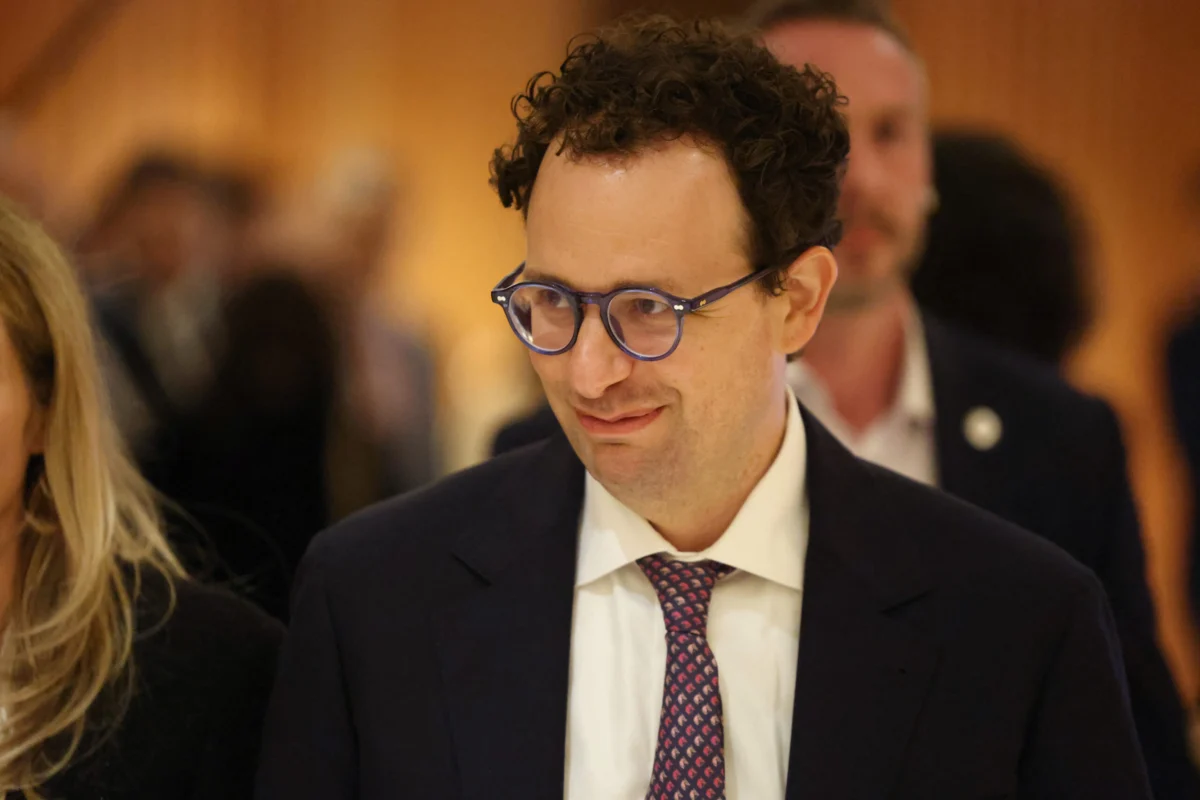
In a weekend marked by both high-profile cultural commentary and significant political engagement, Dario Amodei, CEO of leading artificial intelligence firm Anthropic, is scheduled to have a private dinner with President Donald Trump at the White House this evening. The unprecedented one-on-one meeting comes just hours after Amodei was humorously portrayed on the season premiere of NBC’s "Saturday Night Live," underscoring the escalating public prominence and complex policy challenges surrounding advanced AI development.
The news of the impending dinner was initially reported by Axios, with TechCrunch subsequently confirming the engagement through a source familiar with Amodei’s itinerary. This direct encounter between a key figure in the burgeoning AI sector and the nation’s chief executive highlights the intensifying dialogue around AI’s future, particularly as the technology rapidly advances and its potential societal impacts become clearer. The meeting is especially notable given the divergent public stances the two men have recently taken on the pace and direction of AI development.
A Stark Contrast in AI Philosophy
The upcoming dinner marks the first face-to-face interaction between Amodei and President Trump, who have emerged as vocal proponents of fundamentally different philosophies regarding AI’s trajectory. Amodei, whose company Anthropic is recognized for its commitment to "safe and steerable" AI, recently published a comprehensive plan advocating for a more cautious approach to frontier AI development. His proposal, released on September 12, 2026, outlined a strategy to "pace the frontier," suggesting that the industry and policymakers should prioritize robust safety mechanisms, rigorous testing, and a measured pace of innovation to mitigate potential catastrophic risks. This plan resonates with a growing segment of the AI research community and policy experts who warn of potential existential threats posed by unchecked advanced AI.
Conversely, President Trump has articulated a distinctly different perspective, often dismissing concerns about AI safety as politically motivated. On September 19, 2026, the President controversially suggested that the "AI backlash" was a "Democratic hoax" and has, without presenting specific evidence, downplayed the need for stringent regulatory guardrails. Furthermore, he has expressed a desire to rebrand the technology, proposing the term "super intelligence" to replace "artificial intelligence," a suggestion that has been met with a mixture of bemusement and concern within the scientific and tech communities. Trump also indicated plans to establish a dedicated "AI force" within his administration, though details regarding its mandate, composition, or objectives remain largely undefined.
Anthropic’s Fraught Relationship with the Administration
The relationship between Anthropic and the Trump administration has not been without its complexities, predating the recent public sparring over AI development speed. Earlier this year, the Pentagon, under the current administration, controversially designated Anthropic as a "supply-chain risk." This classification was reportedly a direct consequence of Anthropic’s proactive efforts to implement internal "guardrails" and restrictions on how its powerful AI models could be used, particularly in sensitive military or critical infrastructure applications. The company has since been engaged in ongoing legal battles to challenge and overturn this designation, arguing that its safety-first approach should be commended, not penalized.

Despite this specific point of friction with the Department of Defense, other factions within the administration have shown a more conciliatory stance towards Anthropic. This internal divergence within the government underscores the broader lack of a unified federal strategy or consensus on how to engage with, regulate, and foster the rapidly evolving AI industry. The White House dinner could potentially signal an attempt by the administration to bridge these internal and external policy gaps, or at least to gain direct insights from one of the industry’s most influential voices.
The Broader Context: A Global Race and Regulatory Scramble
Dario Amodei’s dinner with President Trump takes place against a backdrop of intense global competition and an accelerating regulatory scramble in the AI domain. Nations worldwide are grappling with how to balance innovation, national security, economic growth, and ethical considerations.
The United States, while a global leader in AI innovation, has yet to enact comprehensive federal AI legislation. In contrast, the European Union has moved forward with its landmark AI Act, which seeks to categorize AI systems by risk level and impose strict regulations on high-risk applications. Other nations, including China, are investing heavily in AI research and deployment, often with a focus on national competitiveness and surveillance capabilities, creating a geopolitical AI race that carries significant economic and strategic implications.
Within the U.S., the debate extends beyond mere safety to include issues of data privacy, algorithmic bias, intellectual property, and workforce displacement. Major tech companies, including Google, Microsoft, Amazon, and Meta, are all heavily invested in AI, contributing to a market that analysts project to reach trillions of dollars in value within the next decade. The stakes for establishing clear policy frameworks are enormous, influencing everything from national defense to everyday consumer applications.
Key Players and Their Positions
- Dario Amodei (Anthropic CEO): A former Vice President of Research at OpenAI, Amodei co-founded Anthropic with a mission to develop "safe, steerable, and interpretable" AI. His company’s flagship Claude models are built on a "constitutional AI" approach, using a set of principles to guide model behavior rather than extensive human oversight, aiming to reduce harmful outputs. Amodei is a leading voice for "responsible scaling" and proactive risk management for advanced AI. His recent plan emphasized the need for international coordination, robust evaluation benchmarks, and even temporary pauses in development if risks outweigh benefits.
- President Donald Trump: Historically, Trump’s administration focused on deregulation and fostering technological innovation, often expressing skepticism about perceived overreach by federal agencies. His recent comments on AI reflect a desire to push forward aggressively, viewing concerns as impediments to progress or as politically motivated. His proposed "super intelligence" rebranding suggests an emphasis on the aspirational, powerful aspects of AI rather than its inherent risks. His call for an "AI force" could signal a more centralized approach to AI policy, though its direction remains unclear.
- The Pentagon: The Department of Defense’s designation of Anthropic as a supply-chain risk underscores a tension between military application needs and ethical AI development. The military seeks powerful, unconstrained AI for strategic advantages, while companies like Anthropic aim to prevent their models from being used in ways they deem harmful or unethical. This clash highlights the complex ethical dilemmas at the intersection of national security and advanced technology.
Implications of the White House Dinner
The private dinner between Amodei and President Trump carries several potential implications:
- Direct Dialogue at the Highest Level: It provides an unparalleled opportunity for direct communication between a leading AI safety advocate and the nation’s highest decision-maker. This could allow for a nuanced exchange of ideas that might otherwise be lost in public discourse or bureaucratic channels.
- Potential for Policy Influence: While unlikely to result in immediate policy shifts, the meeting could influence the President’s understanding of AI’s complexities and the perspectives of the industry’s frontier developers. It might also shape the discussions within the "AI force" Trump plans to establish.
- Shifting Optics for Anthropic: The dinner could serve to temper some of the negative perceptions stemming from the Pentagon’s supply-chain risk designation, demonstrating that the company is engaging directly with the administration on critical issues. It also elevates Anthropic’s standing as a key player in the national AI conversation.
- A Signal to the AI Industry: The meeting sends a clear message to the broader AI industry that the White House is taking notice of the sector’s rapid growth and the associated policy challenges. It could encourage other AI leaders to engage more directly with policymakers.
- Public Perception and Trust: For a public still largely unfamiliar with the intricacies of advanced AI, such a high-profile meeting, especially following an SNL sketch, can further embed AI into the national consciousness, potentially fostering both greater awareness and scrutiny. The juxtaposition of lighthearted satire and serious policy discussions highlights the multifaceted nature of AI’s integration into society.
Looking Ahead
As the AI industry continues its exponential growth, the calls for coherent governance and responsible development grow louder. This White House dinner, while a private event, is a significant public moment in the ongoing national and global conversation about artificial intelligence. Whether it will lead to a convergence of views, a more refined national AI strategy, or simply a better understanding of the opposing viewpoints remains to be seen. However, it unequivocally signals that AI has moved from the fringes of academic research to the forefront of presidential attention, making its future not just a technological challenge, but a defining political and societal one. The outcomes of such high-level engagements will undoubtedly shape the regulatory landscape and the ethical guardrails that will govern the age of artificial intelligence.