


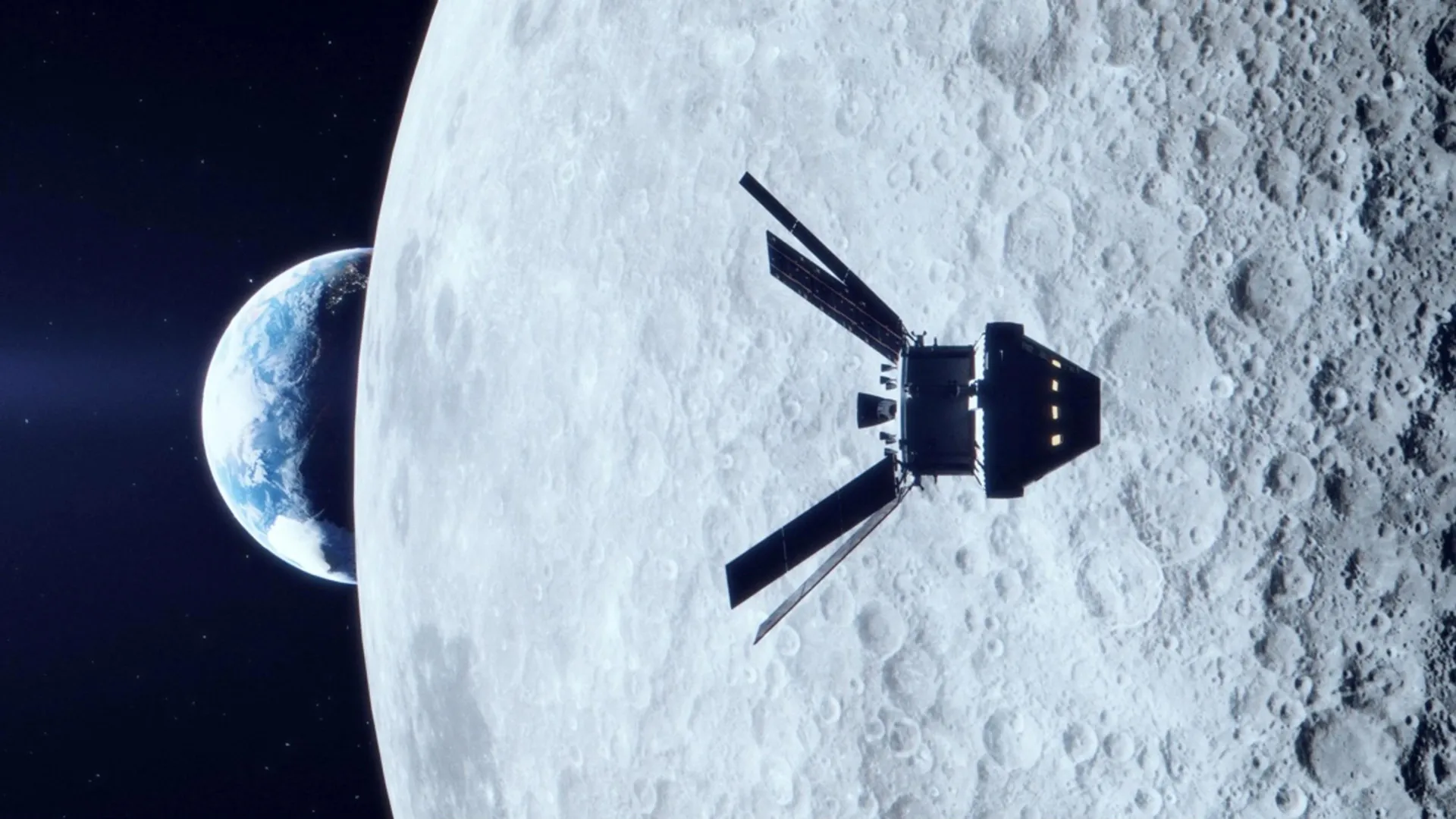
The uncrewed Artemis I mission, a pivotal step in NASA’s ambitious lunar exploration program, has yielded significant preliminary findings regarding the cosmic radiation astronauts might encounter beyond Earth’s protective magnetosphere. Utilizing cutting-edge detectors developed by the Institute of Nuclear Physics of the Polish Academy of Sciences (IFJ PAN) in Cracow, researchers have gathered unprecedented data on radiation exposure levels in the lunar vicinity, revealing nuances that challenge previous assumptions and pave the way for enhanced astronaut safety in future deep-space endeavors. The findings, published in the esteemed journal Radiation Measurements, underscore the critical role of innovative detection technologies in understanding the complex radiation tapestry of space.
Groundbreaking Detection Technology Deployed on Orion Spacecraft
During its groundbreaking circumnavigation of the Moon in late November and early December 2022, the Orion spacecraft carried a sophisticated payload designed to mimic human exposure to the space environment. More than 10,000 miniature crystals, primarily composed of lithium fluoride, were embedded within two human-shaped mannequins, affectionately named Helga and Zohar. These passive detectors, meticulously engineered by scientists at IFJ PAN, served as silent sentinels, meticulously recording the barrage of charged particles and high-energy radiation encountered during the journey.
Professor Paweł Bilski, a senior researcher at IFJ PAN and co-author of the study, elaborated on the fundamental principle behind these detectors: "The fluorescent radiation dose detectors based on lithium fluoride, developed at our institute, are passive in nature. In other words, they work like photographic film: once the crystals have been exposed to radiation, the tracks left by individual particles must be analyzed optically under a microscope." This analogy highlights the elegantly simple yet profoundly effective mechanism by which these crystals capture the invisible footprint of cosmic rays.
The Mechanism of Lithium Fluoride Detectors
The operation of these lithium fluoride detectors hinges on the interaction of ionizing radiation with the crystalline structure. When high-energy particles, such as protons, alpha particles, or heavier atomic nuclei, traverse the lithium fluoride, they disrupt the atomic lattice, creating microscopic defects. These defects, often referred to as "color centers," are invisible to the naked eye but can be rendered observable through optical excitation. By illuminating the crystals with a specific wavelength of blue light, these altered regions fluoresce, emitting a characteristic red glow.
The intensity and spatial distribution of this fluorescence provide crucial information about the type, energy, and trajectory of the incident radiation. Scientists meticulously examine these glowing trails under a fluorescence microscope, effectively reconstructing the path of each individual particle that impacted the crystal. This method allows for a detailed analysis of the radiation environment, offering a granular understanding of the cumulative dose received.
MARE Experiment: A Deep Dive into Lunar Radiation
The lithium fluoride detectors were a key component of the Matroshka AstroRad Radiation Experiment (MARE), a collaborative effort aimed at quantifying radiation exposure in deep space. Within the MARE experiment, several dozen of these experimental lithium fluoride detectors were strategically placed inside both Helga and Zohar. Notably, some of these detectors contained enriched concentrations of the lithium-7 isotope, a variation that can influence the detection of specific types of radiation.
The contribution of IFJ PAN extended beyond these experimental lithium fluoride devices. The institute also provided nearly 600 thermoluminescent crystal detectors, a complementary technology that employs a different principle to measure radiation dose. This multi-faceted approach ensured a comprehensive and robust dataset, cross-validating findings and enhancing the overall reliability of the collected information.
A significant advantage of the newly developed lithium fluoride detectors, as highlighted by the research team, is the streamlined analysis process. Unlike traditional passive detectors made from plastics, which often require chemical etching to reveal particle tracks, the lithium fluoride crystals allow for direct microscopic examination. This eliminates a time-consuming and potentially damaging preparatory step, enabling researchers to study the collected tracks more efficiently and with greater fidelity. The ability to directly inspect these microscopic scars with a standard fluorescence microscope represents a considerable advancement in the field of radiation dosimetry for space exploration.
The Intricacies of Measuring Deep Space Radiation
The accurate measurement of cosmic radiation presents a formidable scientific challenge, largely due to the inherent unpredictability and complexity of the space environment. Unlike controlled laboratory experiments where beams of specific particles can be precisely directed, space radiation bombards detectors from all directions, comprising a vast spectrum of particle types, atomic nuclei, and energies.
This chaotic influx complicates the interpretation of the microscopic tracks left within the detectors. Incoming particles strike the crystals at varying angles, resulting in tracks that extend in multiple three-dimensional directions. A microscope, with its limited focal plane of approximately one micrometer, captures only a cross-section of these tracks. However, the surrounding illuminated crystal can contribute a blurry glow that extends beyond this focal plane. This stray light can influence the measured fluorescence intensity, a key parameter scientists use to estimate the ionization density left by a particle.
Furthermore, different types of particles leave distinct signatures. Highly ionizing particles create continuous, sharply defined tracks, akin to a solid line. Conversely, less ionizing particles might produce fragmented or dotted tracks, representing a more diffuse energy deposition. These variations add layers of complexity to the process of translating raw fluorescence measurements into meaningful radiation data.
Advanced Analysis Techniques Unlock Deeper Insights
To surmount these interpretational hurdles, the IFJ PAN research team developed sophisticated calibration and analysis techniques. They introduced several critical corrections to account for background signals and developed specialized software algorithms designed to isolate and quantify the fluorescence associated with actual radiation events. These advanced analytical tools were instrumental in transforming the raw optical data into reliable numerical measurements of radiation exposure.
Professor Bilski emphasized the efficacy of their refined methodology: "After applying a series of corrections and developing software to appropriately remove the background interfering with the measurements, our results differed by no more than 15% from those obtained using conventional track detectors across the entire overlapping range of energy deposition values. Moreover, we also recorded numerous particle tracks corresponding to energy deposits below the detection threshold of the detectors used to date." This remarkable concordance with established technologies, coupled with the ability to detect previously unobservable low-energy events, highlights the superior capabilities of their lithium fluoride detector system.
Artemis I’s Lunar Radiation Landscape: A Surprising Comparison
The data collected during Artemis I provided a unique opportunity to directly compare radiation exposure levels near the Moon with those experienced in low Earth orbit (LEO). This comparison is crucial for understanding the differing radiation hazards faced by astronauts on the International Space Station (ISS) versus those venturing to the Moon.
More than a decade prior to Artemis I, the MATROSHKA experiment, also involving human-shaped phantoms, was conducted on the ISS. During that mission, a significant portion of the radiation dose received by astronauts originated from low-energy protons trapped within Earth’s Van Allen radiation belts. These belts, doughnut-shaped regions of energetic charged particles held in place by Earth’s magnetic field, represent a substantial radiation hazard for spacecraft in LEO. As these particles penetrated the phantoms, they deposited energy at varying depths, resulting in a non-uniform distribution of radiation doses.
The lunar environment, however, is starkly different. The Van Allen belts do not extend to the Moon, meaning the radiation encountered there is dominated by galactic cosmic rays (GCRs) – high-energy particles originating from outside our solar system, and solar energetic particles (SEPs) emitted during solar flares and coronal mass ejections. These GCRs are significantly more energetic and can traverse the entire human body, depositing only a fraction of their energy as they pass through.
Consequently, the Artemis I detectors registered radiation doses that were distributed almost uniformly throughout the phantoms, a stark contrast to the uneven patterns observed in the earlier ISS experiment. This uniform distribution is a direct consequence of the high-energy, penetrating nature of GCRs.
Perhaps one of the most intriguing, and potentially counterintuitive, findings from Artemis I is the nature of the dose difference between LEO and lunar orbit. While it is generally understood that astronauts in deep space face higher radiation levels, the Artemis I data suggests that this difference might not be as dramatic as one might intuitively expect.
"Low-energy protons, trapped by our planet’s magnetic field within the Van Allen belts, can account for the majority of the radiation dose received by astronauts in low Earth orbit," Professor Bilski explained. "In the vicinity of the Moon, this substantial contribution disappears. Our measurements from the MARE experiment indicate that, although total radiation doses near the Moon are higher than those in Earth orbit due to the considerable levels of galactic radiation, the difference is not as large as one might intuitively expect."
This finding has significant implications for mission planning and astronaut protection. It suggests that while the types of radiation differ substantially, the overall magnitude of the dose increase might be moderated by the absence of the intense, localized radiation from the Van Allen belts when compared to the most heavily shielded regions of LEO. This nuanced understanding is critical for developing effective radiation shielding strategies.
Future Applications: Protecting Tomorrow’s Astronauts
The refined lithium fluoride detectors developed at IFJ PAN hold immense promise for safeguarding future astronauts on long-duration missions. Manufactured using the Czochralski method, a well-established technique for growing high-quality crystals, these detectors have undergone a decade of continuous refinement by Polish scientists.
Their compact size is a paramount advantage. Measuring only a few millimeters in dimension, these detectors are significantly smaller than conventional radiation monitors, making them ideal for integration into spacesuits or personal dosimeters that astronauts can wear comfortably throughout their missions. This unobtrusive design ensures continuous monitoring without impeding astronaut mobility or operational efficiency.
The superior resolution offered by these crystals, providing sharper images of particle tracks compared to etched plastic detectors, allows for the differentiation of individual tracks even in high-radiation environments. This enhanced clarity is crucial for accurately characterizing complex radiation fields. Furthermore, the ability of these detectors to register a broad spectrum of particle types and energies promises a more holistic and comprehensive understanding of the radiation environment encountered in space.
Another critical capability of these detectors is their sensitivity to neutrons. By enriching the crystals with the lithium-6 isotope, scientists can enhance their ability to detect neutrons through nuclear reactions. When neutrons interact with lithium nuclei, they can trigger secondary charged particles that leave detectable traces within the crystal. This neutron detection capability is particularly important, as neutrons are a significant component of the secondary radiation field produced when GCRs interact with spacecraft materials.
Collectively, these attributes position lithium fluoride detectors as a powerful and versatile tool for studying the intricate radiation challenges of space exploration. The data obtained from the Artemis I mission provides an invaluable dataset, offering a clearer picture of cosmic radiation dynamics near the Moon and demonstrating the potential of these compact, advanced detectors to revolutionize how radiation exposure is monitored and managed during future crewed missions. As humanity sets its sights on returning to the Moon and venturing further into the solar system, technologies like these will be indispensable in ensuring the safety and well-being of our celestial pioneers.
The research conducted as part of the MARE project was made possible through the generous support of a grant from the National Science Centre, Poland (NCN), under its OPUS program, underscoring the collaborative and internationally recognized nature of this scientific endeavor.