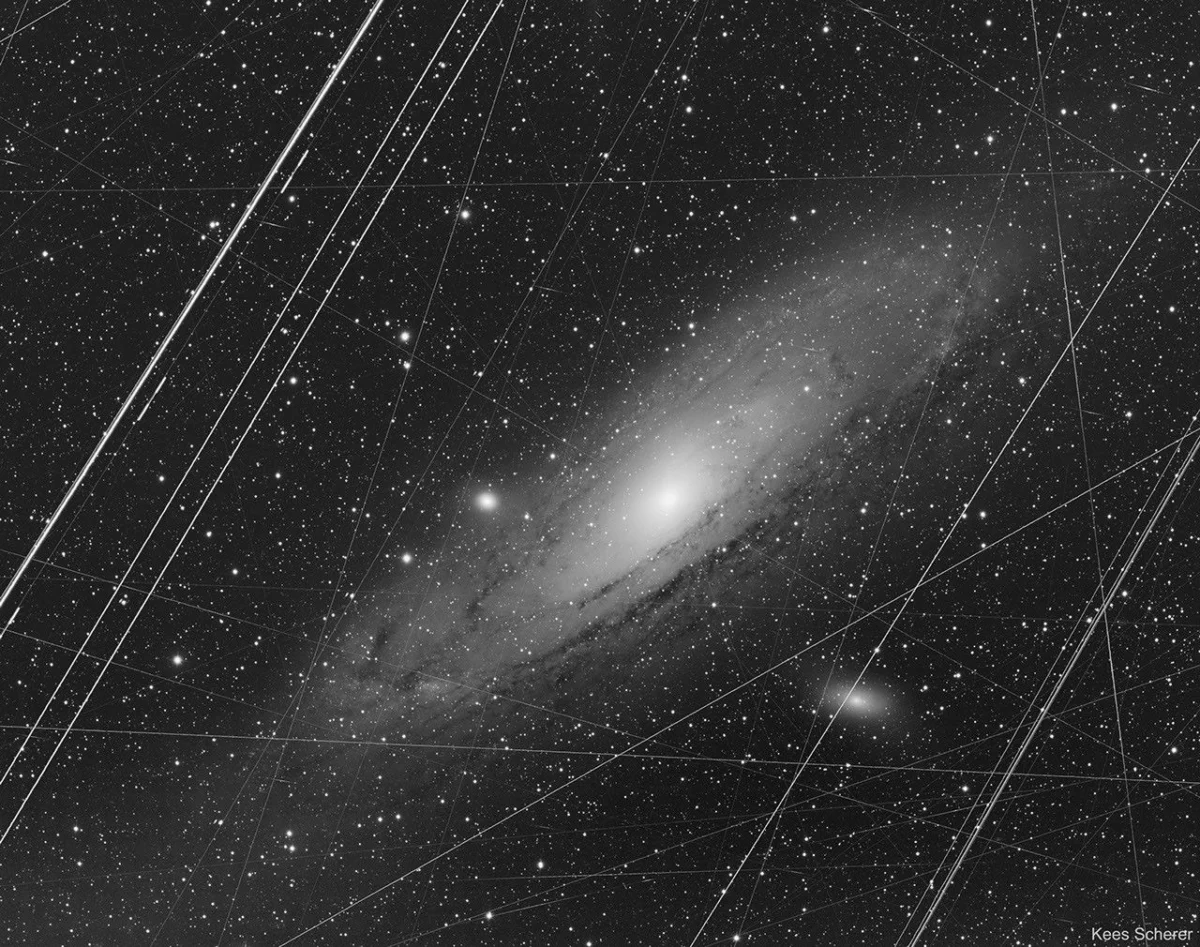
The latest Astronomy Picture of the Day (APOD) from NASA’s science portal offers a compelling dual presentation of the Andromeda galaxy (M31), illustrating the profound impact of meticulous image processing on astronomical observations. This feature provides a unique "before and after" perspective, revealing how modern astrophotography techniques transform raw, artifact-laden captures into breathtakingly clear representations of our closest major galactic neighbor. The initiative underscores APOD’s enduring commitment to public education, showcasing not only the wonders of the cosmos but also the sophisticated methods required to perceive them accurately from Earth’s challenging observational environment.
The Inherent Challenges of Terrestrial Astrophotography
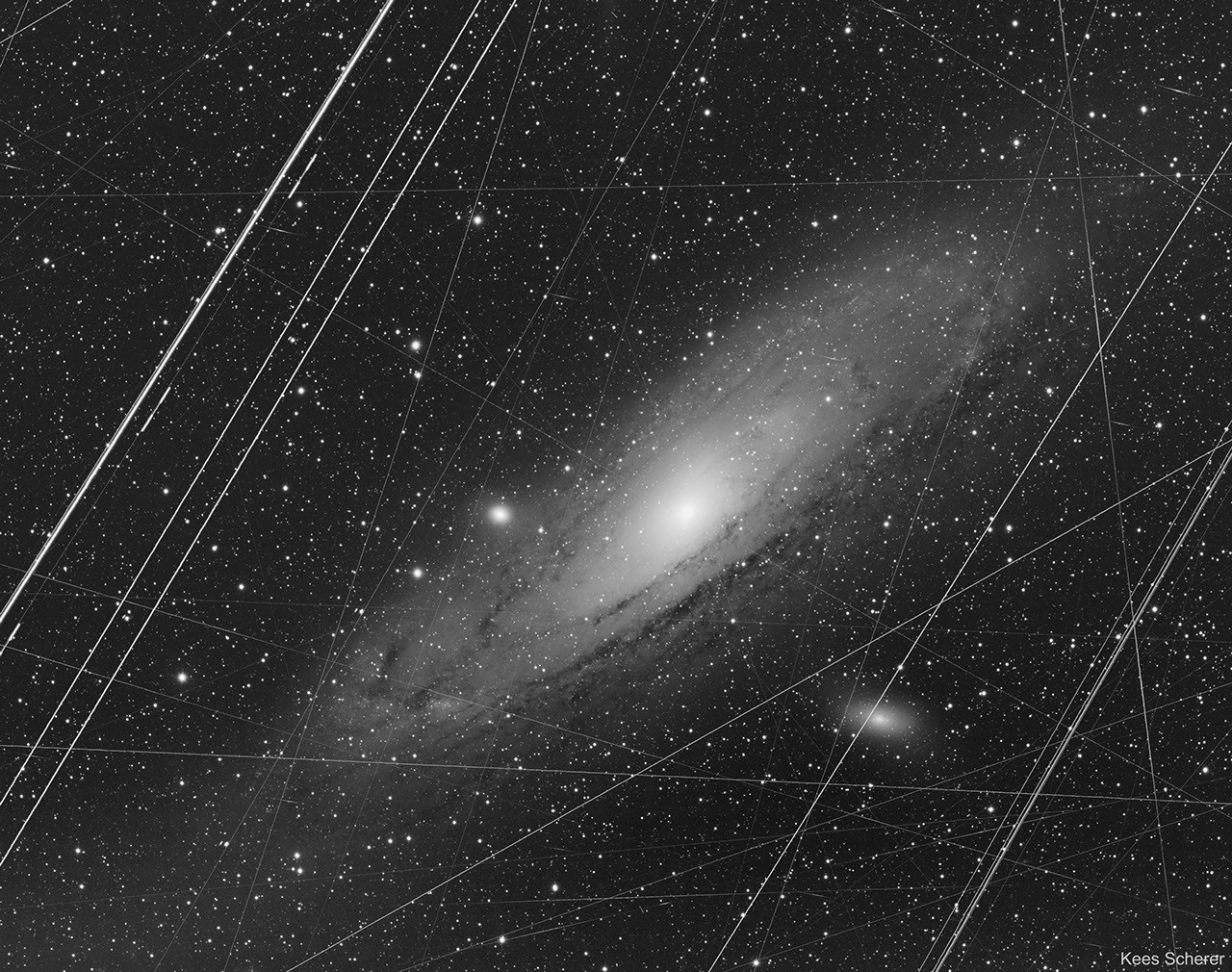
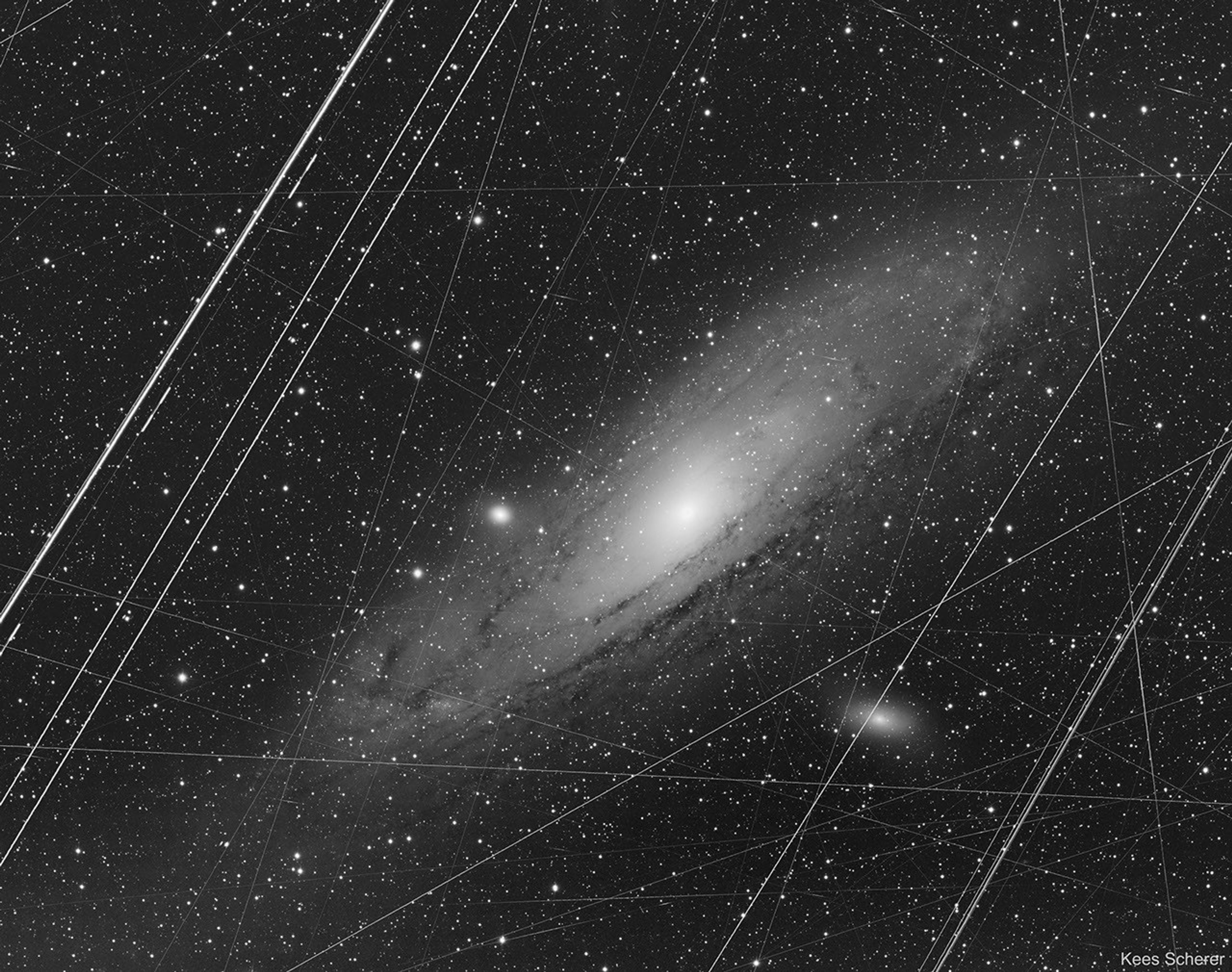
Capturing the faint glow of distant galaxies from Earth is an endeavor fraught with numerous obstacles, a reality starkly illustrated by the "before" image presented by APOD. Even with powerful telescopes and sensitive digital cameras, observations are inherently compromised by a confluence of terrestrial and cosmic interferences. The raw, stacked image of M31, composed of 223 individual 300-second exposures taken in 2019 from a garden observatory in Portugal by astrophotographer Kees Scherer, visibly demonstrates these common impediments.
Among the most pervasive issues are human-made artifacts. Bright, parallel streaks across the field of view are often the tell-tale signs of airplane trails, reflecting city lights or the sun as aircraft traverse the night sky during long exposures. These transient light sources can significantly degrade image quality by overlaying unwanted patterns onto celestial targets. Equally problematic are satellite trails, appearing as longer, continuous lines. With the exponential proliferation of satellite constellations like Starlink, OneWeb, and others, these trails are becoming an increasingly frequent and significant source of light pollution in astronomical images, impacting both professional observatories and amateur enthusiasts. These objects, designed for communication or navigation, inadvertently become sources of visual noise, obscuring faint celestial targets and potentially interfering with scientific data collection.
Beyond human-generated interference, natural cosmic phenomena also leave their mark. Short, abrupt cosmic ray streaks are a common sight in uncalibrated astronomical images. These streaks are caused by high-energy subatomic particles originating from space—protons, helium nuclei, or even heavier atomic nuclei—that collide with the camera’s detector (CCD or CMOS sensor). When a cosmic ray hits the sensor, it deposits energy, creating a bright, linear artifact that has no astronomical origin. While individual cosmic ray hits are random, their cumulative effect across many exposures can degrade image quality, adding spurious signals to the data.
Furthermore, the very nature of digital imaging introduces its own imperfections. Bad pixels, also known as "hot pixels" or "dead pixels," are sensor elements that either register abnormally high signals (hot pixels, due to manufacturing defects or thermal noise) or no signal at all (dead pixels) regardless of light exposure. These appear as bright, fixed points or missing data points in raw images. While often minor individually, they require careful mitigation to ensure a clean final product and prevent misinterpretation of the captured light.
The collective impact of these artifacts—ranging from the pervasive glow of light pollution from urban centers, the shimmering distortion of Earth’s atmosphere (known as "seeing"), to the specific streaks and blemishes documented in the raw M31 image—necessitates a sophisticated post-processing workflow to isolate and reveal the true cosmic structures beneath. Without these advanced techniques, the inherent beauty and scientific detail of deep-sky objects would remain largely obscured by the noise of our terrestrial environment.
The Andromeda Galaxy: A Stellar Beacon in Our Local Group
The subject of this photographic demonstration, the Andromeda galaxy (M31), holds a singular place in our cosmic understanding and remains a perennial favorite for astrophotographers. Located approximately 2.537 million light-years from Earth, it is not only the closest large spiral galaxy to our own Milky Way but also the largest galaxy in the Local Group, which also includes the Triangulum Galaxy (M33) and some 50 smaller dwarf galaxies. Andromeda spans an impressive diameter of about 220,000 light-years, making it more than twice the size of the Milky Way, and is estimated to contain a staggering one trillion stars – significantly more than the Milky Way’s estimated 200 to 400 billion. Its sheer scale and proximity make it an unparalleled laboratory for studying galactic structure and evolution.
Andromeda is a captivating target for both professional astronomers and amateur observers due to its relative proximity and striking visual characteristics. Under exceptionally dark skies, it is one of the few galaxies visible to the naked eye, appearing as a faint, fuzzy patch. Through a telescope, its prominent galactic bulge, intricate spiral arms, and numerous star-forming regions become discernible, revealing a dynamic cosmic system. Its rich stellar populations, dust lanes, and satellite galaxies (like M32 and M110) provide ample detail for study and aesthetic appreciation.
Crucially, Andromeda is on a collision course with the Milky Way. Current astronomical models predict that in about 4.5 billion years, these two colossal galaxies will merge to form a new, larger elliptical galaxy, sometimes colloquially referred to as "Milkomeda." This impending cosmic ballet provides a unique opportunity for astronomers to study galactic dynamics, gravitational interactions, and predict future evolutionary pathways for galaxies like our own. The ability to capture and process clear, artifact-free images of M31 is therefore invaluable for both scientific research and public engagement, offering a vivid window into our cosmic past and future. Understanding its current structure and dynamics is paramount for modeling the future merger event.
The Meticulous Art of Astrophotography Processing: From Raw Data to Pristine Image
The transformation of the "before" image of Andromeda into the pristine "after" version is a testament to the specialized and rigorous methodologies employed in modern astrophotography. Kees Scherer’s process, detailed by APOD, highlights that while general image editing software like Adobe Photoshop can be used for final aesthetic touches, the heavy lifting of artifact removal and signal enhancement is performed by dedicated astronomical imaging software. This distinction is critical, as specialized tools are designed to work with the unique characteristics of astronomical data, preserving scientific integrity while optimizing visual clarity.
The initial phase of processing often involves stacking, a technique exemplified by software like DeepSkyStacker. Stacking combines multiple individual exposures (in this case, 223 frames) into a single, higher-quality image. This process is fundamental to astrophotography because it significantly improves the signal-to-noise ratio. Faint astronomical signals accumulate with each frame, while random noise (like thermal noise from the camera sensor or read noise) averages out. During stacking, the software also aligns the images to correct for slight telescope tracking errors or atmospheric shifts, ensuring that stars and galaxies from different frames perfectly overlap. This averaging effect naturally reduces random noise and makes fixed artifacts like hot pixels less prominent, as their impact is diluted across many frames or they can be identified and rejected.
Following stacking, the integrated image undergoes further refinement using advanced astrophotography suites such as Astro Pixel Processor and PixInsight. These programs offer a comprehensive array of tools specifically tailored for astronomical data:
- Calibration: This involves applying "dark frames," "bias frames," and "flat frames" to the raw data. Dark frames subtract thermal noise, bias frames remove read noise, and flat frames correct for vignetting (darkening at image edges) and dust motes on the sensor or optics. This step is crucial for creating a uniformly illuminated and noise-reduced base image, essential for accurate photometric and astrometric measurements.
- Cosmic Ray Rejection: Specialized algorithms within these software packages are adept at identifying and removing cosmic ray streaks, which often appear as anomalous bright lines or points that deviate significantly from the background signal. These algorithms differentiate cosmic ray hits from actual celestial objects based on their unique characteristics, such as their linearity and transient nature.
- Gradient Removal: Light pollution, even from distant cities or the natural airglow of Earth’s atmosphere, can create a subtle, uneven illumination gradient across astronomical images. Software can model and subtract this uneven background, revealing the true background sky and allowing faint nebulae or galactic arms to emerge.
- Noise Reduction and Sharpening: While stacking reduces random noise, further targeted noise reduction techniques can be applied without sacrificing fine detail. Conversely, sharpening algorithms can enhance the crispness of galactic structures and star fields, bringing out subtle textures and features.
- Color Calibration and Stretching: Astronomical images are often captured in grayscale through different color filters (e.g., Red, Green, Blue). These programs allow for accurate combination and calibration of color channels to produce a true-color image that reflects the actual wavelengths of light emitted. "Stretching" refers to adjusting the image’s dynamic range to make faint details visible while preserving highlights, a process often performed using non-linear transformations that are optimized for the vast dynamic range of astronomical data.
The explicit mention that general photo editors like Photoshop were not the primary tools for artifact removal is significant. While Photoshop excels at artistic manipulation and general image enhancement, its algorithms are not typically optimized for the unique noise profiles, faint signals, and scientific data integrity inherent in astronomical data. Specialized software, by contrast, is built from the ground up to understand and process this specific type of scientific data, allowing for more precise artifact removal and signal extraction without introducing artificiality or compromising the photometric accuracy. The goal is not to create a "digital fantasy," but to meticulously remove Earthly distractions and reveal the intrinsic beauty and structure of the distant galaxy as it truly appears beyond our planet’s veil, thereby providing an authentic visual representation of cosmic reality.
APOD’s Enduring Mission: Education and Astronomical Discovery
The Astronomy Picture of the Day (APOD) stands as a venerable institution in online science communication, having delivered a new image of the universe accompanied by a professional astronomer’s explanation every day since 1995. This latest feature on the Andromeda galaxy exemplifies APOD’s core mission: to educate the public about astronomy and space science through captivating visuals and accessible, factual commentary. By showcasing the processing journey from a raw, imperfect capture to a stunning final image, APOD not only presents the beauty of the cosmos but also demystifies the scientific and technical efforts behind astronomical discovery. It serves as a daily reminder of humanity’s ongoing quest to understand the universe.
The commitment to accuracy is paramount for APOD. The explanation explicitly states that the rigorous processing was undertaken "not to deceive you with a digital fantasy… but to minimize Earthly artifacts that have nothing to do with the distant galaxy and so better recreate what M31 really does look like." This reinforces the scientific integrity that underpins APOD’s selections, ensuring that the public receives an authentic view of the universe, unmarred by terrestrial interference. The accompanying brief explanation, typically penned by Dr. Robert Nemiroff and Dr. Jerry Bonnell or other contributing astronomers, provides crucial context, transforming a mere picture into an educational experience that fosters scientific literacy and curiosity.
Recent administrative updates announced by APOD, including a change in the email for image submissions and the migration of its main NASA site from apod.nasa.gov to science.nasa.gov/apod, reflect an ongoing evolution and adaptation to modern digital platforms. These changes are indicative of NASA’s continuous efforts to optimize its online presence, streamline content delivery, and enhance user experience for its vast global audience. The move to the broader science.nasa.gov domain suggests a strategic integration of APOD into NASA’s larger science communication framework, potentially offering greater discoverability and resource synergy across various scientific disciplines. These updates, while logistical, ensure APOD’s continued role as a vital, authoritative, and accessible portal to the universe for millions worldwide, maintaining its status as a trusted source for daily astronomical inspiration.
Implications for Astronomy and Public Engagement
The demonstration of astrophotography processing through the Andromeda galaxy images carries significant implications for both scientific astronomy and public engagement with space science. For professional astronomers, the ability to effectively filter out noise and artifacts from observational data is fundamental to extracting accurate scientific information. Cleaner images allow for more precise measurements of galactic distances, stellar populations, dark matter distribution, and the dynamics of celestial objects. While ground-based telescopes face inherent limitations compared to space telescopes like Hubble or James Webb, advanced processing techniques maximize the scientific yield from Earth-bound observatories, making them indispensable tools for research.
Furthermore, this showcase highlights the invaluable contribution of amateur astrophotographers. Individuals like Kees Scherer, operating from personal observatories, are increasingly capturing images that rival those once exclusive to professional institutions. The accessibility of high-quality equipment and sophisticated processing software has democratized astrophotography, fostering a vibrant global community that contributes to both aesthetic appreciation and, occasionally, even scientific discovery, such as identifying transient phenomena or undiscovered objects. Their dedication helps popularize astronomy and inspire the next generation of scientists and space enthusiasts, demonstrating that profound cosmic exploration is not solely the domain of large government agencies.
However, the persistent presence of satellite trails, as evidenced in the "before" image, underscores a growing concern within the astronomical community. The exponential increase in satellite launches, particularly for large constellations, poses a significant threat to both optical and radio astronomy. These bright streaks can saturate detectors, obscure faint objects, and interfere with scientific observations, impacting research on everything from near-Earth asteroids to distant galaxies. The APOD feature subtly brings this real-world challenge to public attention, prompting reflection on the balance between technological advancement and the preservation of our view of the cosmos, urging stakeholders to consider mitigation strategies.
Ultimately, the power of a meticulously processed astronomical image lies in its capacity to connect humanity with the vastness and beauty of the universe. By removing the "noise" of Earth, these images allow us to truly see and appreciate the intricate details of galaxies millions of light-years away, fostering a sense of wonder and encouraging deeper exploration of scientific principles. The art of astrophotography, therefore, serves as a crucial bridge between complex scientific data and the public’s imagination, making the distant universe feel a little closer and more comprehensible, inspiring a broader understanding of our place within the cosmos.
Looking Ahead: The Evolving Landscape of Astronomical Imaging
The field of astronomical imaging continues to evolve rapidly, driven by advancements in sensor technology, telescope optics, and computational processing power. Future developments promise even greater clarity and detail in images of celestial objects. Innovations in adaptive optics, which compensate for atmospheric distortion in real-time, and the deployment of next-generation ground-based telescopes with larger apertures will push the boundaries of what can be observed from Earth. Simultaneously, the ongoing refinement of machine learning and artificial intelligence algorithms is poised to revolutionize image processing, enabling more automated and effective removal of artifacts and enhancement of subtle features, potentially reducing the manual effort currently required.
However, challenges remain, particularly concerning the impact of light pollution and the increasing density of objects in Earth orbit. International efforts are underway to mitigate these effects, through regulations on satellite brightness and urban lighting, and through the development of software solutions that can more effectively model and subtract these interferences. The Andromeda galaxy, a timeless subject of astronomical fascination, will undoubtedly continue to be a benchmark for these advancements, offering a consistent target against which to measure our ever-improving ability to observe and understand the universe. The journey from raw light to refined image is a testament to human ingenuity, bridging the immense distances of space with the meticulous precision of science and art. The universe, as always, awaits our gaze, rendered ever clearer by dedicated observers and their sophisticated tools, promising endless discoveries for generations to come.