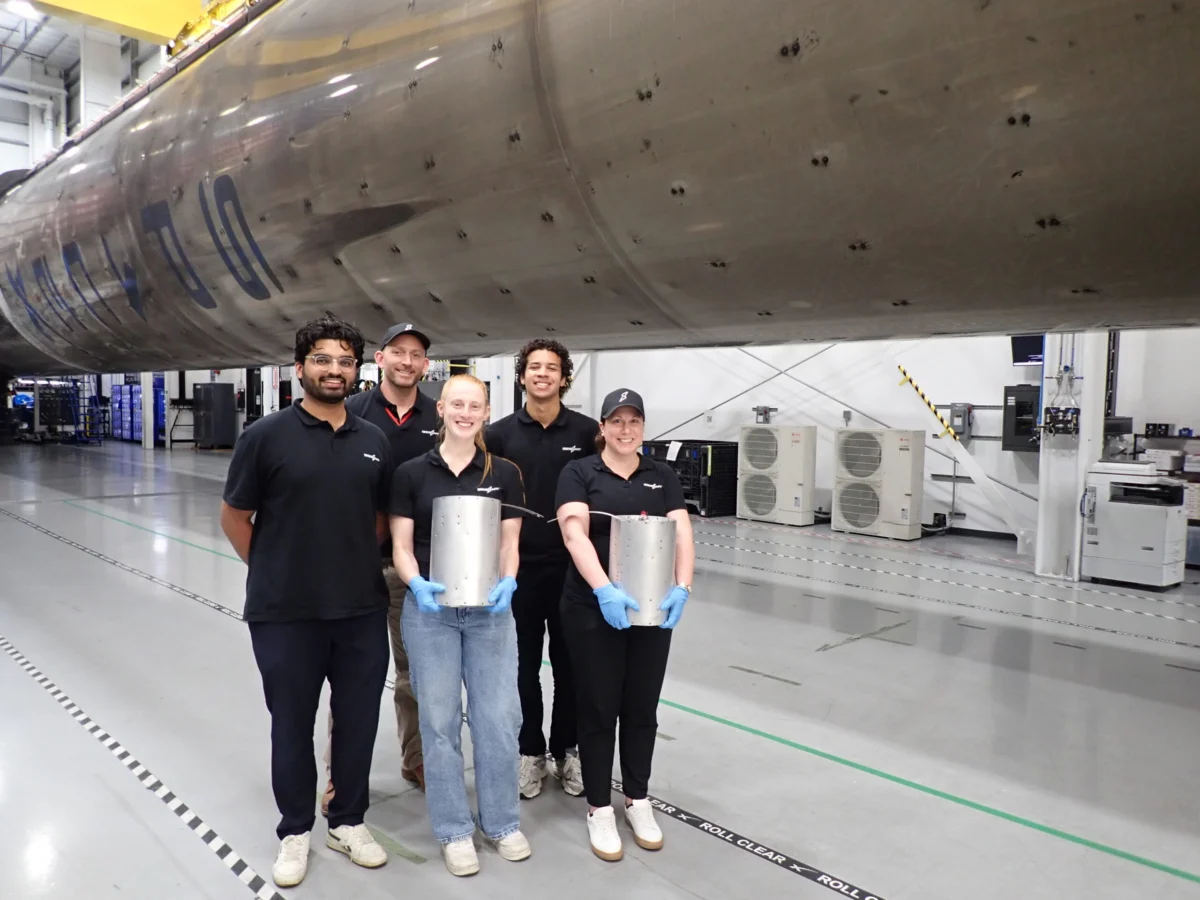
In a significant move poised to redefine the future of high-tech manufacturing, startup Besxar has secured an agreement with SpaceX to prototype an orbital semiconductor factory across a dozen flights utilizing the highly reusable Falcon 9 rocket booster. This groundbreaking partnership seeks to leverage the unique environmental conditions of space—primarily its pristine vacuum—to produce advanced semiconductor precursors, offering a potential paradigm shift from the colossal and complex fabrication plants on Earth. Founded by Ashley Pilipiszyn, a former OpenAI staffer, Besxar has already raised nearly $14 million, including a substantial $9 million seed round co-led by Dauntless Ventures and Overture VC, signaling strong investor confidence in its audacious vision.
The Terrestrial Conundrum: Why Space?
Manufacturing advanced semiconductors on Earth is an endeavor of unparalleled complexity, cost, and scale. Terrestrial chip fabrication facilities, commonly known as fabs, represent some of the most intricate and expensive infrastructure projects ever conceived, often costing tens of billions of dollars to construct and operate. A critical driver of this exorbitant expense and complexity is the incessant battle against contamination. Even microscopic dust particles or molecular contaminants can render a semiconductor wafer useless, necessitating the creation of ultra-clean environments. These cleanrooms operate under stringent conditions, involving multiple layers of air filtration, precise temperature and humidity controls, and positive pressure systems to prevent external impurities from entering. Workers must don specialized suits to avoid shedding skin flakes, hair, or lint. Vibration isolation, electromagnetic interference shielding, and highly pure chemical inputs further add to the engineering challenges and operational costs.
Ashley Pilipiszyn argues that this relentless struggle against Earth’s inherent environment is fundamentally inefficient. "We’re at a time where it’s actually more cost-effective to go where the physics already works," she told TechCrunch, emphasizing the advantage of space. "Don’t do it on Earth where you’re fighting physics." The natural vacuum of space inherently eliminates atmospheric particulate contamination, offering an environment orders of magnitude cleaner than any terrestrial cleanroom. Furthermore, the microgravity environment could enable novel material processing techniques, leading to semiconductor structures or compositions currently impossible to achieve on Earth. This "physics advantage" forms the core of Besxar’s strategic rationale, promising higher purity, potentially superior material properties, and a streamlined manufacturing process free from many terrestrial constraints.
Pioneering Orbital Fabs: Besxar’s Strategy and Early Success
Besxar’s approach is a systematic, iterative one, designed to de-risk the technology incrementally. The company’s first two "fabships"—small, self-contained canisters engineered to transport and test semiconductor materials in orbit—launched aboard a SpaceX Starlink mission in July. These initial flights were critical proof-of-concept tests aimed at demonstrating several key capabilities: the ability of the canisters to withstand the extreme forces of launch, their capacity to protect sensitive wafer samples from contamination throughout the mission, and the successful exposure of these samples to the vacuum of space.
Despite a malfunction in the flight data system of one canister, which Besxar is actively investigating, the mission achieved its primary objectives. The post-flight analysis yielded promising results. Pilipiszyn confirmed to TechCrunch, "The flown samples were the cleanest and had the least amount of particulate matter compared to non-flown terrestrial wafers, which is fantastic for us as we scale up." This initial validation is a crucial milestone, demonstrating that the space environment, coupled with Besxar’s specialized containment technology, can indeed yield significantly cleaner semiconductor precursors. Such purity is paramount for advanced chips, where even a single defect can cause device failure or reduce performance. The company’s name, "Besxar," is a playful nod to "beskar," the fictional ultra-resilient metal from the Star Wars universe, symbolizing its ambition to create materials of unparalleled quality.
Besxar’s development roadmap spans the next two years, focusing on progressively complex manufacturing steps. Following the initial validation of cleanliness and vacuum exposure, the next phases will involve demonstrating fundamental fabrication processes in orbit. This includes heating wafers, then depositing one material onto them, followed by sequential deposition of multiple materials. This iterative process is designed to build confidence and expertise, culminating in the production of qualification samples that can be presented to leading chipmakers. The ultimate goal is to supply these manufacturers with the specialized wafers required for advanced chips that regulate electrical power in critical applications such as data centers, sophisticated robotics, and electric vehicles—sectors where performance, reliability, and efficiency are non-negotiable.
Leveraging SpaceX’s Reusable Fleet: The Unprecedented Return Capability
The cornerstone of Besxar’s strategy lies in its partnership with SpaceX, particularly the utilization of the Falcon 9 booster’s payload bay for prototyping. The ability to manufacture in space is only half the equation; the other, equally critical half, is the efficient and reliable return of products to Earth. Historically, options for returning manufactured goods from orbit have been severely limited, primarily confined to the International Space Station (ISS) with its infrequent cargo return missions, or nascent dedicated return capsules from a handful of startups.
The SpaceX Falcon 9, however, presents an entirely different proposition. Its revolutionary reusability has transformed access to space, and crucially for Besxar, its ability to return its first stage booster to Earth for reuse means that a portion of its payload capacity can be adapted for return missions. In 2023 alone, the Falcon 9 booster made this round-trip an astonishing 163 times, and it has already surpassed 100 flights this year. This unparalleled cadence and demonstrated reliability in returning components to Earth makes it the most frequent and dependable vehicle for Besxar’s prototyping needs. This partnership provides Besxar with a rapid iteration cycle, allowing them to test, refine, and retrieve their "fabships" and samples far more frequently than any other current space platform.
Pilipiszyn initially approached SpaceX three years ago with ambitions to secure flights on Starship, the company’s next-generation, fully reusable launch and landing system. While Starship remains in active development and testing, the Falcon 9 booster payload deal serves as an invaluable interim solution, allowing Besxar to de-risk its core technology without waiting for Starship’s full operational readiness. The long-term vision, however, remains inextricably linked to Starship. With its immense payload capacity (up to 100-150 metric tons to LEO, compared to Falcon 9’s ~22.8 metric tons) and projected ultra-low launch costs per kilogram, Starship is envisioned as the vehicle that will enable Besxar to scale its operations dramatically, flying significantly larger fabs and returning hundreds, and eventually thousands, of wafers per mission. This symbiotic relationship underscores how innovations in launch technology are directly enabling the emergence of in-space manufacturing as a viable economic sector.
A New Frontier for Advanced Semiconductors
Besxar’s focus on precursors for advanced semiconductors taps into a high-value segment of the global chip market, which is projected to exceed $1 trillion by the end of the decade. The chips targeted—those regulating electrical power in data centers, robots, and electric vehicles—are critical components where performance, efficiency, and reliability are paramount. These applications demand the highest levels of material purity and structural integrity, areas where space manufacturing could offer a distinct advantage. If Besxar can consistently produce wafers with superior characteristics due to the space environment, it could significantly impact the efficiency and capabilities of next-generation electronics.
The implications extend beyond mere purity. The microgravity environment could facilitate the growth of semiconductor crystals with fewer defects, or enable the creation of novel heterostructures and thin films with unique electronic properties that are challenging or impossible to achieve under Earth’s gravitational pull. For instance, in microgravity, sedimentation and convection are virtually eliminated, allowing for more uniform doping of materials or the growth of larger, more perfect single crystals. These advantages could lead to breakthroughs in power electronics, quantum computing, and advanced sensor technologies.
Competitive Landscape and Industry Shift
Besxar is not alone in recognizing the potential of in-space manufacturing for semiconductors and advanced materials. Several other companies are actively pursuing similar goals, including United Semiconductors and Space Forge. Space Forge, for example, is developing its "ForgeStar" platform, a reusable satellite designed to host manufacturing processes in orbit, focusing on microgravity’s benefits for materials science. Varda Space Industries is another notable player, having successfully launched and returned a capsule designed to manufacture pharmaceutical products in space.
However, a common bottleneck for all these ventures remains the "limited ability to return a meaningful volume of product" to Earth. While the ISS offers microgravity, its return capacity is severely constrained and often prioritized for scientific samples. Dedicated small satellite platforms offer more flexibility but are still limited in terms of volume and return frequency. This is where Besxar’s strategy of leveraging SpaceX’s reusable fleet provides a crucial competitive edge. By partnering with the company that has most consistently demonstrated high-cadence, reliable return-to-Earth capabilities, Besxar directly addresses one of the most significant challenges facing the nascent in-space manufacturing industry.
Pilipiszyn articulates this strategic advantage clearly: "We believe that there is a solid transport layer now, so we can focus on the application layer." This statement highlights a fundamental shift in the space economy. For decades, the focus was on developing the "transport layer"—rockets to get to space. With SpaceX’s innovations driving down launch costs and increasing reusability, this transport layer is maturing. This allows companies like Besxar to shift their focus entirely to the "application layer"—the actual manufacturing processes and products that can leverage the unique environment of space. "We can just focus on our core manufacturing and getting our products back down to Earth to market as quickly as possible," she added, underscoring the business imperative of efficient product retrieval.
The viability of Besxar’s long-term scaling, particularly to hundreds and thousands of wafers per fab, is heavily dependent on the continued evolution of cheap, reliable, and high-volume return capabilities. This, in turn, requires SpaceX to get Starship fully operational, or for competitors like Rocket Lab with its Neutron rocket, or Stoke Space with its fully reusable rocket, to bring their own next-generation, high-cadence return systems online. The race to develop advanced space transport is thus directly intertwined with the future of in-space manufacturing.
Implications for Global Supply Chains and Space Economy
The success of Besxar and similar ventures could have profound implications for global semiconductor supply chains. By diversifying manufacturing locations and potentially creating novel materials, space-based fabs could enhance resilience against geopolitical disruptions, natural disasters, and pandemics—events that have exposed the fragility of highly concentrated terrestrial supply chains in recent years. Moving certain precursor manufacturing steps off-world could also reduce the environmental footprint associated with ultra-cleanroom construction and operation on Earth, which are energy- and resource-intensive.
Beyond semiconductors, Besxar’s pioneering efforts contribute to the broader vision of a robust in-space economy. The ability to manufacture high-value products in orbit and return them economically to Earth could unlock a new industrial frontier. This shift could drive further innovation in orbital infrastructure, automation, and robotics, creating entirely new sectors and job markets.
However, significant challenges remain. Scaling complex manufacturing processes in the harsh space environment, ensuring robotic autonomy for fabrication, and mitigating the effects of radiation on sensitive materials and equipment are formidable technical hurdles. Regulatory frameworks for industrial operations in orbit, intellectual property protection, and liability also need to evolve. Despite these challenges, the early successes of Besxar, coupled with the accelerating pace of space technology development, suggest that the vision of orbital factories producing Earth-bound goods may transition from science fiction to economic reality within the next decade, fundamentally altering how advanced materials are made.