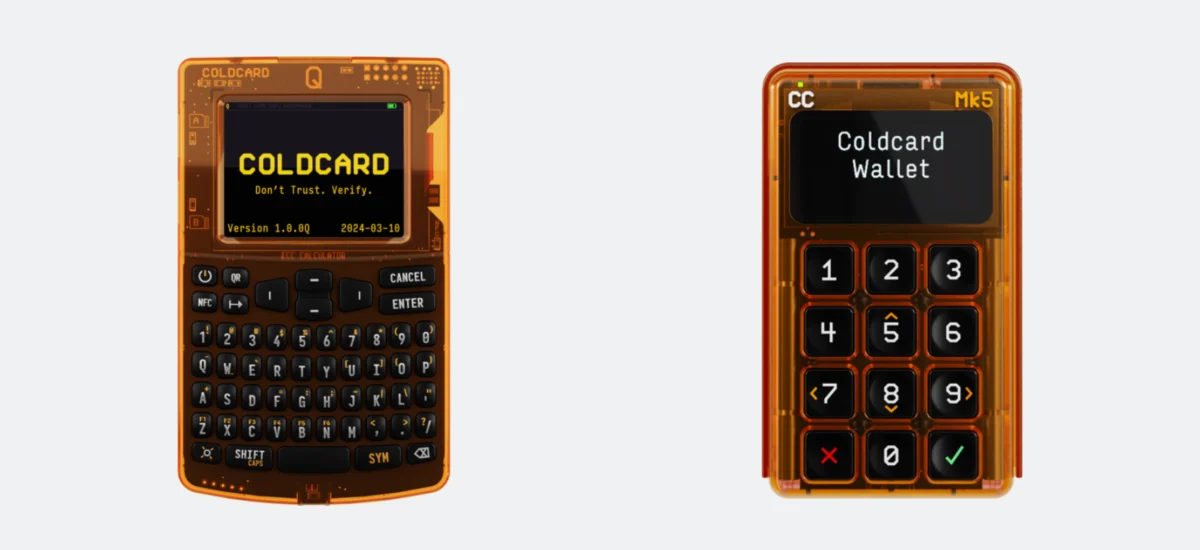
The advisory, shared via official social media channels and technical bulletins, highlights a significant challenge in the world of cold storage: the vulnerability of users who are "less online." Because hardware wallets are designed to be disconnected from the internet, security patches and critical warnings often fail to reach the most vulnerable segment of the population in a timely manner. Coldcard has urged the broader crypto community to assist in spreading the word, particularly to long-term "HODLers" who may not be monitoring daily news cycles. The exploit targets a fundamental component of wallet security—the generation of the master seed phrase—making it one of the most severe security incidents in the history of hardware-based self-custody.
The Magnitude of the Exploit and Recent Data
According to revised figures provided by Galaxy Research, the scale of the losses has escalated rapidly over the past week. Initial estimates placed the damage at roughly $89 million, but a fourth wave of automated sweeps detected on Monday, August 3, 2026, pushed the cumulative total to approximately $114 million. During this most recent surge, attackers successfully drained 449 BTC from 709 unique addresses in a matter of hours. This indicates a highly sophisticated and automated operation capable of identifying and draining compromised wallets as soon as they are identified on the blockchain.
The exploit is not a result of a direct hack into the Coldcard hardware itself, but rather a flaw in the firmware that governs how the device generates the random numbers used to create a wallet’s seed phrase. In cryptography, this randomness is known as entropy. If the entropy is insufficient or "low," the resulting seed phrase becomes predictable to an attacker with enough computing power. Forensic analysis suggests that the vulnerability traces back to firmware versions that have been in circulation since late 2021. Because many users set up their wallets years ago and have not moved their funds or updated their firmware since, they remain "sitting ducks" for the current exploit.
Technical Root Cause: The Entropy Failure
The core of the issue lies in the seed generation process. When a user initializes a new hardware wallet, the device typically uses an internal True Random Number Generator (TRNG) to produce a 12- or 24-word recovery phrase. This phrase serves as the master key for all private keys associated with the wallet. If the firmware contains a bug that limits the range of possible numbers the TRNG can produce, the number of possible seed phrases is drastically reduced.
Attackers have identified this specific weakness in Coldcard’s legacy firmware. By pre-calculating the limited set of possible seed phrases generated by the flawed code, they can recreate the private keys for thousands of wallets without ever needing physical access to the devices. Once the keys are recreated, the attackers use automated scripts to monitor those addresses for any bitcoin balance and instantly "sweep" the funds to their own addresses. This process bypasses all physical security features of the hardware wallet, such as PIN codes or "brick-me" self-destruct sequences, because the attack occurs at the cryptographic level rather than the physical level.
Affected Models and Critical Firmware Versions
Coinkite has provided a detailed breakdown of which devices are at risk. The vulnerability is specific to certain models and the firmware versions they were running at the time the wallet was first initialized.
- Coldcard Mk3: This 2019-era model is considered highly vulnerable if it was set up using firmware version 4.0.1 or any subsequent version prior to the most recent patches. Owners of the Mk3 are advised to move their funds to a newly generated wallet immediately.
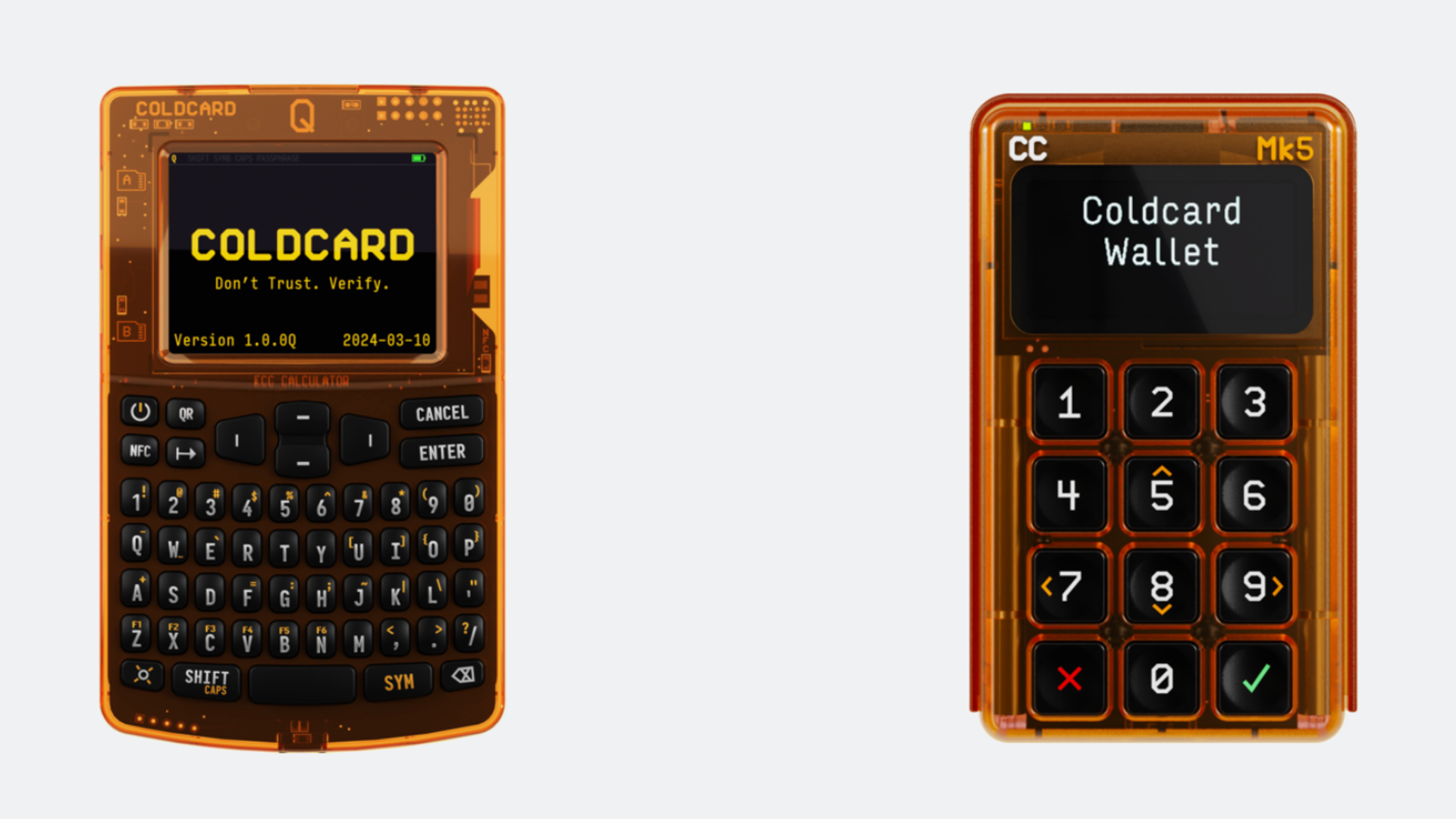
- Coldcard Mk4, Mk5, and Q: These newer models are also at risk if they are running firmware versions below 5.6.0 (for Mk series) or below 1.5.0Q (for the Q model).
The company clarified that the risk is tied to the creation of the seed. If a user generated their seed phrase on a vulnerable firmware version, simply updating the firmware is not enough to secure the funds. The seed itself is compromised. To remediate the threat, users must update their firmware, generate an entirely new seed phrase (which will use the corrected entropy code), and then manually transfer their bitcoin from the old, compromised addresses to the new, secure ones.
The "Dice Roll" Exception
In a notable detail for security purists, Coinkite confirmed that users who utilized the "dice roll" feature during setup are completely safe from this exploit. The dice roll feature allows users to physically roll a six-sided die at least 50 to 100 times and manually input the results into the Coldcard. This process generates entropy from a physical, external source rather than relying on the device’s internal software.
Because wallets created via dice rolls never touched the flawed firmware code during the entropy generation phase, their seed phrases remain cryptographically secure. This incident has sparked a renewed debate within the bitcoin community regarding the importance of "user-provided entropy," with many experts now recommending that all hardware wallet users move away from purely automated seed generation in favor of manual methods.
Industry Reaction and Expert Analysis
The exploit has sent shockwaves through the cybersecurity and cryptocurrency industries. Vincent Bouzon, the Director of Product Security at Ledger—a primary competitor to Coldcard—commented on the situation, noting that this event highlights a critical architectural requirement for hardware wallets. Bouzon stated that the generation of entropy must be "anchored in secure hardware, with an architecture that cannot silently downgrade to an untrusted software-based source."
Bouzon’s critique points to a broader industry concern: the "silent failure" of security components. In this case, users had no way of knowing that their "cold" storage was actually vulnerable to a "hot" exploit because the flaw was buried deep within the firmware’s mathematical implementation. However, Bouzon also defended the concept of self-custody, arguing that while this specific implementation failed, the alternatives remain far riskier. He noted that software wallets (hot wallets) are inherently more exposed to malware, and centralized exchanges represent a loss of true ownership, characterizing exchange balances as "merely an IOU."
Chronology of the Crisis
The timeline of the exploit suggests a coordinated and well-planned attack:
- Late 2021: Flawed firmware is released, introducing the low-entropy seed generation bug.
- July 31, 2026: Initial reports of mysterious "sweeps" emerge on social media and technical forums. Forensic analysts identify a pattern of 594 BTC being drained in a 25-minute window.
- August 1–3, 2026: Multiple waves of attacks occur. Galaxy Research begins tracking the movement of stolen funds, noting that the attackers are targeting addresses created during specific timeframes.
- August 4, 2026 (Morning): A fourth major sweep is detected, bringing the total loss to $114 million.
- August 4, 2026 (12:00 p.m.): Coldcard issues its most urgent warning to date, confirming the exploit is live and ongoing.
Broader Implications for Bitcoin Security
Despite the severity of the $114 million theft, the price of Bitcoin has remained remarkably resilient. Trading near $63,800 during early U.S. hours on Tuesday, the market appeared to view the incident as a localized technical failure rather than a systemic threat to the Bitcoin protocol itself. This distinction is crucial; the Bitcoin network remains secure, but the tools used to interact with it are only as safe as their underlying code.
The Coldcard exploit serves as a stark reminder that "cold storage" is not a "set it and forget it" solution. Security is an active process that requires regular maintenance, including firmware updates and staying informed about emerging threats. For the broader industry, this event likely signals a move toward more transparent and auditable entropy generation processes. It also underscores the importance of multi-signature (multisig) setups. Experts point out that if these drained funds had been stored in a 2-of-3 multisig arrangement—where two different keys from two different manufacturers are required to move funds—the exploit of a single Coldcard firmware bug would have been insufficient to steal the bitcoin.
As the situation develops, Coinkite is expected to release a more comprehensive post-mortem analysis. For now, the priority remains the migration of funds. Users are cautioned to double-check all addresses during the migration process, as the high-stress environment of an active exploit often leads to human errors, such as sending funds to the wrong address or falling for "copy-paste" clipboard malware. The message from the developers is clear: the threat is active, the losses are real, and the time to act is now.