



The celestial spectacle of the July Buck Moon recently graced the night sky over Krk Island, Croatia, offering a mesmerizing prelude to a highly anticipated total solar eclipse slated for August 12. Captured on July 28, 2026, from the scenic Adriatic coast, an image featured by NASA’s renowned Astronomy Picture of the Day (APOD) program beautifully illustrates the full moon rising above distant mountains, accompanied by intricate atmospheric phenomena. This stunning visual not only highlights the enduring beauty of our universe but also serves as a timely reminder of the dynamic interplay between Earth, its moon, and the sun, culminating in one of nature’s most profound events.
The Significance of the Buck Moon
The Buck Moon is the traditional name given to the full moon of July, a nomenclature deeply rooted in the seasonal cycles observed by various indigenous cultures, particularly Native American tribes. This specific name derives from the period when male deer, or bucks, typically begin to grow new antlers, pushing out the old ones in a vibrant cycle of regeneration. For many communities, the full moon names served as a practical calendar, marking key agricultural, hunting, and seasonal milestones throughout the year. For instance, other full moon names include the "Strawberry Moon" in June, signaling the ripening of strawberries, and the "Harvest Moon" in autumn, celebrated for its aid to farmers working late into the night.
From an astronomical perspective, a full moon occurs when the Moon is precisely opposite the Sun in its orbit around Earth. This alignment means that the entire lunar face visible from Earth is illuminated by sunlight, appearing as a complete disk. While the Moon completes an orbit around Earth approximately every 27.3 days, the phase cycle from new moon to new moon (a synodic month) takes about 29.5 days, due to Earth’s simultaneous orbit around the Sun. The July full moon, often associated with warmth and the height of summer, carries diverse cultural significance globally, from festivals and rituals to agricultural planning and maritime navigation. Its appearance on July 28, 2026, over the tranquil waters of the Adriatic, underscored this timeless connection between humanity and the cosmos.
Atmospheric Optics: Earth’s Shadow and the Belt of Venus
The photograph from Krk Island is particularly compelling due to its capture of not just the radiant Buck Moon, but also two subtle yet scientifically fascinating atmospheric phenomena: Earth’s shadow and the Belt of Venus. As the full moon ascended over the southeastern horizon, coinciding with the setting sun, it illuminated these atmospheric features with remarkable clarity.
Earth’s shadow, also known as the twilight wedge or the dark segment, is visible as a diffuse gray band extending above the mountainous horizon. This phenomenon occurs when Earth’s bulk casts a shadow onto its own atmosphere, which is then visible from the unshadowed part of the atmosphere. It is most prominently seen shortly after sunset or before sunrise, opposite the sun’s position. The band typically appears as a deep blue or gray hue, contrasting sharply with the brighter sky above it. The clarity and distinctness of Earth’s shadow are influenced by atmospheric conditions, including humidity and the presence of aerosols. In this specific image, the shadow band provided a dramatic base for the rising moon, emphasizing the curvature and vastness of our planet.
Directly above Earth’s shadow band, the photograph reveals the delicate, pinkish glow of the antitwilight arch, more widely known as the Belt of Venus. This ethereal band of light is caused by the backscattering of reddened sunlight by atmospheric dust and aerosols low in the atmosphere. When the sun is below the horizon, the sunlight must travel through a greater thickness of atmosphere, causing the blue light to be scattered away (Rayleigh scattering), leaving the red and orange hues to pass through. This reddish light is then scattered back towards the observer by particles in the atmosphere above the horizon, creating the characteristic pink or orange glow. The Belt of Venus is a transient beauty, lasting only for a short period during twilight, making its successful capture alongside the Buck Moon a testament to precise timing and photographic skill. The combined visual effect of the rising full moon, Earth’s shadow, and the Belt of Venus creates a layered narrative of light, shadow, and atmospheric physics, showcasing the complexity and beauty of our planet’s interaction with solar radiation.
The Role of Astronomy Picture of the Day (APOD)
The image of the Buck Moon, along with its detailed explanation, was presented by the Astronomy Picture of the Day (APOD) program. Since its inception in 1995 by NASA astronomers Robert Nemiroff and Jerry Bonnell, APOD has become a cornerstone of public astronomical education and inspiration. Each day, APOD features a different image or photograph of our fascinating universe, accompanied by a brief, accessible explanation written by a professional astronomer. The mission of APOD is to showcase the beauty and wonder of the cosmos, making complex scientific concepts understandable and engaging for a global audience.
Over its nearly three decades of existence, APOD has curated an extensive archive of astronomical imagery, ranging from breathtaking nebulae and distant galaxies to planetary close-ups and celestial events visible from Earth. Its daily updates have cultivated a loyal following of amateur astronomers, educators, students, and the general public, fostering a widespread appreciation for astronomy and space science. The program’s commitment to high-quality visuals and scientifically accurate yet approachable explanations has solidified its reputation as a reliable and inspiring source of astronomical information. The inclusion of the Buck Moon image from Krk Island exemplifies APOD’s dedication to featuring diverse and captivating celestial phenomena, often highlighting the contributions of skilled astrophotographers from around the world.
The Anticipated Total Solar Eclipse of August 12, 2026

The visual splendor of the Buck Moon on July 28 was more than just a momentary delight; it was framed as a cosmic precursor to a much larger and rarer event: a total solar eclipse scheduled for August 12, 2026. Solar eclipses occur when the Moon passes directly between the Sun and Earth, casting a shadow on our planet. A total solar eclipse is the most dramatic form, happening when the Moon completely obscures the Sun’s disk, revealing the ethereal solar corona. This precise alignment requires a New Moon phase, making the progression from the full Buck Moon to the upcoming New Moon a crucial element in the celestial mechanics leading to the eclipse.
The August 12, 2026, total solar eclipse is generating significant excitement within the scientific community and among the public. Its path of totality will sweep across parts of the Northern Hemisphere, offering prime viewing opportunities in regions including Greenland, Iceland, and a substantial portion of Europe, notably Spain and Portugal. Major cities and popular tourist destinations in these countries are expected to experience totality, drawing an influx of "eclipse chasers" and general tourists eager to witness this rare phenomenon. The maximum duration of totality for this eclipse is predicted to be over two minutes in some locations, providing ample time for observers to witness the Sun’s corona and other eclipse phenomena, such as Baily’s Beads and the diamond ring effect.
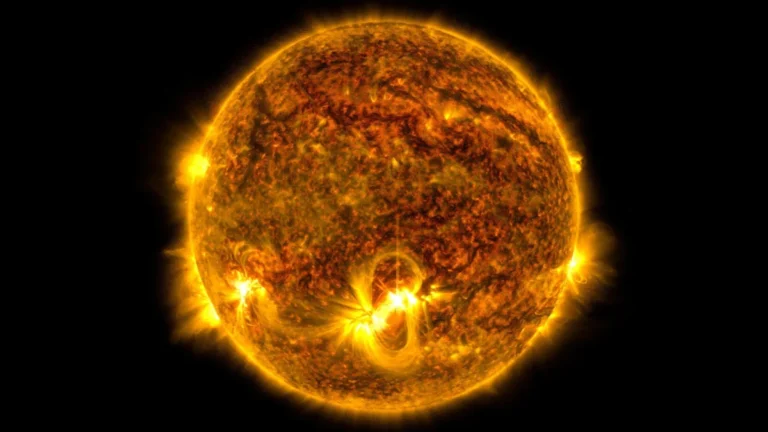
From a scientific standpoint, total solar eclipses are invaluable. They offer unique, albeit brief, opportunities to study the Sun’s corona, its outermost atmosphere, which is usually obscured by the Sun’s intense brightness. Researchers use eclipses to investigate the corona’s temperature, density, and magnetic field structures, providing insights into solar flares, coronal mass ejections, and space weather phenomena that can impact Earth. Furthermore, eclipses allow for observations of the effects of reduced solar radiation on Earth’s upper atmosphere, particularly the ionosphere, and can even be used to test aspects of general relativity, as famously demonstrated by Arthur Eddington in 1919.
Preparation and Public Engagement for the Eclipse
As the August 12 eclipse approaches, organizations like NASA, along with national astronomical societies and local observatories, are intensifying their public outreach and educational campaigns. A primary focus is on promoting safe viewing practices. Directly observing the Sun, even during a partial eclipse, without proper eye protection can lead to severe and permanent eye damage. Certified solar eclipse glasses or viewers, pinhole projectors, and filtered telescopes are essential for safe observation. Public viewing events, live streams, and detailed guides are being prepared to ensure that as many people as possible can safely experience the eclipse.
NASA’s involvement, as indicated by the news release reference in the APOD explanation, includes comprehensive coverage plans, likely involving expert commentary, live feeds from various locations along the path of totality, and educational resources. Such efforts are crucial not only for safety but also for maximizing the scientific and inspirational impact of the eclipse. The event is expected to be a major media story, showcasing the wonders of astronomy and encouraging interest in science, technology, engineering, and mathematics (STEM) among younger generations. The economic implications for regions within the path of totality are also considerable, with increased tourism and local business activity anticipated.
Connecting the Celestial Dots: From Full Moon to New Moon
The APOD explanation cleverly links the rising Buck Moon to the forthcoming New Moon and the total solar eclipse, highlighting the cyclical nature of celestial events. The lunar cycle, driven by the Moon’s orbit around Earth, progresses through various phases, from the invisible New Moon to the fully illuminated Full Moon and back again. A Full Moon, like the Buck Moon, represents the point where the Moon is fully lit as seen from Earth, positioned opposite the Sun. Conversely, a New Moon occurs when the Moon is between the Sun and Earth, making its illuminated side face away from us, rendering it largely invisible.
For a total solar eclipse to occur, the New Moon must align almost perfectly with the Sun and Earth, casting its shadow directly onto Earth’s surface. This precise alignment doesn’t happen every New Moon because the Moon’s orbit is slightly inclined (by about 5 degrees) relative to Earth’s orbit around the Sun. Most New Moons pass either above or below the Sun’s disk. However, when the orbital planes intersect at specific points, known as nodes, and a New Moon occurs at or near one of these nodes, an eclipse is possible. The August 12, 2026, event is one such rare and spectacular alignment. The "setting of the stage" by the Buck Moon poetically refers to this continuous lunar dance, where one phase naturally leads to the conditions necessary for another, more dramatic celestial event.
Broader Implications and The Enduring Fascination
The journey from observing a serene full moon over the Adriatic to anticipating a total solar eclipse encapsulates humanity’s enduring fascination with the cosmos. These events serve as powerful reminders of the grandeur and precision of celestial mechanics, accessible to anyone who looks up at the sky. Programs like APOD democratize astronomy, making scientific discoveries and stunning imagery available to everyone, fostering a sense of wonder and encouraging scientific literacy.
Beyond the immediate spectacle, such astronomical events inspire a deeper appreciation for our place in the universe. They prompt questions about the origins of stars, planets, and life itself. For aspiring scientists, they can be a catalyst, sparking a lifelong passion for exploration and discovery. The photographic documentation of these events, as exemplified by the Buck Moon image, also highlights the advancements in astrophotography, enabling both professional and amateur astronomers to capture ever more detailed and beautiful representations of the universe.
As the world looks forward to August 12, the memory of the Buck Moon on July 28 will serve as a gentle opening act. It underscores the cyclical rhythm of our solar system and the continuous interplay of light and shadow that paints our skies. Whether it’s the subtle beauty of Earth’s shadow and the Belt of Venus, or the awe-inspiring totality of a solar eclipse, the universe continues to offer limitless opportunities for observation, learning, and profound inspiration.