


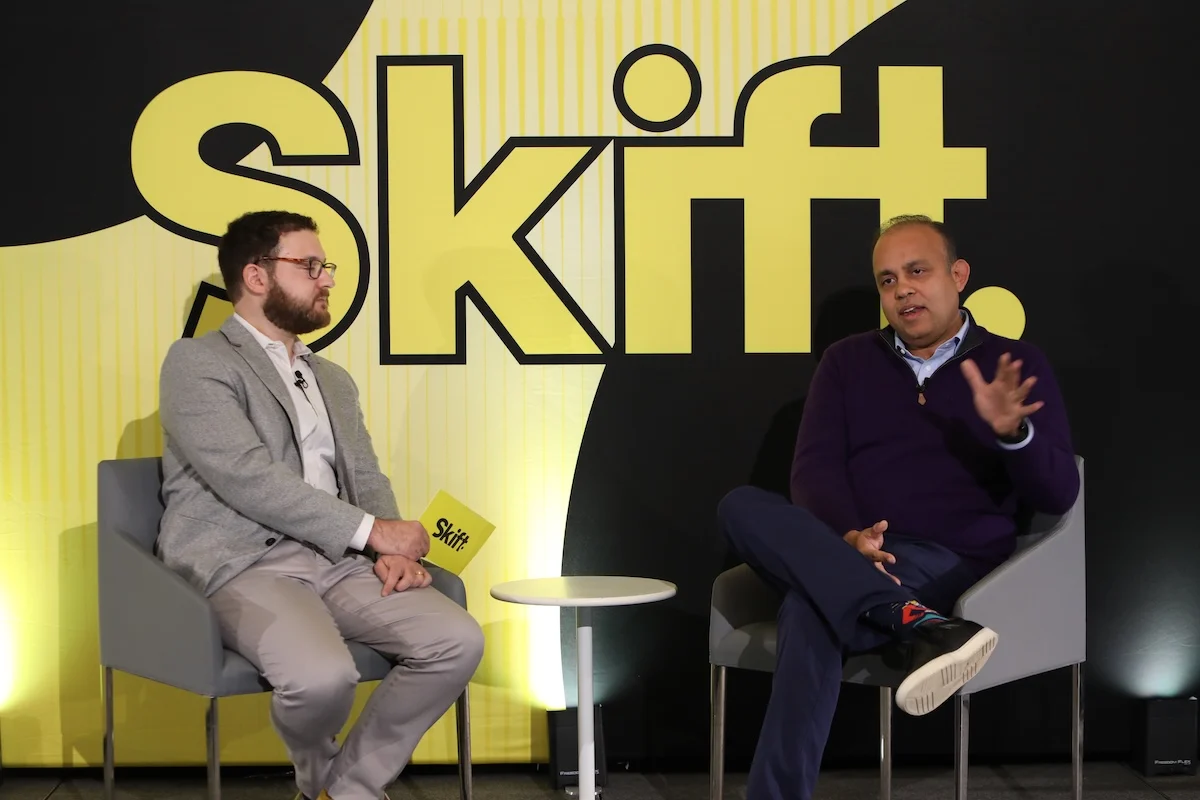
The rapid integration of autonomous artificial intelligence agents into the global travel and financial ecosystems has brought a critical question to the forefront of corporate governance and consumer protection: when a machine makes a costly mistake, who is financially responsible? This dilemma served as the focal point for discussions at the Skift Commerce Summit in New York City on November 11, 2026, where Abhinav Anand, Citi’s Head of Value Cards, Lending, and Commerce for U.S. Consumer Cards, delivered a clear mandate on the future of transactional accountability. As AI agents move beyond simple recommendations to executing complex, multi-variable travel bookings, the financial industry is grappling with a liability framework that was originally designed for human-to-human commerce.
Anand’s remarks highlighted a growing tension between the convenience of "agentic commerce" and the rigid structures of global payment networks. In the view of Citi, one of the world’s largest credit card issuers, the burden of error should not rest with the merchant, the bank, or the end consumer, but rather with the entity providing the artificial intelligence itself. The emergence of this stance marks a significant shift in how financial institutions view the role of software providers, potentially reclassifying AI developers as active participants in the financial chain rather than mere tool providers.
The Shift Toward Autonomous Travel Procurement
The travel industry has undergone a seismic shift over the past three years, transitioning from traditional search engines to generative AI interfaces, and finally to autonomous agents. These agents are programmed to act on behalf of the user, navigating complex flight inventories, hotel availability, and loyalty program nuances to curate and purchase travel itineraries without direct human oversight for every click. While this has significantly reduced the "time-to-booking" for consumers, it has introduced a new class of transactional risk.
In a traditional booking scenario, if a consumer accidentally books a flight for the wrong date, the liability typically falls on the consumer, subject to the airline’s cancellation policies. However, when an AI agent interprets a user’s prompt—such as "book me a trip to London for the conference next month"—and proceeds to book a non-refundable flight for the wrong week due to a data processing error or a "hallucination" in the AI’s logic, the lines of accountability become blurred.
At the Skift Commerce Summit, Anand identified this as the most pressing question facing banks, payment networks, and merchants today. "Who takes the agent liability?" he asked the audience, noting that the industry is currently in a race to define these rules before autonomous transactions become the dominant mode of travel commerce. Citi’s position is firm: liability must follow the agent. If the AI company’s technology makes the error, that company must be the one to provide the refund or cover the cost of the mistake.
Chronology of AI Integration in the Payment Sector
The path to this current liability debate has been shaped by several key milestones in the evolution of financial technology and artificial intelligence:
- The Generative AI Boom (2023–2024): Large language models (LLMs) were first integrated into travel platforms like Expedia and Kayak as conversational interfaces. At this stage, the AI only provided information; the human user still performed the actual transaction, keeping liability clearly with the consumer.
- The Rise of Agentic Workflows (2024–2025): AI companies began developing "agents" capable of using tools and APIs. This allowed AI to not only find a flight but also interact with a checkout page. During this period, developers often included "human-in-the-loop" requirements to avoid legal complications.
- Autonomous Commerce Scaling (2025–2026): By early 2026, the reliability of agents improved to the point where fully autonomous booking became a premium feature for corporate and high-end leisure travelers. This led to the first major disputes over "ghost bookings" and algorithmic errors in itinerary construction.
- The Regulatory and Banking Response (Late 2026): As transaction volumes via AI agents reached a critical mass, major financial institutions like Citi began publicly calling for a standardized liability framework, leading to the current discussions at summits such as Skift Commerce.
Supporting Data: The Cost of Algorithmic Error
The financial stakes involved in AI-driven travel are immense. According to industry projections for 2027, AI-enabled travel bookings are expected to account for over $150 billion in global transaction volume. Even a marginal error rate of 0.5% would result in $750 million in disputed transactions annually.
Current data from payment networks suggests that chargebacks related to "service not as described" or "unauthorized transactions" have seen a 12% uptick in sectors where AI agents are most active. For merchants, particularly airlines and hotels with thin margins, the prospect of absorbing the costs of AI errors is unsustainable. A typical airline operates on a net profit margin of approximately 3% to 5%; a single mismanaged AI booking that results in a forced refund or a chargeback can wipe out the profit from twenty successful bookings.
Furthermore, a 2026 consumer sentiment study conducted by travel tech analysts found that 68% of travelers would be "very unlikely" to use an autonomous booking agent if they were told they would be personally liable for any mistakes the machine made. This consumer hesitation provides a strong incentive for banks and AI companies to resolve the liability issue quickly to ensure the continued growth of the sector.
Proposed Frameworks for Payment Networks
To address these risks, Abhinav Anand suggested that the solution may lie with the gatekeepers of global commerce: Visa and Mastercard. One potential mechanism for enforcing liability involves the creation of a new category of merchant or intermediary specifically for AI agents.
Under this proposed model, an AI agent provider that wishes to facilitate transactions on behalf of users would need to be "vetted and registered" within the payment network. Much like how a traditional travel agency carries Errors and Omissions (E&O) insurance, an AI company might be required to maintain a reserve fund or an insurance policy that the payment network can draw upon in the event of a proven technical error.
"Agents that want to transact on Visa or Mastercard might have to accept some liability," Anand noted. This would likely involve a technological handshake—a digital signature or token—that identifies a transaction as having been initiated by an autonomous agent. If a dispute arises, the payment network could automatically route the liability back to the AI provider’s "liability wallet" rather than initiating a standard chargeback against the airline or hotel.
Industry Reactions and Broader Implications
The response to Citi’s stance has been mixed across the ecosystem. For merchants, the proposal is a welcome relief. Representatives from the hospitality sector have long argued that they should not be the "insurance policy" for experimental technology. If a hotel room is held and then canceled due to an AI error, the hotel loses the opportunity to sell that inventory to another guest.
However, the AI development community faces a more complex challenge. Smaller AI startups and boutique travel-tech firms may find the requirement to carry significant liability insurance a barrier to entry. There are concerns that only the "Big Tech" players—Google, OpenAI, and Microsoft—will have the balance sheets necessary to absorb the risks associated with autonomous commerce, potentially leading to a monopoly on AI-driven travel services.
From a regulatory perspective, the discussion aligns with the broader goals of the EU AI Act and similar emerging frameworks in the United States, which emphasize "human-centric" AI and clear lines of accountability. Regulators are increasingly looking at "algorithmic accountability," where the creators of autonomous systems are held responsible for the outcomes those systems produce in the physical and financial worlds.
Fact-Based Analysis of the Path Forward
The shift toward agent-led liability will likely necessitate several technical and legal innovations over the next 18 to 24 months:
- Standardized Error Logging: For a bank to hold an AI company liable, there must be an objective way to prove the AI made a mistake. This will require a standardized "black box" for AI transactions, recording the user’s original prompt, the AI’s interpretation, and the final API call made to the merchant.
- Dynamic Insurance Products: The insurance industry is already beginning to develop "Algorithmic Malpractice" insurance. These policies would be tailored to the specific risks of autonomous commerce, covering everything from simple booking errors to systemic failures that result in thousands of incorrect transactions simultaneously.
- Updated Terms of Service: Consumers will likely see a significant change in the "Fine Print" of travel apps. These terms will explicitly define the relationship between the user, the AI agent, and the financial liability for errors, likely requiring users to opt-in to autonomous features with a full understanding of the dispute process.
Conclusion: The New Frontier of Financial Responsibility
The comments made by Abhinav Anand at the Skift Commerce Summit serve as a clear signal that the "wild west" era of AI experimentation in finance is coming to an end. As Citi and other major financial institutions demand more rigorous standards, the burden of proof is shifting to the tech companies to demonstrate that their agents are not only intelligent but also financially reliable.
The resolution of the liability question will ultimately determine the speed at which autonomous commerce is adopted by the general public. If a robust framework is established—where AI providers take responsibility for their products—it could unlock a new era of efficiency and personalized service in the travel industry. However, if the industry fails to reach a consensus, the risk of "algorithmic friction" could stall the progress of one of the most promising technological shifts of the 21st century. As 2027 approaches, the eyes of the financial world remain on the payment networks, waiting for the formal rules that will govern the machines now booking our world.