Denver-based AI data center startup Crusoe, fresh off a substantial $3.9 billion funding round, has officially terminated its ambitious plans to deploy a new line of stationary power plants developed by fellow Denver company Boom Supersonic. This dissolution marks a significant shift in the energy procurement strategy for Crusoe, a major player in the rapidly expanding AI infrastructure sector, and presents a considerable setback for Boom Supersonic’s diversification efforts into industrial power generation.
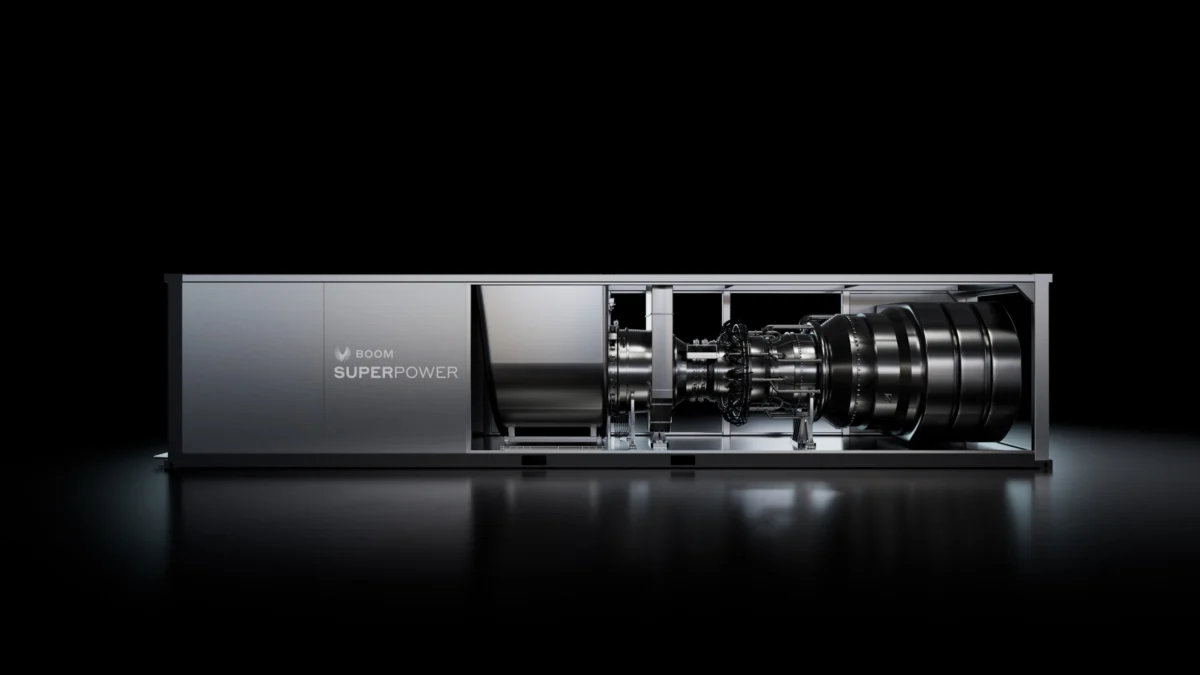
The initial agreement, valued at an estimated $1.25 billion, would have seen Crusoe become the inaugural customer for Boom’s "Superpower" turbines, committing to purchase 29 units, each boasting a 42-megawatt capacity. Deliveries were originally slated to commence in 2027, underpinning a strategic partnership that promised to intertwine the future of high-performance computing with cutting-edge aerospace engineering. However, the deal has now fallen apart, a development confirmed by Boom Supersonic CEO Blake Scholl and subsequently by Crusoe.
The Rise of Crusoe: From Bitcoin to AI Powerhouse
Crusoe’s trajectory has been nothing short of remarkable, evolving from its founding in 2018 as a niche bitcoin mining operation to a critical enabler of the artificial intelligence revolution. The company’s genesis was rooted in an innovative approach to energy: harnessing excess natural gas that would otherwise be flared at oil fields to power its energy-intensive cryptocurrency mining operations. This unconventional beginning instilled in Crusoe a deep understanding of energy infrastructure and a penchant for finding novel power solutions.
In recent years, as the demand for AI computing surged, Crusoe strategically pivoted, leveraging its expertise in building large-scale, energy-efficient data centers. This pivot has proven incredibly successful, positioning Crusoe as one of the preeminent builders of AI data centers globally. Its portfolio now includes massive campuses, such as the sprawling facility in Abilene, Texas, which provides crucial computing power to industry giants like OpenAI. The company’s recent $3.9 billion capital injection underscores investor confidence in its growth trajectory and its pivotal role in addressing the escalating infrastructure needs of the AI era. This substantial funding round, one of the largest in the sector, empowers Crusoe to aggressively expand its footprint and explore diverse energy solutions for its rapidly growing network of "AI factories."
Boom Supersonic’s Dual Ambition: Flying High and Powering Ground
Boom Supersonic, on the other hand, is primarily known for its audacious mission to revive supersonic passenger travel. The company is actively developing Overture, a supersonic jet designed to carry passengers at speeds exceeding Mach 1, aiming to drastically cut flight times across oceans. The development of such a sophisticated aircraft demands immense capital and technological prowess.
In a strategic move to diversify its revenue streams and, critically, to help fund the capital-intensive Overture project, Boom launched a new business line last year (estimated 2025, based on the original article’s implied timeline). This venture aimed to commercialize a version of the advanced engine being developed for Overture – dubbed "Symphony" – as natural gas-fired stationary power plants for industrial applications. These stationary turbines, branded "Superpower," share approximately 80% of their components with their airborne counterparts, highlighting Boom’s innovative approach to leveraging its core aerospace technology. Boom had successfully raised $300 million last year, largely earmarked for the commercialization of this new power generation business, signaling strong belief in its potential. The idea, as articulated by CEO Blake Scholl at the time, was for profits from the Superpower division to provide a stable, recurring revenue stream that could directly support the demanding research, development, and certification costs associated with bringing Overture to market.
The Ill-Fated Partnership: A $1.25 Billion Vision
The partnership between Crusoe and Boom Supersonic was initially heralded as a symbiotic relationship, marrying Crusoe’s need for scalable, reliable power for its burgeoning AI data centers with Boom’s ambition to establish a foothold in the distributed power generation market. Crusoe’s commitment to purchasing 29 Superpower turbines, totaling an impressive 1,218 megawatts (MW) of generation capacity, represented a monumental deal for the nascent Superpower division. The turbines were envisioned as a key component of Crusoe’s future energy mix, particularly for its large-scale data center projects.
The agreement was strategically important for both parties. For Crusoe, it offered a potentially innovative and efficient source of on-site power, aligning with its "power up" philosophy of integrating energy solutions directly with its computing infrastructure. For Boom, securing Crusoe as its launch customer was a critical validation of its Superpower technology and business model, providing the necessary momentum and revenue stream to scale operations and attract further clients. The anticipated delivery timeline, starting in 2027, suggested a phased rollout that would integrate these advanced turbines into Crusoe’s expanding network of AI factories.
The Unraveling: Official Statements and Strategic Realignments
The news of the partnership’s termination emerged via a post on X (formerly Twitter) by Boom Supersonic CEO Blake Scholl. On a Friday, Scholl first extended congratulations to Crusoe founders Cully Cavness and Chase Lochmiller on their company’s recent substantial funding round, before revealing the core news: "The TL/DR is that turbines are no longer part of Crusoe’s near term primary power mix at Abilene/etc., so a launch partnership just didn’t make sense." He clarified that while the direct launch partnership with Crusoe was off, Boom’s Superpower business was still moving forward, stating, "Boom will be delivering about 250MW of Superpowers next year to other sites, and we’re targeting 1GW in 2028." Scholl expressed gratitude for Crusoe’s initial help in shaping the Superpower product and left the door open for future collaboration, "if/when turbines become part of their primary power mix."

Crusoe subsequently confirmed the cessation of business with Boom Supersonic to TechCrunch. Andrew Schmitt, a spokesperson for Crusoe, provided insight into the company’s dynamic energy strategy: "We build AI factories from the power up, and we’re bringing new campuses online across the country, powered by innovative energy sources. As our portfolio grows, we stay flexible, choosing the energy solutions that are right for each site as its needs evolve – including turbines, along with wind, solar, batteries and the grid. While Boom has been a great partner, the partnership isn’t the right fit today. We wish them well."
This statement highlights Crusoe’s commitment to flexibility and site-specific energy solutions, suggesting that the decision was less about a rejection of turbine technology in general, and more about a strategic realignment based on current needs and optimal resource allocation for specific projects.
Crusoe’s Evolving Energy Strategy: A Diverse Portfolio
Crusoe’s "power up" philosophy emphasizes integrating diverse energy sources directly into its data center operations. The company’s initial 1.2 gigawatt (GW) data center in Abilene, Texas, which serves Oracle and OpenAI, is primarily powered by the conventional electrical grid, supplemented by a gas-turbine power plant reserved for backup. This hybrid approach showcases Crusoe’s pragmatism in leveraging existing infrastructure while maintaining redundancy.
Furthermore, Crusoe is developing another significant project in Abilene: a 900 MW data center specifically for Microsoft. This facility is planned to be powered by on-site gas turbines, indicating that turbines remain a viable component of Crusoe’s broader energy strategy, even if the specific Superpower partnership was discontinued. This nuanced approach suggests that Crusoe is constantly evaluating the most efficient, cost-effective, and scalable energy solutions for each individual data center campus, taking into account local grid conditions, fuel availability, environmental considerations, and project timelines. The company’s recent capital raise provides it with substantial resources to pursue this flexible, multi-faceted energy strategy, allowing it to invest in a mix of renewables (wind, solar), battery storage, grid connections, and various forms of on-site generation.
Implications for Boom Supersonic: A Setback for Diversification
For Boom Supersonic, the loss of Crusoe as its launch customer for the Superpower turbines represents a significant setback. The $1.25 billion deal was not merely a large contract; it was intended to be the cornerstone of its new industrial power generation business, providing crucial revenue and market validation. The $300 million raised last year, much of which was allocated to commercializing Superpower, now faces increased pressure to demonstrate returns without its marquee customer.
The immediate financial impact, while not fully disclosed, will likely necessitate a revised strategy for the Superpower division. Boom will now need to aggressively pursue new anchor customers and demonstrate the viability of its turbine technology to a broader market, potentially facing greater scrutiny without the initial endorsement of a high-profile client like Crusoe. Moreover, the strategic goal of using Superpower profits to fund the Overture supersonic jet development becomes more challenging. Delays or reduced revenue from the power division could place additional strain on Overture’s already demanding funding requirements and development timeline. While Scholl’s post indicates other customers are in the pipeline, and targets of 250MW in 2027 and 1GW in 2028 are ambitious, the loss of the foundational Crusoe deal undoubtedly shifts the landscape for Boom’s diversification strategy.
Broader Industry Context: The AI Power Imperative
The termination of this high-profile partnership underscores a critical challenge facing the entire AI industry: the immense and growing demand for reliable, sustainable, and scalable power. Artificial intelligence data centers are notoriously energy-intensive, consuming vast amounts of electricity to run high-performance GPUs and maintain optimal operating temperatures. Industry estimates suggest that data centers could account for a significant percentage of global electricity consumption in the coming years, driven largely by the proliferation of AI.
The race to build AI infrastructure is, in many respects, a race for power. Companies like Crusoe are at the forefront of this challenge, exploring every conceivable energy option to keep their "AI factories" humming. This includes not only traditional grid connections and fossil fuel-based generation but also a burgeoning interest in renewable energy sources, advanced battery storage, and even emerging nuclear technologies like small modular reactors (SMRs). The volatility of energy markets, the complexities of grid integration, and the increasing pressure for decarbonization all contribute to a highly dynamic and challenging environment for power procurement. The decision by Crusoe reflects the constant evaluation and adaptation required to meet these demands, where flexibility and optionality are paramount.
Looking Ahead: Dynamic Shifts in Energy and AI Infrastructure
The dissolved partnership between Crusoe and Boom Supersonic highlights the fluid nature of strategic alliances in rapidly evolving sectors. For Crusoe, the path forward appears undeterred, supported by its recent multi-billion-dollar funding and a continued commitment to a diversified and flexible energy strategy for its rapidly expanding AI data center footprint. The company’s ability to attract major clients like OpenAI and Microsoft indicates its core value proposition remains strong, irrespective of specific vendor partnerships for power generation.
For Boom Supersonic, the challenge is clear: to pivot effectively, secure new anchor customers for its Superpower turbines, and demonstrate the long-term viability of its industrial power division. The company’s core mission with Overture remains intact, but its funding model has experienced an unexpected tremor. The broader implications for the AI and energy sectors point towards a future where innovation in power generation and distribution will be just as critical as advancements in computing hardware and software. The pursuit of AI dominance is inextricably linked to the ability to reliably and sustainably power it, making every strategic decision in energy procurement a high-stakes play in the global technology race. The future may indeed be long, as Scholl noted, and collaboration between disparate industries remains a powerful engine for progress, even if specific partnerships evolve or dissolve along the way.