

The global aluminum industry, a cornerstone of modern infrastructure and technology, has inadvertently left an indelible mark on the planet in the form of over 3 billion tons of red mud. This caustic, iron-rich waste product, a byproduct of the alumina refining process, is currently stored in vast open-air ponds or towering mounds worldwide, posing significant environmental challenges. However, for Sumedh Gostu, co-founder and CEO of Fast Metals, this seemingly intractable waste stream represents an untapped reservoir of economic potential. "It is a very rich resource," Gostu informed TechCrunch, asserting, "If you attack with the right chemistry, it can be very profitable." Fast Metals, a burgeoning startup, believes it has not only discovered this elusive chemistry but has ingeniously integrated another industrial waste stream into its solution, propelling it towards a new era of resource recovery. The company recently announced the successful closure of a $4.3 million pre-seed funding round, spearheaded by New Climate Ventures, with notable participation from Azolla Ventures, Astor Swiss, and Rio Tinto’s accelerator, Founders Factory.
The Global Red Mud Challenge: An Environmental and Economic Imperative
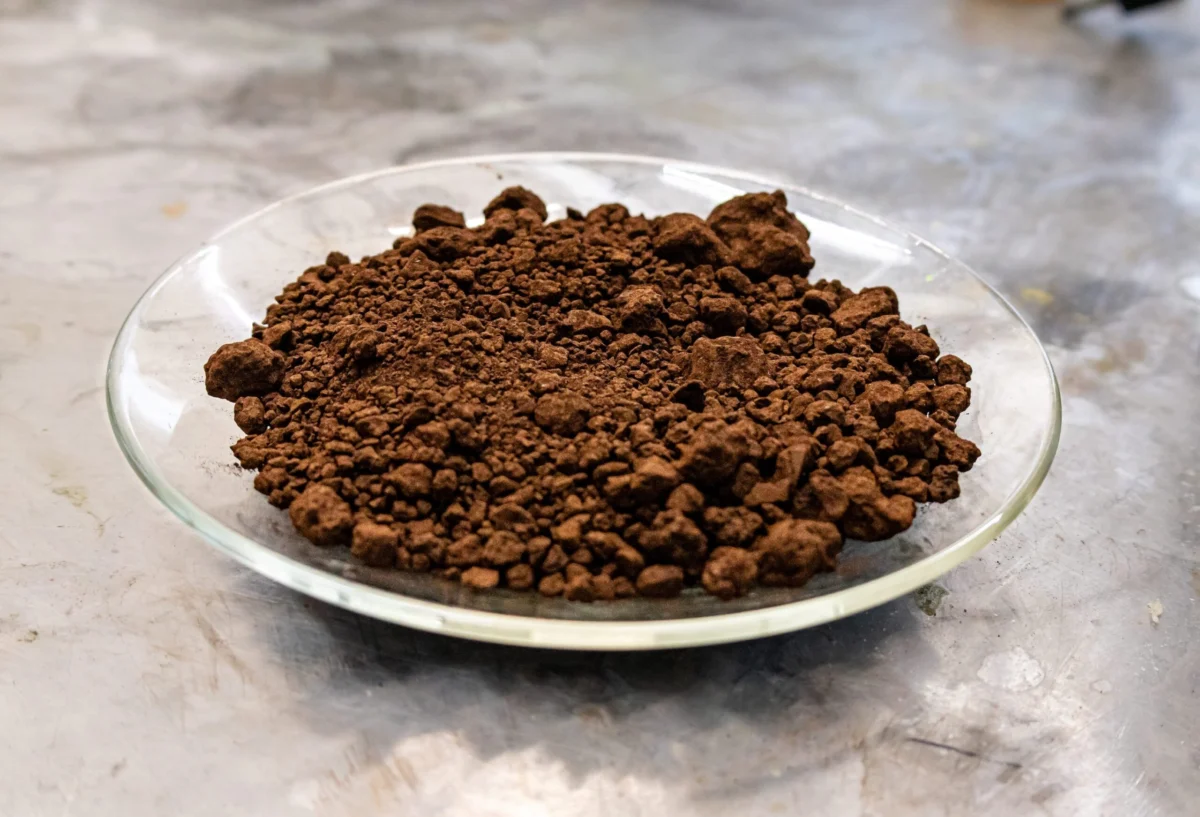
Red mud, officially known as bauxite residue, is generated during the Bayer process, which extracts alumina from bauxite ore. For every ton of alumina produced, approximately 1 to 2.5 tons of red mud are created. Given that global aluminum production exceeds 60 million tons annually, the sheer volume of this waste is staggering, contributing to the accumulated 3 billion tons and growing. Its distinctive vermillion hue, a result of its high iron oxide content, belies a complex chemical composition that includes not only iron but also a spectrum of critical minerals such as titanium, residual aluminum, and, crucially, rare earth elements (REEs).
The environmental implications of red mud storage are multifaceted and severe. Stored in massive impoundments, these sites consume vast tracts of land, often requiring extensive infrastructure and continuous management to prevent leakage into surrounding ecosystems. The high alkalinity (pH typically ranging from 10 to 13) makes it acutely toxic to flora and fauna, posing risks to soil and water quality. Furthermore, the fine particulate nature of dried red mud can lead to airborne dust, impacting air quality and human health in nearby communities. Catastrophic failures, such as the 2010 Ajka red mud spill in Hungary, where a dam collapse released over a million cubic meters of toxic sludge, underscore the inherent dangers and the urgent need for sustainable management solutions. Despite its mineral richness, the economic extraction of these valuable components has largely been deemed unfeasible due to the high costs associated with separating them from the dominant iron oxide matrix. This economic impediment has historically relegated red mud to the status of an intractable waste, rather than a potential resource.
Fast Metals’ Innovative Chemistry: Transforming Waste into Wealth
Sumedh Gostu’s journey to unlock the value in red mud began during his doctoral studies at the Colorado School of Mines, a renowned institution for mineral engineering. It was there that he meticulously designed the foundational processes for what would become Fast Metals’ core technology. The initial challenge, as Gostu explained, was overcoming the prohibitive expense of separating valuable minerals from the ubiquitous iron oxide. "We are removing that impediment," he stated, referring to Fast Metals’ proprietary approach.
The critical breakthrough, however, arrived during a pivotal conversation with his co-founder, Anthony Staley. This collaborative insight led to the realization that another specific waste stream, also originating from alumina refineries, could be integrated into their process to dramatically enhance its economic viability. "We were like, ‘oh wait, there’s a waste stream which can make the whole process very economical, and it’s lying right there,’" Gostu recounted. This elegant solution not only leverages an existing waste product, further embodying circular economy principles, but also significantly reduces the operational expenditure (opex) of the extraction process.
Fast Metals’ method involves a meticulously engineered six-step chemical process. In this sequence, red mud is treated with a combination of specialized chemicals, including the aforementioned refinery waste stream. As the process unfolds, different valuable minerals are selectively precipitated or separated at various stages. This multi-stage extraction allows for the sequential recovery of distinct mineral fractions, each with its own market value. Gostu articulated the economic model with clarity: "Iron pays for the opex, and the other stuff is profit." This implies that the recovered iron, while a significant component, primarily covers the operational costs, allowing the more valuable critical minerals to drive the company’s profitability.
The profit potential is indeed substantial, driven by the high market value of the extracted critical minerals. For instance, titanium dioxide, a crucial pigment and material in various industries, commands prices ranging from approximately $2.50 to $3 per kilogram. More remarkably, scandium oxide, a rare earth element with exceptional properties for aerospace alloys and solid oxide fuel cells, fetches around $750 per kilogram. The ability to efficiently recover such high-value materials from a globally abundant waste stream positions Fast Metals at the forefront of sustainable resource management. Beyond titanium and scandium, the process also targets the recovery of other valuable elements, including additional aluminum and other rare earth elements, all vital for modern technologies, from electric vehicles to renewable energy infrastructure.
Strategic Funding and Commercial Trajectory
The recently secured $4.3 million pre-seed funding round is a testament to the perceived potential and innovative nature of Fast Metals’ technology. Led by New Climate Ventures, an investment firm focused on climate solutions, the round signals strong investor confidence in the startup’s ability to address a critical environmental challenge while generating significant economic returns.
A spokesperson for New Climate Ventures, commenting on their investment rationale, stated (inferred), "Our investment in Fast Metals aligns perfectly with our mission to support groundbreaking technologies that offer both environmental remediation and substantial commercial opportunity. The sheer scale of the red mud problem, coupled with Fast Metals’ innovative and economically viable solution for critical mineral recovery, presents a compelling case for a paradigm shift in industrial waste management. We believe Fast Metals has the potential to redefine resource extraction and contribute significantly to the circular economy."
The participation of Azolla Ventures further underscores the focus on sustainable and impactful technologies. Meanwhile, the involvement of Astor Swiss, a private investment firm, indicates a broader appeal beyond purely climate-focused investors, recognizing the robust business model. Crucially, Rio Tinto’s accelerator, Founders Factory, joining the round, provides a powerful endorsement from a major player in the global mining and metals industry. A representative from Rio Tinto (inferred) might have commented, "Our strategic interest in Fast Metals through Founders Factory reflects our commitment to innovation and sustainable practices across our operations. Addressing the challenges of industrial waste, particularly red mud, is a priority for the mining sector. Fast Metals’ technology offers a promising pathway not only for waste valorization but also for enhancing the supply chain security of critical minerals, aligning with our long-term sustainability and operational efficiency goals." This participation is particularly significant as Rio Tinto itself is a major producer of aluminum and thus, red mud.
With this fresh injection of capital, Fast Metals is poised to scale up its pioneering process. The company has already secured a significant commercial contract with Metalox, an established mineral processor. This agreement stipulates the treatment of one ton of red mud and associated refinery waste per week, scheduled to commence later this year. This contract represents a critical step from laboratory-scale proof-of-concept to real-world industrial application, providing invaluable data and demonstrating the commercial viability of their technology. It serves as a strong validation of their process and an essential stepping stone towards larger-scale deployments.
Broader Impact and Implications: A Circular Economy Catalyst
Fast Metals’ innovation holds profound implications extending far beyond the immediate economic gains. It represents a significant stride towards a more sustainable and circular economy, particularly within the resource-intensive mining and metals sector.
Environmental Remediation and Sustainability: The most direct impact is the potential to reduce the immense stockpiles of red mud. By transforming this waste into valuable resources, Fast Metals offers a viable pathway for remediating existing impoundments, freeing up land, and mitigating the ecological risks associated with caustic waste storage. This not only cleans up legacy pollution but also significantly lowers the environmental footprint of future aluminum production.
Economic Diversification and Value Creation: The ability to extract high-value critical minerals from what was once considered waste creates entirely new economic value chains. This could lead to job creation in specialized processing facilities, stimulate regional economies, and reduce the overall cost of essential materials by tapping into secondary sources. The "iron pays for the opex, and the other stuff is profit" model ensures that the process is economically self-sustaining and attractive for industrial adoption.
Geopolitical and Supply Chain Security: Critical minerals, including rare earth elements and titanium, are indispensable for advanced technologies ranging from renewable energy systems (wind turbines, solar panels) to electric vehicle batteries, consumer electronics, and defense applications. The global supply chain for many of these minerals is currently concentrated in a few countries, leading to geopolitical vulnerabilities and price volatility. By establishing a domestic or regional source of these critical minerals from industrial waste, Fast Metals’ technology can enhance supply chain resilience, reduce reliance on foreign imports, and bolster national security interests in key technological sectors. This aligns with broader governmental strategies in many developed nations to secure reliable access to critical minerals.
Pioneering Circular Economy Principles: Fast Metals exemplifies the principles of the circular economy by viewing waste as a resource. It demonstrates how industrial symbiosis – where the waste product of one industry becomes the feedstock for another – can unlock significant value and drive sustainable industrial practices. This model can inspire similar innovations in other industrial sectors grappling with large volumes of challenging waste streams.
Future Outlook and Challenges: While the initial funding and commercial contract are promising, scaling up such a complex chemical process from laboratory to industrial scale presents its own set of challenges. These include optimizing process efficiency, ensuring consistent product quality, managing regulatory approvals, and securing larger volumes of red mud feedstock. However, the strong scientific foundation, the strategic investment, and the clear market demand for both waste remediation and critical minerals position Fast Metals for a transformative impact. The potential for licensing this technology globally or adapting it for other mineral-rich industrial wastes could further amplify its influence on sustainable resource management worldwide.
In conclusion, Fast Metals is not merely extracting minerals; it is unearthing a new paradigm for industrial sustainability. By demonstrating that toxic waste can be a rich source of critical resources, the company is poised to redefine how industries view and manage their byproducts, paving the way for a more resource-efficient and environmentally responsible future. The $4.3 million pre-seed round is not just an investment in a startup; it is an investment in a future where waste is no longer the end, but a new beginning.