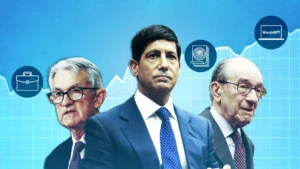


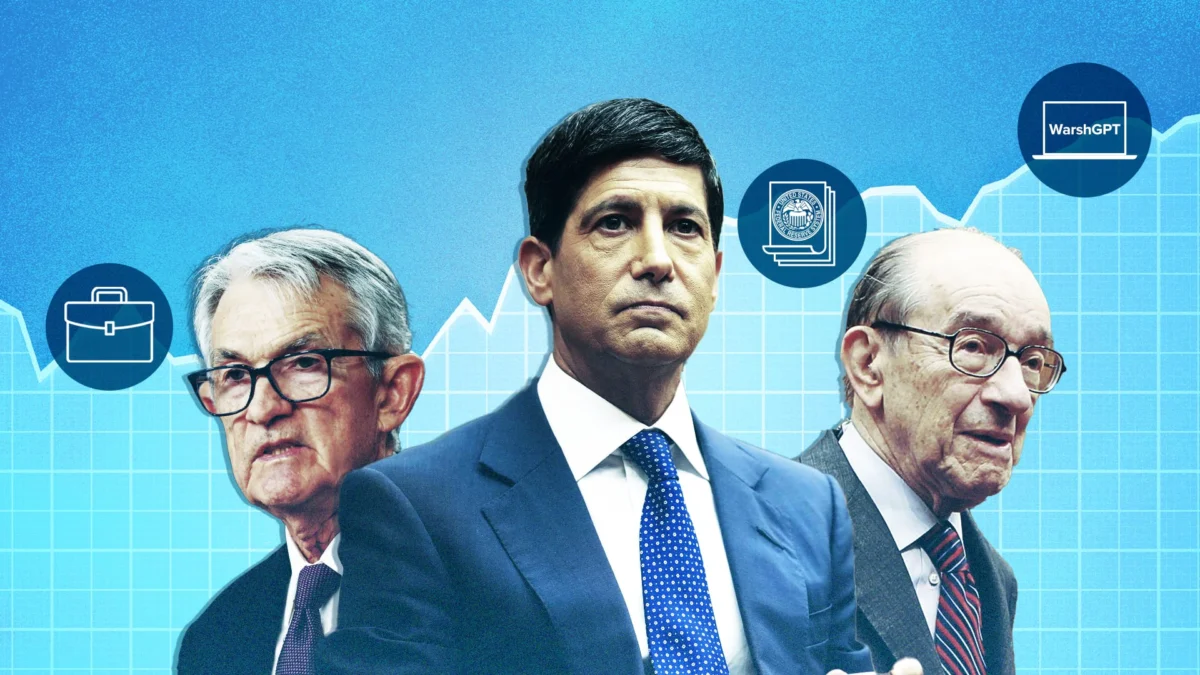
Washington, D.C. – A profound shift in the Federal Reserve’s communication strategy under its new Chairman, Kevin Warsh, is sending ripples through financial markets, compelling investors and institutions to recalibrate their analytical frameworks and embrace advanced technological solutions like artificial intelligence. Since assuming leadership in May, Warsh has spearheaded an overhaul of the central bank’s forward-looking guidance, moving away from the verbose "Fedspeak" that has long characterized official pronouncements. This deliberate reduction in transparency has created a new era of uncertainty, prompting firms like F/m Investments to innovate rapidly, exemplified by their recent launch of "WarshGPT," an AI-powered tool designed to decipher the Chairman’s nuanced approach.
The Dawn of a New Era at the Fed
For years, market participants, often termed "Fed watchers," have meticulously dissected every word, comma, and inflection from the central bank, attempting to forecast future interest rate movements and monetary policy shifts. Firms like F/m Investments built successful business models around "decoding Fedspeak," the specialized jargon and carefully constructed phrases often employed by central bank leaders to manage market expectations without committing to explicit future actions. However, Chairman Warsh’s tenure, commencing in May, signaled an immediate departure from this tradition. His stated intention to "go quiet" on market participants, reducing the volume and specificity of forward guidance, has sounded an alarm for those whose investment theses are intricately linked to predicting the Fed’s next move.
The rationale behind Warsh’s strategy, while not fully articulated in detail, is widely speculated to aim at restoring market discipline and reducing the perception of the Fed as a perpetual safety net. By providing less explicit guidance, Warsh may seek to encourage market participants to rely more on fundamental economic analysis and less on direct signals from the central bank, potentially fostering greater market resilience and self-reliance. This approach could also grant the Fed more flexibility in its policy decisions, preventing it from being "boxed in" by prior commitments or market expectations built on explicit forward guidance.
Historical Echoes and the Greenspan Precedent
This is not the first time the financial world has grappled with a less forthcoming Federal Reserve chairman. Many investors and Fed historians draw parallels to the era of former Chairman Alan Greenspan, whose communication style was notoriously opaque. During Greenspan’s nearly two-decade tenure (1987-2006), market participants became experts in interpreting the slightest nuances. As Gary Richardson, a former Fed historian and now an economics professor at the University of California, Irvine, recalls, "people joked that Greenspan simply saying ‘good evening’ could cause a market decline."
A particularly famous example of market over-interpretation was the "briefcase indicator." This informal metric operated on the theory that the size of the briefcase Greenspan carried to Capitol Hill for congressional testimony offered clues about his upcoming policy stance. A bulkier bag, it was theorized, meant he was carrying more evidence to justify an alteration in borrowing costs, often signaling a potential rate hike. This historical context underscores the deep-seated human and institutional need to understand the central bank’s intentions, even when direct communication is limited. The current shift under Warsh suggests a return to an environment where subtle cues and deep analytical dives will once again gain prominence, potentially eclipsing the more transparent approach seen under recent predecessors like Jerome Powell.
Quantifying the Communication Shift
The tangible evidence of Warsh’s communication overhaul emerged swiftly. One of his inaugural actions was to establish task forces aimed at reshaping various aspects of the Fed’s operations, prominently including how the central bank communicates with the public. The statement released after the June Federal Reserve meeting – Warsh’s first as chairman – served as a stark illustration of this new philosophy. A CNBC analysis revealed that the statement contained approximately 130 words, a significant reduction from the more than 300 words typically seen in prior publications under Chairman Powell. Warsh himself acknowledged the statement was "shorter" and "simpler," emphasizing that it purposefully excluded explicit forward guidance, a staple of Fed communication in recent years.
Further analysis by financial institutions confirmed this dramatic shift. UBS, a global financial services company, reported that in his first post-decision press conference, Warsh allocated only 5% of his sentences to policy-relevant topics. This contrasts sharply with an average of 27% dedicated to such topics during meetings under former Chairman Jerome Powell. These quantitative measures highlight a deliberate and significant reduction in direct policy signals, leaving market participants with far less explicit information to process.
The Rise of AI in "Fedspeak" Decoding

In response to this new information vacuum, financial institutions are rapidly deploying cutting-edge technologies. F/m Investments’ "WarshGPT" is a prime example. Released this week, the artificial intelligence-powered tool parses nearly 1,800 documents and transcripts from Warsh’s public record, aiming to help users understand his analytical framework for economic and monetary policy issues. Developed using Anthropic’s Claude model, despite its name being a playful nod to OpenAI’s ChatGPT, WarshGPT was built for less than $1,000 and took roughly two weeks from inception to release. Its development included rigorous pre-rollout testing by a diverse group including Fed alumni and prominent financial newsletter writers, ensuring its robustness and accuracy.
While WarshGPT taps into extensive historical economic and political data to provide context for its responses, F/m Investments has set clear boundaries for its capabilities. The bot is programmed not to impersonate Warsh, nor will it offer forward statements or forecasts. Its primary function is to serve as a sophisticated interpretive aid, allowing users to understand the mindset of the Chairman rather than predict his explicit actions. This approach reflects a broader trend among financial firms, where AI is being leveraged not for outright predictions, but for enhancing comprehension and extracting nuanced insights from vast datasets.
Broader Institutional Adaptation
F/m Investments is not alone in its strategic pivot. Other major financial institutions are also rethinking their analytical tools and strategies for navigating a Warsh-led central bank. UBS, for instance, has developed an interactive dashboard for its clients. This tool allows users to track and assess the Fed’s policy tone in an unbiased manner, according to Elena Amoruso, a strategist at the Swiss bank. Amoruso’s analysis following Warsh’s debut policy meeting last month concluded that his policy-relevant comments were "overwhelmingly hawkish," driven by his views on the labor market, growth, and inflation. She underscored the critical value of such analysis, noting that "one word can move dollars," emphasizing the high-stakes nature of central bank communication.
At JPMorgan Asset Management, Chief Global Strategist David Kelly and his team are developing contingency plans for potential further reductions in Fed transparency. Should the central bank eliminate the "dot plot" – the graphical representation of individual Federal Open Market Committee (FOMC) members’ projections for future interest rates – Kelly’s team plans to intensify their scrutiny of speeches and public appearances by individual FOMC members. This granular approach would aim to glean insights into their likely voting patterns and collective sentiment. However, Kelly also preaches patience, acknowledging that significant changes to Fed communication are likely to be announced and implemented over several months, and the final decisions may not be as drastic as some anticipate. "Just like the Federal Reserve says it can be patient in adjusting interest rates to the economy, we can be patient in adjusting our resources," Kelly remarked, highlighting a pragmatic approach to an evolving landscape.
Implications for Markets and Investors
The consensus among analysts is that reduced forward guidance from the Fed will likely lead to increased market volatility following policy decisions or public appearances by central bank officials. For some sophisticated traders, this environment of "less clarity" presents a unique opportunity to generate "alpha" – market-beating returns. Steve Friedman, a senior macroeconomist at MacKay Shields and a New York Fed alum, articulates this perspective: "If there’s less communication about the reaction function, I actually think that’s a negative for the economy." However, he adds, "less clarity about what the Fed may do can actually be a source of alpha for investors if you have a robust framework for thinking about the economy and monetary policy."
In this less transparent environment, market participants will increasingly focus on alternative indicators and the statements of other key Fed officials. Friedman, for instance, stated he would more closely monitor speeches from Fed Governor Christopher Waller, whom he describes as a "bellwether" for the broader committee. Waller recently commented that the Fed should not be focused on "fighting the last war" with inflation but cautioned that interest rate hikes could still be on the table, offering a glimpse into the ongoing policy debate within the central bank.
For retail traders and ordinary investors, the implications are more challenging. UC-Irvine’s Richardson suggests that they may need to further diversify their portfolios to account for the added policy uncertainty. Investment firms seeking to gain an edge, meanwhile, are expected to significantly increase spending on hiring Fed alumni – individuals with invaluable insider knowledge and experience in deciphering central bank dynamics – to help make predictions in this lower-transparency environment.
The immediate impact of Warsh’s communication shift is already evident in the diverging expectations for future policy. Fed funds futures traders, for example, are currently pricing in an almost 59% likelihood that the central bank will increase interest rates in September, according to CME’s FedWatch tool. In contrast, traders on Kalshi, an event contract trading platform, believe it is most likely that the Fed will keep rates unchanged at that same meeting. This divergence highlights the increased uncertainty and difficulty in forecasting policy in the absence of clear forward guidance.
As Richardson aptly summarizes, "For ordinary investors, it’s already really hard for them to figure out what’s going on. It’s going to become much harder." The financial world is thus bracing for a period where sophisticated analytical tools, deep institutional knowledge, and a keen eye for subtle signals will be more critical than ever in navigating the enigmatic pronouncements of the Federal Reserve under Chairman Kevin Warsh.