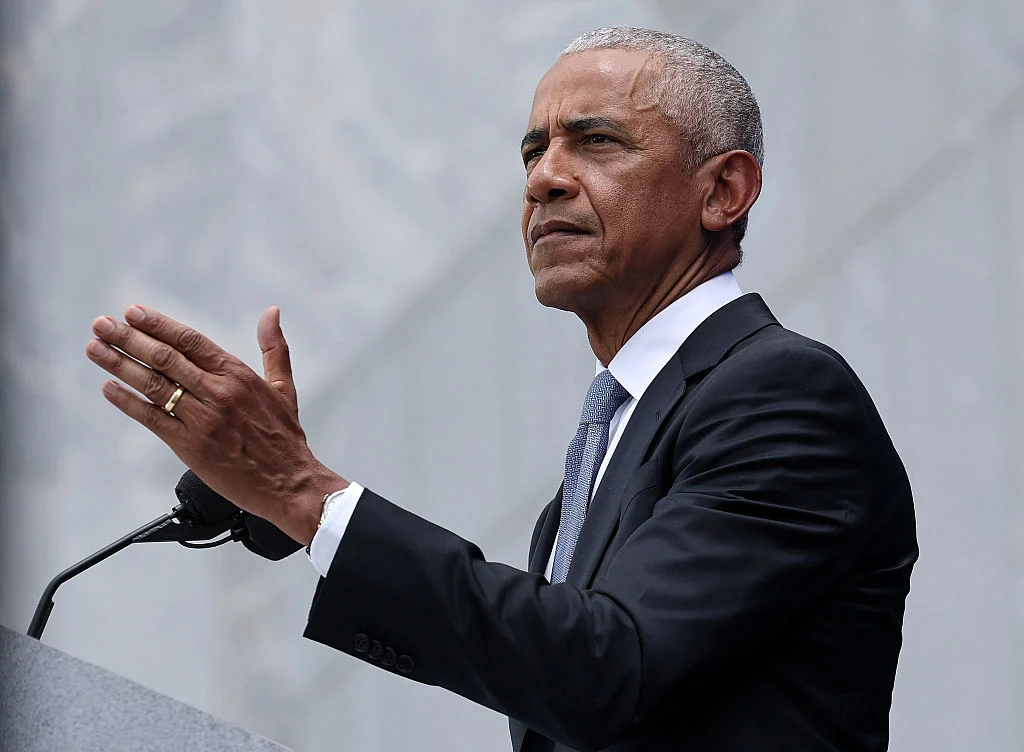
Former President Barack Obama has recently issued a significant call to action for the Democratic Party, urging them to elevate artificial intelligence (AI) to one of their "central agendas" and to develop a "very clear plan" to address the profound economic and safety concerns surrounding this rapidly evolving technology. These remarks, reported by The New York Times, underscore a burgeoning awareness within political circles of AI’s transformative potential and its accompanying risks, signaling a critical juncture for policy formulation in the United States.
Obama delivered these potent observations on a Thursday, during a Democratic fundraising event where he was interviewed by House Minority Leader Hakeem Jeffries. A partial transcript of the event, provided by Obama’s office, revealed a candid discussion during which Jeffries specifically asked the former president how congressional Democrats should approach the complex landscape of AI. Obama’s response highlighted the urgency of proactive governance, stating that once Democrats regain the House majority, they must "put together a framework for a very public conversation." This emphasis on public discourse suggests a desire to foster transparency and broad societal engagement in shaping AI policy, rather than leaving its development solely in the hands of private corporations.
The former president articulated a dual perspective on AI’s trajectory, acknowledging both its immense promise and its inherent perils. "This is something that is moving very fast in private hands, and if we don’t get on top of it, I think can be dangerous," Obama warned, echoing concerns widely held by experts across various fields. This apprehension stems from the rapid pace of AI development, often driven by a competitive private sector, which could potentially outstrip regulatory capacities and societal readiness. However, Obama also presented an optimistic outlook, affirming, "If we do get on top of it, I do think it’s beneficial. I genuinely think it’s going to accelerate, for example, drug development in ways that can help us cure diseases." This balanced view recognizes AI’s capacity to revolutionize sectors like healthcare, scientific research, and environmental sustainability, provided robust governance mechanisms are in place.
House Minority Leader Hakeem Jeffries swiftly affirmed Obama’s stance, stating, "the former president is correct that decisive action must be taken on artificial intelligence." Jeffries further leveraged the moment to criticize the opposing party, asserting that "Republicans have abdicated their responsibility to govern on behalf of the American people." This political framing suggests that AI regulation could become a significant battleground issue in future legislative sessions, with Democrats positioning themselves as the party committed to proactive oversight and public interest protection. The Democratic platform is increasingly likely to incorporate strong regulatory frameworks for emerging technologies, focusing on worker protections, equitable access, and safeguarding against algorithmic bias and misinformation.
Obama’s Role and Industry Engagement
Beyond his public pronouncements, The New York Times also reported that Obama has proactively offered himself as a "sounding board" to leading AI executives, indicating a hands-on approach to understanding the technology’s nuances. His engagement includes conversations with prominent figures such as Anthropic CEO Dario Amodei and OpenAI CEO Sam Altman. This direct dialogue with industry leaders reflects a strategic effort to bridge the gap between technological innovation and public policy, leveraging his influence and experience to foster constructive discussions.
Obama’s comments arrive amidst a crescendo of concern surrounding AI safety, particularly following a high-profile resignation from Anthropic, a leading AI research company. An unnamed AI researcher reportedly quit, issuing a stark warning that major AI companies are "racing straight to self-improving superintelligence and gambling with our lives." This incident brought to light internal anxieties within the AI community regarding the pace of development, the potential for autonomous systems to evolve beyond human control, and the perceived lack of sufficient safety protocols. The concept of "self-improving superintelligence" refers to a hypothetical AI that could recursively enhance its own capabilities, potentially leading to an intelligence explosion with unpredictable and potentially catastrophic consequences for humanity.
Industry’s Evolving Stance on Safety
In response to the escalating safety debate and internal dissent, Anthropic CEO Dario Amodei outlined a broad approach to "pacing the frontier" on Saturday. This proposed framework includes several key components aimed at enhancing safety and accountability: granting independent safety evaluators access to leading AI companies and their models, and developing "common safety standards" across the industry. Amodei’s initiative signals a growing recognition within the AI industry itself that self-regulation and collaboration are crucial to mitigating risks and fostering public trust.
The proposed "pacing the frontier" strategy by Amodei garnered positive reactions from other influential figures in the tech world. In social media posts, OpenAI CEO Sam Altman and SpaceX CEO Elon Musk appeared to respond favorably to the plan. Altman explicitly stated that OpenAI would also commit to "having independent evaluators with employee-like access," indicating a potential industry-wide shift towards greater transparency and external oversight. This move, if broadly adopted, could represent a significant step towards establishing robust safety protocols and ethical guidelines for AI development, moving beyond mere corporate promises to concrete, verifiable actions.
The Republican Perspective: Trump’s AI Vision
Meanwhile, former President Donald Trump offered a contrasting perspective on AI safety concerns, discussing the matter with reporters at an Irish golf event on Sunday. Bloomberg reported that Trump largely downplayed the immediate dangers, instead emphasizing American technological dominance. He boasted that the United States is "the most sophisticated country in the world," adding a strategic imperative: "I want to keep it that way because whoever wins AI wins." This statement underscores a geopolitical rivalry narrative, positioning AI supremacy as a critical factor in global power dynamics.
Trump’s approach, while acknowledging the need for "guardrails," seemed to dismiss some of the more dire warnings. "And we can put guardrails," Trump said. "We can do this and that. But I think you have a lot of negative forces that are bringing it up that shouldn’t be bringing it up." This rhetoric suggests a skepticism towards those advocating for more stringent regulations, potentially viewing such calls as impediments to innovation or national competitive advantage. Earlier in the year, the Trump administration had released a legislative framework for AI that notably aimed to preempt state laws and shift the burden of child safety related to AI use onto parents, indicating a preference for federal oversight and a more hands-off approach to corporate responsibility. This framework was criticized by some for potentially undermining consumer protections and fragmenting regulatory efforts.
The Urgency of Regulation: A Global Perspective
The divergent views expressed by Obama and Trump highlight the profound challenges facing policymakers as they grapple with AI. The debate is not merely about technical specifications but about fundamental questions of economic equity, national security, and societal well-being. The lack of a comprehensive federal regulatory framework for AI in the United States stands in stark contrast to efforts in other regions, most notably the European Union. The EU AI Act, for instance, proposes a risk-based approach, categorizing AI systems based on their potential to cause harm and imposing corresponding obligations, from transparency requirements to outright prohibitions for certain applications deemed to pose "unacceptable risk." This global context adds pressure on the U.S. to define its own regulatory stance to avoid falling behind in establishing ethical and safe AI practices.
Economic Implications and Workforce Transformation
Beyond safety, the economic impact of AI remains a central concern. Reports from leading consulting firms like McKinsey and PwC project that AI could add trillions to the global economy but also significantly disrupt labor markets. McKinsey Global Institute, for example, estimated that AI could automate tasks accounting for 15% of global working hours by 2030, potentially displacing hundreds of millions of jobs worldwide. While AI is also expected to create new jobs and enhance productivity, the transition is unlikely to be seamless. The World Economic Forum’s "Future of Jobs Report" frequently highlights the need for massive reskilling and upskilling initiatives to prepare the workforce for an AI-driven economy. This is precisely the kind of "economic impact" Obama’s call for a "clear plan" seeks to address, emphasizing the need for policies that ensure a just transition, protect workers, and promote equitable distribution of AI’s benefits.
The potential for AI to exacerbate existing inequalities is also a significant worry. If access to AI-powered tools and the skills to leverage them are concentrated, it could widen the gap between those who benefit from the new economy and those left behind. Discussions around universal basic income, robust social safety nets, and expanded educational opportunities are becoming increasingly relevant in the context of AI’s economic transformation.
Geopolitical Race for AI Supremacy
Trump’s assertion that "whoever wins AI wins" reflects a widely held belief among global leaders regarding the strategic importance of AI. The United States and China are often cited as the primary contenders in this technological race, with both nations investing heavily in AI research, development, and application. The competition extends across military applications, economic dominance, and scientific leadership. Concerns about data privacy, intellectual property theft, and the ethical use of AI in national security contexts are integral to this geopolitical competition. A lack of coherent domestic AI policy in the U.S. could be perceived as a strategic vulnerability in this global contest.
The divergent approaches of Obama, advocating for democratic deliberation and comprehensive planning, and Trump, emphasizing national dominance with a more cautious stance on regulatory burdens, encapsulate the complex political landscape surrounding AI. As the technology continues its rapid advancement, the imperative for robust and forward-thinking governance becomes ever more pressing. The coming years will likely see AI policy emerge as a defining issue in American politics, with profound implications for the economy, society, and the nation’s global standing. The debate has truly begun, and the stakes could not be higher.