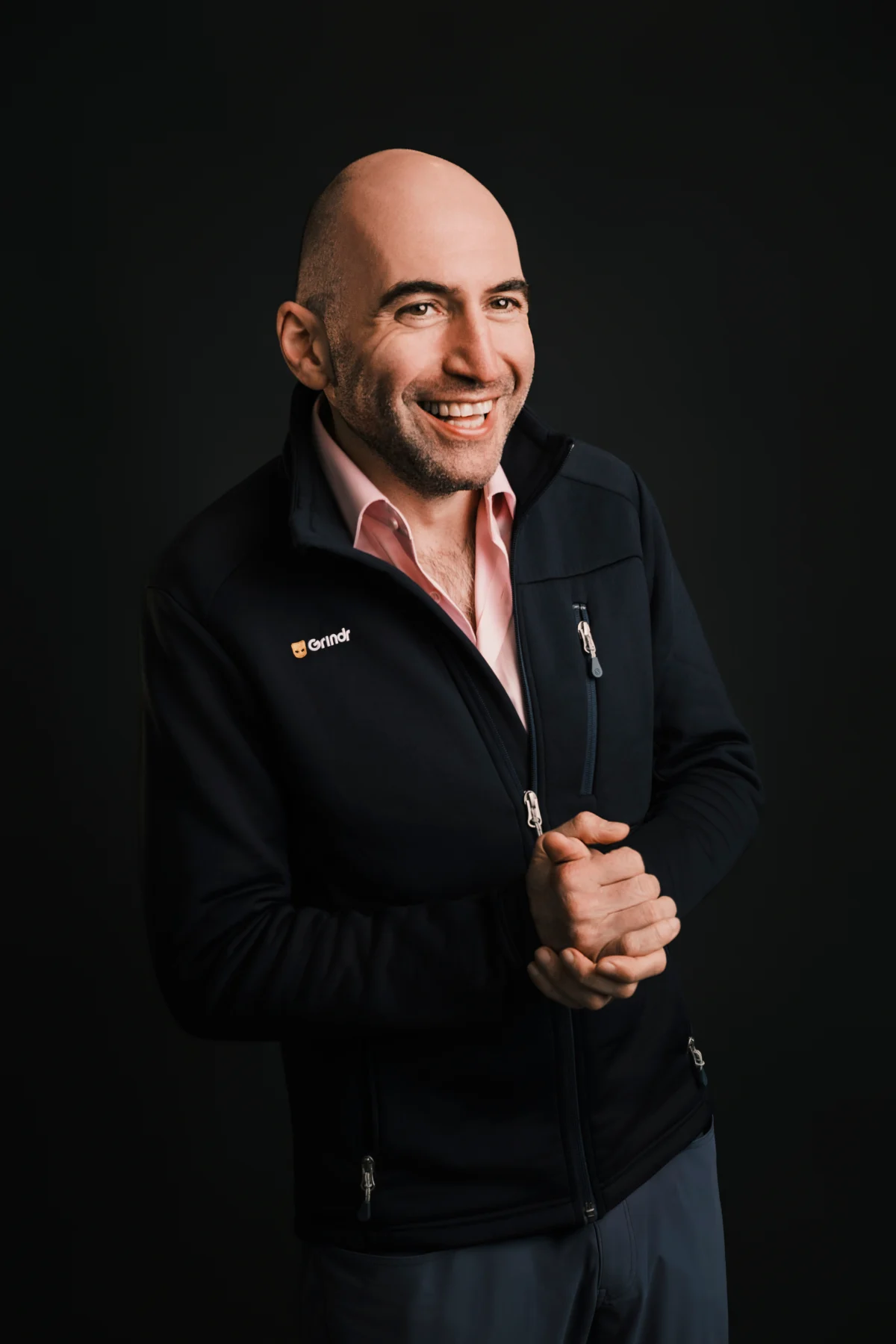
When George Arison assumed the helm of Grindr in 2022, he inherited a company adrift, navigating the choppy waters of a tumultuous past that included a forced divestiture from Chinese ownership due to national security concerns, followed by a private-equity rescue. Despite its foundational profitability, the company lacked a coherent product roadmap or a clear business strategy. Fast forward four years, following a SPAC listing and a controversial but decisive return-to-office mandate, Grindr has not only found its footing but has emerged as a compelling growth narrative in the competitive tech landscape. Under Arison’s leadership, the platform is on track to nearly triple its revenue, from $195 million in 2022 to a projected $540 million-plus this year, all while maintaining robust adjusted EBITDA margins exceeding 40%. This remarkable turnaround underscores a strategic pivot from merely a hookup app to an ambitious "everything app" for the LGBTQ+ community, aiming to integrate dating, healthcare, and travel into a singular digital ecosystem.
A Challenged Legacy and a New Era
Grindr’s journey before Arison’s arrival was marked by significant corporate instability. Founded in 2009, it pioneered location-based social networking for gay and bisexual men. However, its ownership became a point of contention when Beijing Kunlun Tech Co. acquired a majority stake in 2016 and then full ownership in 2018. This Chinese ownership triggered an intervention by the Committee on Foreign Investment in the United States (CFIUS), which deemed the data collection practices a national security risk, fearing potential access by the Chinese government to sensitive user information. The ensuing forced divestiture led to a sale to San Vicente Acquisition Partners, a U.S.-based investment firm, in 2020. This period of uncertainty, coupled with a lack of long-term strategic direction, left the company with substantial latent potential but an underdeveloped product and business model.
Arison, a seasoned entrepreneur known for co-founding and leading Shift Technologies, an online used-car marketplace that also went public via a SPAC in 2020, brought a fresh perspective and a clear mandate for transformation. His initial priorities upon joining Grindr were threefold: company building, aggressive revenue growth, and establishing a long-term strategic vision.
The Architect of Change: Arison’s Strategic Pillars
The first order of business for Arison was to instill a culture of productivity and accountability. He noted that during the peak-COVID era, many employees were hired with low expectations for in-office presence, leading to an average output of only "three to four hours of real work a day." To address this, Arison implemented a highly publicized and controversial return-to-office (RTO) mandate in the summer of 2023, requiring employees to be in the office two days a week. This decision, while met with significant internal resistance and public backlash, led to a substantial reduction in staff, with the company downsizing to approximately 70 employees from a larger, less efficient workforce. Today, only about 25 individuals from the pre-Arison era remain, and the company operates with a lean U.S. team of 175 employees, supplemented by a team in Colombia, managing a projected $540 million in revenue. This aggressive restructuring significantly enhanced operational efficiency and set the stage for accelerated growth.
The second pillar of Arison’s strategy focused on driving revenue growth by developing products that users were willing to pay for. This involved a granular approach to improving the core offering and introducing new features that justified premium subscriptions. As a result, the pay conversion rate — the percentage of active users who subscribe to a paid tier — increased from under 6% to over 9%. Concurrently, the average revenue per user (ARPU) nearly doubled since 2022, demonstrating the success of enticing existing customers to invest more in their Grindr experience rather than solely relying on a dramatic expansion of the overall user base. In the second quarter of this year, Grindr reported 1.4 million paying users, representing 9% of its total user base, highlighting the effectiveness of its monetization strategy.
The third and most ambitious pillar was the articulation of a long-term vision: transforming Grindr into a "gayborhood in your pocket." This vision extends far beyond dating and hookups, envisioning Grindr as a comprehensive platform that addresses various aspects of its users’ lives, including healthcare and travel. This move aligns with the broader "everything app" trend seen across consumer technology, where platforms like WeChat in China or X (formerly Twitter) aspire to become indispensable daily utilities.
Innovating at the "EDGE": AI and Premium Offerings
A significant part of Grindr’s future growth strategy hinges on its innovative use of artificial intelligence and the introduction of a new, ultra-premium subscription tier called "EDGE." This tier, currently undergoing testing, has already generated considerable buzz and some online skepticism due to its significantly higher price point. Early tests in markets like Canada indicated a potential monthly cost equivalent to $350-$375 USD, prompting online reactions ranging from "literally who’s paying for this" to nostalgic calls for "2012 Grindr back."
Arison clarified that the quoted pricing was merely one test point in a range designed to understand market elasticity and is not the final price. He emphasizes that EDGE is not selling "AI itself" but rather features derived from AI — leveraging sophisticated algorithms to understand user behavior and intent (with consent) to facilitate much better matches than what sparse user profiles alone could achieve. Early retention rates for these AI-driven features are reportedly higher than any previous offerings. EDGE is slated for a full rollout late this year or early next, positioning it as a premium flagship product akin to Tesla’s Model X or S, with the underlying AI capabilities expected to trickle down to broader product offerings over time.
Grindr’s commitment to AI extends beyond premium features. The company boasts an impressively lean engineering team of approximately 94-95 technical personnel across all roles. Arison revealed that roughly 80% of Grindr’s code is now AI-written, leading to a remarkable 2.5x increase in engineering productivity over the past year. This efficiency allows the team to accomplish the work typically requiring 300-350 engineers with only about 100, a testament to the transformative power of AI in software development.
The application of AI in matching aims to address a fundamental challenge in gay dating: limited geographic pools. Even in cities with significant LGBTQ+ populations like San Francisco, the total number of gay men (around 50,000-60,000) represents a relatively small dating pool. Arison posits that AI could entirely break down these geographic constraints, surfacing highly compatible partners in distant locations based on behavioral data rather than just self-reported profile information. While Grindr does not track relationship outcomes post-match, internal data suggests that it remains a primary platform for gay men seeking relationships. Moreover, demographic shifts indicate a growing desire among younger cohorts (under 35) for long-term monogamous relationships (50%) and even children (25%), a significant departure from previous generations. AI-driven matching is an attempt to meet these evolving user needs, acknowledging that traditional methods have often fallen short.
Expanding Horizons: Healthcare and Travel
The "gayborhood in your pocket" strategy manifests most concretely in Grindr’s foray into healthcare and, eventually, travel. Recognizing the unique health needs and challenges faced by the LGBTQ+ community, Grindr has initiated several healthcare-focused products. The first phase involved "cash-pay" products through a line called Woodwork, offering medications for erectile dysfunction (ED), GLP-1s, and peptides. An AI bot has recently been integrated to handle these transactions directly within the app, streamlining the user experience.
The second critical area is HIV prevention and treatment. Grindr has committed to providing 10 million people with direct access to information on where to obtain Pre-Exposure Prophylaxis (PrEP), a highly effective HIV prevention medication. This initiative is already active in the U.S. through an in-app health center and is being expanded internationally. The long-term vision, projected a decade out, includes actual clinical care, such as connecting users with gay doctors through telehealth services. While these services are not being built in-house today, Arison foresees healthcare becoming a significant revenue stream for Grindr, potentially even surpassing its current core business.
Currently, non-subscription revenue — encompassing ads, healthcare, and other services — remains a small fraction of Grindr’s overall business. Subscriptions account for approximately 83% of revenue, a slight decrease from 86% in 2022, primarily due to the substantial growth of the subscription base itself. The newer ventures are still nascent, but Arison envisions a future where Grindr boasts a robust subscription business alongside strong advertising, healthcare, and travel segments.
The "Grindr Discount": Overcoming Market Stigma
Despite its impressive financial turnaround and strategic innovations, Grindr continues to grapple with what Arison refers to as a "Grindr discount" in the investment community. He recounted an instance where an investor’s financial model explicitly included a "Grindr discount" line item, reducing the fair-value estimate by 25%. This suggests a persistent stigma impacting the company’s valuation, which Arison attributes primarily to its identity as a gay dating app. He cited examples of a consulting firm declining to work with them due to "reputational concerns" and a bank refusing their funds during the Silicon Valley Bank crisis, contrasting this with strong partnerships from major institutions like Goldman Sachs and Morgan Stanley.
Arison argues that this discount is not applied to dating apps generally, pointing out that "nobody says that about Tinder," which features a "free tonight" button on its homepage. The implication is that the market’s discomfort is specifically linked to Grindr’s association with gay culture. Indeed, the stock currently trades at roughly 11 times its projected 2027 EBITDA, representing about a 35% discount compared to its peers in the dating app and broader tech sectors, even if the explicit rationale for this gap remains unclear.
However, there are signs that market perceptions are beginning to shift. Morgan Stanley, Goldman Sachs, and Raymond James have all raised their price targets on Grindr’s stock this year. Morgan Stanley, in particular, upgraded it to "overweight" in July, specifically citing the potential of the EDGE tier and Grindr’s telehealth initiatives as key drivers. This growing analyst confidence has contributed to a significant run-up, with the stock climbing approximately a third over the past six months. Arison expresses hope that Grindr is increasingly being recognized as a growth company, a designation supported by its consistent track record of over 25% revenue growth for 16 consecutive quarters under his leadership.
Future Outlook and Broader Implications
Grindr’s transformation under George Arison represents a significant case study in corporate revitalization and strategic repositioning. By focusing on fundamental company building, aggressive monetization of its core product, and an ambitious expansion into adjacent verticals like healthcare and travel, Grindr is attempting to transcend its initial identity as a niche dating app. The integration of advanced AI, both in product development and user experience, is proving to be a critical differentiator, enabling unprecedented efficiency and personalized matching.
The company’s journey also highlights the persistent challenges faced by businesses associated with marginalized communities, particularly in the financial markets. Overcoming the "Grindr discount" will require sustained performance, clear communication of its expanded vision, and continued demonstration of its value proposition to a broader investor base. Should Grindr successfully execute its "gayborhood in your pocket" strategy, it could establish a new paradigm for how digital platforms serve specific communities, offering not just social connection but also essential services tailored to their unique needs. The long-term aspiration for a diversified revenue stream — a strong subscription business, a thriving advertising segment, and significant contributions from healthcare and travel — paints a picture of a company aiming for sustained, multifaceted growth, positioning itself as an indispensable digital hub for the global LGBTQ+ community.