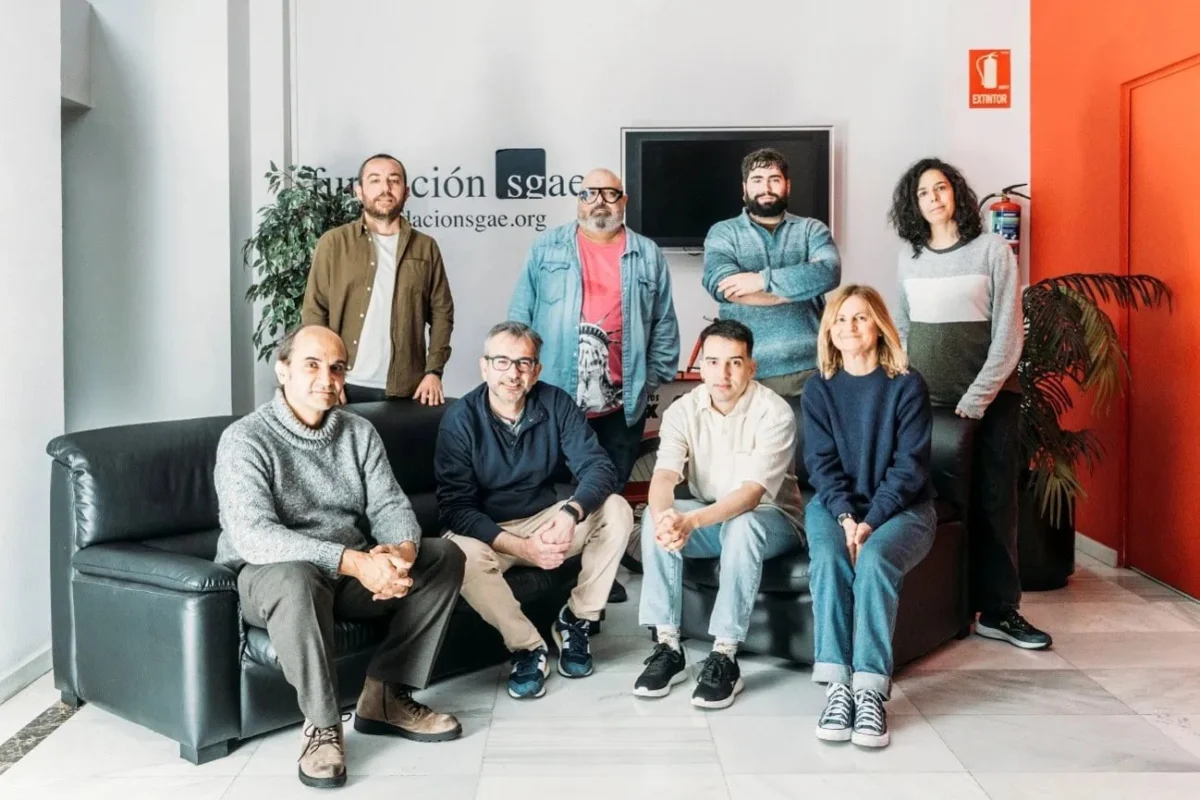
Madrid, Spain – The sixth edition of Iberseries & Platino Industria, a prominent international forum for the Ibero-American audiovisual industry, is currently underway in Madrid, featuring a robust schedule dedicated to fostering new content creation and international collaboration. A key highlight of this year’s event, scheduled for Thursday, October 1st, is the presentation of six innovative series projects developed by seven talented screenwriters. This initiative, a product of a significant collaboration with Fundación SGAE, Spain’s leading collective management organization for intellectual property rights, aims to propel these nascent narratives from concept to production and global distribution.
These six compelling series projects will be unveiled during a dedicated pitching session, offering a crucial platform for their creators to connect with a curated audience of producers, international buyers, investors, and other key stakeholders within the global audiovisual landscape. The organizers emphasize that this event serves as a vital nexus for the "production, financing, and international reach of new fiction projects, while reinforcing one of the objectives of Iberseries & Platino Industria: to facilitate connections between creative talent and the different players in the Ibero-American audiovisual industry." This strategic alignment underscores the event’s commitment to bridging the gap between creative vision and commercial viability, a critical step in today’s competitive media market.
The Iberseries & Platino Industria forum, now in its sixth year, has steadily grown in stature, becoming a crucial meeting point for professionals from Spain, Latin America, and increasingly, other global markets. Its focus on series development and co-production has attracted significant attention, particularly in a period where streaming platforms and broadcasters are constantly seeking fresh, diverse, and high-quality narrative content. The partnership with Fundación SGAE further bolsters this endeavor, providing essential support and recognition for Spanish screenwriters and their original works. Fundación SGAE, established in 1899, plays a pivotal role in advocating for and managing the rights of creators across various artistic disciplines, ensuring fair compensation and promoting the cultural and economic value of intellectual property.
This year’s selection of six projects represents a diverse range of genres and themes, reflecting the vibrant and evolving storytelling landscape within Spain and the broader Ibero-American region. Each project has been meticulously developed through a rigorous selection process, highlighting its potential for artistic merit, commercial appeal, and cultural relevance. The event provides an unparalleled opportunity for these emerging voices to gain visibility, secure funding, and forge vital partnerships that can transform their visions into reality.
A Closer Look at the Presented Series Projects
The Hollywood Reporter (THR) has obtained exclusive details on the six series projects being showcased in Madrid, offering a glimpse into the narratives that could shape the future of Ibero-American television.
La librera by Virginia Burgos (Seville) and Juan Sánchez (Madrid)
Synopsis: Set against the backdrop of the early 1990s, La librera chronicles the journey of a woman who bravely establishes the first LGBT bookstore in Spain. Over several decades, this establishment evolves into more than just a commercial enterprise; it becomes a sanctuary and a clandestine hub for political discourse for the entire community. However, as societal landscapes shift and the neighborhood she helped foster begins to distance itself, the protagonist is confronted with a profound existential question: "What do you do when nobody needs you anymore?"
Analysis: This project delves into themes of community, identity, and the enduring impact of social activism. The narrative arc promises a poignant exploration of an individual’s role within a marginalized community and the challenges of navigating evolving societal norms. The "takeaways" highlight the inherent dramatic potential, suggesting a compelling character study that will likely resonate with audiences interested in stories of resilience and the complexities of social change. The potential for this series to spark conversations about historical LGBTQ+ movements in Spain and the personal sacrifices involved in advocacy is significant.
Avión by Miguel Cavadas (Vigo)
Synopsis: Avión paints a vivid portrait of a Galician village that embodies the aspirational dream of emigration: leaving a life of scarcity in Spain to return with wealth from abroad. During the winter months, the village reverts to its reality of rural decline and an aging population. However, as summer arrives, it transforms into a spectacle of affluence, characterized by an influx of money, vibrant ranchera music, and Mexican flags. The population swells dramatically as former residents return to celebrate, indulge, and showcase their transatlantic successes. This microcosm represents a duality, existing in a liminal space between two disparate worlds: the deep-rooted sense of community and the individualistic pursuit of fortune, the past of limited opportunities and the present of newfound prosperity, juxtaposing Galicia’s modest pensions with Mexico’s substantial fortunes. The central dramatic question arises: What transpires when these two vastly different worlds inevitably collide?
Analysis: This series offers a rich tapestry of social commentary, examining the complex socio-economic realities of emigration and return migration. The stark contrast between the village’s winter and summer personas provides a compelling visual and narrative framework for exploring themes of cultural identity, class disparity, and the psychological effects of living between two worlds. The "takeaways" suggest a departure from lighthearted portrayals, hinting at a darker, more nuanced social drama that will compel viewers to look deeper into the intricate realities of Galicia and its diaspora. The exploration of intergenerational relationships and the clash between tradition and modernity is likely to be a key element.
El capricho by Alberto Grondona
Synopsis: El capricho is envisioned as a satirical historical comedy that centers on the intense power struggles among three formidable women at the 18th-century Spanish court: Queen María Luisa of Parma, the captivating Duchess of Alba, and the intellectually progressive Duchess of Osuna. Their relentless battles for influence, public image, and personal desire unfold against the backdrop of a Spain teetering on the brink of collapse. These intricate courtly maneuvers are observed and recounted with biting irony by Francisco de Goya, an astute and uneasy witness whose perspective transforms the palace intrigue into a surprisingly contemporary mirror of human ambition and folly.
Analysis: This project promises a sophisticated blend of historical drama and biting satire, drawing parallels to modern political and social machinations. The "takeaways" aptly describe it as a "female-led comedic Game of Thrones with Spanish fire and twists," suggesting a narrative filled with wit, intrigue, and sharp social commentary. The inclusion of Francisco de Goya as a narrator adds a unique artistic and historical layer, allowing for a meta-commentary on power, perception, and the enduring nature of human desires. The series has the potential to offer a fresh and engaging perspective on a pivotal period in Spanish history.
Teléfonos fijos by Ángel Mirou
Synopsis: In the unassuming Recalde neighborhood of Bilbao, landline telephones begin to ring in the early hours of the morning, startling those who still maintain these outdated devices in their homes. Upon answering, residents are met with the voices of deceased relatives, friends, or acquaintances. The only commonality among these phantom callers is their departed status. The series navigates the central mystery: are these calls genuine evidence of an afterlife, or are they an elaborate deception orchestrated through cutting-edge technology? Regardless of the answer, the lives of those involved are irrevocably transformed.
Analysis: This series taps into contemporary anxieties surrounding technology, the supernatural, and the nature of reality. The "takeaways" pose a critical question about credulity in an era of sophisticated scams and artificial intelligence: "I hear dead people. But in the age of tech scams and AI, can we trust my ears – or your eyes, for that matter!?" This suggests a narrative that will play with audience expectations, blurring the lines between the tangible and the spectral. The exploration of grief, memory, and the human desire for connection beyond death, set against a technologically advanced backdrop, offers a compelling premise.
La edad menor by Roberto Osa
Synopsis: The series is set in a dystopian Madrid where children have been legally designated as guardians of their parents. María finds herself in direct conflict with this established system when her mother is subjected to La edad menor, an irreversible process of infantilization. Her brother is caught in a moral quandary, torn between loyalty to his sister and the allure of power within this new societal structure. A devastating secret is poised to emerge, revealing that neither resistance nor sacrifice may be sufficient to halt the encroaching oblivion.
Analysis: La edad menor presents a provocative and unsettling premise, exploring themes of societal inversion, parental responsibility, and the potential for dystopian futures. The "takeaways" humorously suggest its potential resonance with contemporary observations of governance ("Power to the kids! You may look at politicians in your country and think this could actually work.") while acknowledging the inherent sinister undertones ("But let’s be honest: there’s something that sounds worrisome, even sinister, about this synopsis."). This series has the potential to be a thought-provoking commentary on family dynamics, societal control, and the ethical implications of radical social engineering.
Trueque by Pedro Pablo Picazo
Synopsis: Trueque (meaning "barter" or "swap" in Spanish) follows three families who share a close friendship. They are all grappling with the daily challenges of parenting their teenagers. Each family possesses unique strategies and perceived solutions for their children’s behavioral issues. The central conceit of the series arises from a provocative question: What if they were to "swap" their children? What could possibly go wrong with such an arrangement?
Analysis: This series appears to be a high-concept comedy with a potentially dark comedic edge. The "takeaways" playfully allude to familiar tropes, suggesting a fresh take on child-centric narratives: "Forget Honey, I Shrunk the Kids! Here comes Honey, I Swapped the Kids." The premise allows for humorous explorations of parental frustrations, adolescent rebellion, and the unexpected consequences of unconventional solutions. The series could delve into the dynamics of friendship and the complexities of familial bonds when put to the ultimate test.
Iberseries & Platino Industria: A Catalyst for Growth
The significance of Iberseries & Platino Industria extends beyond the individual project pitches. The event has become a crucial barometer for the health and trajectory of the Ibero-American audiovisual sector. In recent years, the region has witnessed a surge in high-quality productions that have gained international acclaim, with Spanish-language series increasingly finding substantial audiences on global streaming platforms. This forum provides a vital infrastructure for nurturing this growth by facilitating essential industry connections.
Data from industry reports consistently highlights the growing demand for diverse content, with international audiences actively seeking narratives from different cultural perspectives. Platforms like Netflix, HBO Max, Amazon Prime Video, and others have significantly invested in local productions across Latin America and Spain, recognizing the global appeal of stories rooted in specific cultural contexts. Iberseries & Platino Industria directly contributes to this ecosystem by identifying and championing new talent and projects that can meet this demand.
The collaboration with Fundación SGAE is particularly noteworthy. As a steward of intellectual property rights, the organization’s involvement underscores a commitment to ensuring that creators are not only recognized but also appropriately compensated and supported throughout the production lifecycle. This partnership aligns with broader industry efforts to establish sustainable models for content creation that benefit both artists and the industry at large.
The scheduling of this event in October positions it strategically within the global industry calendar, allowing for follow-up discussions and deal-making to extend well into the following year. The success of previous editions of Iberseries & Platino Industria has demonstrated its efficacy in launching careers, securing international distribution deals, and fostering a sense of community among Ibero-American audiovisual professionals.
Broader Impact and Future Implications
The presentation of these six series projects at Iberseries & Platino Industria is more than just a pitching event; it is an investment in the future of Ibero-American storytelling. By providing a platform for emerging screenwriters, the forum directly contributes to the diversification and enrichment of the global content landscape. The potential for these narratives to resonate with international audiences is significant, offering fresh perspectives and unique cultural insights that differentiate them in a crowded market.
The success of these projects, should they secure financing and move into production, will not only benefit the creators but also have a ripple effect across the industry. It will signal to other aspiring writers the viability of pursuing ambitious and original ideas, and it will further solidify the reputation of Spain and the broader Ibero-American region as a hub for high-quality audiovisual production.
Moreover, the themes explored in these series – social commentary, historical satire, supernatural mysteries, and dystopian futures – reflect a contemporary sensibility that is likely to appeal to a wide range of viewers. The ability to translate these culturally specific narratives into universally engaging stories is a testament to the growing sophistication of Ibero-American filmmaking and television production.
As the industry continues to evolve, events like Iberseries & Platino Industria, supported by organizations like Fundación SGAE, play an indispensable role in cultivating talent, fostering innovation, and driving the international success of regional creative industries. The six series projects showcased this week represent a promising glimpse into the vibrant and compelling future of Ibero-American television.