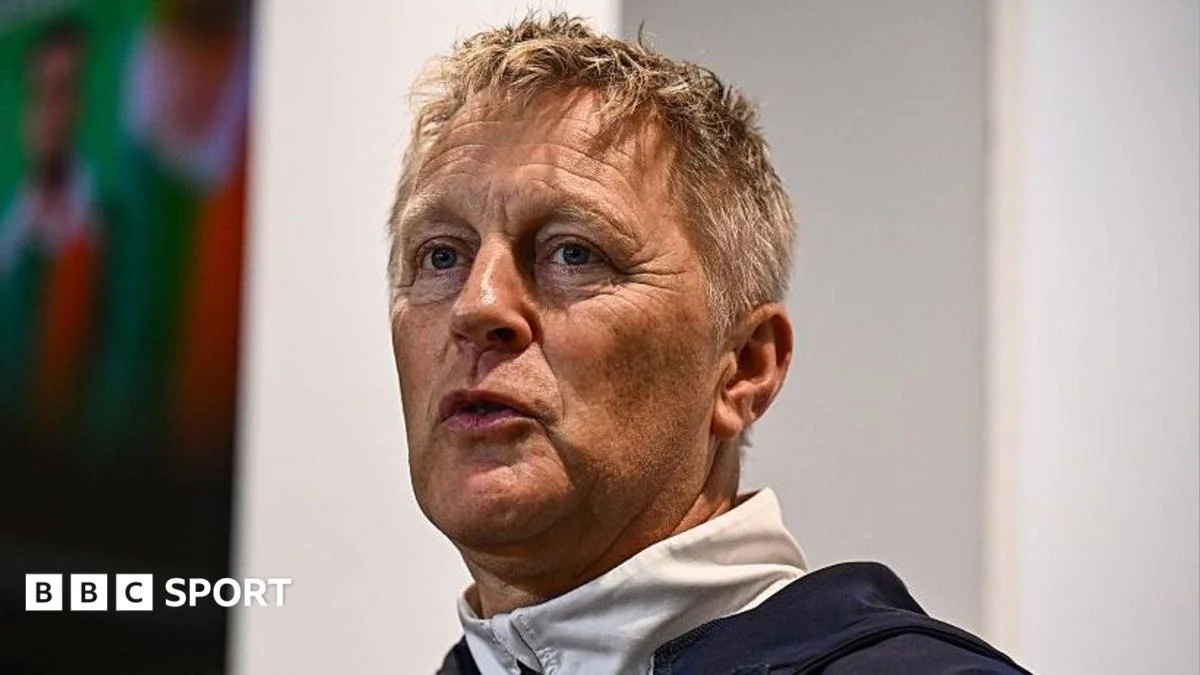
The diplomatic fallout from the Republic of Ireland football manager Heimir Hallgrimsson’s controversial remarks regarding upcoming Nations League fixtures against Israel has escalated dramatically, with the Israel Football Association (IFA) issuing a scathing public denouncement of the Icelandic coach. The IFA accused Hallgrimsson of "ignorance, hypocrisy and stupidity" in comments made during his squad announcement last week, intensifying a growing wave of pressure on the Football Association of Ireland (FAI) to boycott the matches.
Hallgrimsson, when questioned about maintaining his players’ focus amidst the politically charged context of the games, stated, "We’re not playing with genocide, we’re playing against genocide. We’re playing against Israel, we’re not playing with Israel." This stark framing, drawing a direct moral line between the act of playing and the concept of genocide, has ignited a fierce debate and prompted a strong retaliatory response from the Israeli sporting body.
The IFA, in a pointed statement released on social media on Monday, directly addressed Hallgrimsson’s remarks. “We have contributed to the world and humanity in countless fields, earning an impressive number of Nobel Prizes along the way,” the IFA declared, aiming to project a narrative of national achievement and global contribution. They continued, “Unfortunately, we have not yet found a cure for stupidity, ignorance and hypocrisy displayed by @IrelandFootball team coach. We’re not playing with ignorance, hypocrisy and stupidity, we’re playing against the coach who embodies them.” This retaliatory salvo directly mirrors Hallgrimsson’s phrasing, turning his own words back on him in a bid to discredit his moral standing.
The Football Association of Ireland has, as of the time of reporting, remained silent on the IFA’s accusations and the escalating controversy. This lack of official response from the FAI comes as a protest against the matches took place at the Republic of Ireland team’s hotel on Monday evening, underscoring the growing domestic pressure for a boycott.
Background and Escalation of the Conflict
The current diplomatic and sporting tension is inextricably linked to the ongoing conflict between Israel and Palestine. The current phase of heightened conflict began on October 7, 2023, when armed Palestinian group Hamas launched a large-scale attack on Israel. This attack resulted in approximately 1,200 deaths and the taking of 251 hostages. In response, Israel initiated a substantial military operation in the Gaza Strip. The United Nations has reported that the Israeli retaliation has led to the deaths of over 70,000 Palestinians. Israel has consistently denied allegations of committing genocide or war crimes, maintaining that its actions in Gaza are a necessary measure of self-defence.
The upcoming Nations League fixtures, scheduled for September 27 in Hungary and October 4 in Serbia, have therefore become a focal point for activism and protest, particularly within Ireland, where a strong tradition of solidarity with the Palestinian cause exists.
The Growing Boycott Movement
The pressure on the FAI to withdraw from the matches has been amplified by a significant show of support from within the Irish sporting community. More than 160 Irish sportspeople have publicly endorsed an open letter penned by the Irish Sport for Palestine Group. This letter urges a boycott of the games against Israel, asserting that such a stance would be a powerful demonstration of solidarity.
The letter argues that the FAI, European governing body UEFA, and the Irish government should have acted decisively to prevent the situation from reaching this point. However, it stresses that there remains an opportunity to "show the power of sport to unite."
Prominent signatories to the letter include a diverse range of athletes from various disciplines. Among them are Olympian Ciara Mageean, former Republic of Ireland international footballer Louise Quinn, ex-Ireland rugby fly-half Tony Ward – who notably boycotted an Irish rugby tour of South Africa during the apartheid era – and boxers Tyrone McKenna and Eric Donovan. The letter also boasts a significant number of figures from Gaelic games, including GAA stars Padraig O’Hora, Joe Brolly, Colm O’Rourke, Michael Darragh Macauley, Philly McMahon, Valerie Mulcahy, and Rena Buckley. Para-athlete Alan Dineen and ultimate frisbee player Stephen Jones, who have previously boycotted fixtures against Israel, have also lent their names to the appeal.
The letter articulates a powerful sentiment: "This is a significant moment and with this moment you have an opportunity to do the right thing." It emphasizes the symbolic weight of representing one’s country, stating, "Putting on the Irish jersey and representing your country means something. But the Ireland we want represented is the one that remembers its roots in anti-colonial and anti-imperial resistance, which Irish sport played a large part of."
The signatories contend that the current situation transcends mere sporting competition. "This moment symbolises something deeper, it is bigger than sport. But in a way this IS sport," the letter reads. It concludes with a compelling assertion: "Not playing the game would be the most sporting thing you could do. Through your leadership and courage, it would show the power of sport to unite, remind us of the shared values that connect us all, and have an impact far beyond the game."
Implications and Analysis
The exchange between the IFA and Hallgrimsson, coupled with the widespread calls for a boycott, highlights the increasingly complex intersection of sports, politics, and international relations. Sporting bodies often find themselves navigating sensitive geopolitical landscapes, and the decisions made in this instance could have far-reaching implications.
The IFA’s strong reaction, characterized by personal attacks on Hallgrimsson, suggests a strategic attempt to shift the narrative away from the underlying political issues and focus on the perceived disrespect from the Irish side. By framing Hallgrimsson as embodying "stupidity, ignorance and hypocrisy," the IFA aims to undermine his credibility and the moral basis of his comments.
For the FAI, the situation presents a significant challenge. A decision to proceed with the matches risks alienating a substantial portion of the Irish sporting public and potentially facing further protests and criticism. Conversely, a boycott would undoubtedly draw condemnation from FIFA, UEFA, and potentially lead to sanctions, impacting future participation in international competitions. This dilemma forces the FAI to weigh its sporting obligations against the strong ethical and political sentiments expressed by prominent figures and a segment of the public.
The precedent set by Tony Ward’s boycott of the South African rugby tour in the 1980s is frequently invoked in such debates in Ireland, underscoring a historical willingness to use sport as a tool for political expression and solidarity. The current situation is drawing parallels to that era, suggesting that the moral imperative to act is being prioritized by many over sporting participation.
The reference to Nobel Prizes by the IFA is a calculated move to emphasize Israel’s perceived contributions to global progress and intellectual achievement, implicitly contrasting it with Hallgrimsson’s perceived lack of understanding. This rhetorical strategy seeks to position Israel as a nation of substance and achievement, making the accusations of ignorance and hypocrisy appear all the more unwarranted.
The scheduling of the matches in neutral venues – Hungary and Serbia – further complicates the situation, removing the element of home advantage and potentially making the decision to boycott less about direct confrontation and more about a clear ethical stance.
The broader impact of this controversy extends beyond the immediate sporting context. It amplifies the global discourse surrounding the Israeli-Palestinian conflict and raises questions about the responsibility of international sporting organizations in addressing human rights concerns. The actions of the FAI and the Republic of Ireland team in the coming weeks will be closely scrutinized, not just within Ireland but on the international stage, as they navigate this deeply contentious issue. The calls for unity and the power of sport to "unite" are being tested, with the outcome potentially shaping future engagements between sports and political activism. The FAI is now under immense pressure to articulate its position and demonstrate leadership in a situation that has clearly transcended the boundaries of the football pitch.