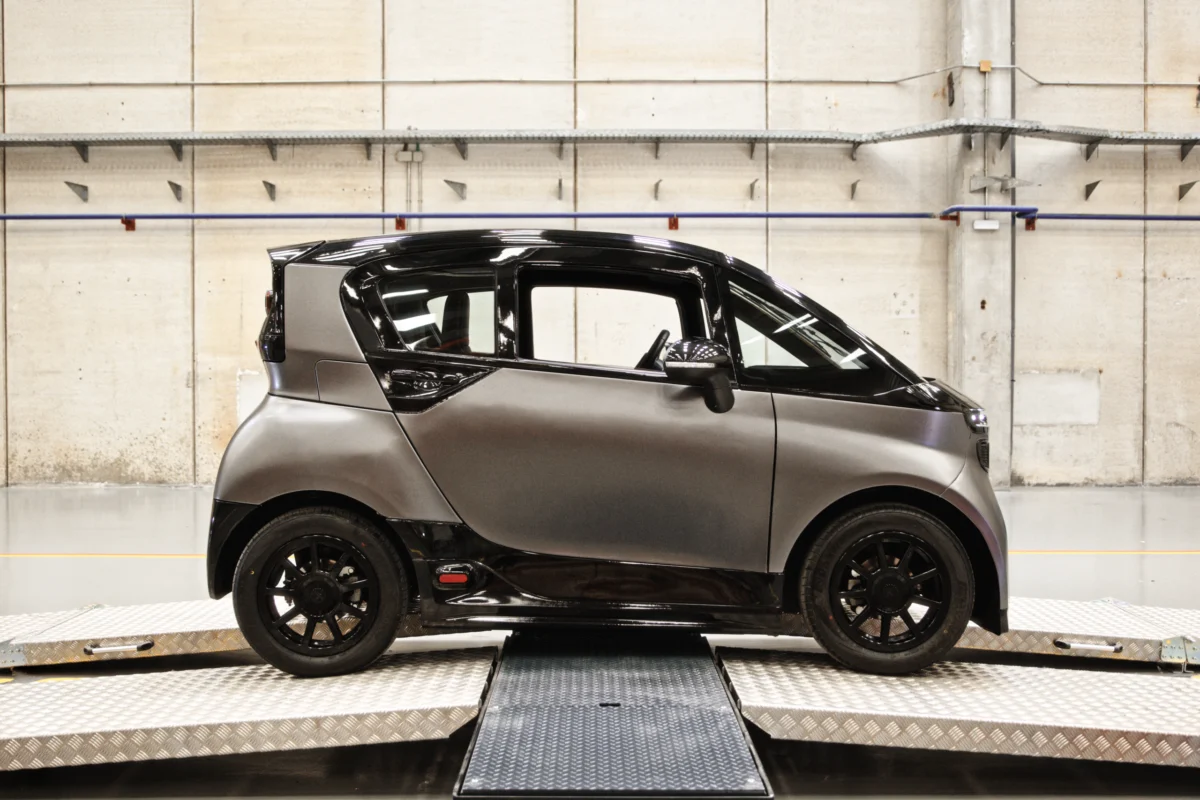
Europe’s urban centers are witnessing a significant transformation in personal mobility, with an increasing preference for smaller, more agile vehicles. This shift has fueled a growing appetite for microcars, but the once-iconic Italian "yoghurt pots" and even celebrated ultracompact brands like Smart have largely ceded manufacturing ground to a wave of small Chinese electric vehicles. In this evolving landscape, Spanish startup Liux is poised to disrupt the market with its forthcoming microcar, the Liux Big, betting on a unique blend of sustainability, local manufacturing, and innovative design to carve out its niche.
The Shifting Landscape of European Urban Mobility
The European microcar segment, traditionally dominated by lightweight, compact vehicles ideal for congested city streets, has undergone a dramatic reorientation. For decades, manufacturers across Italy, France, and other European nations produced distinctive, often petrol-powered, microcars that became synonymous with urban freedom. However, the advent of electric vehicle technology, coupled with the formidable manufacturing capabilities and aggressive pricing strategies of Chinese automakers, has fundamentally reshaped this market. Brands like Smart, once a symbol of European ultracompact innovation, have moved their production to China, illustrating the formidable challenges faced by traditional European players. This influx of Chinese-made EVs, often characterized by rapid development cycles and competitive pricing, has left a void in European-led sustainable manufacturing for this critical urban segment. The demand, however, remains robust, driven by tightening emission regulations, limited parking, and a desire for more sustainable personal transport solutions within metropolitan areas. This is where Liux aims to step in, following in the tracks of other European innovators like Switzerland’s Microlino, but with a distinct, deeply embedded commitment to circularity.
Liux’s Vision: Redefining the "European Car" Through Sustainability
At the heart of Liux’s ambitious project are co-founders Antonio Espinosa de los Monteros and David Sancho, whose diverse backgrounds converge on a shared vision for sustainable mobility. Espinosa, a veteran of social entrepreneurship, previously co-founded Auara, a Spanish B Corp renowned for selling natural mineral water in recycled and recyclable bottles. His journey in promoting "real circularity" – where products are designed for disassembly and material preservation for a second life – now extends to the automotive sector. Sancho, on the other hand, brings extensive engineering prowess, having previously showcased his talent with the Bóreas, a hybrid supercar unveiled at the 24 Hours of Le Mans in 2017. Their collaboration represents a powerful fusion of environmental ethos and high-performance automotive engineering.
Initially, the duo unveiled the Liux Animal in 2022, a fully electric five-seater SUV crafted almost entirely from recycled or plant-based materials. However, a pragmatic pivot soon followed. Recognizing that homologation – the process of certifying a vehicle for sale across Europe – would be significantly smoother and more achievable with a smaller car, they shifted their focus to the Liux Big. This strategic decision underscores a commitment to market viability alongside their sustainability goals. Espinosa’s intriguing assertion to TechCrunch that "The idea of a European car does not exist" reveals a profound understanding of global supply chain realities. Rather than striving for an impossible, fully sovereign European supply chain, Liux has chosen to navigate this reality by making sustainability its unwavering "north star." This approach redefines what "Made in Spain" truly means for the company: not just assembly, but a meticulous, end-to-end commitment to environmental responsibility across its entire value chain.

Innovation Under the Hood: The "Big" Design and Materials
The Liux Big, despite its ironic name, is designed to be small enough to park at a right angle to the curb, embodying urban practicality. Yet, its oversized ambitions are rooted in its groundbreaking design and material choices. Perhaps the most notable innovation is its fiber body, crafted from a novel linen-based biocomposite. This material is not merely plant-based; it is specifically designed for ease of extraction and recycling, directly addressing Espinosa’s philosophy: "What makes something recyclable has to do with how it’s built… When you build something, you have to try to preserve the integrity of the material and the components so that a second life is possible." This contrasts sharply with many modern vehicles, where complex material layering and bonding make true circularity challenging. The use of linen, a renewable resource, significantly reduces the carbon footprint associated with traditional metal or plastic body panels, aligning with Liux’s holistic environmental agenda.
Beyond its innovative body, the Liux Big incorporates other sustainable features. While its batteries are not produced in Europe, they are designed to be easily rechargeable at home, including compatibility with power generated from solar panels, further integrating renewable energy into the vehicle’s ecosystem. The car is also engineered for longevity and ease of maintenance, aiming to counteract the rapid obsolescence cycles prevalent in the modern automotive industry. This focus on durability and repairability not only reduces waste but also offers a more economical ownership experience for consumers over time.
Liux has meticulously worked within the constraints of its L7e homologation, which classifies it as a slightly heavier quadricycle than ultralight L6e vehicles. This classification, while imposing weight and size limitations, has been strategically leveraged by Liux’s R&D head, Celso Fernández Llorens, to maximize utility. The result is a surprisingly spacious 260-liter trunk, a significant achievement for a vehicle in this category, showcasing Liux’s ability to innovate within regulatory frameworks. Crucially, the company has prioritized safety, aiming to provide a "car-like" driving experience rather than one reminiscent of a two-wheeler. Despite the fact that L-category vehicles do not legally require crash tests, Liux has proactively conducted and showcased rigorous testing of the Big’s ability to slalom, brake, and perform other critical maneuvers. This commitment to safety, emphasized by David Sancho, underscores their dedication to user confidence and distinguishes the Big from many other microcars often perceived as less robust.
Precision Manufacturing in Azuqueca de Henares
The realization of Liux’s vision is anchored in its manufacturing capabilities in Spain. In a significant industrial milestone, Liux opened Spain’s first new car plant in over 30 years, located in Azuqueca de Henares, approximately an hour’s drive from central Madrid. This facility is central to Liux’s "Made in Spain" identity, though the company openly acknowledges the complexities of a truly sovereign supply chain. Co-founders Espinosa and Sancho have concluded that a fully localized supply chain is an unattainable ideal in today’s global economy, opting instead for a pragmatic approach that prioritizes sustainability while navigating international sourcing.
The Azuqueca factory, though compact, is designed for efficiency, adhering to Toyota’s renowned "lean management" principles. Beatriz Belda González, the Spanish-born head of production who previously honed her skills at BMW in Munich, oversees operations, focusing on the final assembly stages. This streamlined approach allows the factory to maintain a smaller footprint while projecting an impressive production capacity. Liux anticipates reaching an annual production volume of 20,000 cars by 2030, a testament to the scalability of their lean manufacturing model and their confidence in future demand. The initial ramp-up will span three facilities across Spain, indicating a distributed and optimized production strategy.

Market Positioning and Consumer Appeal
With Europe-wide homologation secured in 2026, Liux is preparing to commence sales of the Big in the first half of the following year. Early indicators of market interest are promising, with over 7,500 individuals having joined a no-fee waiting list. This list has provided valuable insights into Liux’s prospective customer base, identifying the most represented profile as a 55- to 60-year-old city dweller. This demographic suggests that the Liux Big will often serve as a household’s second car, a practical choice for urban commutes and errands, rather than a primary family vehicle.
The pricing strategy positions the Liux Big at the higher end of the microcar spectrum, with an expected price tag below €18,000 (approximately $21,000) before potential EV subsidies. While this is a premium for the segment, Liux aims to justify it through its unparalleled sustainability credentials, advanced engineering, and robust safety features that surpass regulatory minimums. The company believes the Big will "punch above its weight" by offering a superior driving experience and a stronger value proposition in terms of long-term environmental and economic benefits.
The sales experience itself is designed to reinforce Liux’s brand identity. Ana Terrado Leyva, head of brand, highlights the unique showroom design, which features textile screens, 3D models showcasing the Big’s three color options (two more than the Ford Model T, she quips), and a linoleum floor as a subtle nod to the linen-based biocomposite. These aesthetic choices are deliberate attempts to differentiate Liux from its primarily Chinese competitors, emphasizing a European sensibility rooted in design, material integrity, and a premium, sustainable experience.
Strategic Growth and Future Horizons
To bring the Liux Big to market, the startup has successfully secured €16 million (approximately $18.5 million), including significant European funding. This capital will be crucial for establishing distribution networks through partnerships with car dealerships across Europe for the urban version of the Big. Beyond the initial launch, Liux has ambitious plans. The main model will be available in 15 kWh and 20 kWh versions, catering to different range requirements. A cargo version is also slated for development, expanding the Big’s utility for urban logistics and businesses.
The presence of David Sancho, with his supercar engineering background, ensures that the temptation to explore more high-performance or innovative vehicle concepts is never far away. Indeed, Liux has explicitly stated in a LinkedIn post that it does not intend to be "a one-car brand," hinting at a broader product roadmap for the future. Furthermore, recognizing the rapidly evolving landscape of urban mobility, Liux is keeping the door open for strategic partnerships with companies managing B2B fleets and those involved in autonomous vehicle technology. While challenging traditional car ownership might be a long-term goal, Espinosa acknowledges the need to pick battles, focusing first on offering an affordable, highly sustainable option that can make an immediate difference in urban environments.

Implications for Europe’s Automotive Future
Liux’s emergence carries significant implications for the European automotive industry, urban planning, and the broader push for sustainable development. For European manufacturing, Liux represents a hopeful counter-narrative to the prevailing trend of production offshoring. By establishing a new car plant in Spain and prioritizing a European-led design and engineering philosophy, Liux demonstrates that innovation and manufacturing can still thrive within the continent, even if global supply chains remain a reality. This could inspire other European startups to explore niche markets with strong value propositions centered on sustainability and local economic impact.
From a sustainability perspective, Liux is not just offering an electric vehicle; it is attempting to pioneer a truly circular economy model in automotive design. The emphasis on linen biocomposites, ease of recycling, longevity, and home-rechargeable batteries sets a new benchmark for environmental responsibility that extends beyond merely eliminating tailpipe emissions. If successful, this approach could influence larger automakers to rethink their material choices, manufacturing processes, and product lifecycles, fostering a more sustainable industry as a whole.
For urban planning and mobility, the Liux Big offers a compelling solution to the challenges of congestion and pollution in European cities. As a compact, efficient, and environmentally conscious vehicle, it aligns with policies promoting cleaner air and reduced traffic. Its target demographic suggests it could become a popular choice for city dwellers seeking practical, eco-friendly secondary vehicles, contributing to a gradual shift away from larger, more polluting cars for urban use. In a market increasingly shaped by global competition and environmental imperatives, Liux is making a bold statement: perhaps the idea of a "European car" does exist after all, redefined not by protectionism, but by a relentless commitment to innovation and sustainability.