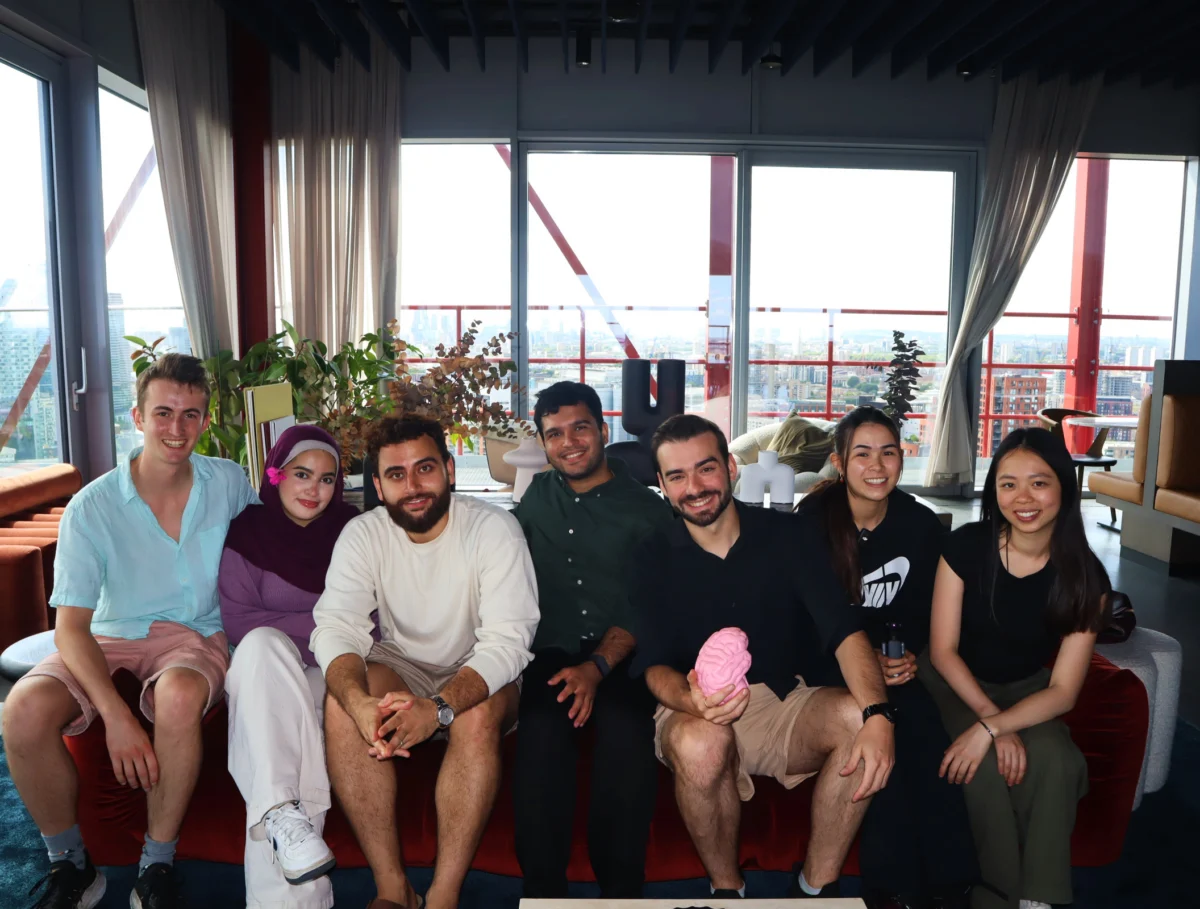
In a striking counter-narrative to Silicon Valley’s relentless "hustle culture," a unique co-living space in East London has emerged, offering a holistic approach to startup development. Known as the London Island Founder House, or more colloquially, "Lift House," this innovative community of six twentysomethings aims for "holistic improvement in life" rather than the intense, deadline-driven ethos of "12 weeks, Demo Day is coming," as explained by 26-year-old co-founder Rowan Aldean. This initiative represents a significant bet on the burgeoning U.K. tech scene’s ability to foster successful companies without succumbing to the burnout often associated with its Californian counterpart, signaling a maturing ecosystem with its own distinct identity.
The concept of a "hacker house," a blend of startup workspace and co-living, originated and proliferated within the frenetic environment of San Francisco. These spaces typically prioritize relentless product development, often pushing founders to extremes, sometimes even operating in less-than-legal conditions or demanding "996" (9 AM to 9 PM, 6 days a week) work sprints. Such an environment, while fostering rapid innovation, has frequently been criticized for neglecting mental health, work-life balance, and overall well-being. Lift House, by contrast, is a deliberate divergence from this model, positioning itself as an "anti-San Francisco" hacker house, one of the very few dedicated co-living hacker houses in London, a city where such communal tech living spaces are far less common than in the Bay Area.
The Genesis of Lift House: A Vision for Holistic Growth
The origins of Lift House trace back to a vision for a more sustainable and balanced approach to entrepreneurship. The six-story building, strategically located within a new East London development and boasting views of the water, officially launched in March. Rowan Aldean and his wife, Zahraa, 22, an aspiring pharmaceutical research PhD candidate, became residents in May. Aldean, a seasoned entrepreneur who reportedly sold his previous company last year for millions, now leads an "applied AI" startup focused on helping companies deploy AI agents effectively. His experience in the high-stakes world of tech has clearly informed his desire for a different kind of founder environment.
The name "Lift House" carries a dual meaning, reflecting both the building’s literal elevator and its overarching mission to "uplift" tech founders. This ethos is rooted in a belief that innovation and success need not come at the cost of personal well-being. Aldean’s journey and commitment to creating this alternative model highlight a growing sentiment within the global tech community for spaces that support mental and physical health alongside professional ambition. The meticulous selection of East London, a hub of creativity and technological advancement, further underscores the house’s intent to tap into a vibrant, yet distinct, urban ecosystem. The clean sidewalks and modern infrastructure of the development where Lift House resides symbolize a fresh start, a departure from the often chaotic and improvisational nature of some Silicon Valley setups.

Deconstructing the Hacker House Model: London vs. Silicon Valley
The stark contrast between Lift House and the traditional Silicon Valley hacker house model is central to its identity. While SF hacker houses have gained notoriety for their intense atmospheres, ranging from cramped, illegally run warehouses to lavish galas that serve as networking battlegrounds, Lift House actively shuns such theatrics. Founders in San Francisco have recounted tales of punishing 72-hour coding sprints, living in tents for proximity to their startups, or adhering strictly to the "996" work culture. This relentless pursuit of rapid growth and "demo day" readiness has undeniably fueled innovation but often left a trail of burnout, mental health challenges, and a pervasive sense of inadequacy among those who couldn’t keep up.
Aldean firmly rejects this performative aspect. "I don’t expect the performative and over-the-top events will be a thing here," he states, pointing to DeepMind, one of London’s most successful AI companies, as a prime example of impactful innovation without fanfare. DeepMind’s groundbreaking work, including its contributions to Nobel Prize-winning research, was achieved through focused, sustained effort rather than public spectacle. This philosophy is foundational to Lift House, promoting a culture where deep work, genuine collaboration, and personal growth take precedence over ostentatious displays of "hustle." It’s a deliberate move to de-glamorize the frantic pace and superficial trappings that have become synonymous with some segments of the global startup world.
"Londonmaxxing" and the UK’s AI Renaissance
Lift House is an integral part of a broader phenomenon termed "Londonmaxxing," where founders strategically optimize their engagement with the unique advantages offered by London’s tech scene. This trend signifies a collective effort to leverage the city’s resources, talent, and cultural environment to achieve entrepreneurial success, albeit with a distinctly British flavor. The London ecosystem is perceived as less ostentatious and less dominated by the "startup bro" culture often found in San Francisco, yet its founders share equally ambitious goals: success, wealth, and market domination.
The capital’s tech landscape, particularly its artificial intelligence sector, is experiencing a remarkable boom. According to Dealroom data, London AI startups have already attracted an impressive $12 billion in funding so far in 2026, contributing to a staggering $14.7 billion raised by all London startups during the same period. This influx of capital highlights the city’s growing prominence as a global AI hub. Six companies alone have secured over $500 million each: Wayve, Superintelligence, ElevenLabs, Recursive, Ineffable Intelligence, and Isomorphic Labs – notably, the latter three were founded by DeepMind alumni, underscoring the strong talent pipeline and collaborative spirit within the London AI community. This excitement surrounding AI has significantly boosted morale across the U.K. tech scene, inspiring a new generation of founders, including those at Lift House, to embark on ambitious ventures. Beyond AI, London benefits from robust government initiatives, such as the Digital Strategy, which aims to make the UK a science and technology superpower, and various R&D tax credit schemes that incentivize innovation. The city also boasts an exceptional talent pool, drawing graduates from world-renowned institutions like Oxford, Cambridge, Imperial College London, and University College London, ensuring a steady supply of skilled individuals for the tech sector. This confluence of funding, talent, and strategic support positions London as a formidable contender on the global tech stage, providing a fertile ground for "Londonmaxxing" founders to thrive.

A Day in the Life: Cultivating Balance at Lift House
Life at Lift House seamlessly integrates startup workspace with a communal living experience, carefully designed to foster both productivity and personal well-being. The timeline for residents is flexible, accommodating stays from a single month to half a year or longer, allowing founders to adapt their living arrangements to their startup’s evolving needs. While residents manage their own groceries, cooking together and sharing ingredients is a common practice, reinforcing the communal bond. Household chores are also divided equitably, ensuring a shared responsibility for the living environment. Although rent details remain private, the value proposition extends far beyond mere accommodation, offering a curated experience that prioritizes balance—an almost revolutionary concept by San Francisco startup standards.
The commitment to a balanced lifestyle is evident in the structured, yet flexible, daily and weekly routines. Sundays are dedicated to group journaling, a practice introduced by David Amor, 28, who leads a brain coaching and training company. This reflective exercise encourages residents to track their time spent in nature, dietary habits, and physical activity levels, promoting mindfulness and self-awareness. Luke, 27, who runs an AI-marketing company and requested his last name be withheld, attests to the positive impact: "I’m eating healthier, working out more, and sleeping more. I always make sure to have lunch now, which is something that is simple, but I wasn’t doing before I lived here." This simple yet profound shift in daily habits highlights the transformative power of the Lift House environment.
Beyond individual wellness, the house fosters collective engagement. Tuesday evenings are reserved for friendly competition, with founders participating in a local volleyball league as the house team. After communal dinners on other evenings, Wan Ying L, 25, who recently departed an AI startup to pursue a new venture, might entertain the group with piano melodies in the living room. Spontaneous social activities, like board game nights featuring Catan or collective visits to London’s vibrant art exhibitions, further enrich the communal experience, providing much-needed breaks from the intensity of startup life. Presence Plumb, 25, a tech strategist residing in the house, frequently hosts rooftop dinner parties. These events celebrate the diverse nationalities within the house, offering dishes from Iraqi to Spanish cuisines, and serve as informal networking opportunities for invited founders, researchers, investors, and operators to discuss the latest tech trends and investment opportunities in a relaxed setting. "It’s a bit calmer, balanced, authentic in a way," Plumb observes of the London ecosystem. "They don’t want too much of that only startup tech bro vibe. They want a bit of balance."
Individual founders within Lift House maintain diverse work schedules tailored to their personal preferences and company demands. David Amor, for instance, starts his day promptly at 8 AM, allowing himself a mere 30 seconds after waking before diving into focused morning work. "I have a clear objective of ‘this is what I want to do in the first half of the day, when there’s no distractions,’" he explains. His routine also includes a cold shower, which he credits with increasing dopamine levels by 250%, providing a motivational "spark." Luke, on the other hand, typically begins his day around 8:30 AM, often co-working with his co-founder, Varun, 27 (who also requested his last name be withheld), who travels to Lift House for collaborative sessions, starting with a team call around 9 AM. Aldean himself prefers a later start, rarely waking before 10 AM unless a significant event, such as a "crazy angel [investor] call," necessitates an earlier rise. These varied routines demonstrate that while balance is a guiding principle, personal productivity strategies are respected and encouraged, creating a flexible environment that supports individual working styles within a collaborative framework.
The British Tech Identity: Nuances and Challenges

When asked what makes Lift House uniquely British, Aldean offers a lighthearted quip about shared tea-drinking habits versus San Francisco’s filtered coffee culture. However, the differences run deeper, rooted in the distinct cultural pressures faced by British founders. Unlike their U.S. counterparts, who often embrace failure as a badge of honor and celebrate aggressive "hustle," British entrepreneurs navigate a cultural landscape marked by an aversion to risk, a strong inclination toward humility, and a lingering shame associated with failure. This isn’t about forsaking sleep for grind, but rather contending with what is often termed "tall poppy syndrome"—a phenomenon where individuals who achieve exceptional success are often cut down by public criticism or media scrutiny. This cultural dynamic makes founders in the U.K. ecosystem wary of overtly flaunting their achievements, fostering a more understated approach to success.
Despite these unique challenges, London presents a compelling proposition for early-stage founders. Luke highlights the city’s robust network, ample early-stage capital opportunities, and crucially, the option for a rich life beyond the confines of the tech world. In many respects, London’s cultural offering for founders more closely resembles that of New York City than San Francisco, providing a vibrant urban tapestry that allows for diverse interests and experiences. Amor further elaborates on London’s multifaceted appeal: "London is so diverse that if you look properly enough, you’ll always find something fun to get involved with, whether that’s a founder-run club, wellness events, [or going] to jazz nights."
The U.K. government also plays a role in fostering local startups through initiatives like the Seed Enterprise Investment Scheme (SEIS) and Enterprise Investment Scheme (EIS). These schemes offer significant tax relief to individuals investing in small, high-growth companies, effectively incentivizing angel investments into local startups. Luke explains how this mechanism benefits founders like himself and Varun, allowing them to attract capital more readily: "There’s people who will pay basically the same rate of tax if they give us the money versus if they pay income tax." This financial advantage, combined with the cultural environment, makes London an attractive launchpad.
Aldean also perceives the London ecosystem as less cutthroat than Silicon Valley. He recalls his own experiences living in a Bay Area hacker house where desks were intentionally positioned to face walls, emphasizing heads-down product building. He felt a pervasive sense of anxiety, constantly worried about gossip and negative stories being spread, especially if it could benefit a competitor. "There’s nothing like ‘oh my god did you hear that the CTO just, like, did this,’" Aldean says, contrasting it with a more discreet, if not absent, gossip culture in the U.K. Furthermore, Aldean believes London startups tend to target and sell into large, established corporations rather than primarily trading services or products among themselves, as is often the case in Silicon Valley. This dynamic means founders can focus on building robust solutions without the perceived need to "kiss up or posture" to gain favor with peers. Varun and Luke echo this sentiment, with Varun describing the U.S. market as "relatively fleeting," characterized by "quick wins." In contrast, he notes, "Here, it’s hard to close a customer, but if they close, they stay with you longer," suggesting a preference for building long-term, stable client relationships over rapid, high-turnover sales cycles.
The Transatlantic Pull: Opportunities and Dilemmas
Despite the unique advantages and burgeoning success of London’s tech scene, a significant gravitational pull often steers many U.K. startups toward the United States for scaling. The transatlantic journey represents both an opportunity and a dilemma for British founders. In the U.K., entrepreneurs benefit from access to affordable, top-tier talent graduating from world-renowned universities such as Oxford and Cambridge. Additionally, London’s advantageous time zone facilitates seamless collaboration with partners and markets across Europe, the Middle East, Asia, and even parts of North America. This geographic and talent leverage makes the U.K. an ideal proving ground for initial development and regional expansion.

However, the U.S. offers unparalleled access to the world’s largest economy and, crucially, a vast pool of investors willing to write substantial checks across all funding stages, from pre-seed to growth. This sheer scale of capital and market opportunity often proves irresistible for startups aiming for global dominance. Varun succinctly captures this dynamic: "It’s almost like a factory line in a way. You start here, and then you expand there or vice versa." This "factory line" model often sees British startups hone their product and market fit in the U.K. before making the leap across the Atlantic for significant growth capital and market penetration.
American investors, keenly aware of the U.K.’s talent pool, frequently exert pressure on founders to relocate. The reporter recounts a conversation with a startup founder who was explicitly told by a top investor that funding was contingent on her moving to the U.S. She eventually complied, though she chose to keep her family in the U.K. to raise her children, highlighting the personal sacrifices often involved. Luke confirms this common practice: "We had an investor in Miami who said the same thing." He and Varun have already initiated their U.S. expansion, and despite their affection for London, they acknowledge that a move to the U.S. to be closer to their growing customer base remains a distinct possibility. This tension — the desire to nurture the European ecosystem versus the undeniable allure of American capital and market scale — is a persistent challenge. Presence Plumb, the tech strategist at Lift House, notes, "I work with a lot of people trying to support the European ecosystem more," underscoring efforts to mitigate this brain drain. Yet, as Aldean aptly observes, founders "talk about London; everyone is bullish on the country until they get the opportunity to leave," encapsulating the constant battle for talent and innovation.
The Evolving Landscape of London’s Co-living Tech Spaces
The Lift House’s current lease has approximately a year remaining, and there’s a strong collective sentiment among its residents to extend its tenure for as long as feasible. This desire speaks to the unique value and community it provides in a city where dedicated co-living hacker houses are still a rarity. While London hosts numerous short-term tech gatherings, such as the Solana Hacker House meet-up series, permanent co-living spaces specifically tailored for founders are only just beginning to gain traction. Global co-living chains are recognizing London’s potential, with San Francisco-based networks like The Residency having expanded into the city last year, and BaseJump announcing plans for a London version of its hacker house program soon.
Interestingly, Lift House is not the first attempt at a dedicated founder residence in London. In 2024, two founders launched "The London Founder House," which Sifted famously covered under the headline "The people here don’t want work-life balance." This initiative, noted as London’s first-ever hacker house, embodied a starkly different philosophy, prioritizing intense work above all else. To even be considered for residency, founders needed to have raised at least half a million dollars, reflecting a focus on established, high-potential ventures. Although The London Founder House wound down last year, it left a significant influence through its pioneering concept, networking events, and the connections it forged within the ecosystem.
Lift House, however, deliberately carves out a different niche. Its prospective residents are not judged solely on their funding rounds or product milestones, but also on demonstrating a genuine hobby outside their companies and an active interest in fitness. This selection criterion reinforces its core mission of fostering holistic development. It’s a key element of the "Londonmaxxing" pitch: the promise that in London, founders can genuinely "have it all" – ambitious professional success alongside a balanced, enriching personal life. Aldean encapsulates this ethos, stating, "The culture is to build something that lasts, not necessarily burn out chasing a flash." In a global tech landscape often driven by fleeting trends and unsustainable pressures, Lift House offers a compelling alternative, positioning London as a beacon for balanced, enduring innovation.