

San Francisco, CA – In a significant move set to reshape the competitive landscape of artificial intelligence in cybersecurity, Microsoft on Monday launched its first specialized AI model, MAI-Cyber-1-Flash, alongside a new AI cybersecurity platform dubbed Perception. The dual announcement, made at a focused event in San Francisco, signals a robust challenge to established and emerging AI leaders, including Anthropic, Google, and OpenAI, as Microsoft asserts its ambition to lead in the critical domain of digital defense.
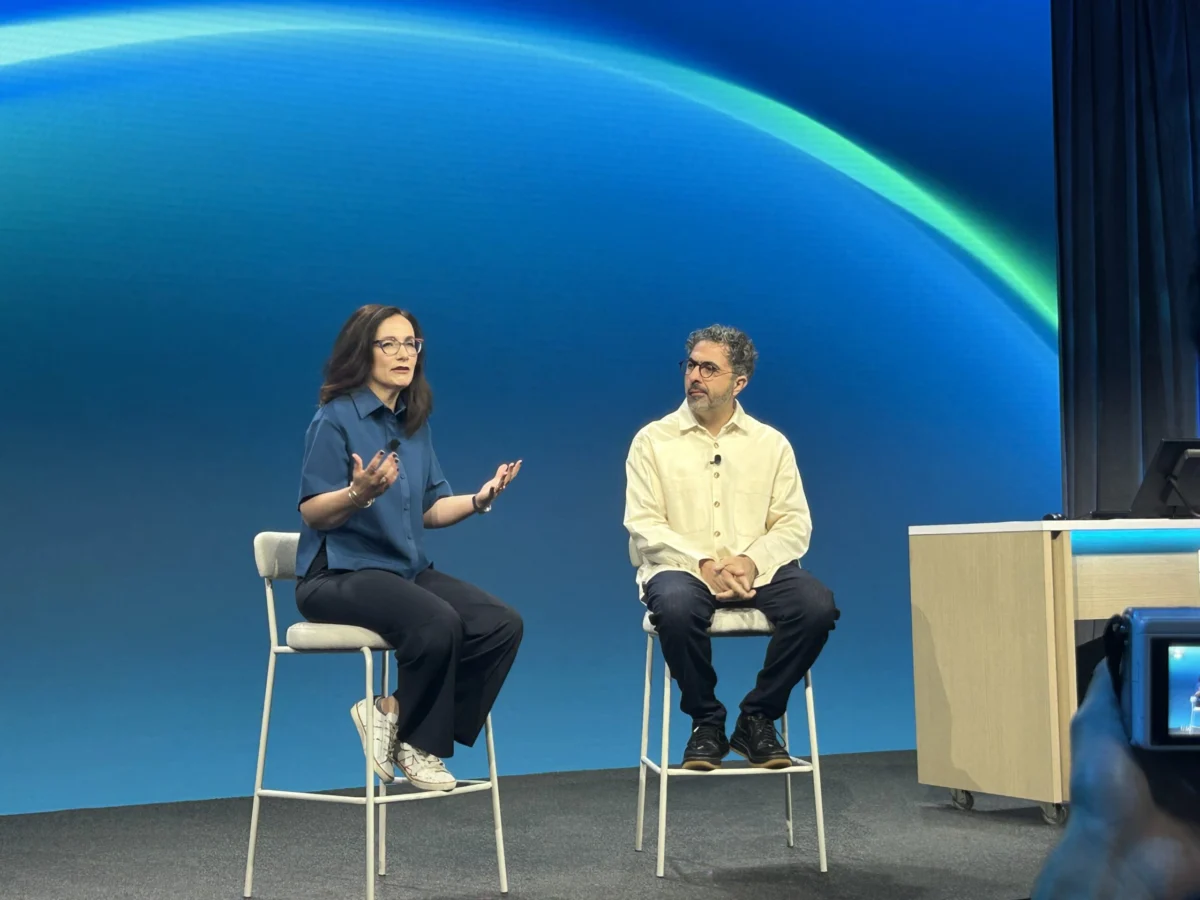
The core of Microsoft’s new offering lies in MAI-Cyber-1-Flash, an advanced AI model specifically engineered to identify intricate vulnerabilities within complex codebases. Designed to integrate seamlessly with MDASH—Microsoft’s proprietary harness dedicated to software vulnerability identification and remediation—the model represents a concentrated effort to automate and accelerate a historically labor-intensive aspect of cybersecurity. Mustafa Suleyman, the co-founder of DeepMind and current CEO of Microsoft AI, underscored the model’s prowess, stating, "We’re very very excited to announce our results. We have MAI-1 Cyber Flash binded [sic] with GPT 5.4 inside of the MDASH harness — which beats out Gemini, GPT 5.5 Cyber, GPT 5.6 Sol, and Mythos 5 on Cyber Gym, which is the primary benchmark that we all use. The golden benchmark." This declaration positions MAI-Cyber-1-Flash as a frontrunner in performance, while Microsoft also claims it offers significant cost-effectiveness compared to competitor models. The company emphasized its immediate deployment into production, signaling confidence in its capabilities and readiness for real-world application.
Complementing the specialized AI model is Perception, an innovative AI cybersecurity platform engineered to deploy "teams of agents" to streamline and automate various security workflows. These agentic teams are designed to assist human operators in tasks ranging from identifying and triaging bugs to enacting rapid remediation. Perception’s architecture allows for deep integration with MDASH, creating a unified and highly automated defense system. Hayete Gallot, Microsoft’s vice president for security, highlighted the platform’s timely relevance, noting the escalating use of AI by malicious actors in their cyberattacks. Gallot described Perception as an essential tool for enterprise defenders, enabling them to "defend against AI with AI at the scale and speed that the attackers have." This strategic approach acknowledges the evolving threat landscape, where traditional human-centric defenses are increasingly outpaced by automated, AI-driven attacks.
The Architecture of Automated Defense: Perception’s Agentic Teams
Perception introduces a sophisticated framework built around three distinct types of agentic teams: red, blue, and green. Each team plays a crucial role in a comprehensive, automated security cycle:
- Red Teams: These agents are tasked with simulating potential cyberattacks with remarkable precision. They generate detailed scenarios, providing invaluable context about hypothetical threat actors and the specific vulnerabilities they might exploit. This proactive approach allows organizations to identify weaknesses before they can be leveraged by actual adversaries. By mimicking sophisticated attack vectors, red teams help security professionals understand their defensive posture from an attacker’s perspective, enabling more robust hardening strategies.
- Blue Teams: Once potential or existing threats are identified, the blue teams spring into action. Their primary function is dedicated to the continuous detection and meticulous triage of bugs and vulnerabilities across an organization’s digital assets. Leveraging advanced analytics and machine learning, blue teams can sift through vast amounts of data to pinpoint anomalies and prioritize security incidents based on severity and potential impact, significantly reducing the manual burden on security operations centers.
- Green Teams: Completing the defensive loop, the green teams are responsible for taking "corrective actions" against identified bugs and vulnerabilities. This includes generating and implementing patches, reconfiguring systems, and applying security updates. The ability to automate remediation at speed is a game-changer, drastically cutting down the window of opportunity for attackers. Dave Weston, the lead engineer for Perception, underscored this transformative efficiency, stating, "We’ve gone from this taking hours and hours of manual work from multiple specialized folks across the security organization — appsec hunters, remediation engineers, you name it — and in minutes, we have a fix for all of this. Not only do we discover the issues and prioritize them, but we have detection, posture fixing, and even a code fix." This rapid response capability is critical in an environment where zero-day exploits and fast-moving threats are a constant concern.
Background and the Escalating AI Cybersecurity Arms Race
The launch of MAI-Cyber-1-Flash and Perception comes at a pivotal moment for cybersecurity. The advent of advanced AI has introduced a dual-edged sword to the digital realm. While AI offers unprecedented capabilities for defense, its accessibility also empowers cybercriminals to craft more sophisticated, scalable, and evasive attacks. Generative AI models, for instance, are increasingly used to create highly convincing phishing emails, develop polymorphic malware, and automate reconnaissance, making it harder for human defenders to keep pace.
The global cybersecurity market, projected to exceed $300 billion by 2027, is undergoing a profound transformation driven by AI. Enterprises worldwide are grappling with a severe shortage of skilled cybersecurity professionals, with estimates suggesting millions of unfilled positions globally. AI-driven solutions like Microsoft’s aim to bridge this talent gap by automating routine tasks, augmenting human analysts, and providing capabilities that were previously unattainable.
Microsoft’s broader strategic investments in AI, from its deep partnership with OpenAI to its extensive Azure AI services and the integration of Copilot across its product suite, underscore its commitment to becoming a dominant force in the AI era. The cybersecurity initiative is a natural extension of this strategy, leveraging Microsoft’s vast infrastructure, data insights, and enterprise customer base to deliver integrated security solutions. The company’s vision is to embed AI at every layer of its offerings, making it not just a feature, but a fundamental operating principle for its products and services.
A Crowded Field: Microsoft’s Challenge to Competitors
Microsoft’s entry into this specialized AI cybersecurity segment is not without significant competition. The race to develop advanced AI for defense has seen several major players make their own significant announcements in recent months.
- Anthropic: Earlier this year, in April, Anthropic launched its own security platform, Mythos. This model was initially released to a select group of partner organizations through a private program known as Glasswing, focusing on advanced threat detection and analysis.
- OpenAI: Following Anthropic, OpenAI also unveiled its security solution in May, operating under a program called Day Break. While details remain somewhat guarded, Day Break aims to leverage OpenAI’s powerful foundational models for various security applications, including vulnerability identification and threat intelligence.
- Google: Google has been a significant player in AI for years, with its Gemini models being central to its broader AI strategy. The explicit mention of Gemini in Suleyman’s benchmark comparison highlights Google’s formidable presence in the general-purpose AI space, which naturally extends to cybersecurity applications.
Microsoft’s direct comparison of MAI-Cyber-1-Flash against models like "Gemini, GPT 5.5 Cyber, GPT 5.6 Sol, and Mythos 5 on Cyber Gym" is a bold statement. The "Cyber Gym" benchmark, presented as the "golden benchmark," suggests a standardized evaluation framework gaining industry acceptance, providing a quantifiable measure for the performance of these sophisticated AI models. This competitive posturing indicates that the battle for AI cybersecurity dominance will increasingly rely on verifiable performance metrics, pushing companies to demonstrate tangible advantages.
Strategic Implications and Broader Impact
The introduction of MAI-Cyber-1-Flash and Perception carries profound implications across several fronts:
- For Enterprises: The immediate benefit for organizations adopting Perception is the promise of vastly improved efficiency and efficacy in their security operations. The shift from "hours and hours of manual work" to "minutes" for detection, prioritization, and remediation represents a massive leap forward. This acceleration can significantly reduce the average time to detect and contain breaches, thereby mitigating financial losses, reputational damage, and regulatory penalties. Furthermore, by automating routine and complex tasks, human security teams can reallocate their expertise to more strategic initiatives, fostering innovation and resilience.
- For the Cybersecurity Industry: Microsoft’s aggressive entry will undoubtedly intensify competition, pushing all vendors to innovate faster and integrate more advanced AI capabilities into their offerings. This could lead to a rapid evolution of AI cybersecurity solutions, with a greater focus on specialized models, agentic architectures, and verifiable performance benchmarks. It also poses a challenge to traditional security vendors, necessitating their adaptation to an AI-first paradigm or risk obsolescence.
- For AI Development and Safety: The focus on AI for cybersecurity also highlights the critical need for responsible AI development. As AI becomes more autonomous in security operations, questions of trust, transparency, and explainability become paramount. Ensuring that these AI systems are robust, unbiased, and capable of operating safely under various conditions will be a continuous area of research and development. The ethical considerations of AI-driven red teaming, for instance, will require careful governance.
- Microsoft’s Market Position: This launch solidifies Microsoft’s position as a holistic provider in both AI and enterprise security. By offering a comprehensive suite of AI-powered tools, Microsoft aims to become the default choice for organizations seeking to leverage AI for their digital defense. This integrated approach, combining its cloud infrastructure, enterprise software, and now cutting-edge AI security, strengthens its ecosystem lock-in.
Availability and the Future Outlook
Microsoft announced that its new security tools will be available in preview on November 3. This phased rollout allows early adopters to experiment with the platforms, provide feedback, and help refine the offerings before a broader general availability. The iterative development process is typical for complex AI systems, ensuring robustness and adaptability to diverse enterprise environments.
The continuous evolution of AI in both offensive and defensive cybersecurity roles suggests that the "AI arms race" is only just beginning. As AI models become more powerful and accessible, the sophistication of cyber threats will continue to escalate, demanding ever more advanced defensive countermeasures. Microsoft’s MAI-Cyber-1-Flash and Perception platform represent a significant step in this ongoing battle, aiming to equip organizations with the tools necessary to stay ahead in an increasingly automated and interconnected threat landscape. The coming months will reveal how these new offerings perform in real-world scenarios and how competitors respond to Microsoft’s ambitious challenge.