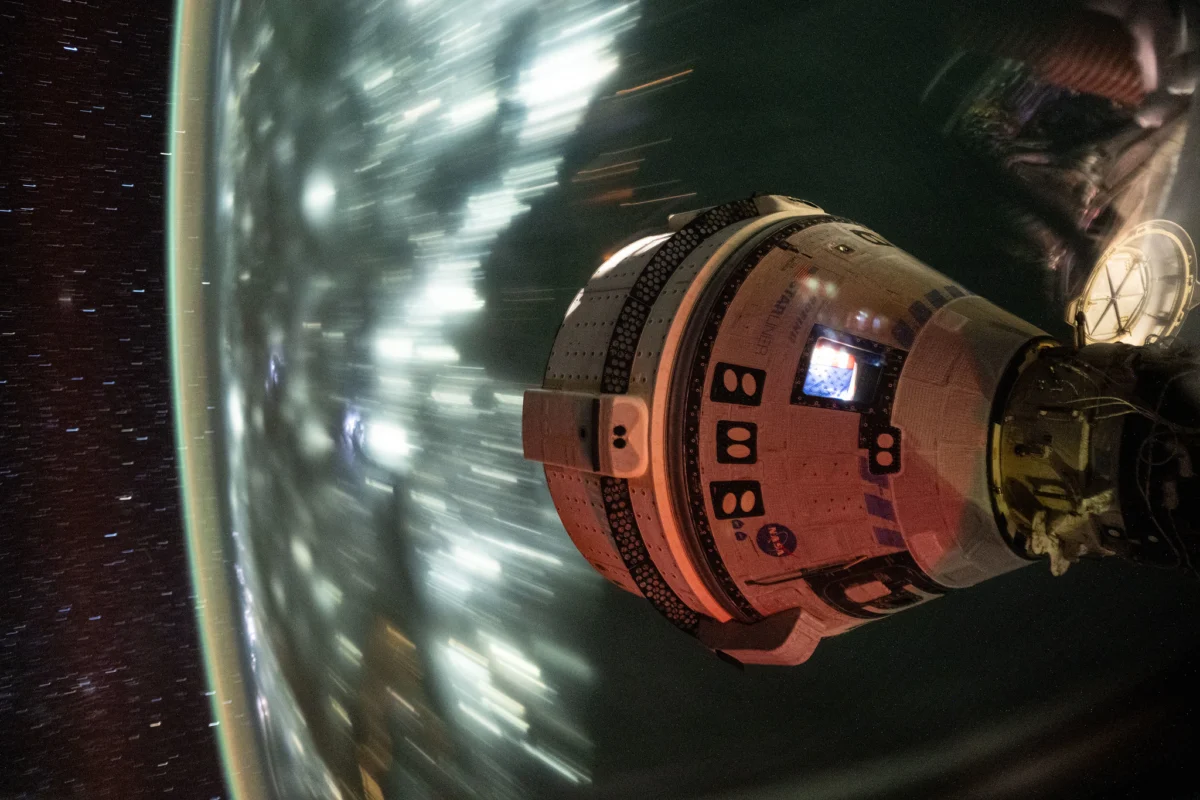
On Monday, a pivotal joint announcement from NASA and Boeing unveiled a significantly revised strategy for the Starliner spacecraft, outlining an ambitious path forward that includes extending its operational lifespan with additional crew missions and certifying the next-generation Vulcan Centaur rocket for human spaceflight to low Earth orbit. This development underscores NASA’s unwavering commitment to maintaining diverse, reliable crew transportation options as the agency navigates the complex landscape of future space exploration and commercialization.
The announcement from the two aerospace giants is a testament to the persistent challenges and equally persistent resolve inherent in pioneering human spaceflight. It comes after a period of intense scrutiny and corrective actions following a series of technical hurdles that have delayed Starliner’s full operational certification. NASA Administrator Jared Isaacman articulated the broader vision driving these decisions, stating, "We are living through the most exciting era of space exploration since Apollo. As this domain continues to open, there will be growing demand for launch vehicles, transfer stages, landers, and, of course, spacecraft that carry astronauts. NASA has been committed to having multiple crew transportation options since the beginning of the Commercial Crew Program. We have worked closely with Boeing to address the issues identified on previous Starliner flights, and we intend to see this vehicle return to flight in support of the International Space Station and future commercial destinations."
In a clear demonstration of confidence in Boeing’s ongoing remediation efforts and Starliner’s long-term potential, NASA intends to exercise options for a fifth and sixth flight to and from the International Space Station (ISS) using the Starliner capsule. Furthermore, the agency confirmed plans to collaborate with Boeing and United Launch Alliance (ULA) to certify ULA’s new Vulcan Centaur rocket for crew transportation, paving the way for Starliner missions beyond the retirement of the venerable Atlas V rocket, which has served as Starliner’s launch vehicle for its test flights.
A Phased Return to Flight: Starliner-1 and Starliner-2
The immediate focus for the Starliner program is on an uncrewed engineering evaluation mission, now designated Starliner-1. This critical flight aims to rigorously validate the extensive improvements made to the spacecraft and gather essential flight data before any astronauts are placed onboard. Administrator Isaacman elaborated on this phased approach, "We are starting with an uncrewed Starliner-1 mission to the International Space Station to validate the improvements made to the spacecraft and gather the flight data we need. From there, we will use what we learn, continue implementing the corrective actions identified by our Program Investigation Team, and complete the testing and certification required for crewed flight. Our current plan is to return astronauts on Starliner-2 by 2028."
This revised timeline pushes the anticipated crewed flight, originally known as the Crew Flight Test (CFT), further into the future, now rebranded as Starliner-2. The Starliner-1 mission is tentatively slated for launch in December of this year or January 2027, serving as a vital precursor to human spaceflight. This uncrewed mission is not merely a test flight but a comprehensive engineering evaluation designed to verify improved thermal environments within the spacecraft, obtain necessary performance data for full system qualification, and identify any residual risks ahead of crewed operations. Dana Weigel, manager of NASA’s Low Earth Orbit Program, underscored the mission’s importance, stating, "Starliner’s next flight is a critical step on the path to achieving full system certification and ensuring a sustained human presence in low Earth orbit. With the safety of our space station crew and the public as our highest priority, we will test Starliner’s propulsion system through targeted demonstration objectives and disciplined operational controls. These steps are essential to validating Starliner’s thermal performance which is a key element for the certification."
The Genesis of Commercial Crew: A Quest for Independence and Redundancy
The journey of Starliner is intrinsically linked to NASA’s Commercial Crew Program, an initiative born out of necessity and a vision for the future of space exploration. Following the retirement of the Space Shuttle program in 2011, the United States found itself reliant on Russia’s Soyuz spacecraft for transporting astronauts to the International Space Station. This dependence highlighted a critical gap in U.S. human spaceflight capability and spurred NASA to foster a robust commercial space industry that could provide independent, safe, and cost-effective access to space.
In 2014, NASA awarded contracts to Boeing and SpaceX, tasking them with developing distinct crew transportation systems. Boeing received a contract valued at $4.2 billion for its CST-100 Starliner capsule, while SpaceX secured a $2.6 billion contract for its Crew Dragon spacecraft. The underlying philosophy was to introduce redundancy and competition, ensuring that if one system encountered issues, another would be available, thereby guaranteeing continuous access to the ISS. SpaceX’s Crew Dragon achieved full certification in 2020 and has since conducted numerous successful crew rotation missions for NASA, demonstrating the viability of the commercial approach. Starliner, however, has faced a more protracted and challenging development trajectory.
A Detailed Chronology of Starliner’s Hurdles and Progress
Starliner’s path to certification has been marked by a series of significant setbacks, each prompting extensive investigations and redesign efforts.
- Orbital Flight Test-1 (OFT-1) – December 2019: Starliner’s inaugural uncrewed test flight aimed to dock with the ISS. However, software glitches, including an incorrect mission elapsed time setting and thruster firing anomalies, prevented the spacecraft from reaching the correct orbit and rendezvous with the station. While the capsule made a safe landing, the mission failed to meet its primary objectives. A joint NASA-Boeing investigation identified 80 corrective actions.
- Orbital Flight Test-2 (OFT-2) – May 2022: A re-do of the uncrewed test flight became necessary after the OFT-1 issues. OFT-2 also faced significant delays, notably due to oxidizer isolation valve problems in the service module that required the vehicle to be rolled back from the launchpad for repairs. Despite these pre-launch issues, the mission successfully launched, docked with the ISS, and returned to Earth, demonstrating many of the critical systems and meeting most of its test objectives.
- Crew Flight Test (CFT) – Originally planned for 2024, now converted: The most recent and significant setback occurred as Starliner was preparing for its first crewed flight with NASA astronauts Barry "Butch" Wilmore and Sunita Williams. During pre-flight checks and the subsequent uncrewed return, a comprehensive review identified critical issues with the spacecraft’s service module reaction control system (RCS) thrusters. These thrusters are vital for orbital maneuvers, attitude control, and deorbit burns.
Technical Deep Dive: Unpacking the Thruster Anomalies
The findings released by NASA’s Program Investigation Team (PIT) in February provided a detailed outline of the programmatic and technical issues that led to the uncrewed return during what was intended to be Starliner’s first crewed flight in 2024. The investigation yielded a total of 61 recommendations for NASA and Boeing to ensure that future missions meet the stringent safety and performance standards required for human spaceflight.
Specifically, the report highlighted problems with Starliner’s service module reaction control thrusters operating outside of their engineering qualification, which directly resulted in a loss of control experienced during its Crew Flight Test simulation. Through extensive ground testing and meticulous analysis, NASA and Boeing determined that the service module thruster performance issues stemmed from a complex interplay of factors, predominantly the thermal environment within the service module and inherent design features of the thrusters themselves. A key issue identified was "poppet seal extrusion," where the seals within the thruster valves would deform under certain thermal conditions, adversely affecting thruster performance and reliability.
Boeing has responded to these critical findings with significant modifications. The company has implemented thermal modifications to the spacecraft’s service module, which NASA will meticulously evaluate for improved performance on the upcoming Starliner-1 mission. Furthermore, NASA and Boeing have jointly decided to incorporate an additional thruster valve design modification. This modification, focused on addressing the poppet seal extrusion and its detrimental effects on thruster performance, will be completed in support of full spacecraft certification and all future crewed flights.
Beyond the thruster system, Boeing is undertaking a suite of other improvements across the spacecraft. These include the installation of new crew module thrusters, an upgrade to the battery systems, and minor modifications to the parachute system aimed at enhancing performance and reliability. These comprehensive upgrades are all geared towards achieving the highest levels of safety and reliability necessary for human spaceflight certification.
Forging the Future: Vulcan Centaur and Expanded Missions
The announcement of two additional Starliner missions (the fifth and sixth) beyond the initial contract options signals NASA’s long-term strategic planning for Low Earth Orbit (LEO) operations. These extended missions will be crucial not only for continued crew rotation and resupply of the International Space Station but also for supporting the envisioned transition to commercial space stations. As the ISS approaches its planned decommissioning in 2030, NASA is actively fostering the development of private space stations, and Starliner could play a vital role in servicing these future commercial destinations, ensuring a sustained human presence in LEO.
A significant element of Monday’s announcement is the certification of ULA’s Vulcan Centaur rocket for human spaceflight. The Atlas V, a workhorse for ULA and the launch vehicle for all Starliner test flights to date, is nearing the end of its operational life. Its retirement necessitates a successor for critical missions, including human spaceflight. The Vulcan Centaur is ULA’s next-generation heavy-lift launch vehicle, designed to be more powerful, cost-effective, and versatile than its predecessors. Its certification for crewed missions is a complex and rigorous process, requiring extensive testing and validation to meet NASA’s stringent human rating requirements. This move ensures that Starliner will have a reliable and capable launch platform for its extended missions well into the next decade.
Implications for Boeing, NASA, and Commercial Space
The revised Starliner timeline and expanded mission commitment carry significant implications for all stakeholders. For Boeing, a successful return to flight and eventual certification of Starliner is paramount for restoring confidence in its human spaceflight capabilities and reinforcing its position as a key NASA partner. The delays and technical issues have been costly, both financially and in terms of public perception, but the company’s continued investment and NASA’s sustained support underscore the strategic importance of the program. Boeing remains steadfast in its commitment to the Starliner program, viewing it as a critical asset for providing safe and reliable human spaceflight transport. The company’s leadership has consistently emphasized their dedication to resolving every technical challenge in close collaboration with NASA, ensuring the highest standards of safety and mission success.
For NASA, maintaining two independent crew transportation systems (Starliner and SpaceX’s Crew Dragon) is a cornerstone of its LEO strategy. This redundancy provides crucial resilience against unforeseen technical issues with either system, ensuring uninterrupted access to the ISS and future commercial platforms. The Commercial Crew Program, despite Starliner’s challenges, has demonstrably revitalized U.S. human spaceflight capabilities and spurred innovation in the commercial space sector. The decision to extend Starliner missions and certify Vulcan reinforces NASA’s long-term vision for a vibrant, commercially driven space economy.
The broader commercial space industry also benefits from these developments. The extensive testing, modifications, and certification processes undergone by Starliner contribute invaluable lessons learned that can inform future spacecraft designs and operational protocols across the industry. The establishment of multiple, robust pathways to LEO is essential for unlocking the full potential of space exploration, scientific research, and commercial endeavors.
As NASA and Boeing embark on this refined path, the focus remains squarely on safety and methodical progress. The upcoming uncrewed Starliner-1 mission will be a critical waypoint, providing the data necessary to validate the extensive work undertaken and clear the way for Starliner to finally carry astronauts to the International Space Station and beyond, solidifying its role in the next chapter of human space exploration.