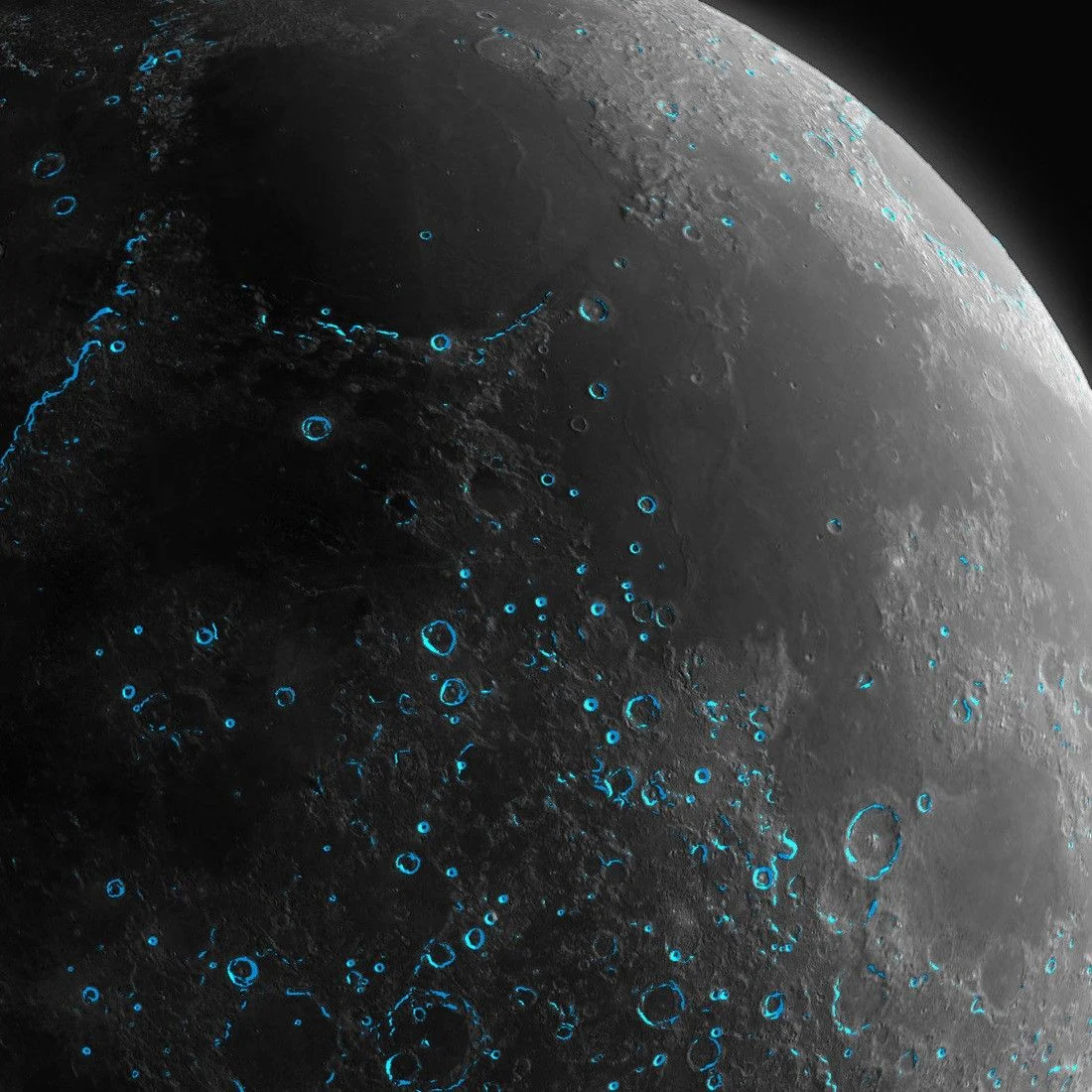
NASA is poised to host its annual International Observe the Moon Night (InOMN) celebration on Saturday, September 19, from 5:30 to 8 p.m. CST, at the prestigious U.S. Space & Rocket Center in Huntsville, Alabama. As the official visitor center for NASA’s Marshall Space Flight Center, the venue offers a fitting backdrop for an evening dedicated to celebrating Earth’s closest celestial neighbor, delving into the science underpinning its existence, and acknowledging its profound connection to human space exploration and diverse global cultures. This free public event is designed to engage attendees of all ages with the wonders of lunar science and the ambitious future of human missions back to the Moon, spearheaded by the Artemis program.
The Significance of International Observe the Moon Night
International Observe the Moon Night is a global, annual public engagement event that encourages observation, appreciation, and understanding of our Moon and its connection to planetary science and exploration. Initiated in 2010 by NASA, the Lunar Reconnaissance Orbiter (LRO) mission, and other partners, InOMN has grown into a worldwide phenomenon, bringing together tens of thousands of participants across all seven continents. Its primary goals are to unite people around the globe with a common focus, to inspire curiosity about the Moon, to encourage citizen science, and to highlight the scientific and cultural importance of Earth’s natural satellite. The event serves as a crucial platform for NASA to share its ongoing research and exploration efforts, fostering a deeper connection between the public and the space agency’s endeavors.
The Moon, a celestial body approximately 238,900 miles (384,400 kilometers) from Earth with a diameter of about 2,159 miles (3,474 kilometers), has captivated humanity for millennia. Its gravitational pull influences Earth’s tides, and its phases have shaped calendars, myths, and scientific understanding across countless civilizations. For scientists, the Moon is a pristine laboratory, preserving a geological record stretching back billions of years, offering clues not only about its own formation but also the early history of the inner solar system and the origins of life on Earth. Events like InOMN democratize access to this scientific inquiry, allowing everyone to partake in the thrill of discovery.
Huntsville: A Cradle of Space Exploration
The choice of the U.S. Space & Rocket Center in Huntsville, Alabama, as the host location for this significant event is deeply symbolic. Huntsville, often dubbed "Rocket City," boasts an unparalleled legacy in space exploration. It was here that Wernher von Braun and his team developed the Saturn V rocket, the monumental launch vehicle that propelled Apollo astronauts to the Moon. Today, NASA’s Marshall Space Flight Center continues this heritage, serving as a primary center for propulsion systems, space launch vehicle development, and scientific research that directly supports lunar and deep-space missions. The U.S. Space & Rocket Center, as Marshall’s official visitor center, naturally extends this mission by educating and inspiring the public, housing iconic artifacts like a genuine Saturn V rocket and a multitude of exhibits detailing the history and future of spaceflight.
Hosting InOMN at such a historically rich location provides attendees with an immersive experience, linking the past achievements of lunar exploration with the ambitious goals of the present and future. Officials from the U.S. Space & Rocket Center frequently emphasize their commitment to making space science accessible and engaging for all visitors, aligning perfectly with the spirit of InOMN. The center’s mission to "inspire the next generation of explorers" is vividly brought to life through events that connect public interest with cutting-edge research.
Artemis and Humanity’s Return to the Moon
A central theme of this year’s International Observe the Moon Night will be the Artemis program, NASA’s ambitious initiative to return humans to the lunar surface. Agency experts will deliver talks specifically on lunar science and exploration, highlighting recent lunar observations made by the Artemis II crew in April. The Artemis program represents a new era of lunar exploration, aiming not only to land the first woman and the first person of color on the Moon but also to establish a sustainable human presence there, paving the way for future missions to Mars.
Artemis II, slated to be the first crewed test flight of NASA’s Orion spacecraft with astronauts, will orbit the Moon, demonstrating critical systems and procedures for human deep-space travel. The observations made by its crew during their training or actual mission provide invaluable insights, helping to refine future mission plans and contributing to our understanding of the lunar environment. These observations might include visual surveys of potential landing sites, assessments of lunar resources, or atmospheric phenomena. The integration of Artemis updates into InOMN underscores the event’s relevance to current scientific endeavors and public investment in space exploration. The long-term vision of Artemis includes building the Gateway, a lunar orbital outpost, and establishing a base camp on the lunar south pole, where water ice is believed to be abundant. These future developments are directly tied to the foundational understanding of the Moon that events like InOMN help to cultivate.
Engaging Activities for All Ages
The International Observe the Moon Night celebration promises a diverse array of engaging activities designed to captivate visitors of all ages, from budding scientists to seasoned space enthusiasts. The event’s structured program includes opportunities for hands-on STEM activities, a dynamic science stage show, an interactive event photo booth, and creative face-painting.
The hands-on STEM activities are a cornerstone of the educational outreach. These might include building and launching miniature rockets, simulating lunar crater formation using various materials, designing Moon habitats, or creating models of lunar phases. Such activities provide experiential learning, allowing participants to directly apply scientific principles and engineering concepts in a fun and accessible manner. These interactive stations are crucial for demystifying complex scientific ideas and fostering an early interest in science, technology, engineering, and mathematics.
The science stage show will feature agency experts delivering presentations on a range of lunar topics. These talks could cover the Moon’s geological history, the challenges and innovations of lunar landing missions, the search for water ice, or the potential for lunar resource utilization. The format often includes visual aids, question-and-answer sessions, and engaging narratives that bring complex scientific concepts to life for a general audience. The presence of NASA experts ensures that the information shared is authoritative, up-to-date, and directly connected to ongoing research.
Beyond the educational core, the event also incorporates elements of fun and community building. An event photo booth will allow attendees to capture memories against lunar-themed backdrops, often with props like astronaut helmets or alien masks, serving as a tangible memento of their participation. Face-painting, particularly popular with younger attendees, adds a festive atmosphere, transforming children into astronauts, aliens, or celestial bodies, further immersing them in the theme of space exploration. These lighter activities play a vital role in making scientific events approachable and enjoyable for families, ensuring a holistic experience.
Star Power: Janet Ivey and the Von Braun Astronomical Society
Adding to the allure of the evening, the event will feature Janet Ivey, the esteemed host of the Emmy-nominated children’s television series, "Janet’s Planet." Ivey is widely recognized for her passionate and engaging approach to making science accessible and exciting for young audiences. Her presence underscores the educational mission of InOMN, as she embodies the spirit of curiosity and discovery that NASA aims to foster. Through her show, Ivey has inspired countless children to look up at the night sky with wonder, and her participation at the event will undoubtedly amplify this message, making complex scientific ideas relatable and inspiring for the next generation of scientists and engineers. Educators frequently emphasize the impact of charismatic communicators like Ivey in sparking and sustaining interest in STEM fields among youth.
Complementing the scientific talks and educational activities, the Von Braun Astronomical Society (VBAS) will be on-site with an array of telescopes, providing attendees with guided tours of the Moon, planets, and other celestial objects. The VBAS, a non-profit organization dedicated to fostering interest in astronomy in the Huntsville area, has a long history of public outreach. Their experts will offer invaluable insights, explaining what attendees are observing through the eyepieces and answering questions about the cosmos. This direct observation opportunity is often cited as one of the most impactful aspects of InOMN, allowing individuals to experience the tangible reality of celestial bodies rather than just viewing images. The chance to see the Moon’s craters, maria, and perhaps even some prominent planets like Jupiter or Saturn, depending on their visibility during the event, through powerful telescopes can be a truly transformative experience, connecting individuals directly with the vastness of space. The VBAS regularly expresses its dedication to sharing the wonders of the cosmos, making them ideal partners for an event focused on lunar observation.
Fostering Future Generations: The Educational Imperative
The broader impact of events like International Observe the Moon Night extends far beyond a single evening of observation. Such initiatives are fundamental to NASA’s commitment to public engagement and science literacy. By making space science accessible and exciting, InOMN plays a crucial role in inspiring future generations to pursue careers in STEM fields. In an era where technological advancements are paramount, fostering a strong foundation in science and engineering is vital for national progress and global competitiveness.
The hands-on activities, expert talks, and direct observation opportunities collectively demystify scientific processes and show that science is not just for a select few but is an endeavor open to all curious minds. The event also highlights the collaborative nature of space exploration, involving scientists, engineers, educators, and the public. This communal experience of discovery strengthens public support for scientific research and exploration, demonstrating the tangible returns on investment in space programs, from technological spin-offs to advancements in fundamental knowledge.
Moreover, InOMN promotes citizen science, encouraging individuals to become active participants in scientific discovery. Even simple observations of the Moon can contribute to a collective understanding, fostering a sense of ownership and personal connection to the scientific enterprise. NASA officials consistently underscore the critical role of public engagement events like International Observe the Moon Night in bridging the gap between cutting-edge research and everyday life, illustrating how humanity’s quest to understand the universe enriches us all.
NASA Marshall’s Enduring Legacy in Lunar Missions
The Planetary Missions Program Office at NASA Marshall, which presents the evening’s events, has a rich history and ongoing role in lunar exploration. Marshall Space Flight Center, historically renowned for its propulsion expertise, was instrumental in developing the Saturn V rockets that powered the Apollo missions. Today, Marshall continues to play a vital role in the Artemis program, developing the Space Launch System (SLS), the powerful rocket designed to carry astronauts and cargo to the Moon and beyond. Its contributions include the core stage, the engine section, and various other critical components that will enable humanity’s return to the lunar surface.
The Planetary Missions Program Office specifically oversees missions that explore other celestial bodies in our solar system, including the Moon. Their involvement in presenting InOMN underscores the integrated approach NASA takes to exploration, from mission planning and execution to public outreach and education. This office’s expertise ensures that the scientific content presented during the event is directly relevant to ongoing and future lunar missions, providing attendees with a direct link to the forefront of space exploration.
Logistics and Media Information
For members of the media interested in covering this enriching event, confirmation of attendance is required by 3 p.m. CST on Friday, September 18. Media representatives should contact Joel Wallace at [email protected] in the NASA Marshall newsroom to confirm their participation. Upon arrival, media personnel must report to the Davidson Center to gain access to the event. Visitor parking is conveniently available at the U.S. Space & Rocket Center.
NASA will facilitate numerous opportunities for media to capture compelling visuals and conduct interviews with agency experts, providing valuable content for news reports. Specific activities available for coverage include the dynamic hands-on STEM activities, the engaging science stage show featuring expert talks, the interactive event photo booth, and the festive face-painting stations. These diverse opportunities ensure that media outlets can capture the full scope of the event’s educational and celebratory atmosphere. Joel Wallace can be reached for further inquiries at 256-786-0117 or via email at [email protected].
The Moon: A Timeless Source of Wonder and Discovery
In conclusion, International Observe the Moon Night at the U.S. Space & Rocket Center is more than just an event; it is an invitation to engage with one of humanity’s most enduring sources of wonder. The Moon, once perceived as a distant, mysterious orb, is now understood as a dynamic celestial body with a complex history and a critical role in our future. From its influence on Earth to its potential as a staging ground for deep-space missions, the Moon continues to inspire scientific inquiry and technological innovation.
As humanity prepares for a sustained return to the Moon through the Artemis program, public engagement events like InOMN become increasingly vital. They not only educate and entertain but also foster a sense of shared purpose and excitement for the grand adventure of space exploration. By bringing together experts, educators, and the public, NASA and its partners ensure that the spirit of discovery remains vibrant, inspiring generations to continue looking up, asking questions, and reaching for the stars. The evening promises to be a memorable celebration of lunar science, exploration, and the enduring human connection to our celestial neighbor.
For more comprehensive information about International Observe the Moon Night and its global initiatives, interested individuals are encouraged to visit the official NASA science website: https://science.nasa.gov/moon/observe-the-moon-night/overview.