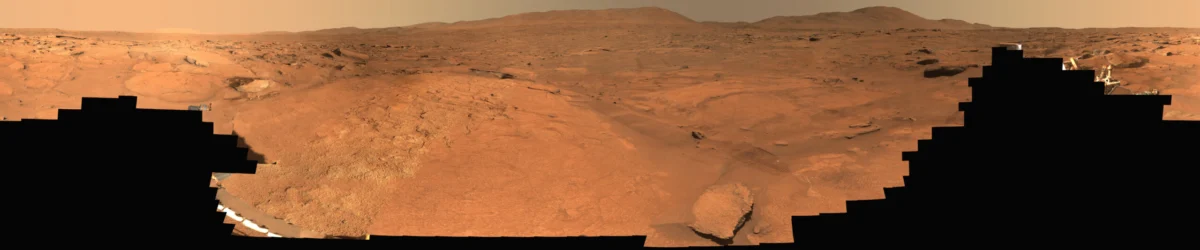
When NASA’s Perseverance rover reached the inner edge of Mars’ Jezero Crater in September 2023, mission scientists anticipated encountering sedimentary rocks, which are typically considered prime targets for discovering biosignatures. Instead, the rover made a surprising geological discovery: an extensive exposure of igneous rock, revealing an astonishingly complex record of water activity that fundamentally reshapes our understanding of early Martian habitability and geological evolution within the crater. This pivotal finding, detailed in a study published recently in the journal Communications Earth & Environment, centers on a region dubbed the "Margin Unit," an area stretching along the ancient shoreline of what was once a vast Martian lake. The results necessitate a re-evaluation of how water influenced the Martian landscape and its potential to foster life.
Jezero Crater: A Prime Target in the Search for Life
Jezero Crater, a 45-kilometer-wide impact basin situated on the western edge of Isidis Planitia, was meticulously chosen as the landing site for the Perseverance rover due to compelling orbital evidence suggesting it once harbored a deep, persistent lake billions of years ago. A prominent river delta formation, clearly visible from orbit, strongly indicated sustained water flow into the crater, depositing layers of sediment. On Earth, such sedimentary environments, composed of fine-grained clay and silt, are exceptional at preserving organic molecules and microbial fossils, making them invaluable in the astrobiological quest for signs of ancient life. The "follow the water" strategy has been a cornerstone of NASA’s Mars exploration program, as liquid water is considered an essential prerequisite for life as we know it.
Furthermore, orbital missions, including NASA’s Mars Reconnaissance Orbiter (MRO) and ESA’s Mars Express, had detected strong spectroscopic signals of carbonate minerals within Jezero Crater, particularly in regions like the Margin Unit. On Earth, carbonates frequently form in shallow ocean and lake environments, often in association with biological activity or conditions conducive to life. This orbital data significantly reinforced the expectation of finding extensive sedimentary deposits in the Margin Unit, a zone believed to represent the ancient lake’s shoreline where carbonates would likely have precipitated from the interaction of atmospheric carbon dioxide with the lake water. The presence of these minerals was a key factor in targeting this specific area for in-depth investigation.
The Perseverance rover itself, a sophisticated mobile laboratory launched in July 2020 and landed in February 2021, was purpose-built to explore such promising environments. Its overarching scientific objectives include searching for signs of ancient microbial life, characterizing the planet’s geology and past climate, and collecting carefully selected Martian rock and regolith samples for potential return to Earth via the ambitious Mars Sample Return campaign. The rover’s suite of advanced scientific instruments, including SuperCam, PIXL (Planetary Instrument for X-ray Lithochemistry), SHERLOC (Scanning Habitable Environments with Raman & Luminescence for Organics & Chemicals), and WATSON (Wide Angle Topographic Sensor for Operations and eNgineering), provides an unprecedented capability to analyze Martian geology and chemistry in situ, offering a ground-truth perspective to orbital observations.
The Surprising Encounter: Igneous Dominance in the Margin Unit
Upon Perseverance’s arrival at the Margin Unit in September 2023, located at the transitional zone between the crater floor and the surrounding highlands, the scientific team was met with an unexpected geological reality. Instead of the anticipated layered sedimentary rocks, the rover found itself navigating an extensive exposure of igneous rock. Igneous rocks are formed from the cooling and solidification of molten magma or lava, either deep beneath the surface (intrusive or plutonic) or through volcanic eruptions on the surface (extrusive or volcanic). While fine-grained sediments are often considered more ideal for preserving direct biosignatures, igneous rocks are invaluable "record-keepers" in their own right. The mineral crystals locked within them encapsulate crucial details about the precise conditions, temperature, pressure, and timing of their formation, thereby providing a unique window into the planet’s magmatic, tectonic, and thermal history.
The critical instrument behind this groundbreaking discovery was SuperCam, a versatile suite of tools strategically positioned atop Perseverance’s mast. Co-led by Purdue University, Los Alamos National Laboratory in the United States, and French institutions IRAP (Research Institute in Astrophysics and Planetology) and CNES (Centre National d’Etudes Spatiales), SuperCam integrates Laser-Induced Breakdown Spectroscopy (LIBS), Raman spectroscopy, and visible/infrared spectroscopy, alongside a high-resolution imager and a microphone. This multi-faceted capability allows for comprehensive analysis of rock and soil composition from a distance. When an intriguing rock target is identified, SuperCam can fire its laser from distances up to 21 feet (6.5 meters) away, vaporizing a tiny spot on the rock’s surface to create a plasma. By meticulously analyzing the spectrum of light emitted by this plasma, scientists can precisely determine the elemental and mineralogical composition of the target. Perseverance has leveraged SuperCam to analyze more than 185 bedrock targets across the Margin Unit, systematically building a detailed geochemical map of this enigmatic Martian terrain.
A Multi-Stage History: Three Chapters of Water Interaction
The detailed mineralogical and chemical analyses of these igneous rocks by SuperCam unveiled a hydrological history far more intricate and dynamic than initially conceived. The rocks bore unequivocal signs of having interacted with water on at least three distinct occasions, with each encounter progressively altering their chemistry and physical appearance. This multi-stage alteration points to a prolonged and remarkably dynamic hydrological evolution within Jezero Crater, effectively transforming the Margin Unit into a "crossroads for aqueous systems," a term coined by Candice Bedford, a research scientist at Purdue University and the lead author of the study. This complex history suggests that Jezero Crater was not merely a static lakebed but a dynamic geological system influenced by various water sources and processes over billions of years.
Chronology of Water Interaction Events:
-
Event One: Carbonation by CO2-Rich Groundwater (Deep Subsurface Alteration)
At the higher elevations within the Margin Unit, Perseverance encountered coarse-grained, crystalline rock rich in the mineral olivine. Olivine, a common mineral in mafic and ultramafic igneous rocks, is a hallmark of deep-seated igneous formations that typically cool slowly beneath the surface, allowing its crystals to grow large. This olivine unit likely formed from a body of magma far beneath the Martian surface and was subsequently exposed as overlying material eroded away over eons. These higher-elevation rocks showed minimal signs of water interaction, preserving their primary magmatic characteristics.However, as the rover traversed lower elevations, closer to the ancient lakebed, the olivine-rich rocks appeared significantly transformed. The earliest documented water interaction involved carbon-dioxide-rich groundwater percolating through these rocks. This process, analogous to serpentinization reactions observed on Earth where water reacts with olivine, saw the CO2-rich groundwater chemically react with the magnesium and iron-rich olivine. This reaction led to the formation of distinctive ridges of carbonate minerals that now conspicuously fill fractures within the bedrock. As the softer surrounding rock has eroded over time due to aeolian processes, these carbonate-filled veins have been left standing proud, providing clear and compelling evidence of this ancient aqueous event. The presence of CO2-rich water suggests an early Martian atmosphere potentially richer in carbon dioxide, capable of dissolving into groundwater and driving these significant mineralogical changes within the subsurface.
-
Event Two: Silica Deposition Linked to the Jezero Lake (Surface and Subsurface Interaction)
The second significant chapter in the Margin Unit’s water story appears to be directly related to the massive lake that once filled Jezero Crater. As water, likely from the lake itself or from groundwater systems interacting with the lake, permeated the olivine-rich rocks, particularly those submerged beneath the ancient lake’s waterline, it led to further alteration. Eleni Ravanis, a planetary scientist at the University of Hawaii at Manoa and a coauthor of the study, highlighted this finding, noting, "Turning olivine into carbonate can leave silica behind, and we see more of that silica in rocks that sat below the water line." This observation strongly suggests that the lake waters, or groundwater systems connected to the lake, contributed to the deposition of silica, a mineral well-known for its exceptional capacity to preserve biosignatures and microfossils on Earth. The distinct spatial distribution of silica, correlating with areas likely submerged during the lake’s existence, firmly links this alteration event to the prolonged presence of Jezero’s ancient lake. -
Event Three: Hydrothermal Activity (Late-Stage Heated Groundwater Systems)
The most recent and perhaps most tantalizing water event identified in the Margin Unit involved localized hydrothermal activity. In the eastern part of the Margin Unit, Perseverance discovered robust mineral veins, approximately 10 inches (25 centimeters) thick, composed of minerals such as calcium sulfate and fluorite. The presence of fluorite, in particular, is a profoundly significant clue, as this mineral typically forms when hot water circulates through volcanic rocks. This indicates a later, distinct phase of heated underground water flow, possibly driven by residual volcanic heat from the igneous intrusions or by thermal energy generated from impact events. Such hydrothermal systems are of paramount importance in astrobiology, as they represent environments where chemical energy is readily available, potentially supporting chemoautotrophic microbial life even in the absence of sunlight. On Earth, similar environments around deep-sea hydrothermal vents are known to teem with unique and diverse ecosystems, thriving independently of solar energy.
Profound Implications for Mars’ Habitability and Geological Evolution
The revelation of igneous rocks with such a complex history of water interactions within the Margin Unit profoundly impacts our understanding of Jezero Crater and, by extension, the broader narrative of early Mars.
Challenging Orbital Interpretations and the Need for Ground-Truth: The initial expectation of finding predominantly sedimentary rocks, primarily based on orbital detections of carbonates, underscores a crucial lesson in planetary science: ground-truth observations are indispensable for validating and refining remote sensing data. While orbiters provide invaluable global and regional context, the fine-grained, in-situ detail provided by a rover’s sophisticated instruments can unveil complexities that are otherwise entirely obscured. As Candice Bedford aptly stated, "It is very rare that things are as we expect them to be from orbital data. I hope this work helps reshape how scientists view the history of water in Jezero Crater and across Mars." This finding reinforces the iterative nature of scientific discovery and the critical role of robotic explorers.
Redefining Martian Habitability: The prevalence of igneous rocks does not diminish Jezero’s astrobiological potential; rather, it significantly broadens the scope of plausible habitable environments on early Mars. While sedimentary rocks are highly valued for preserving direct fossilized evidence, the alteration products of igneous rocks—such as carbonates and silica—are themselves critical signposts in the search for ancient life. On Earth, the interaction of water with olivine, for instance, can release molecular hydrogen, a potent energy source for certain types of chemoautotrophic microbes. Moreover, the discovery of a late-stage hydrothermal system is particularly exciting. Hydrothermal environments are widely considered prime candidates for the emergence and sustenance of life, offering both chemical energy and protection from the harsh surface radiation. This finding suggests that Jezero Crater may have offered multiple, distinct windows of habitability over its extensive geological history, not solely during its surface lake phase.
A Dynamic Martian Water Cycle: The identified sequence of alteration events paints a vivid picture of a remarkably dynamic and long-lived hydrological cycle on early Mars. From deep subsurface groundwater activity to direct interaction with a persistent surface lake, and finally, localized hydrothermal events, Jezero Crater experienced a multifaceted interplay between its subsurface and surface water reservoirs. This complexity challenges simpler models of a single, static lake phase and suggests a far more intricate and evolving interplay of Mars’ climate and geological activity. Understanding the precise sequence, timing, and conditions of these interactions provides crucial data for reconstructing the changing climate and habitability of early Mars over billions of years.
Significance for Mars Sample Return: The detailed findings from the Margin Unit will be invaluable in guiding the selection of specific rock and regolith samples that Perseverance is meticulously collecting for eventual return to Earth. Samples from these igneous rocks, especially those showing clear evidence of extensive water alteration and potential hydrothermal activity, could contain unique insights into Martian geochemistry, mineralogy, and potential biosignatures. Analyzing such samples in terrestrial laboratories, equipped with instruments far more sophisticated and powerful than those that can be carried by a rover, could unlock secrets that are currently beyond our reach, potentially including definitive evidence of past life. The diversity of rock types and complex water interaction histories encountered further emphasizes the importance of collecting a varied and representative sample cache.
Future Directions in Mars Exploration: The scientific work being conducted in Jezero Crater, particularly the nuanced understanding gained from the Margin Unit, will undoubtedly inform the design and scientific objectives of future Mars missions. It underscores the importance of versatile instruments capable of performing detailed mineralogical and chemical analyses, and the necessity of adapting scientific strategies based on ground-truth discoveries that frequently challenge initial hypotheses. The ongoing surprises from Mars continually push scientists to refine their models, expand their understanding of planetary evolution, and embrace the unexpected.
Conclusion
The journey of NASA’s Perseverance rover continues to yield unexpected and profound insights into the Red Planet. The discovery of a complex, multi-stage history of water interaction within the igneous rocks of Jezero Crater’s Margin Unit serves as a powerful reminder of Mars’ dynamic past and its profound potential to have harbored ancient life. Far from being a disappointment of finding "the wrong type of rock," this discovery has illuminated a richer, more complex narrative of Martian geology and hydrology, revealing that the very rocks thought less likely to preserve life’s traces can, in fact, hold critical clues to past habitable conditions. As Perseverance continues its exploration and meticulous sample collection, each new finding builds upon the last, steadily piecing together the grand puzzle of Mars’ ancient climate, geological evolution, and the enduring question of whether life once thrived on its surface. This ongoing scientific endeavor promises to continue challenging our preconceptions and deepening our appreciation for the intricate history of our planetary neighbor.
Source Information:
The Perseverance rover mission is managed for NASA by Caltech’s Jet Propulsion Laboratory in Southern California, which also built and manages rover operations on behalf of the agency’s Science Mission Directorate as part of NASA’s Mars Exploration Program portfolio. SuperCam is a collaborative effort co-led by Purdue University in Indiana, Los Alamos National Laboratory in New Mexico, and IRAP (Research Institute in Astrophysics and Planetology) and CNES (Centre National d’Etudes Spatiales) in Toulouse, France.
For more information about Perseverance, visit: https://science.nasa.gov/mission/mars-2020-perseverance