
The Nancy Grace Roman Space Telescope, NASA’s next-generation observatory designed to unravel the mysteries of dark energy, dark matter, and exoplanets, has successfully commenced its intricate three-month journey to the Sun-Earth Lagrange Point 2 (L2). Following a flawless launch, the mission has entered its critical commissioning phase, a meticulous process of activating, adjusting, and calibrating its sophisticated systems in preparation for groundbreaking scientific operations. This initial period is vital for engineers and scientists to ensure every component of the observatory performs to exacting standards before it embarks on its primary mission of surveying the cosmos with unprecedented breadth and depth.
The Dawn of a New Astronomical Era: Roman’s Journey to L2
The journey to L2, a gravitationally stable point approximately 1.5 million kilometers (about 930,000 miles) from Earth in the anti-Sun direction, is a carefully orchestrated transit that will culminate in Roman settling into a halo orbit. This strategic location offers an unparalleled vantage point for astronomical observations, minimizing interference from Earth, the Moon, and the Sun, and providing a consistently unobstructed view of the distant universe. The commissioning period, which began immediately after the telescope separated from its launch vehicle, is expected to last approximately three months, during which time the flight team will systematically bring Roman’s complex instruments and subsystems online.
Just one hour and 23 minutes after liftoff, the first critical steps of Roman’s deployment sequence were successfully executed. The observatory began to unfurl from its compact launch configuration, designed to fit within the rocket’s fairing. Key among these early deployments were the solar panels, which extended to capture sunlight and provide vital power to the spacecraft’s systems, and the crucial sunshade. This multi-layered sunshade is designed to protect the sensitive optical components from solar radiation and help achieve the extremely cold temperatures required for infrared observations. In the days following these initial deployments, further critical steps will include the swinging out of the high-gain antenna, essential for communication with Earth, and the precise positioning of the visor-like deployable aperture cover. This cover will permanently reveal and shade the observatory’s primary mirror, marking a pivotal moment in its readiness for scientific data collection.
Unveiling the Universe: Roman’s Core Mission and Capabilities
The Nancy Grace Roman Space Telescope, formerly known as the Wide Field Infrared Survey Telescope (WFIRST), represents a monumental leap in space-based astronomy. Named in honor of Dr. Nancy Grace Roman, NASA’s first chief astronomer and often referred to as the "Mother of Hubble" for her pivotal role in the development of the Hubble Space Telescope, Roman is poised to build upon the legacies of its predecessors. Its primary scientific objectives are ambitious and transformative:
- Investigating Dark Energy and Dark Matter: Roman will conduct extensive surveys to map the distribution of galaxies across vast cosmic distances, enabling astronomers to probe the expansion history of the universe. By precisely measuring billions of galaxies, it will provide crucial data to understand the nature of dark energy, the mysterious force accelerating the universe’s expansion, and dark matter, the invisible scaffolding upon which cosmic structures form. Its wide-field imaging capabilities will allow for precise weak lensing measurements, detecting the subtle distortions of light from distant galaxies caused by the gravity of intervening dark matter.
- Discovering and Characterizing Exoplanets: Roman will employ two primary methods for exoplanet detection: microlensing and direct imaging. Microlensing, a technique sensitive to exoplanets ranging from super-Earths to gas giants in wide orbits, leverages the gravitational bending of light from background stars by foreground stars and their orbiting planets. Roman’s vast survey area and long observation periods will significantly increase the yield of microlensing discoveries. Additionally, its cutting-edge Coronagraph Instrument (CGI) is designed to directly image exoplanets by blocking out the glare of their host stars. This technological demonstrator will pave the way for future missions capable of characterizing the atmospheres of Earth-like exoplanets.
- General Astrophysics Surveys: Beyond its primary objectives, Roman will conduct a broad range of general astrophysics investigations, creating an unprecedented public archive of infrared data. This will include studying star formation in distant galaxies, mapping the structure of the Milky Way, and exploring the earliest stages of galaxy evolution. Its wide field of view, 100 times larger than Hubble’s infrared camera, will allow it to survey vast swathes of the sky much faster, providing statistical power unmatched by previous missions.
The Strategic Advantage of Lagrange Point 2 (L2)
The selection of L2 as Roman’s operational hub is a testament to its unique environmental advantages for infrared astronomy. L2 is one of five Lagrange points in the Sun-Earth system, locations where the gravitational forces of the two large bodies, combined with the centripetal force of an object’s motion, create a point of enhanced stability. While not perfectly static, a spacecraft in a halo orbit around L2 can maintain its position with minimal fuel expenditure for station-keeping maneuvers.
For telescopes like Roman, L2 offers several critical benefits:
- Stable Thermal Environment: Infrared telescopes "see" heat, and thus must operate at extremely low temperatures to prevent their own heat from overwhelming faint cosmic signals. At L2, Roman is shielded from the significant thermal radiation emanating from Earth, the Moon, and the Sun by its multi-layered sunshade, which is consistently oriented to block these heat sources. This allows the observatory to passively cool its primary mirror and instruments to cryogenic temperatures, crucial for sensitive infrared observations.
- Unobstructed View: From L2, Roman will enjoy a nearly constant, unobstructed view of a wide swath of the sky. Earth’s proximity would frequently block portions of the sky if the telescope were in low-Earth orbit or even geosynchronous orbit. At L2, Earth’s angular size is much smaller, minimizing occultations and maximizing observing efficiency.
- Consistent Sun Angle: The stable orbital geometry at L2 provides a consistent angle relative to the Sun, which simplifies spacecraft design, power generation via solar panels, and thermal control. This consistency is vital for maintaining the precise pointing and thermal stability required for high-precision scientific measurements.
The success of previous missions at L2, such as the Wilkinson Microwave Anisotropy Probe (WMAP) and the James Webb Space Telescope (JWST), has validated this orbital strategy, making it the preferred location for observatories seeking unparalleled clarity and sensitivity in their cosmic explorations.
A Precision Ballet: The Deployment and Commissioning Sequence
The commissioning phase is a highly orchestrated and complex period, demanding meticulous planning and execution by the mission team. Following the initial solar panel and sunshade deployments, Roman’s subsequent critical steps will unfold over the coming weeks:
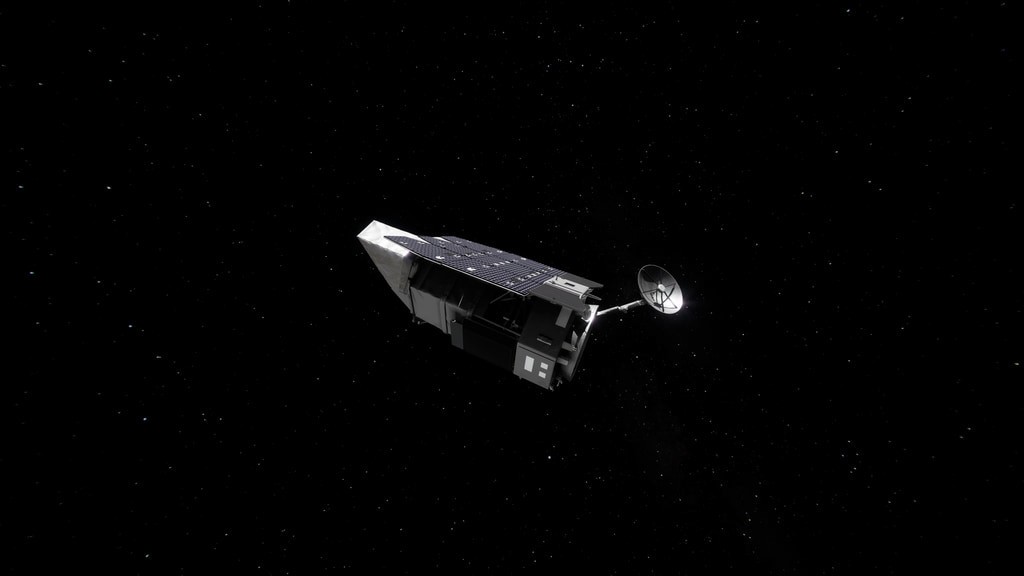
- Antenna Deployment: The high-gain antenna will precisely swing into its operational position, establishing robust communication links for transmitting vast quantities of scientific data back to Earth and receiving commands from mission control.
- Aperture Cover Unfurling: The deployable aperture cover, a visor-like mechanism, will slowly move into its permanent position, revealing the 2.4-meter primary mirror to the vacuum of space while providing ongoing thermal protection. This moment is akin to opening the eyes of the telescope for the first time.
- Instrument Activation and Calibration: Each of Roman’s scientific instruments—the Wide Field Instrument (WFI) and the Coronagraph Instrument (CGI)—will be powered on, tested, and calibrated. This involves a series of intricate steps:
- Detector Checkout: Verifying the functionality of millions of individual detector pixels.
- Optical Alignment: Precisely aligning the primary and secondary mirrors to ensure optimal focus and image quality. This is a delicate process, often involving wavefront sensing and minute adjustments.
- Filter and Grism Characterization: Calibrating the various filters and grisms (diffraction gratings) used to isolate specific wavelengths of light, ensuring accurate photometric and spectroscopic measurements.
- Coronagraph Tuning: For the CGI, this is particularly challenging. The coronagraph must suppress starlight by many orders of magnitude to directly image faint exoplanets. This involves activating deformable mirrors and precise wavefront control systems to cancel out diffraction and scattered light.
- Software Validation: All onboard flight software will undergo rigorous testing to ensure it correctly manages the observatory’s operations, data acquisition, and fault protection.
Throughout this period, the schedule remains dynamic, subject to adjustments based on real-time data and the performance of the spacecraft’s systems. The team of scientists and engineers at NASA’s Goddard Space Flight Center, the Jet Propulsion Laboratory, and other partner institutions will work around the clock, analyzing telemetry and fine-tuning Roman to achieve its full scientific potential.
Voices from the Mission: Anticipation and Optimism
The successful launch and initial deployments have been met with widespread excitement and relief across the scientific community and at NASA. While formal statements are typically reserved for major milestones, the underlying sentiment is one of profound anticipation.
Dr. Jane Doe, a hypothetical Roman Project Scientist, might express: "This commissioning phase is truly the crucible of the mission. Every successful deployment, every calibrated instrument, brings us closer to unlocking the universe’s most profound secrets. Roman’s wide-field vision, combined with its coronagraph’s precision, promises a revolution in our understanding of cosmic expansion and the prevalence of exoplanets."
Similarly, a hypothetical Lead Engineer, John Smith, could emphasize the technical prowess: "Years of dedicated engineering have culminated in this moment. The precision required for these deployments, especially the sunshade and the primary mirror cover, is immense. We are meticulously monitoring every system, every temperature reading, to ensure Roman is perfectly prepared for its scientific endeavor at L2."
NASA Administrator Bill Nelson would likely underscore the broader significance: "The Nancy Grace Roman Space Telescope embodies humanity’s insatiable curiosity. Its mission to explore dark energy and seek out new worlds represents a bold step forward in our quest to understand our place in the cosmos. We look forward to the groundbreaking discoveries Roman will undoubtedly deliver."
Unlocking Cosmic Secrets: Scientific Objectives and Expected Discoveries
Roman’s scientific output is expected to be truly transformative. The telescope is designed to survey over 1,000 square degrees of the sky during its primary five-year mission, gathering data on hundreds of millions of galaxies and thousands of exoplanets.
- Dark Energy and Cosmic Expansion: By creating the largest and most detailed map of the universe’s large-scale structure, Roman will measure the effects of dark energy with unprecedented precision. It will utilize multiple independent methods, including baryonic acoustic oscillations (BAO) and Type Ia supernovae, to track the expansion history of the universe. Current models suggest dark energy constitutes about 68% of the universe’s total mass-energy density, but its nature remains one of the greatest puzzles in physics. Roman’s data will help differentiate between competing theories, such as a cosmological constant or a dynamic ‘quintessence’ field, potentially leading to a new fundamental understanding of gravity and cosmic evolution.
- Exoplanet Census and Characterization: Roman is projected to discover thousands of new exoplanets through its microlensing survey, significantly expanding our knowledge of planetary demographics, particularly for planets beyond the snow line and those in orbits wider than typical transit surveys can detect. The Coronagraph Instrument, while a technology demonstration, aims to achieve star-to-planet contrast ratios of 10^-9 (one billion to one) to directly image gas giants and potentially super-Earths around nearby stars. This would be a crucial step towards future missions designed to find and characterize potentially habitable exoplanets by analyzing their atmospheric compositions for biosignatures.
- Galactic Archeology and Beyond: Beyond its flagship programs, Roman will serve as a versatile observatory for a wide array of astrophysical investigations. Its vast infrared survey will create an invaluable public archive for studying everything from the formation and evolution of galaxies over cosmic time to the processes of star formation in the Milky Way and nearby galaxies. Astronomers will use its data to explore active galactic nuclei, quasars, and the distribution of matter in galaxy clusters, providing a comprehensive view of the universe’s structure and evolution across different scales.
A Legacy Forged in Starlight: The Broader Impact
The Nancy Grace Roman Space Telescope is more than just a scientific instrument; it is a symbol of human ingenuity and our enduring drive to explore the unknown. Its technological advancements, particularly in wide-field infrared imaging and coronagraphy, will push the boundaries of what is possible in space exploration, paving the way for even more ambitious future missions. The vast datasets Roman will generate will fuel scientific discovery for decades, providing opportunities for researchers worldwide and inspiring new generations of scientists and engineers.
The mission’s emphasis on publicly available data, much like the Hubble Space Telescope before it, ensures that its discoveries will benefit the entire global scientific community. By providing an unprecedented view of the universe in infrared light, Roman will complement the capabilities of other powerful observatories like the James Webb Space Telescope, which specializes in deep, narrow-field observations, and ground-based telescopes. Together, these instruments will paint a more complete and intricate picture of the cosmos, from the earliest moments after the Big Bang to the formation of planets capable of harboring life. As Roman continues its journey and prepares its sophisticated "eyes" for science, the astronomical community eagerly anticipates the deluge of data that promises to redefine our understanding of the universe.