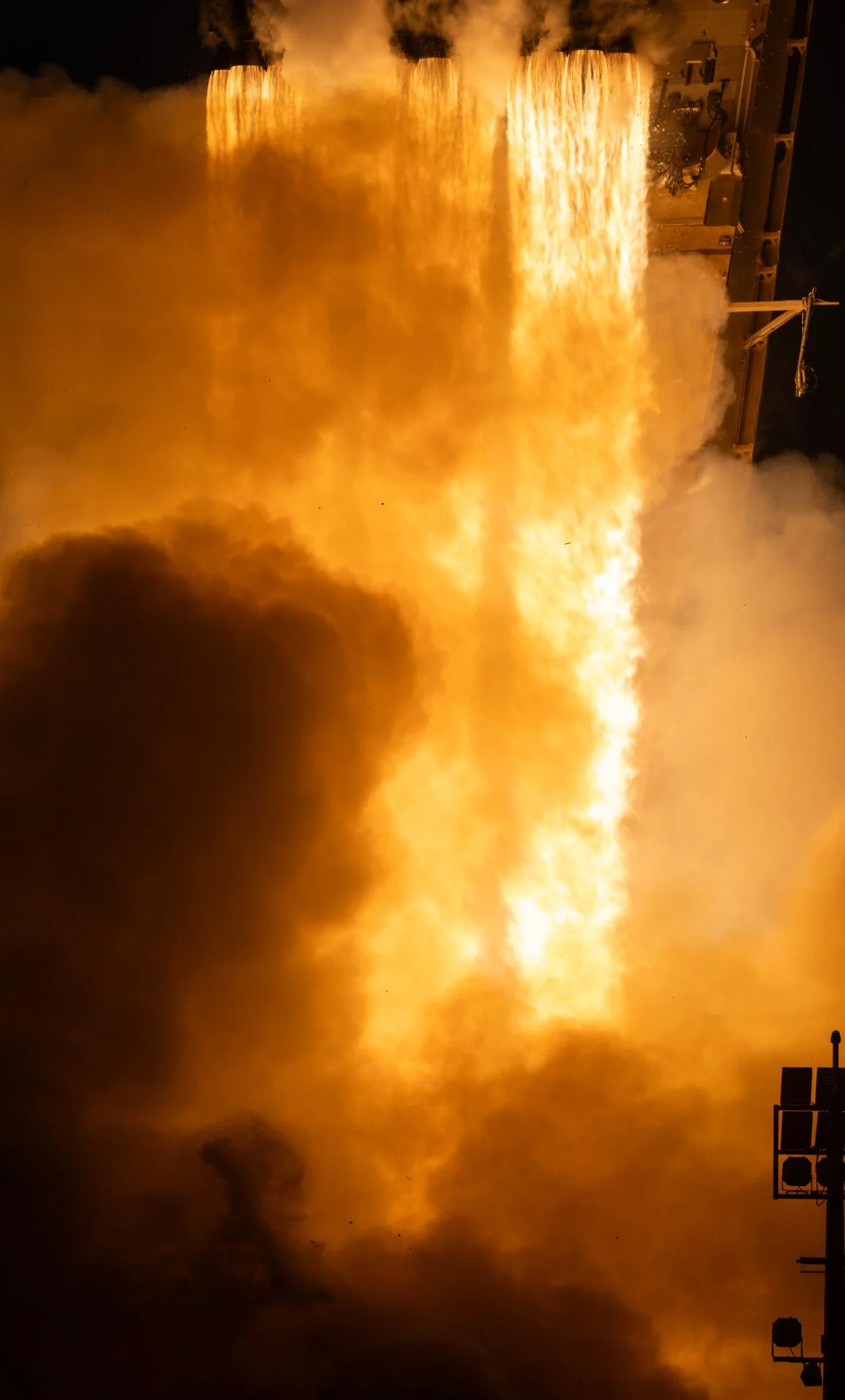
The scientific community and space enthusiasts worldwide celebrated a pivotal moment in astronomical exploration as NASA’s Nancy Grace Roman Space Telescope successfully launched on August 30 at 7:26 a.m. EDT. Propelled by a SpaceX Falcon Heavy rocket from the historic Launch Complex 39A at the agency’s Kennedy Space Center in Florida, the observatory has begun its three-month, million-mile voyage to its final operational orbit at the Sun-Earth L2 Lagrange point. This flagship mission is poised to revolutionize our understanding of the cosmos, promising to unveil the universe’s most profound secrets, including the elusive nature of dark matter, the accelerating expansion driven by dark energy, and the myriad of exoplanets beyond our solar system.
A New Eye on the Cosmos: Roman’s Unprecedented Capabilities
The Nancy Grace Roman Space Telescope, previously known as the Wide Field Infrared Survey Telescope (WFIRST), represents a significant leap forward in space-based astronomy. Its design marries a remarkably large field of view with exquisite infrared vision, enabling it to survey vast expanses of the sky with unparalleled efficiency and peer deep into cosmic history. Unlike its predecessors, which often focused on narrow, highly magnified segments of the sky, Roman is engineered for wide-area surveys, capturing images 100 times larger than those produced by the Hubble Space Telescope’s Wide Field Camera 3, while maintaining Hubble-quality resolution across its expansive view. This unique capability is crucial for statistical studies of astronomical phenomena that require observing thousands or even millions of objects simultaneously.
At the heart of Roman’s scientific prowess is its 2.4-meter primary mirror, identical in size to Hubble’s, but optimized for wide-field imaging in the infrared spectrum. Its primary instrument, the Wide Field Instrument (WFI), is equipped with 18 detectors, each with 4096 x 4096 pixels, totaling 300 megapixels. This advanced imager will collect light in various infrared wavelengths, allowing astronomers to detect faint, distant objects whose light has been stretched into the infrared by the universe’s expansion. The telescope also carries a Coronagraph Instrument, a technology demonstration payload designed to block out the glare of parent stars, enabling direct imaging and spectroscopic characterization of exoplanets. While the WFI is the primary science driver, the Coronagraph holds immense potential for future exoplanet research, pushing the boundaries of what is possible in direct exoplanet observation.
The Scientific Mandate: Dark Energy, Dark Matter, and Exoplanets
Roman’s ambitious scientific program is structured around three core pillars:
Dark Energy: The universe is expanding at an accelerating rate, a phenomenon attributed to a mysterious force dubbed dark energy. Roman will employ two primary methods to precisely measure the effects of dark energy over cosmic time:
- Baryon Acoustic Oscillations (BAO): These are fossilized sound waves from the early universe that left a characteristic imprint on the distribution of galaxies. By mapping the positions of millions of galaxies across billions of light-years, Roman will precisely measure the cosmic distance scale at different epochs, providing critical insights into how dark energy’s influence has evolved.
- Type Ia Supernovae: These "standard candles" are exploding white dwarf stars with a known intrinsic brightness. By observing these supernovae at various distances, Roman can measure how far away they are and how fast the universe was expanding when their light was emitted, offering another independent measure of dark energy’s impact.
The data collected by Roman is expected to significantly narrow down the possible explanations for dark energy, moving beyond the simple cosmological constant to more complex models.
Dark Matter: This enigmatic substance, which does not emit, absorb, or reflect light, is believed to make up about 27% of the universe’s mass and plays a crucial role in the formation of galaxies and large-scale structures. Roman will probe dark matter primarily through:
- Weak Gravitational Lensing: As light from distant galaxies travels through the cosmos, it is subtly bent by the gravitational fields of intervening dark matter halos. Roman’s wide field of view and high-resolution imaging will allow it to detect these minute distortions in the shapes of millions of background galaxies, creating a detailed map of dark matter distribution across vast cosmic scales. This will help scientists understand how dark matter clumps together and how it interacts with ordinary matter.
Exoplanets: The search for worlds beyond our solar system is one of humanity’s most compelling scientific endeavors. Roman is poised to become a prolific exoplanet hunter, particularly through:
- Gravitational Microlensing: This technique relies on a star or planet passing in front of a more distant background star, causing the background star’s light to be temporarily magnified. The pattern of this magnification can reveal the presence and characteristics of the foreground object, even if it’s a free-floating planet not orbiting any star. Roman’s ability to stare at dense star fields in the Galactic bulge for extended periods makes it uniquely suited for detecting thousands of exoplanets, including those as small as Mars, and potentially identifying populations of free-floating planets. This method is complementary to the transit method employed by missions like Kepler and TESS, which are biased towards planets orbiting close to their stars. Microlensing can detect planets at much wider orbital separations, expanding our understanding of planetary system architectures.
A Tribute to Nancy Grace Roman: The "Mother of Hubble"
The telescope is named in honor of Dr. Nancy Grace Roman (1925-2018), a pioneering astronomer who was instrumental in establishing NASA’s space astronomy program and is widely regarded as the "Mother of Hubble." As the first Chief of Astronomy in NASA’s Office of Space Science, she played a critical role in planning and developing the Hubble Space Telescope, advocating for space-based observatories at a time when such concepts were revolutionary. Dr. Roman dedicated her career to opening the universe to observation from above Earth’s distorting atmosphere. Her foresight and persistent advocacy laid the groundwork for decades of groundbreaking discoveries, making her a truly fitting namesake for a mission that promises to continue her legacy of expanding our cosmic horizons. The decision to rename the telescope from WFIRST to the Nancy Grace Roman Space Telescope in 2020 underscores NASA’s commitment to recognizing the contributions of women in STEM and inspiring future generations of scientists.
The Launch Vehicle: SpaceX Falcon Heavy
The selection of the SpaceX Falcon Heavy for Roman’s launch highlights NASA’s increasing reliance on commercial launch providers for critical scientific missions. The Falcon Heavy, currently the most powerful operational rocket in the world, is renowned for its immense payload capacity and cost-effectiveness, partly due to its reusable booster technology. This mission marks the fourth primary NASA payload to be launched aboard a Falcon Heavy, following previous deployments that demonstrated the rocket’s reliability and precision for high-value scientific assets. The successful acceleration of Roman’s launch date, facilitated by NASA’s Launch Services Program working closely with SpaceX, further attests to the efficiency and flexibility offered by these commercial partnerships. The launch from Launch Complex 39A, a site with a storied history including Apollo and Space Shuttle missions, added another layer of historical significance to Roman’s journey. The flawless countdown and ascent, observed by millions globally, were a testament to meticulous planning and execution by both NASA and SpaceX teams.
Chronology of a Million-Mile Voyage and Scientific Readiness
The journey to L2 is a carefully orchestrated sequence of events. Following separation from the Falcon Heavy’s upper stage approximately 26 minutes after liftoff, Roman began its solo transit. Over the next three months, the telescope will execute a series of critical maneuvers, including precise thruster firings to refine its trajectory towards the Sun-Earth L2 Lagrange point, a gravitationally stable location about 1.5 million kilometers (approximately 930,000 miles) from Earth in the anti-sun direction.
Key milestones during this cruise phase include:
- Solar Array Deployment: Shortly after separation, the telescope’s large solar arrays unfurled to begin generating power.
- Antenna Deployment: High-gain antennas were deployed to establish robust communication links with Earth.
- Sunshield Deployment (if applicable): While Roman doesn’t have a multi-layered sunshield like JWST, its design incorporates passive cooling elements to bring its instruments down to cryogenic temperatures necessary for infrared observation.
- Instrument Cooldown: The telescope’s instruments, particularly the Wide Field Instrument, will undergo a gradual cooldown process to reach their operational temperatures, typically around -180 degrees Celsius (-292 degrees Fahrenheit), to minimize internal heat radiation that could interfere with infrared observations.
- Orbit Insertion Burn: A final, precise burn will place Roman into its halo orbit around the L2 point.
Once at L2 and cooled to its operational temperature, Roman will enter its commissioning phase, expected to last several months. This period involves meticulous calibration of all instruments, extensive testing of the telescope’s optics, and fine-tuning of its pointing and tracking systems. Engineers and scientists will ensure every component is functioning optimally and that the data collected meets the stringent scientific requirements. This will include taking "first light" images, which, while primarily for engineering verification, often provide stunning early glimpses of Roman’s capabilities. The scientific observation program is anticipated to commence fully in mid-2025, after which Roman will embark on its primary five-year mission, with the potential for extension.
Anticipated Scientific Impact and Broader Implications
The scientific output from the Nancy Grace Roman Space Telescope is expected to be transformative. By providing the most comprehensive maps of dark matter and dark energy ever created, Roman will offer unprecedented constraints on cosmological models, potentially revealing new physics beyond the Standard Model. Its exoplanet survey, particularly through microlensing, will expand the known census of exoplanets dramatically, discovering thousands of new worlds, including many that are cold, rocky, and far from their stars, similar to planets in our outer solar system. This will provide crucial statistics for understanding planet formation and evolution across a wider range of stellar environments.
Roman is also designed to be highly complementary to other flagship observatories. Its wide-field infrared capabilities will allow it to survey vast regions of the sky, identifying targets of interest that can then be scrutinized in greater detail by telescopes like the James Webb Space Telescope (JWST), which excels at high-resolution spectroscopy of individual objects. For instance, Roman might identify thousands of distant galaxies distorted by weak lensing, and JWST could then perform detailed spectroscopic analyses on a subset of these to study their composition and kinematics. Similarly, Roman’s microlensing discoveries could prompt follow-up observations by ground-based telescopes or even future space missions.
Statements from Leadership
NASA Administrator Bill Nelson emphasized the mission’s importance, stating, "The Nancy Grace Roman Space Telescope represents the pinnacle of astronomical innovation. It will unlock secrets of the universe that we can only imagine today, building on the legacy of Dr. Roman and paving the way for future generations of discovery. This mission is a testament to American ingenuity and global collaboration."
Dr. Mark Clampin, Director of the Astrophysics Division at NASA Headquarters, added, "Roman’s unique combination of a wide field of view and infrared sensitivity will allow us to tackle some of the most pressing questions in astrophysics, from the nature of dark energy to the prevalence of Earth-like planets. We anticipate a torrent of new data that will keep astronomers busy for decades."
A SpaceX representative highlighted the successful launch, noting, "Deploying such a critical scientific asset with the Falcon Heavy underscores our commitment to supporting NASA’s ambitious exploration goals. We are proud to be a part of this mission that will push the boundaries of human knowledge."
The Road Ahead: A New Era of Discovery
The successful launch of the Nancy Grace Roman Space Telescope marks the beginning of an exciting new chapter in astrophysics. As the observatory meticulously makes its way to L2 and undergoes its rigorous commissioning, the scientific community holds its breath in anticipation. The data Roman will collect promises not only to refine our existing cosmological models but also to challenge them, potentially leading to entirely new paradigms for understanding the universe. The mission stands as a beacon of human curiosity and ingenuity, a testament to our enduring quest to understand our place in the cosmos and to unravel the deepest mysteries hidden within its vast, dark expanse.