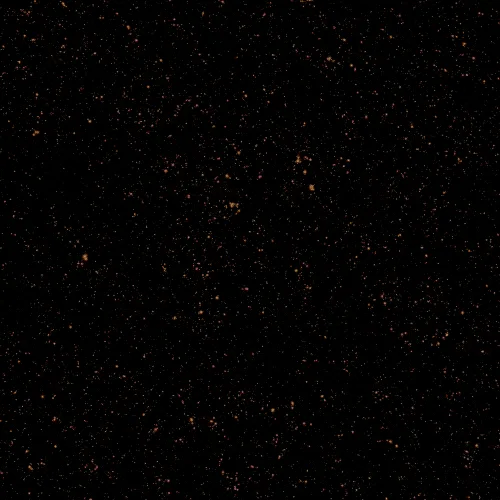
The scientific community and space enthusiasts worldwide are bracing for a pivotal moment in astrophysics as NASA’s Nancy Grace Roman Space Telescope is set to launch at 7:26 a.m. EDT on Sunday, August 30. This next-generation observatory, named in honor of NASA’s first chief astronomer, Dr. Nancy Grace Roman, promises to revolutionize our understanding of the universe, offering an unprecedented wide-field view that will delve into some of the cosmos’s most profound mysteries, including the nature of dark energy and the vast diversity of exoplanets. As the final countdown commences, anticipation builds for a mission poised to redefine the boundaries of astronomical discovery.
The Mission’s Core Purpose: Unveiling Cosmic Enigmas
The primary scientific objectives of the Roman Space Telescope are ambitious and far-reaching, designed to tackle two of the most pressing questions in modern astrophysics: the expansion history of the universe driven by dark energy, and the distribution and properties of exoplanets. Dark energy, a mysterious force thought to be responsible for the accelerating expansion of the universe, constitutes approximately 68% of the cosmos’s energy density, yet its true nature remains elusive. Roman will employ several independent methods to precisely measure dark energy’s effects, including weak gravitational lensing, baryonic acoustic oscillations, and supernovae surveys.
Weak gravitational lensing involves studying the subtle distortions of distant galaxy shapes caused by the gravitational pull of intervening dark matter and dark energy. By mapping these distortions across vast cosmic distances, scientists can infer the distribution of matter and the influence of dark energy over billions of years. Baryonic acoustic oscillations (BAO), fossilized sound waves from the early universe imprinted on the large-scale distribution of galaxies, serve as "standard rulers" to measure cosmic distances. Roman’s wide field of view will allow it to survey enormous volumes of space, gathering a statistically robust sample of galaxies to precisely map these oscillations. Additionally, the telescope will observe thousands of distant Type Ia supernovae, which act as "standard candles" for measuring cosmic distances, providing another crucial independent measurement of the universe’s expansion rate.
Beyond cosmology, Roman is poised to become a powerful exoplanet hunter. Its primary method for exoplanet detection will be microlensing, a technique where the gravity of a foreground star and its planets temporarily magnifies the light from a background star as they align. This method is particularly sensitive to discovering planets located at greater distances from their host stars, similar to the ice giants in our own solar system, and even free-floating planets. Roman’s extensive survey of the galactic bulge, an area rich in stars, is expected to yield a statistical census of exoplanets, revealing the frequency of different planetary types across a wide range of masses and orbital separations. This will provide invaluable data for understanding planet formation and evolution beyond our solar system.
Technological Marvel: The Roman’s Unique Capabilities
What truly sets the Roman Space Telescope apart is its extraordinary wide-field instrument (WFI) and its groundbreaking coronagraph instrument (CGI). The WFI boasts a 2.4-meter primary mirror, identical in size to the Hubble Space Telescope’s, but its field of view is a staggering 100 times larger than Hubble’s infrared instrument. This means Roman can image a much larger patch of sky in a single observation, enabling it to survey vast cosmic regions with unprecedented efficiency. This capability is crucial for collecting the enormous datasets required for dark energy studies and for conducting comprehensive microlensing surveys across the galactic bulge. The WFI will capture images and spectra across the visible and near-infrared wavelengths, providing a wealth of information about galaxies, stars, and exoplanets.
The Coronagraph Instrument (CGI) represents a significant technological leap. While primarily a technology demonstration, the CGI is designed to directly image exoplanets by blocking out the overwhelming glare of their host stars. It uses a complex system of deformable mirrors and advanced optics to suppress starlight by a factor of up to a billion, allowing the faint light from orbiting planets to be detected. This capability is critical for characterizing the atmospheres of exoplanets and potentially identifying biosignatures in the future. If successful, the CGI will pave the way for future missions specifically designed for direct imaging and spectroscopic analysis of Earth-like exoplanets. The integration of such a cutting-edge instrument alongside the WFI underscores Roman’s dual role as both a scientific discovery engine and a technological pathfinder.
A Legacy Honored: Who Was Nancy Grace Roman?
The telescope is named after Dr. Nancy Grace Roman (1925-2018), often referred to as the "Mother of Hubble" for her pivotal role in planning and developing the Hubble Space Telescope. As NASA’s first chief astronomer in the Office of Space Science, Dr. Roman was instrumental in establishing the agency’s space astronomy program. Her foresight and dedication were crucial in advocating for space-based telescopes, recognizing their potential to overcome the limitations of Earth’s atmosphere. By naming this new observatory after her, NASA acknowledges her profound and lasting contributions to astrophysics and space exploration, ensuring her legacy continues to inspire future generations of scientists and engineers. Dr. Roman’s vision laid the groundwork for many of the astronomical breakthroughs we have witnessed over the past decades, and it is fitting that a mission poised for such transformative discoveries carries her name.
A Journey Through Time: Mission Development and Milestones
The genesis of the Roman Space Telescope can be traced back to the 2010 Astronomy and Astrophysics Decadal Survey, which identified a large-field infrared survey telescope as a top priority for future space missions. Initially known as the Wide Field Infrared Survey Telescope (WFIRST), the concept evolved through extensive studies and technological development. Early designs focused on leveraging existing hardware, specifically a 2.4-meter primary mirror donated to NASA by the National Reconnaissance Office, significantly reducing development costs and time.
Key milestones in the mission’s development included its formal approval in 2016, leading to the initiation of its design and construction phase. Over the subsequent years, engineers and scientists at NASA’s Goddard Space Flight Center in Greenbelt, Maryland, and numerous partner institutions meticulously crafted and assembled the telescope’s intricate components. This included the construction and testing of the WFI’s 18 detectors, each with 4K by 4K pixels, amounting to a massive 300-megapixel camera—a stark contrast to Hubble’s 16-megapixel camera. The Coronagraph Instrument, a marvel of precision engineering, also underwent rigorous testing to ensure its ability to achieve extreme starlight suppression.
In May 2020, NASA officially renamed WFIRST to the Nancy Grace Roman Space Telescope, recognizing Dr. Roman’s foundational contributions. The telescope’s primary mirror and instrument modules were integrated into the spacecraft bus, followed by extensive environmental testing, including vibration, acoustic, and thermal vacuum tests, simulating the harsh conditions of launch and space. These crucial tests ensured the spacecraft’s resilience and operational readiness for its multi-year mission. The journey from conceptual design to a fully assembled and tested observatory reflects decades of scientific vision and engineering prowess.
The Countdown Begins: Pre-Launch Preparations
As the launch date approaches, the Roman Space Telescope has undergone its final series of rigorous pre-launch preparations at the launch site. Following its meticulous assembly and testing at Goddard Space Flight Center, the observatory was carefully transported to Cape Canaveral Space Force Station in Florida. Upon arrival, it was integrated with its launch vehicle, a SpaceX Falcon Heavy rocket, renowned for its significant payload capacity and reliability.
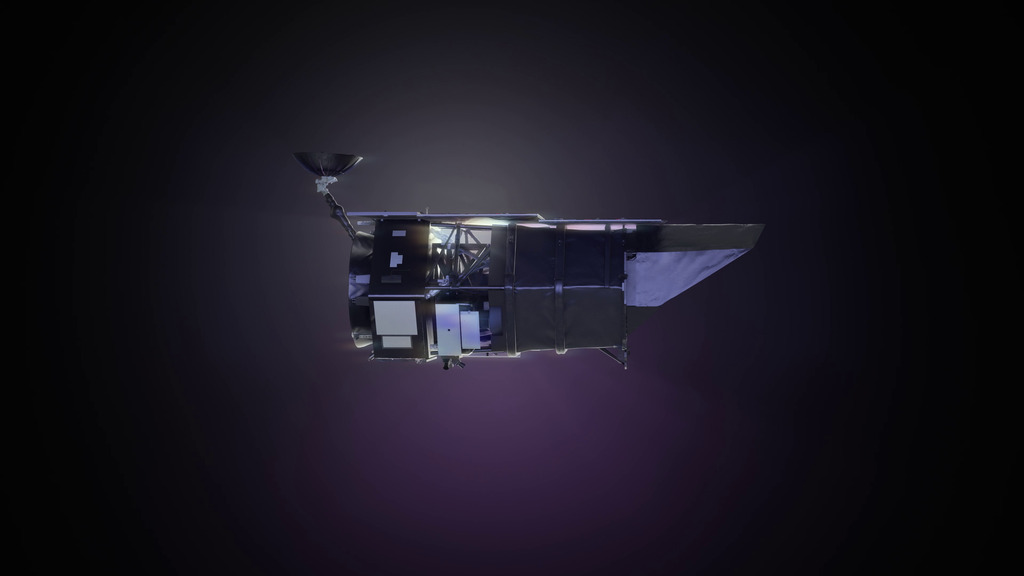
The final days leading up to launch are a flurry of activity, involving detailed checks of all spacecraft systems, fueling procedures, and integration of the telescope within the rocket’s fairing. Launch teams from NASA and SpaceX conduct multiple readiness reviews, ensuring that all systems—from propulsion and power to communications and navigation—are fully operational and aligned with the launch sequence. Weather forecasts are closely monitored, as optimal conditions are crucial for a successful liftoff. Mission controllers and scientists gather at various control centers, preparing for the critical initial phases of flight and the subsequent commissioning period once Roman reaches its intended orbit. The atmosphere is one of focused determination, tempered with immense excitement for the discoveries that lie ahead.
Voices from NASA and the Scientific Community
The impending launch has generated a wave of anticipation across the scientific community. NASA Administrator Bill Nelson, reflecting on the mission’s potential, would likely emphasize Roman’s capacity to continue NASA’s legacy of groundbreaking space observatories. "The Nancy Grace Roman Space Telescope represents the pinnacle of human ingenuity and our insatiable drive to explore the cosmos," Nelson might state. "Following in the footsteps of Hubble and Webb, Roman will unlock secrets of dark energy, chart the universe’s expansion, and search for new worlds, inspiring a new generation to look up and wonder."
Dr. Julie Crooke, Roman Project Scientist at NASA’s Goddard Space Flight Center, is expected to highlight the telescope’s unique capabilities. "Roman’s wide field of view is a game-changer for cosmology and exoplanet research," Crooke would likely explain. "We’ll be able to survey vast areas of the sky with unprecedented speed and precision, gathering the data needed to understand how the universe evolved and how common planetary systems truly are. The microlensing survey alone is expected to discover thousands of new exoplanets, including many that are difficult to find with other methods."
From the exoplanet community, Dr. Michael Tremblay, a leading researcher in exoplanet demographics, might comment on the transformative potential for planet hunting. "Roman will give us a statistical census of exoplanets like never before," Tremblay could remark. "Understanding the frequency and types of planets, especially those in the outer regions of their star systems, is crucial for refining our theories of planet formation. And the Coronagraph Instrument, even as a tech demo, holds the promise of directly observing other Earths, a truly profound step in our search for life beyond our home." Cosmologists, too, eagerly await the data, with Professor Alistair Finch from the Institute for Theoretical Astrophysics stating, "The precision measurements of dark energy from Roman will either confirm our current cosmological model or, even more excitingly, point to new physics that could fundamentally alter our understanding of the universe’s ultimate fate."
Beyond the Launch: The Roman’s Operational Phase and Expected Discoveries
Following a successful launch, the Roman Space Telescope will embark on a journey to its operational orbit: the Sun-Earth L2 Lagrange point, approximately 1.5 million kilometers (1 million miles) from Earth. This gravitationally stable location offers an unobstructed view of the universe, free from Earth’s thermal and light interference, making it an ideal spot for infrared observations. The journey to L2 will take several weeks, during which critical deployment sequences will occur, including the unfurling of its solar arrays and the calibration of its instruments.
The commissioning phase, expected to last several months, will involve meticulous testing and calibration of the Wide Field Instrument and the Coronagraph Instrument. Engineers will fine-tune the WFI’s detectors, filters, and optics, while scientists will work to optimize the CGI’s star-blocking capabilities to achieve the required levels of starlight suppression. Once commissioned, Roman will begin its five-year prime mission, which could potentially be extended, collecting an enormous volume of data. The mission is designed to generate petabytes of data, which will be processed, archived, and made publicly available to the global scientific community, fostering collaborative research and enabling unforeseen discoveries for decades to come.
Expected discoveries range from identifying thousands of new exoplanets, including potentially free-floating ones, to precisely mapping the distribution of dark matter and dark energy across cosmic history. Roman’s surveys will also contribute to general astrophysics by observing high-redshift galaxies, studying star formation in distant regions, and detecting transient phenomena like distant supernovae or gravitational wave counterparts. The Coronagraph, if successful, could provide the first direct images of rocky exoplanets around nearby stars, pushing the boundaries of exoplanet characterization.
Broader Implications for Astronomy and Beyond
The Nancy Grace Roman Space Telescope’s launch carries profound implications not just for astronomy but for humanity’s broader quest for knowledge. By shedding light on dark energy, Roman could fundamentally rewrite our understanding of cosmology, potentially revealing new forces or dimensions at play in the universe. Its exoplanet census will provide an unparalleled statistical foundation for understanding the prevalence of planetary systems, informing our search for life beyond Earth.
The technological advancements embodied in the Coronagraph Instrument will have a lasting legacy, accelerating the development of future direct imaging missions capable of characterizing Earth-like exoplanets and searching for signs of life in their atmospheres. Roman will bridge the observational gap between Hubble and JWST, offering a unique wide-field infrared perspective that complements their capabilities, allowing astronomers to contextualize high-resolution observations within a larger cosmic framework. This mission is a testament to international collaboration and scientific persistence, promising to inspire new generations of scientists, engineers, and explorers. The data it collects will fuel countless research projects, leading to new insights into the universe’s origins, evolution, and the potential for life elsewhere.
Public Engagement and Accessibility
NASA is committed to making the Roman mission accessible to the public. Live coverage of the launch will be available on NASA Television, the NASA app, and the agency’s website, allowing people worldwide to witness this historic event. Throughout the mission, NASA will provide regular updates, images, and scientific findings through its official channels, ensuring that the excitement of discovery is shared with everyone. Educational resources and outreach programs will also be developed to engage students and educators, highlighting the scientific principles and engineering marvels behind the Roman Space Telescope.
Media contact:
Claire Andreoli
NASA’s Goddard Space Flight Center, Greenbelt, Md.
[email protected]
301-286-1940