


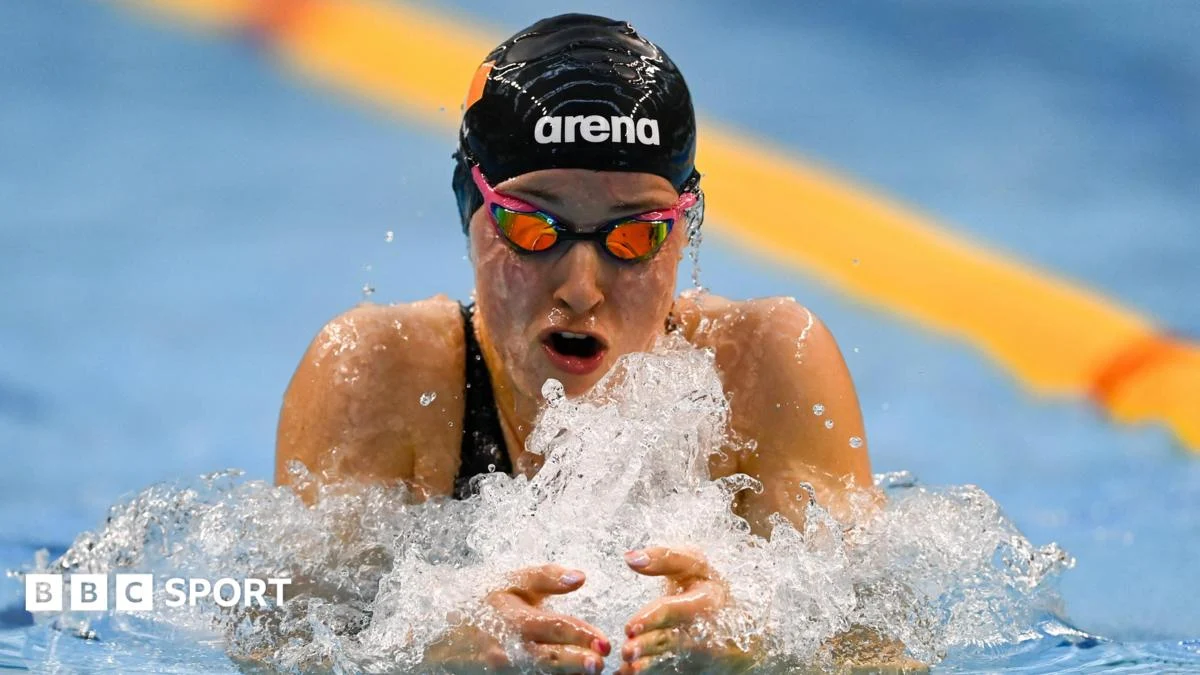
Northern Ireland’s Ellie McCartney has etched her name into the Commonwealth Games history books, clinching a hard-fought bronze medal in the fiercely competitive women’s 200m breaststroke final held in Glasgow. The 21-year-old swimmer delivered a performance of grit and determination, touching the wall in a personal best time of 2:24.73 to secure her maiden senior international medal. This triumph adds another significant achievement to Northern Ireland’s burgeoning medal tally at the Games, showcasing the nation’s growing strength in aquatic sports.
The final saw McCartney facing formidable opposition, including the home favourite Abgharad Evans and Kaylene Corbett of South Africa. While McCartney had qualified for the final with the sixth-fastest time in the semi-finals, she demonstrably elevated her performance on the biggest stage. Her surge in the latter stages of the race was a testament to her unwavering focus and strategic race pacing, ultimately proving decisive in her podium finish. The Enniskillen swimmer’s bronze was secured by a slender margin of just 0.16 seconds over Australia’s Ella Ramsay, highlighting the incredibly tight nature of elite swimming competition.
A Career-Defining Performance and Growing Pedigree
This bronze medal represents a significant milestone in McCartney’s burgeoning swimming career. While she has previously showcased her talent on the international stage, securing gold at the Commonwealth Youth Games in 2023 and European Under-23 Championships last year, this Glasgow medal marks her first senior international podium finish. This achievement signifies a crucial step up in her development, demonstrating her ability to compete and succeed against seasoned professionals in a high-pressure environment. Her consistent progression, from youth accolades to senior success, paints a picture of a dedicated athlete on a clear upward trajectory.
Northern Ireland’s Dominance in the Pool and Beyond
McCartney’s bronze is the third medal secured by Northern Ireland in the swimming events at the Glasgow Commonwealth Games, underscoring a period of significant success for the nation in the aquatics arena. Swimmers Bethany Firth and Barry McClements have also contributed to this impressive haul. Firth earned a bronze medal in the 200m freestyle S14 category, showcasing her exceptional talent in para-swimming. McClements, meanwhile, claimed a silver medal in the men’s S9 100m backstroke, further highlighting the depth of talent within the Northern Ireland swimming team.
The success in the pool is mirrored across other sporting disciplines. The nation has also celebrated podium finishes in bowls, with Gary Kelly and the duo of Chloe Wilson and Shauna O’Neill all securing bronze medals. Furthermore, the boxing contingent for Northern Ireland has demonstrated considerable promise, with four athletes guaranteed to bring home medals, ensuring a strong overall performance for the delegation.
Context of the Commonwealth Games and Aquatic Competition
The Commonwealth Games, held every four years, brings together athletes from the 71 member states of the Commonwealth of Nations. It is a prestigious multi-sport event that fosters camaraderie, competition, and celebrates sporting excellence. The swimming competitions at the Games are always a highlight, attracting world-class athletes who vie for glory in a range of disciplines. The 200m breaststroke, in particular, demands a unique blend of power, technique, and endurance. Athletes must maintain an efficient stroke over the two lengths of the pool, navigating turns and underwater phases with precision. The physiological demands are immense, requiring significant aerobic and anaerobic capacity.
The Glasgow venue, known for its vibrant atmosphere and passionate crowds, undoubtedly added to the intensity of the finals. Home advantage can often play a role, and the presence of a strong home favourite like Abgharad Evans would have amplified the pressure and excitement within the arena. McCartney’s ability to perform under such conditions speaks volumes about her mental fortitude.
A Look at the Race Dynamics and McCartney’s Strategy
While the original report indicates McCartney’s sixth-place semi-final performance, the final saw a dramatic shift. The time of 2:24.73 is a significant improvement and places her among the elite in the Commonwealth. The 200m breaststroke is a race where pacing is crucial. An overly aggressive start can lead to a premature fade, while a conservative approach might leave too much ground to make up. McCartney’s performance suggests a well-executed strategy, likely involving a strong middle-distance pace and a powerful finish. The narrow margin of victory over Ella Ramsay indicates that every stroke, every turn, and every moment of effort was critical in securing the bronze.
Supporting Data and Performance Benchmarks
To contextualize McCartney’s achievement, it’s useful to consider her personal best times and the performances of her competitors. Without access to specific historical data from the Commonwealth Games or broader international rankings for this particular event, we can infer the high level of competition. For example, elite times in the women’s 200m breaststroke often fall within the 2:20-2:25 range. McCartney’s 2:24.73 places her firmly within this competitive bracket. For comparison, the current world record for the women’s 200m breaststroke is held by Yuliya Efimova of Russia, at 2:17.53, set in 2016. While McCartney is not yet at world-record pace, her performance at the Commonwealth Games demonstrates her potential to challenge for medals at even higher-level events in the future.
Jack McMillan’s Sixth-Place Finish in the 200m Freestyle
In another swimming event, Jack McMillan of Northern Ireland finished in sixth place in the men’s 200m freestyle final. The race was dominated by Australian swimmer Kai Taylor, who secured the gold medal. James Guy of England took silver, and Matt Richard, also from England, claimed bronze. McMillan, who was in second place at the 100-meter mark, was ultimately overtaken by his Team GB teammates, finishing with a time of 1:46.29 seconds. While not a podium finish, sixth place is a respectable performance in a highly competitive international final and demonstrates McMillan’s continued presence at the top tier of British swimming. His race highlights the fierce competition within the freestyle events, where fractions of a second can determine placings.
Looking Ahead: Daniel Wiffen’s Anticipated 1500m Freestyle Challenge
The anticipation for further success in the pool remains high with the upcoming men’s 1500m freestyle event. Olympic 800m champion Daniel Wiffen is set to compete at 20:50 BST, with eyes firmly set on securing his first medal of the Games. Wiffen’s pedigree as an Olympic champion makes him a strong contender, and his performance will be closely watched as he aims to add a Commonwealth title to his impressive collection. The 1500m freestyle is an endurance epic, demanding incredible stamina and mental resilience, and Wiffen’s inclusion guarantees a compelling spectacle.
Broader Implications for Northern Ireland Sport
Ellie McCartney’s bronze medal, alongside the successes of her teammates, carries significant weight for the future of sport in Northern Ireland. These achievements serve as powerful inspiration for aspiring young athletes across the region. They demonstrate that with dedication, talent, and strong support systems, Northern Ireland can compete and excel on the global stage. The increased visibility of these athletes can lead to greater investment in sports development programs, improved training facilities, and enhanced opportunities for young people to pursue their athletic ambitions. The success in swimming, in particular, could galvanize further interest and participation in aquatic sports, potentially leading to a more robust talent pipeline in the years to come. The consistent medal hauls across various sports also contribute to a positive national sporting identity and pride.
The Commonwealth Games provide a unique platform for athletes from smaller nations to gain invaluable experience and recognition. For McCartney, this bronze medal is not just a personal triumph but a beacon of hope and a testament to the potential residing within Northern Ireland’s sporting community. As the Games continue, all eyes will be on the remaining events, with the hope that further successes will be added to this already remarkable chapter for Northern Ireland sport. The journey of these athletes, from dedication in training pools to the roar of the crowd in Glasgow, embodies the spirit of competition and the pursuit of excellence.