


The landscape of decentralized communication and artificial intelligence has reached a significant milestone with the official release of Hermes Agent support for Buzz, an open-source, self-hostable workspace developed by Block. This integration represents a fundamental shift in how human-AI collaboration is structured, moving away from centralized bot-token models toward a decentralized identity framework built on the Nostr protocol. By enabling Hermes Agent within the Buzz ecosystem, Nous Research and Block are providing a platform where every participant—whether a human user or an autonomous AI agent—operates as a unique cryptographic keypair. This ensures that every interaction is a signed event on a user-owned relay, establishing a transparent and immutable audit trail for agentic workflows.
The Architecture of Decentralized Collaboration
At the core of this integration is Buzz, a communication platform designed by Block (formerly Square) to function as a self-hostable alternative to centralized services like Slack or Microsoft Teams. Unlike traditional platforms that rely on a central authority to manage user identities and data, Buzz is built on Nostr (Notes and Other Stuff Transmitted by Relays). In this architecture, there is no central server that owns the messages. Instead, users host their own relays, and messages are propagated across a network of decentralized nodes.
The introduction of Hermes Agent support brings the advanced reasoning capabilities of Nous Research’s AI models directly into these decentralized channels. The Hermes series, particularly the latest iterations based on the Llama-3 architecture, has gained a reputation in the open-source community for its high performance in instruction following and agentic tasks. By integrating these capabilities into Buzz, developers can now deploy agents that possess their own sovereign identities.
The removal of the bot-token model is perhaps the most significant technical advancement in this release. In traditional environments, an AI bot is often a secondary entity tethered to an API key or a service account. In the Buzz-Hermes ecosystem, the agent is a first-class citizen. It has its own public key (npub), its own channel memberships, and its own cryptographic signature for every message it sends. This provides a level of security and accountability that is difficult to achieve in centralized environments, as the agent’s actions are cryptographically linked to its identity.
Strategic Deployment and Target Demographics
The deployment readiness of the Hermes-Buzz integration caters to a wide spectrum of users, from independent developers to mid-market engineering teams. Because both components are open-source—Buzz under the Apache-2.0 license and Hermes Agent under the MIT license—there are no proprietary barriers to entry.
For solo developers and small teams, the Buzz Desktop application offers a "zero-config" experience. The application includes a managed runtime that can automatically spawn a Hermes instance. This allows for immediate experimentation with AI-driven channel management or automated code assistance without the need for complex infrastructure setup.
For mid-market platform teams, the value proposition lies in the robustness of the underlying stack. The Buzz relay infrastructure utilizes industry-standard components, including PostgreSQL for relational data, Redis for caching and real-time messaging, and S3-compatible storage (such as MinIO) for file handling. This allows engineering teams to integrate the platform into their existing DevOps pipelines and internal clouds.
Enterprises, however, are advised to view current implementations as pilot programs. While the core functionality is stable, certain enterprise-grade features, such as mobile client parity and complex multi-stage workflow approval gates, are still in active development. Nevertheless, the platform’s current state is highly suitable for specific internal use cases such as:
- Incident Memory: Agents can analyze historical channel data to provide context during active outages.
- Branch-as-Room Code Review: Automating the creation of dedicated channels for specific code branches where agents can provide real-time feedback.
- Automated Documentation: Agents can draft release notes or technical documentation based on the dialogue occurring within development channels.
- Scheduled Reporting: Utilizing cron-delivered reports for system health or project velocity.
Three Tiers of Technical Integration
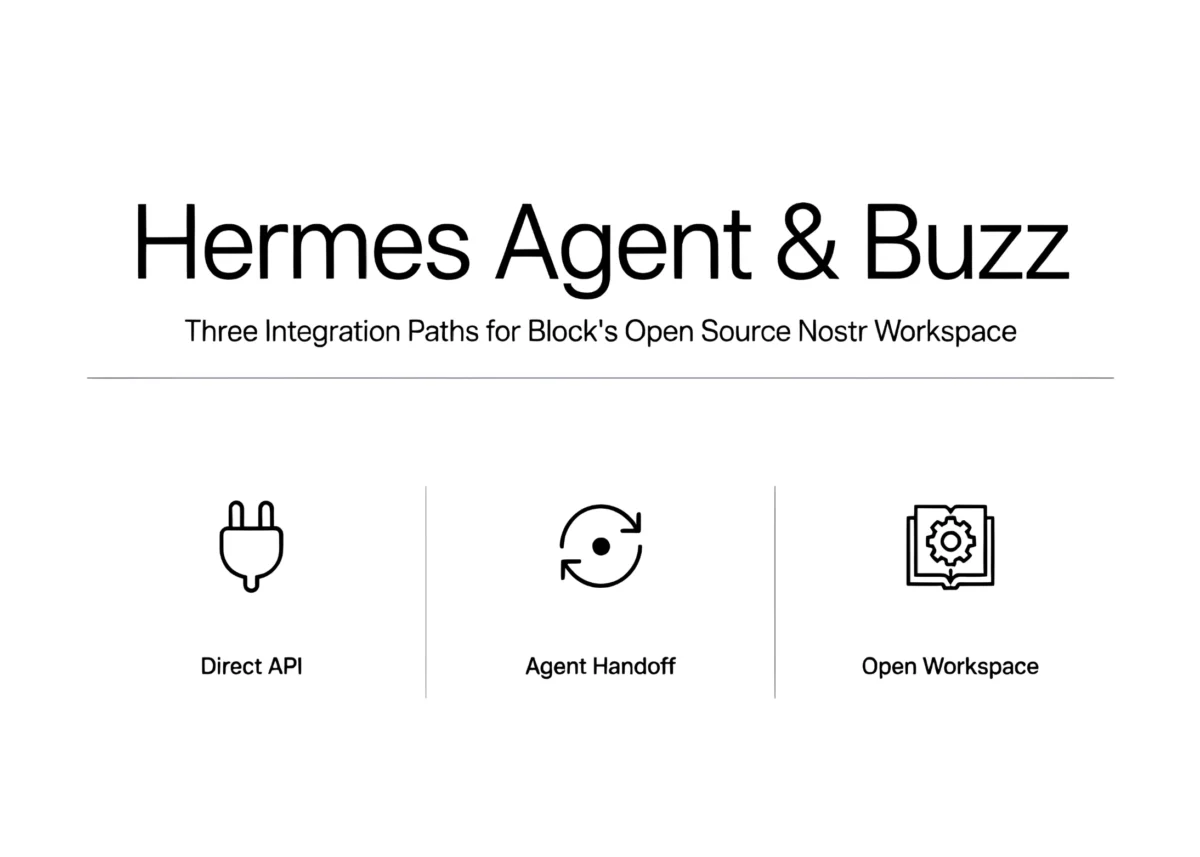
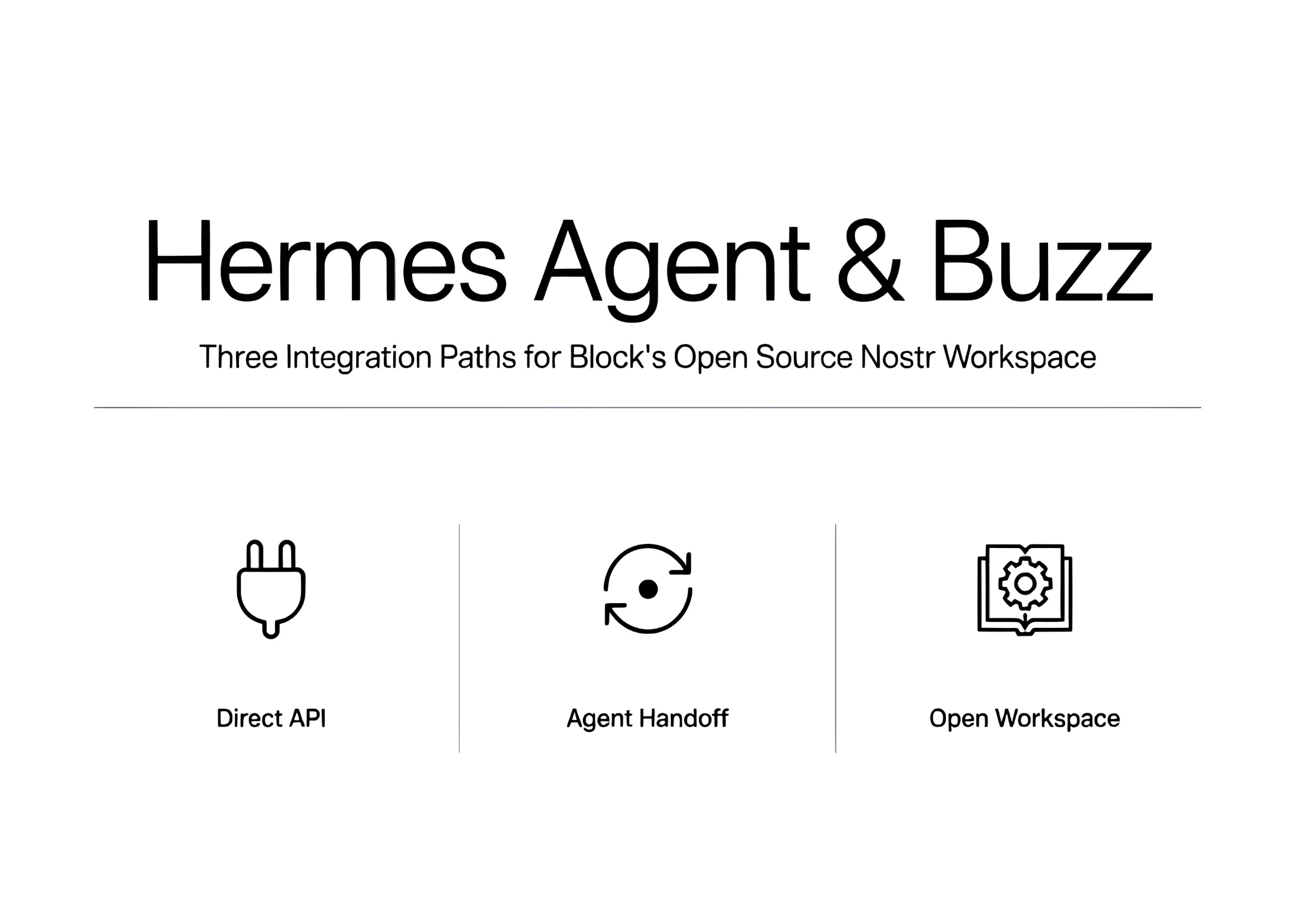
To accommodate various hosting environments, the integration documentation outlines three distinct methods for connecting Hermes Agent to the Buzz workspace.
1. Buzz Desktop Managed Runtime
This is the most accessible path for local development. Within the Buzz Desktop settings, a "Runtimes" menu allows users to activate Hermes as a preset harness. The system utilizes a discovery mechanism to locate the hermes-acp launcher within the user’s login-shell path. Communication is handled via the Agent Control Protocol (ACP) over standard input/output (stdio), allowing the agent to function as a local subprocess of the chat client.
2. The Relay Bridge
The relay bridge is designed for scenarios where the agent’s identity is hosted on a remote server or a dedicated cloud instance. In this configuration, the buzz-acp harness acts as a bridge, connecting a specific channel to the Hermes process. The integration is a transport-level bridge rather than a separate installation, ensuring that the spawned subprocess maintains consistent access to the same configuration, credentials, and memory state as the primary Hermes host. This method is ideal for maintaining a persistent agent presence across multiple sessions.
3. Native Gateway Platform
The deepest level of integration involves the native gateway platform. By utilizing a bundled Buzz plugin, the Buzz workspace is treated as a native messaging platform for Hermes, equivalent to its integrations with Telegram or Discord. This path supports the full suite of messaging features, including threaded replies, reactions, image processing, and mention-based gating. Under this model, Hermes manages its own session state and approval workflows independently of the Buzz client, making it the preferred choice for complex, high-autonomy agent deployments.
Protocol Standards and Security Defaults
The integration makes extensive use of Nostr-specific standards to ensure secure and efficient communication. On the gateway path, inbound messages are received over a persistent WebSocket connection authenticated via NIP-42. This protocol ensures that the agent only responds to authorized relays and users. Furthermore, the system employs BIP-340 Schnorr signatures for message signing, which offers improved security and efficiency over traditional ECDSA signatures.
To prevent "agent spam" and ensure privacy, the recommended defaults for the Buzz adapter are strictly configured:
- Mention-Only Response: The
require_mention: truesetting ensures that agents do not interject in every conversation, responding only when explicitly addressed in public channels. - Access Control: The
allow_all_users: falsesetting allows administrators to restrict agent access to a specific list of public keys (npubs), preventing unauthorized users from consuming AI resources. - Clean Channels: By setting
interim_assistant_messagesandtool_progressto false, the internal "thought process" and tool-calling logs of the AI are kept out of the main chat interface, maintaining a clean user experience. - De-duplication: Events are de-duplicated using unique event IDs against a per-channel high-water mark, preventing the agent from processing the same message multiple times in the event of network instability.
Chronology and Development Context
The partnership between Nous Research and Block’s Buzz team is the culmination of several months of cross-pollination between the decentralized social media community and the open-source AI community.
Block’s involvement in the Nostr ecosystem accelerated in early 2024 as part of the company’s broader initiative to support decentralized protocols. Buzz was initially developed to solve the "silo problem" in corporate communication, where data is often trapped within proprietary platforms. By building on Nostr, Block aimed to create a platform where the protocol, not the provider, defines the interaction.
Simultaneously, Nous Research has been iterating on the Hermes Agent framework, seeking to create a "universal adapter" for AI models. The goal was to allow a single AI brain to interact seamlessly across various communication protocols. The synergy between a protocol-agnostic agent (Hermes) and a provider-agnostic chat platform (Buzz) became apparent as both projects gained traction on GitHub, with Buzz currently boasting over 18.8k stars.
Analysis of Implications for the AI Industry
The integration of Hermes into Buzz signals a move toward "Sovereign AI." In the current AI landscape, most agents are hosted on centralized platforms (like OpenAI’s GPTs or Custom Instructions). These agents are subject to the terms of service, uptime, and data privacy policies of the host provider.
By contrast, a Hermes Agent running on a private Buzz relay represents a fully sovereign stack. The user owns the hardware, the relay (data), the protocol (Nostr), and the model weights (Hermes). This is particularly critical for industries with high compliance requirements, such as legal, finance, and healthcare, where data cannot leave the controlled environment.
Furthermore, the use of Nostr as the transport layer opens the door for cross-organizational AI collaboration. Because Nostr is a global protocol, an agent belonging to "Company A" could theoretically be invited into a channel hosted by "Company B" simply by sharing a public key and relay address, without the need for complex API integrations or shared Slack Connect channels.
Future Outlook and Community Engagement
As the project moves out of the initial release phase, the roadmap focuses on enhancing the "human-in-the-loop" experience. Developers are currently working on more robust workflow approval gates, where an agent can propose an action (such as a code merge or a cloud deployment) that requires a cryptographic signature from a human administrator before execution.
The community is encouraged to contribute to the ongoing development by accessing the integration documentation and the primary GitHub repositories for both Buzz and Hermes Agent. As an open-source endeavor, the evolution of this platform depends on the feedback and contributions of the developers who deploy it.
The successful integration of Hermes and Buzz demonstrates that the future of AI work may not lie in larger, more centralized platforms, but in the intelligent orchestration of decentralized, sovereign components. By combining the reasoning power of advanced open-source models with the censorship-resistant and identity-first architecture of Nostr, Nous Research and Block have laid the groundwork for a new era of digital collaboration.