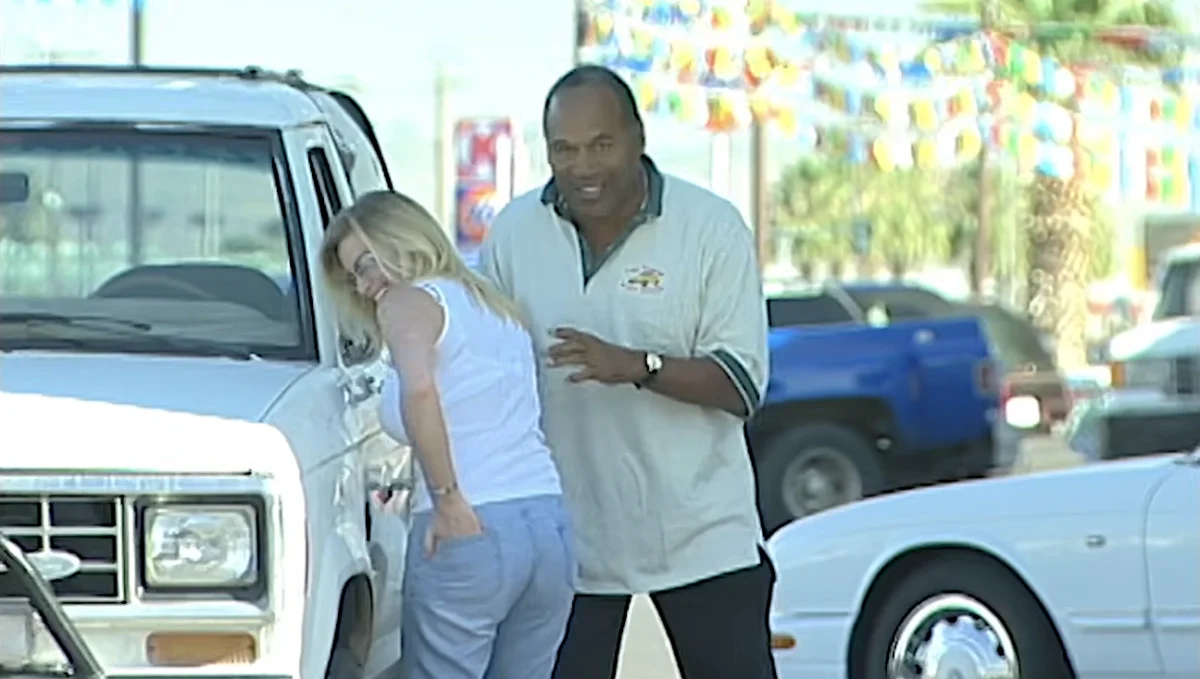
In 2006, a bizarre chapter in the post-trial life of O.J. Simpson unfolded with the production of a hidden-camera prank show titled Juiced. Conceived as a potential comeback vehicle, the series aimed to capitalize on the burgeoning reality television landscape and echo the success of shows like Punk’d. However, Juiced never achieved the widespread release its creators envisioned, becoming a cautionary tale of celebrity, exploitation, and the shifting tides of public opinion and media distribution. Now, the docuseries O.J. Unseen: Exploitation of Evil on ID seeks to excavate the story of this ill-fated project, utilizing a trove of behind-the-scenes footage and interviews with those involved to offer a comprehensive, and often uncomfortable, look at its making and subsequent downfall.
The Genesis of Juiced: A Risky Comeback Attempt
Following his acquittal in the 1995 murder trial of Nicole Brown Simpson and Ronald Goldman, O.J. Simpson remained a figure of intense public fascination and controversy. While the criminal trial captivated the nation through extensive media coverage, including the rise of Court TV, the mid-2000s saw a significant shift in the entertainment industry with the ascendance of reality television. Shows like American Idol and Survivor dominated ratings, but this era also birthed a wave of more provocative and often exploitative programming. Series such as Are You Hot? and The Swan pushed boundaries, reflecting what some describe as "the Mike Darnelian times of unscripted television and pushing the envelope," referencing a period of audacious and boundary-testing reality content.
It was within this environment that Juiced emerged. The concept was brought forth by Rick Mahr, a producer with an established business in distributing "ruckus"-style videos, including the popular Best of Backyard Wrestling DVDs. Mahr envisioned a prank show that would leverage Simpson’s notoriety, aiming to reintroduce him to the public in a seemingly lighter, entertainment-focused context. The idea was to have Simpson participate in various pranks, often involving unsuspecting individuals, with the humor derived from their reactions to his presence.
Behind the Scenes: A Glimpse into the Making of Juiced
The O.J. Unseen docuseries, executive produced by Eric Day and Mark Koops of INE Entertainment, and directed by Rebecca Halpern, delves deeply into the production of Juiced. The series draws heavily on over 60 hours of unearthed behind-the-scenes footage, offering viewers an unprecedented look at the day-to-day operations of the show. This footage captures Simpson interacting with cast and crew, the staging of pranks, and the overall atmosphere of the production.
According to executive producer Eric Day, the discovery of this material was akin to finding an "untouched time capsule of a moment in pop culture history." The footage provides insights into the mechanics of the pranks, revealing instances where they were successfully executed, where they faltered, and even where they proved "impossible to pull off." This behind-the-scenes perspective, Day suggests, offers more than just a look at a TV show; it reveals aspects of the medium, of O.J. Simpson himself, and the motivations of those involved in his orbit.
Mark Koops elaborates on the significance of this archival material, stating that it illuminates not only the creation of Juiced but also its eventual unraveling. The docuseries features interviews with numerous individuals who worked on the show, including Mahr and director Todd Lewis. Their testimonies offer a spectrum of perspectives on their involvement, ranging from a notable lack of remorse to profound regret.
The Unraveling of Juiced: Public Outrage and DVD Release Failure
The initial plan for Juiced involved a DVD release. However, as details of the show began to leak, it ignited a firestorm of public outrage. The families of Nicole Brown Simpson and Ronald Goldman, along with a significant portion of the public, viewed the concept of a prank show featuring O.J. Simpson as deeply insensitive and exploitative, especially given the gravity of the crimes for which he had been tried and acquitted.
The backlash was swift and severe. The planned DVD release was scrapped, effectively shelving the project. While Juiced briefly became available through video-on-demand services, its intended impact was thwarted. A decade after his acquittal, Simpson’s attempt to re-enter the public spotlight through such a lighthearted and potentially controversial format failed to materialize as planned. The incident underscored the ongoing sensitivity surrounding the Simpson case and the public’s reluctance to see him presented in a trivializing context.
O.J. Unseen: Examining the Motives and the Aftermath
The documentary series aims to dissect the complex web of factors that led to the creation and subsequent failure of Juiced. It explores the motivations of the key players, including O.J. Simpson himself, Rick Mahr, and director Todd Lewis.
Rick Mahr, a central figure in the docuseries, acknowledges that he believed Juiced would be a commercial success. However, in retrospect, he expresses some ambivalence about whether he "crossed a line" with the project. Director Todd Lewis, on the other hand, articulates a more pronounced sense of remorse for his role in Juiced. He even confesses that a part of him harbored a hope that the filming process might lead Simpson to an on-camera confession regarding the murders. This sentiment, while perhaps a desperate wish, highlights the lingering aura of mystery and unresolved questions surrounding the case.

The Content of Juiced: Tone-Deaf Humor and Troubling Imagery
The finished product of Juiced, as depicted in O.J. Unseen, offers little in the way of sophisticated humor. The majority of the pranks rely on the surprise of unwitting individuals encountering O.J. Simpson, eliciting reactions that are often described as bemused or uncomfortably amused.
One segment that stands out for its perceived insensitivity is a sketch where Simpson portrays a used car salesman attempting to sell a white Ford Bronco. This scene is particularly jarring given the Bronco’s prominent role in the infamous low-speed police chase following Nicole Brown Simpson’s murder. The pranks are interspersed with direct-to-camera segments of Simpson and a notably tasteless rap video. In this video, Simpson is depicted in attire resembling a stereotypical pimp, surrounded by topless dancers, further amplifying the show’s questionable judgment.
The Real Story Unfolds in the Unseen Footage
It is within the unearthed behind-the-scenes footage that O.J. Unseen truly finds its narrative power. These moments offer a more candid and often surreal glimpse into the production. The documentary teases potentially revelatory scenes, including one where Simpson, seemingly on the verge of discussing the events of the night of the murders, appears to be discussing his past.
Mark Koops describes one such moment captured on film: Simpson is being driven by director Todd Lewis, having apparently consumed alcohol. During this car ride, Simpson begins to speak about his trial and his life experiences. Koops characterizes this as a pivotal moment where "true crime, reality television and celebrity culture collided." He expresses a viewer’s frustration, questioning why Lewis didn’t press further or elicit more direct answers during this apparent opening. This scene, for Koops, represents a moment where they were "as close to finding out the truth as we’re ever going to be."
Another striking anecdote shared by Eric Day involves Simpson undergoing prosthetic makeup to transform into an older white man. While this transformation is underway, a television in front of him is playing Court TV. Day notes that Simpson, despite his circumstances, offers "very informed opinions on what it means to be a good celebrity and a bad celebrity in terms of your ability to get a conviction or be exonerated." This observation underscores Simpson’s unique and complex relationship with fame, the media, and the legal system, stemming from his direct and profound experience with all facets of celebrity culture and the justice system.
Simpson’s Enduring Public Presence and the Evolution of Celebrity Branding
Despite the failure of Juiced, O.J. Simpson never truly faded from public consciousness. While he did not reclaim the level of fame and public goodwill he once enjoyed, his notoriety persisted. A year after Juiced, he was involved in an armed robbery incident in Las Vegas, for which he was convicted and served nearly nine years in prison. His life and the events surrounding the murders have been the subject of numerous documentaries, including the critically acclaimed O.J.: Made in America, and the award-winning television series American Crime Story.
O.J. Unseen posits that Juiced, despite its profound flaws and questionable ethics, can be viewed as an early, albeit misguided, attempt at celebrity brand management. In an era preceding the widespread influence of social media and direct-to-fan platforms, the show represented a nascent effort by a celebrity to control their narrative and engage directly with an audience.
The Shifting Landscape of Media Gatekeepers
Eric Day reflects on the broader implications of Juiced‘s failure within the context of media distribution. He points out that in the era of Juiced‘s production, a limited number of entities controlled cable distribution and physical media sales through retailers like Best Buy and Sam Goody. These "gatekeepers," he argues, had the power to decide what content reached the public. The collective decision, whether conscious or not, was that Juiced "crossed the line."
Day contrasts this with the current media landscape, which he describes as "the Wild West in the most crazy sense in terms of how stuff can get out there." The absence of these traditional gatekeepers means that content, regardless of its ethical implications or quality, can find its way to audiences with unprecedented ease. He muses on whether this lack of oversight is ultimately beneficial or detrimental, highlighting the profound shift in how media is consumed and controlled.
O.J. Unseen: Exploitation of Evil airs Monday and Tuesday nights at 8 p.m. on ID and is also available on HBO Max, offering a critical examination of a forgotten, yet revealing, moment in the life of O.J. Simpson and the evolution of media and celebrity culture.