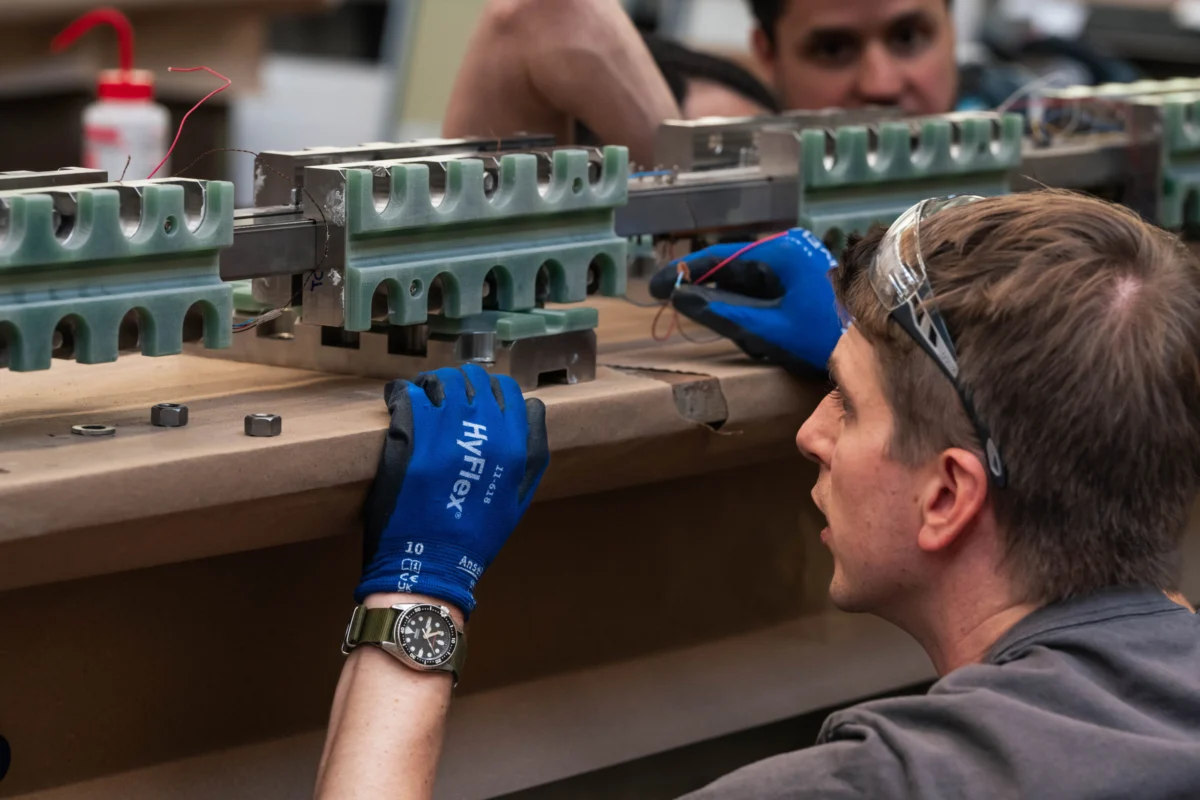
In a significant strategic move set to reshape the nascent fusion energy landscape, Proxima Fusion, a leading Germany-based startup, announced on Thursday, September 10, 2026, its ambitious plan to establish a state-of-the-art manufacturing facility dedicated to producing fusion-grade high-temperature superconducting (HTS) tape. This formidable investment, valued at €140 million (approximately $162.6 million USD), is poised to secure a critical component for the company’s advanced stellarator fusion reactor designs, marking a pivotal step towards commercializing clean, abundant fusion power. The announcement, made at 11:38 AM PDT, underscores Proxima Fusion’s commitment not only to technological innovation but also to vertical integration within its supply chain, a strategy increasingly recognized as vital in high-stakes, capital-intensive industries.
The Global Race for Fusion: A New Energy Paradigm
The pursuit of fusion energy, often hailed as the holy grail of clean power, involves harnessing the same process that fuels the sun. By fusing light atomic nuclei, immense amounts of energy can be released with virtually no long-lived radioactive waste and an inexhaustible fuel source (isotopes of hydrogen, derived from water). However, achieving controlled fusion on Earth presents extraordinary scientific and engineering challenges, primarily in heating plasma to millions of degrees Celsius and containing it long enough for fusion reactions to occur efficiently. Decades of research, predominantly in publicly funded projects like ITER (International Thermonuclear Experimental Reactor) in France, have laid foundational knowledge. More recently, a surge of private investment has fueled numerous startups, each vying to be the first to deliver commercial fusion power. This intensified competition has seen hundreds of billions of dollars poured into diverse technological approaches, from magnetic confinement (tokamaks and stellarators) to inertial confinement, propelling the industry toward what many hope will be a breakthrough within the next decade. The global energy crisis, coupled with the urgent need to decarbonize economies, has amplified the urgency and appeal of fusion as a potential solution to humanity’s long-term energy needs.
HTS Tape: The Conductor of Tomorrow’s Energy
At the core of Proxima Fusion’s technological strategy, and indeed a significant portion of the contemporary fusion industry, lies high-temperature superconducting (HTS) tape. Superconductors are materials that can conduct electricity with zero resistance when cooled below a critical temperature. While "high-temperature" is a relative term—these materials still require cryogenic cooling, albeit at temperatures significantly higher (e.g., liquid nitrogen temperatures of around -196°C) than conventional low-temperature superconductors (requiring liquid helium at -269°C)—their properties are revolutionary. HTS materials, specifically second-generation (2G) HTS tapes based on rare-earth barium copper oxide (REBCO), offer several transformative advantages for fusion reactors. They can generate exceptionally powerful magnetic fields, often several times stronger than traditional copper coils or low-temperature superconducting magnets, for a given volume. This increased field strength is crucial for tightly confining the superheated plasma, preventing it from touching the reactor walls and maintaining the extreme conditions necessary for fusion reactions. Furthermore, HTS tapes enable more compact and efficient reactor designs, reducing the overall footprint and potentially the capital costs of future power plants. Their higher operating temperatures also simplify cryogenic systems, making them more robust and less expensive to operate compared to their predecessors. The emergence of HTS tape roughly a decade ago is widely regarded as one of the fundamental breakthroughs that has accelerated the current generation of fusion power startups, allowing them to envision smaller, more scalable, and economically viable reactor architectures.
Proxima Fusion’s Stellarator Strategy and HTS Integration
Proxima Fusion’s approach is rooted in the stellarator concept, a complex magnetic confinement device known for its inherent plasma stability, which theoretically allows for continuous, steady-state operation. Unlike tokamaks, which use a pulsed current to create part of their confining magnetic field, stellarators rely entirely on external, intricately shaped magnets to create a twisting, toroidal magnetic cage. This design eliminates the risk of disruptive plasma instabilities common in tokamaks, which can halt operations and cause wear on reactor components. Proxima Fusion spun out of the renowned Max Planck Institute for Plasma Physics in Greifswald, Germany, inheriting a rich legacy from the pioneering Wendelstein 7-X (W7-X) stellarator experiment. W7-X, often described as the most complex magnetic fusion device ever built, has demonstrated the long-pulse, high-performance plasma confinement capabilities of the stellarator design.
Proxima Fusion’ aims to leverage this heritage, combining advanced stellarator physics with cutting-edge HTS magnet technology to create a new generation of fusion devices. The company’s demonstration plant is projected to require an astounding 20,000 kilometers of HTS tape, a length equivalent to half the circumference of the Earth. Its subsequent commercial power plant, designed for continuous energy generation, will demand double that amount—40,000 kilometers. This colossal requirement underscores the critical need for a reliable, high-volume supply chain. The HTS tape will be precision-wound into the intricate, non-planar coils characteristic of stellarator designs, creating the precise magnetic fields necessary to shape and contain the plasma. The ability of HTS tape to carry high currents while maintaining superconductivity at elevated magnetic fields is indispensable for the complex geometries and operational demands of Proxima Fusion’s proposed reactors.
Building a European Supply Chain: Strategic Autonomy in Fusion
The decision by Proxima Fusion to build its own HTS tape factory represents a profound strategic move with significant geopolitical and economic implications. Currently, the global production of high-quality HTS tape is heavily concentrated in East Asia, primarily in China and Japan, with a few specialized manufacturers in the United States and South Korea. This geographical concentration poses potential supply chain vulnerabilities for European fusion companies, including risks of intellectual property leakage, geopolitical tensions impacting trade, and reliance on foreign entities for mission-critical components. By establishing a domestic manufacturing capability within Germany, Proxima Fusion is not merely optimizing its internal production process; it is actively contributing to the development of a resilient, localized European supply chain for advanced fusion technologies.
This move aligns with broader European Union initiatives aimed at fostering strategic autonomy in critical technologies and industries, reducing reliance on non-EU suppliers, and bolstering regional economic security. The new factory could potentially serve as a hub for HTS tape production for other European fusion projects or related high-tech industries, creating a robust ecosystem of innovation and manufacturing within the continent. Such vertical integration is crucial for de-risking the development pathway of nascent technologies like fusion, ensuring that key components are available at scale, at competitive costs, and with guaranteed quality control. For a technology that promises to deliver long-term energy independence, securing the means of production for its fundamental components is an act of foresight and national strategic importance.
Funding the Future: Public-Private Synergy

The €140 million factory investment follows closely on the heels of a monumental €411 million funding round that Proxima Fusion secured months prior. This substantial capital injection propelled the company into the upper echelons of the best-funded fusion startups globally, signaling strong investor confidence in its technological roadmap and commercialization potential. While specific investors were not detailed in the announcement, such rounds typically involve a mix of venture capital firms, institutional investors, and strategic corporate partners keen on disruptive energy technologies.
The factory’s funding structure itself is a testament to the synergistic model of public-private partnerships often seen in high-risk, high-reward technological ventures. Proxima Fusion plans to leverage a blend of private capital from its recent funding round and significant public support. The state of Lower Saxony, a German federal state known for its industrial prowess and commitment to innovation, is contributing a substantial €21 million towards the factory’s development. This public investment underscores the German government’s recognition of fusion energy as a strategic industry and its commitment to fostering technological leadership and economic development within its borders. Such governmental backing often provides critical de-risking for private investors, validates the strategic importance of the project, and helps catalyze broader regional economic benefits, including job creation and the establishment of an innovation ecosystem.
Economic Impact and Regional Development
The establishment of Proxima Fusion’s HTS tape factory in Lower Saxony is expected to generate significant economic benefits for the region. Beyond the initial construction phase, the facility will create a substantial number of high-skilled manufacturing, engineering, and research jobs. This influx of specialized talent will contribute to the diversification of the local economy, attracting further investment and fostering a regional hub for advanced materials and energy technologies. The presence of a cutting-edge manufacturing facility will also stimulate local supply chains, creating opportunities for ancillary businesses and service providers. For Lower Saxony, this investment is a tangible demonstration of its commitment to supporting green technologies and positioning itself at the forefront of the global energy transition. The long-term economic impact could extend to attracting research institutions and educational programs focused on superconductivity and fusion engineering, solidifying the region’s role as a center of excellence in these critical fields.
Beyond Fusion: The Multifaceted Potential of HTS Technology
While fusion energy is anticipated to consume a substantial portion of the world’s HTS tape production in the coming decades, the technology’s applications extend far beyond magnetic confinement reactors. HTS materials are foundational to a wide array of advanced industrial and scientific endeavors. Companies like Veir, backed by Microsoft, are already exploring the use of HTS for high-efficiency, megawatt-class superconductors targeting the burgeoning demand from data centers, where power density and cooling efficiency are paramount.
Other critical applications include:
- High-efficiency power transmission: Superconducting power cables can transmit electricity with virtually no loss, potentially revolutionizing national grids by making them more efficient, resilient, and capable of handling larger loads, including renewable energy sources.
- Medical imaging: HTS magnets are being developed for more compact and powerful Magnetic Resonance Imaging (MRI) machines, offering improved diagnostic capabilities.
- Particle accelerators: Stronger HTS magnets can enable more powerful and compact particle accelerators for fundamental physics research and medical applications.
- Electric propulsion: Advanced HTS motors and generators are being researched for use in electric aircraft and ships, offering lighter, more powerful, and more efficient propulsion systems.
- Energy storage: HTS coils can be used in Superconducting Magnetic Energy Storage (SMES) systems, which store energy in a magnetic field created by the flow of DC current in a superconducting coil, offering very fast response times for grid stabilization.
Proxima Fusion’s investment in HTS manufacturing therefore not only serves its immediate fusion goals but also contributes to the broader advancement and availability of a technology with widespread transformative potential across multiple sectors, reinforcing Europe’s capabilities in advanced materials science.
Expert Perspectives and Forward Outlook
Industry analysts and experts have largely applauded Proxima Fusion’s move, viewing it as a prudent and necessary step towards de-risking the complex journey to commercial fusion. Dr. Anya Sharma, a leading analyst in advanced energy technologies, commented, "Securing a domestic supply of critical components like HTS tape is a brilliant strategic decision for any fusion company. It mitigates supply chain risks, ensures quality control, and ultimately accelerates their development timeline. This move positions Proxima Fusion not just as a technology innovator, but also as a future industrial powerhouse." A spokesperson for the Lower Saxony Ministry for Economic Affairs stated, "Our investment in Proxima Fusion’s HTS factory underscores Lower Saxony’s dedication to fostering cutting-edge technologies and creating high-skilled jobs. This facility will not only be crucial for the future of fusion energy but will also bolster our region’s position as a hub for advanced manufacturing and green innovation."
While the timeline for commercial fusion power remains a subject of debate, with estimates ranging from the late 2030s to the 2050s, Proxima Fusion’s systematic approach to both reactor design and critical component manufacturing signals a mature understanding of the challenges involved. The factory is expected to be operational within a few years, allowing Proxima Fusion to ramp up HTS tape production in alignment with its reactor development schedule. The successful establishment and operation of this facility will be a key milestone, providing the essential building blocks for their demonstration plant and, ultimately, their commercial power stations.
Conclusion: A Step Closer to Commercial Fusion
Proxima Fusion’s commitment to building a €140 million HTS tape factory represents more than just an investment in manufacturing capacity; it is a strategic declaration of intent. It signifies a tangible step towards securing the future supply chain for fusion energy, fostering European technological autonomy, and accelerating the path to a cleaner, more sustainable energy future. By taking control of the production of this vital component, Proxima Fusion is not only strengthening its own position in the global fusion race but also laying foundational groundwork that could benefit the broader European high-tech landscape. As the world increasingly looks for solutions to climate change and energy security, such bold investments in foundational technologies are crucial, bringing the promise of commercial fusion power incrementally closer to reality.